


More news on this day
A FedEx cargo jet arriving from Memphis overran a runway at Miami International Airport on the evening of Wednesday, November 25, 2026, forcing the temporary closure of all but one runway and triggering widespread delays and diversions at one of the United States’ busiest Thanksgiving gateways. No injuries were reported, but ground stops and residual disruption on Thursday are affecting hundreds of flights and complicating travel plans across South Florida and beyond.
Get the latest news straight to your inbox!
What happened to the FedEx cargo flight at Miami?
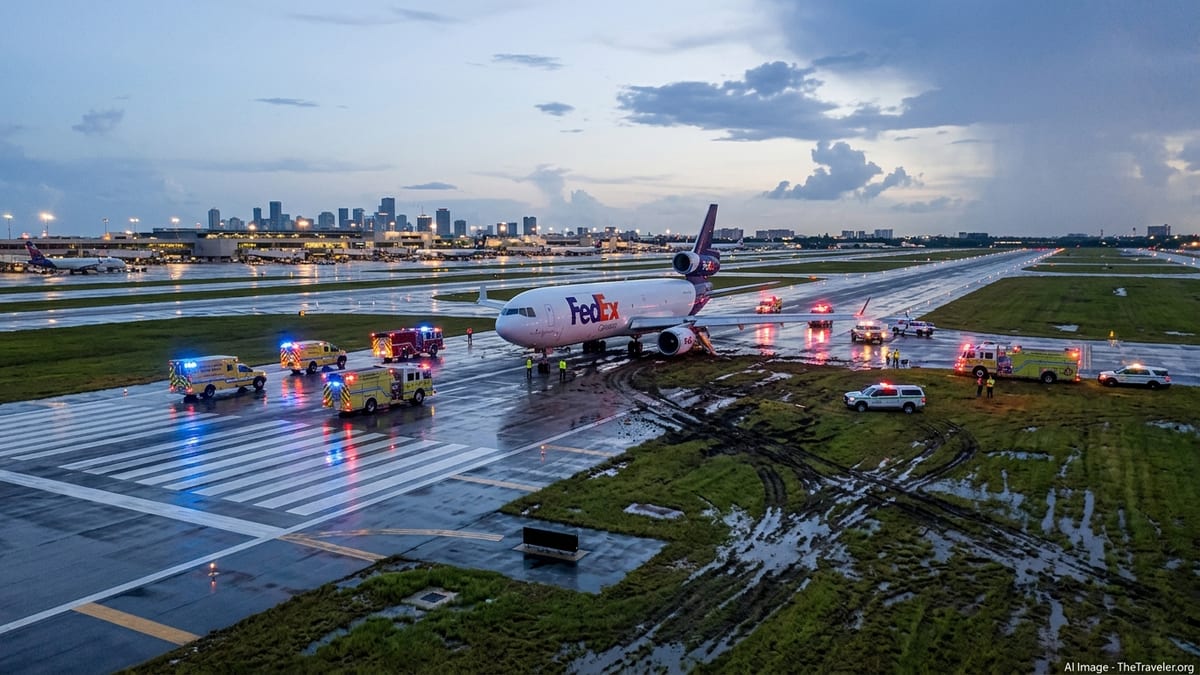
According to statements from the Federal Aviation Administration and local authorities, a FedEx-operated McDonnell Douglas MD-11 freighter arriving from Memphis overran Runway 26R at Miami International Airport at around 8:40 p.m. local time on Wednesday, November 25. The aircraft left the paved surface during its landing roll and came to rest within the airport’s safety area at the western end of the runway. Emergency crews from Miami-Dade Fire Rescue responded, but officials confirmed that all crew members were accounted for and no injuries were reported.
Initial descriptions from the FAA and airport officials classify the occurrence as a runway excursion on landing rather than a collision or in-flight emergency. The freighter remained upright and there were no immediate reports of fire. Early images from the scene showed the aircraft off the end of the runway with emergency vehicles positioned nearby. Authorities have not yet publicly confirmed the aircraft registration or any damage details, and both the FAA and the National Transportation Safety Board have said they will investigate the circumstances of the landing and subsequent overrun.
Local media and aviation incident trackers indicate the freighter had departed Memphis, FedEx’s primary cargo hub, earlier in the evening, operating a regularly scheduled all-cargo service to Miami. Weather at the time included passing rain and thunderstorms over parts of South Florida, with low clouds and wet runway conditions reported in the region, although investigators have not yet identified any contributing factors. At this stage there is no official determination about whether weather, aircraft condition, runway braking action or operational decisions played a role in the excursion.
Airport closures, ground stop and impact on Thanksgiving travel
The immediate operational impact at Miami International Airport was significant. With the FedEx jet immobilized beyond the end of Runway 26R, airport management and air traffic control closed that runway and, as a precaution, temporarily shut down all runways except Runway 9R, one of the remaining east-west runways. The Federal Aviation Administration also issued an evening ground stop for flights bound for Miami, meaning aircraft at departure airports across the country could not take off for MIA until the restriction was lifted or modified.
With only one runway available and new arrivals temporarily held, both arriving and departing flights experienced substantial disruption on Wednesday night. Flight-tracking and delay-reporting services showed hundreds of Miami movements either delayed, diverted to alternate airports or cancelled in the hours following the incident. Some domestic flights bound for Miami were rerouted to nearby South Florida airports such as Fort Lauderdale-Hollywood International or Palm Beach International when it became clear that their scheduled arrival slots were no longer available.
The timing of the incident compounded its effect on travelers. The runway excursion occurred on the eve of Thanksgiving, historically one of the busiest travel periods of the year in the United States. Federal aviation statistics show that late November typically brings elevated traffic across the national airspace system, particularly to Florida destinations popular with both holiday visitors and residents returning to the state. With an existing weather system already slowing operations at some East Coast hubs, the sudden loss of capacity at a major gateway like Miami added further strain and lengthened delays well into the night.
How Miami and airlines are restoring operations
By Thursday morning, November 26, attention at Miami International Airport had shifted from emergency response to recovery. Airport officials and the FAA indicated that flights were expected to resume more normal patterns once the disabled FedEx aircraft could be removed and safety checks completed on Runway 26R and adjacent areas. As of early Thanksgiving morning, schedules still showed knock-on delays and some cancellations, particularly on carriers with heavy overnight and early-morning operations into Miami.
Runway and taxiway inspections are a standard part of this recovery process. After a runway excursion, airport maintenance and safety teams typically check for damage to lighting, navigation aids, pavement markings and the runway surface itself. They also confirm that the runway safety area, which is designed to reduce the risk of damage during an overrun, remains intact and clear of debris. Only after these inspections and any required repairs or cleaning can a runway be fully reopened to normal traffic.
Airlines serving Miami are balancing recovery flights with the constraints of available slots, crew duty-time limits and aircraft positioning. Some carriers have added larger aircraft on certain routes or combined flights where feasible to re-accommodate passengers from cancelled services. Others are using nearby airports as temporary alternatives for passengers willing to travel by road for the final segment of their journey. Travelers booked over the next 24 to 48 hours are being urged to monitor their airline apps and notification channels closely, as day-of-travel changes remain likely while schedules are rebalanced.
Safety context: recent incidents and how runway excursions are investigated
The runway excursion involving the FedEx freighter comes during a year of elevated scrutiny around ground safety at Miami International Airport. On September 6, a Boeing 767-300 freighter operating as 21 Air Flight 7598 on behalf of Amazon overran Runway 30 after landing, crossed the airport perimeter and struck vehicles on a nearby road, resulting in multiple fatalities and injuries. The NTSB is still investigating that earlier accident and released an investigative update in September outlining its preliminary findings and areas of focus.
More recently, on November 14, a UPS cargo aircraft and a Copa Airlines passenger jet made contact on a taxiway at Miami, causing minor damage but no injuries. That incident prompted a separate FAA investigation into ground-movement procedures and situational awareness on the airport’s busy taxiway network. With three notable events in less than three months involving freighter and passenger operations on the ground, regulators and airport authorities are likely to face renewed questions about risk management during periods of high traffic and challenging weather.
Runway excursions are a well-recognized category of aviation incident, and both the FAA and NTSB have extensive guidance on how they are analyzed. Investigations typically examine flight data recorders and cockpit voice recorders, weather and braking reports, aircraft weight and landing performance calculations, crew decision-making, and the configuration and maintenance of the runway itself. While runway overruns and veer-offs are serious, many are survivable, particularly at large airports where safety areas and engineered arresting systems are designed to reduce the risk of catastrophic outcomes when an aircraft leaves the paved surface.
What travelers using Miami and South Florida airports should do now
For passengers traveling through Miami on Thanksgiving Day and into the weekend, the most immediate implication of the FedEx incident is continued schedule disruption rather than direct safety risk. With the incident confined to a freighter landing and no injuries reported, passenger terminals and landside facilities remain open. However, residual delays, aircraft repositioning and crew scheduling constraints mean that even flights on routes unaffected by the original ground stop may operate off-schedule for part of November 26 and possibly into November 27.
Travelers booked to depart from or arrive at Miami in the coming days should treat all flight times as subject to change on short notice. Checking airline apps and websites multiple times on the day of travel, enabling text or email alerts, and arriving at the airport earlier than usual for check-in and security screening can help reduce the risk of missed flights or connections. Those with flexible plans may wish to consult their airline about rebooking options, including same-day changes to alternative flights or, when offered, rerouting through Fort Lauderdale or other nearby airports if Miami’s schedule recovery is slower than anticipated.
Looking ahead, the key milestones will be the full reopening of Runway 26R once inspections are complete and the removal of the FedEx aircraft, and subsequent updates from the FAA and NTSB as they gather data on the landing and rollout. Travelers and aviation observers can expect a preliminary summary from investigators in the coming days or weeks, followed by a more detailed factual report at a later stage. Until then, authorities have emphasized that the cause of the runway excursion has not yet been determined. For now, the practical concern for passengers is to anticipate lingering congestion at Miami, build extra time into their journeys through the region and verify their flight status frequently during this unusually strained holiday travel period.