


More news on this day
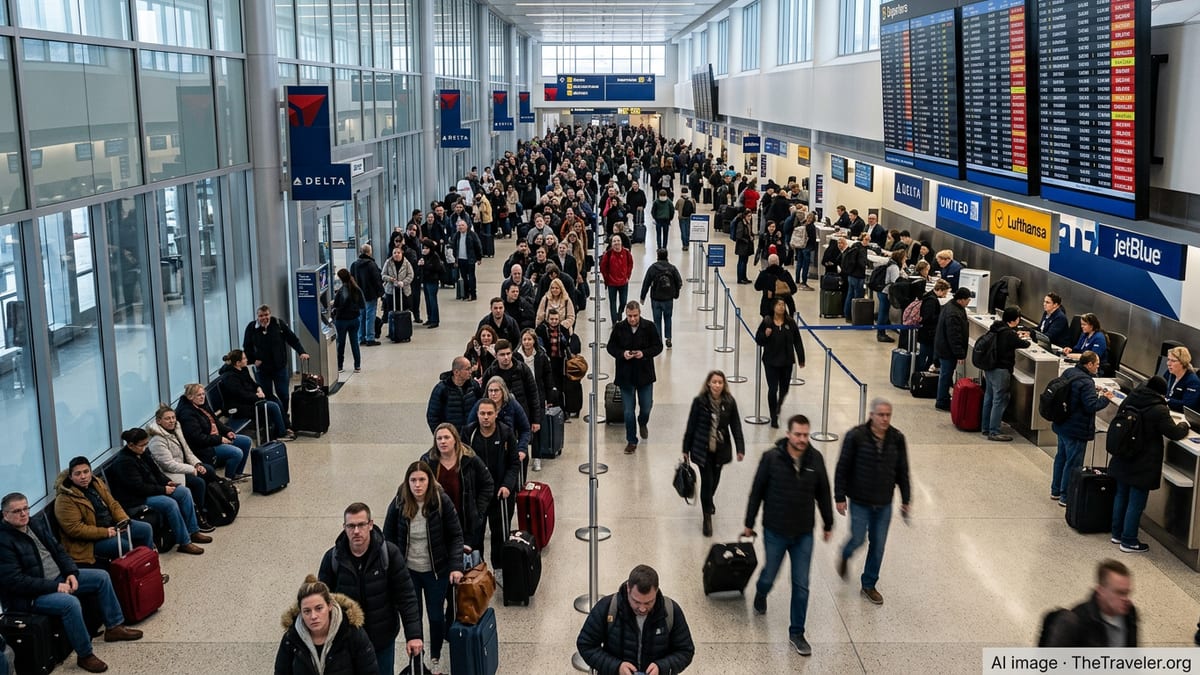
An Italian traveler’s ordeal at Bergen Airport is drawing attention to the impact of Norway’s ongoing air traffic controllers’ strike, as hundreds of passengers remain stranded for days with limited information, unclear rights and scarce support on the ground.
Get the latest news straight to your inbox!
Strike Turmoil Leaves Italians Grounded in Bergen
The disruption began in earnest over the weekend of August 22–23, 2026, when an air traffic controllers’ strike sharply reduced capacity in Norwegian airspace and triggered a cascade of cancellations at Bergen Airport Flesland. Publicly available information from airport operator Avinor describes an ongoing strike that is causing widespread delays and cancellations across multiple Norwegian airports, including Bergen.
Among those affected are dozens of Italian tourists who had scheduled late‑August returns from Norway’s west coast. Italian media coverage describes passengers informed of cancellations less than an hour before departure, after check‑in and baggage drop, leaving many without immediate access to their luggage and with no clear onward options.
Reports from Norwegian and Italian outlets indicate that Bergen and Stavanger have been among the most heavily impacted airports, with airspace temporarily closed to regular traffic during peak disruption periods. Independent travel reports and consumer coverage characterize the situation at Bergen as chaotic, with rolling cancellations that left many travelers uncertain whether they would depart the same day or remain overnight.
For Italian visitors who had planned carefully timed itineraries through the fjords and cities like Oslo and Bergen, the sudden breakdown in flight schedules turned the final leg of their holiday into an open‑ended wait in departure halls.
Overnight in the Terminal: Mattresses, Sleeping Bags and Makeshift Camps
Local news and national Norwegian coverage note that more than 300 passengers were forced to sleep at Bergen Airport during the worst of the disruption. The airport operator sought support from humanitarian organizations for blankets and field beds, but many passengers still resorted to sleeping on the floor or across rows of seats.
Italian regional newspapers have highlighted several individual stories of travelers stranded at Bergen for two consecutive nights, some of them young couples and solo tourists. One report mentions Italian passengers arriving well ahead of a scheduled afternoon departure to Florence, only to see that flight and many others cancelled in quick succession. With hotel rooms scarce and costly at short notice, many opted or were effectively forced to stay inside the terminal.
Accounts gathered in Italian lifestyle and travel sections describe passengers improvising “airport camps,” using trekking gear and sleeping bags intended for Norway’s national parks to endure unexpectedly long stays at the airport. Some travelers reported limited access to updated departure boards and difficulty finding staff able to provide concrete rebooking options.
While Avinor’s public guidance encourages passengers to monitor information from their airlines and notes that the scale of disruption varies by airport and day, the on‑the‑ground reality at Bergen has been depicted as long queues, crowded waiting areas and a self‑help atmosphere among stranded travelers swapping information and power outlets.
Patchy Assistance and the Question of Passenger Rights
The strike has not only exposed vulnerabilities in Norway’s aviation infrastructure but also raised questions about how airlines are handling their obligations toward stranded passengers. Italian coverage focusing on Bergen cites cases in which travelers reported a lack of meal vouchers, unclear guidance on hotel accommodation and minimal proactive communication from airline desks.
Some Italian tourists who were stranded in Bergen have described, in published accounts, being advised to retrieve checked baggage from carousels and attempt to rebook flights via travel agencies or online platforms, often without formal written notices of cancellation. According to these reports, there were instances where no assistance desks were visibly open during key periods, leaving passengers reliant on general airport information points or online customer service channels.
Airlines operating at Bergen, including low‑cost carriers and regional operators, publish general policies on delayed and cancelled flights that reference EU and European Economic Area rules on care and assistance. These policies typically outline circumstances under which passengers may be entitled to meals, hotel stays and rebooking. However, the exceptional nature of a nationwide strike, combined with high passenger volumes in late August, appears to have created a gap between written commitments and the support some passengers say they actually received inside the terminal.
Travel advice shared on public forums in the days following the first wave of cancellations has encouraged passengers stuck in Bergen to document expenses, keep records of boarding passes and notifications, and pursue claims either directly with airlines or through travel insurance providers once they finally reach home.
Italian Consular Network and Limited Local Support in Bergen
The Italian consular network in Norway includes an honorary vice consulate in Bergen, operating under the authority of the Italian Embassy in Oslo. Official information from the embassy lists the local post as a point of reference for Italian citizens in western Norway, with limited opening hours and a recommendation to contact the embassy directly in urgent situations.
Italian press reports from the past few days note that some stranded Italians in Bergen have sought information on whether consular offices could assist with documentation or emergency support as the strike continued. Coverage describes at least one visit by consular staff to the airport during the disruption, but overall travel reporting emphasizes that formal consular intervention in flight disruptions is typically restricted to assistance with documents or serious emergencies, rather than organizing alternative transport.
For individual Italian travelers caught by surprise in Bergen, this structure has meant relying primarily on airlines and travel agencies for practical solutions, while consular resources offer a backstop in specific cases. Publicly available advisories from European and national institutions generally highlight that, during labor disputes affecting air traffic, passengers should first seek assistance from the operating airline, using consular services mainly for issues such as lost documents, health emergencies or legal difficulties.
As the strike continues to affect Norwegian airspace, Italian travelers planning late‑summer trips to the fjords and coastal cities are being urged in open travel forums to monitor airline notifications closely, consider flexible booking options and verify coverage limits in their travel insurance in case of prolonged disruption.
Tourism Impact and Lessons for Late‑Summer Travel to Norway
The grounding of flights across Norway has come at a time when Bergen is experiencing strong tourist demand, especially from European markets such as Italy. Industry data and past route announcements show that carriers have invested in direct links between Norway and Italian destinations, reflecting a growing appetite for fjord cruises, rail journeys and city‑break combinations that include Bergen.
The current episode is underscoring how vulnerable such itineraries can be to labor disputes that affect air traffic control rather than specific airlines. While regular statistics for Bergen’s main carriers suggest generally high on‑time performance and low historical cancellation rates, the abrupt reduction of airspace capacity has illustrated that even robust operations can be overwhelmed by systemic constraints.
For travelers, the ordeal of being stranded in Bergen is becoming a case study in the importance of contingency planning. Recent discussions in travel communities have pointed to practical steps for future trips, including allowing buffer days at the end of an itinerary, favoring flexible tickets where possible and familiarizing oneself in advance with airline policies on delays and cancellations.
As air traffic controllers and employers continue negotiations, the experience of Italian tourists camped out at Bergen Airport is likely to remain a reference point in travel reporting throughout the late‑summer season, a reminder that even in well‑organized destinations, unforeseen disruptions can quickly transform a dream trip into an extended stay in the departure hall.
https://www.lanazione.it/pistoia/cronaca/norvegia-bloccati-giovani-a2jh1xmi