


More news on this day
Air travelers across Europe are facing widespread disruption as industrial action and staffing pressures have forced 133 flight cancellations and 2,512 delays, heavily affecting major hubs including Rome and Madrid and causing knock-on problems for leading low-cost and flag-carrier airlines.
Get the latest news straight to your inbox!
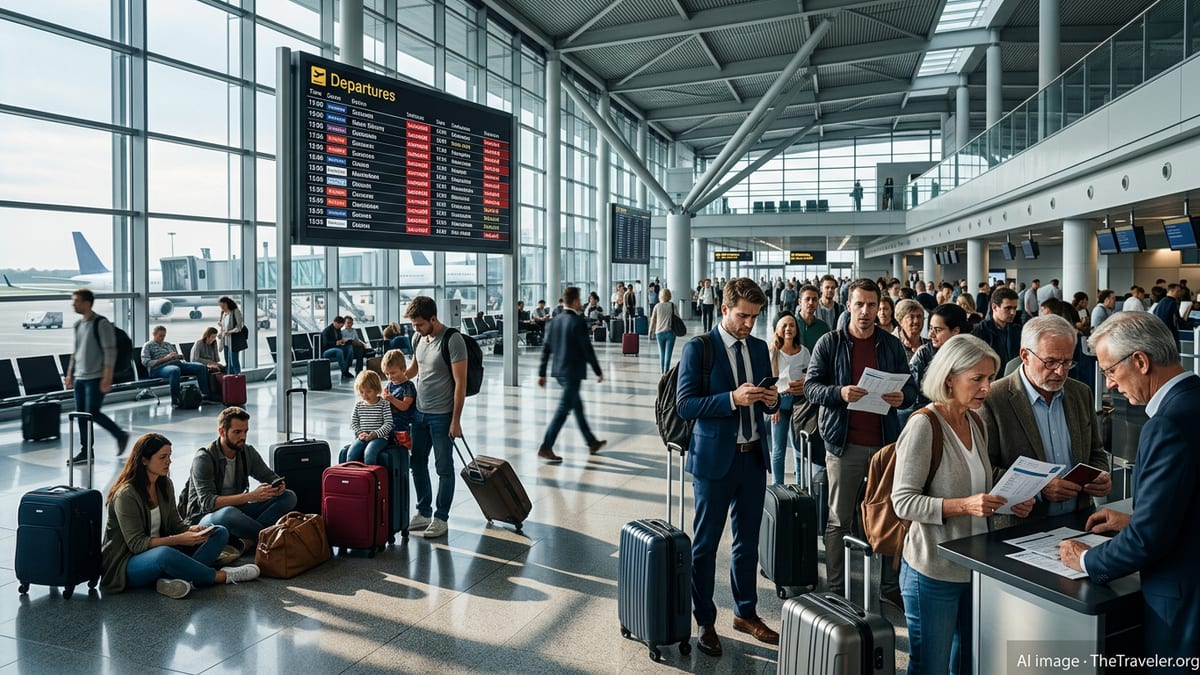
Strikes and Staffing Gaps Ripple Through Key European Hubs
Published coverage from European media and aviation monitoring services indicates that a new wave of strikes by aviation workers has converged with existing staffing shortages, triggering the cancellation of 133 flights and delaying 2,512 more across the continent. The disruption is centered on Italy and Spain, where Rome and Madrid act as critical nodes in Europe’s air network and quickly pass schedule shocks on to surrounding airports.
In Italy, reports note that walkouts by ground staff and airline crews have periodically affected Rome’s Leonardo da Vinci Fiumicino Airport, where carriers such as ITA Airways, Wizz Air, Ryanair and Volotea operate dense schedules on intra-European routes. When flight crews or handling teams pause operations, even for a few hours, departure banks compress, aircraft and crews fall out of rotation, and delays accumulate across the day as airlines attempt to recover their timetables.
Spain has faced similar turbulence. Madrid Barajas, a primary hub for Iberia as well as a major base for Ryanair and other low-cost airlines, has seen rolling pressure on its operations, particularly during busy morning and evening waves. Publicly available flight-performance data for routes linking Rome and Madrid show an elevated share of services arriving late, underscoring how quickly a local disruption in one country can cascade into another.
Industry analyses of delay statistics in Europe suggest that flows between Rome Fiumicino and Madrid Barajas are consistently among the most delay-prone city pairs on the continent, reflecting both heavy traffic volumes and recurring capacity constraints. When strikes or staffing actions are layered on top of this pattern, the result is a steep, rapid build-up of late-running services and cancellations that can take days to unwind.
Rome and Madrid at the Center of a Wider European Gridlock
According to timetable aggregators and route databases that track real-time operations, Rome Fiumicino and Madrid Barajas together handle hundreds of daily departures and arrivals, with dozens of connections linking them directly to major European cities. Madrid alone is listed with hundreds of daily movements serving more than 200 destinations, while the Rome–Madrid corridor operates more than one hundred weekly flights in normal conditions.
Because of this central role, cancellations and delays at either airport spread quickly through airline networks. A grounded aircraft in Rome can mean a delayed departure from Madrid later in the day, and that in turn can disrupt a connecting leg onward to another European or intercontinental destination. For passengers, this translates into missed connections, forced overnight stays, and a scramble for rebooking options during already congested travel periods.
Recent performance summaries for flights between the two capitals show average departure delays running into the tens of minutes, with a majority of services arriving later than scheduled during heavy-disruption periods. Historical analyses from European air-traffic performance bodies place Rome–Madrid and several Madrid-centric pairs, such as Madrid to Tenerife or London Heathrow, among the top European routes for average delay per departure when the network is under strain.
With both airports acting as home hubs for national and low-cost carriers, even a relatively small number of cancelled rotations can displace aircraft and crew rosters across multiple days. Airlines then face the choice of consolidating flights, rerouting aircraft from other bases, or trimming schedules, each of which can further contribute to the count of affected services across Europe.
Major Airlines and Key Routes Bear the Brunt
The disruption has hit a broad mix of operators, from legacy flag carriers to budget airlines that rely on high aircraft utilization. Published route data identify ITA Airways, Iberia, Ryanair, Wizz Air Malta, Volotea and Air Europa among the most active on the Rome–Madrid axis, with multiple daily rotations scheduled across different time bands.
Operational histories compiled by flight-tracking platforms highlight frequent delays on individual services linking Rome and Madrid, in some cases showing average arrival delays approaching an hour on the worst-performing flights. These delays are not confined to any single airline, indicating that structural factors such as air-traffic flow management, ground-handling bottlenecks, and terminal congestion play a significant role.
When industrial action affects air-traffic control, ground handlers or airline staff, these underlying vulnerabilities are exposed. Cancellations tend to concentrate on short-haul intra-European routes, including those between Rome, Madrid and other large airports such as Amsterdam, Paris, London and Frankfurt. As crews and aircraft are reassigned to protect long-haul operations, regional flights often absorb the bulk of schedule cuts, magnifying the impact on point-to-point leisure and business travelers.
For airlines already managing tight summer and early autumn timetables, the current wave of disruption adds financial and operational pressure. Compensation obligations under European passenger-rights rules, rebooking costs, and the need to reposition aircraft all increase operating expenses at a time when carriers are still rebuilding balance sheets after prior downturns.
What Travelers Across Europe Are Experiencing
For passengers, the operational statistics translate into long queues, packed departure lounges, and uncertainty at the gate. Travelers connecting through Rome and Madrid report tight or missed connections when inbound flights arrive late and minimum transfer times can no longer be met. In some cases, passengers are being rerouted through secondary hubs or shifted onto later flights, extending journeys by several hours.
During the current disruption, travel forums and social platforms are recording a stream of accounts from passengers dealing with last-minute cancellations, extended waits at check-in, and delayed baggage delivery. These individual experiences mirror the aggregate data reported by flight-tracking sites, where the volume of delayed departures on affected days climbs well above recent averages.
Aviation analysts note that while strikes are typically announced in advance, the precise level of participation and the extent of protective measures can be difficult for travelers to predict. Publicly available notices may list time windows for industrial action, yet the real-world impact depends on how many flights airlines proactively cancel, how quickly they can recover operations, and whether additional factors such as weather compound the disruption.
With many routes operating close to capacity, especially on popular city pairs such as Rome–Madrid, spare seats for rebooked passengers can be scarce. This helps explain why even a relatively defined number of cancellations and delays can translate into multi-day travel challenges for those caught in the middle of the disruption.
Prospects for Recovery and Advice for Passengers
Looking ahead, recovery across the European network will depend on how quickly airlines and airports can stabilize staffing levels and how long current industrial actions persist. Once strike periods end, carriers typically add extra capacity or deploy larger aircraft on key routes to clear backlogs, but this process can take several days when aircraft and crews are scattered across multiple bases.
Public guidance from airports and airlines encourages travelers to monitor flight status regularly, use official apps and websites for rebooking where possible, and arrive earlier than usual at departure airports during known strike windows. Travel experts also advise allowing longer connection times through Rome and Madrid while disruption levels remain elevated, and where feasible, considering alternative routings that avoid heavily affected hubs.
For those whose plans are disrupted, consumer organizations point travelers toward passenger-rights rules in the European Union, which may provide for care, assistance, and in certain cases financial compensation for cancellations and long delays. However, eligibility can depend on specific circumstances, including the cause of disruption and the amount of notice provided by the airline.
With Rome, Madrid and at least 11 other European airports adjusting schedules in response to strikes and staffing constraints, the coming days are expected to remain challenging for air travel across the region. Travelers planning trips through these hubs are being urged by publicly available advisories and travel industry guidance to remain flexible and to build additional time into their itineraries.
The Peninsula Qatar – European flight disruption report
FlightConnections – Rome Fiumicino to Madrid route data