


More news on this day
A stranded traveler at Gatwick Airport has been dubbed the “Hero of Gatwick” on social media after stepping in to help manage confused and angry passengers during severe UK-wide flight disruption linked to an air traffic control failure.
Get the latest news straight to your inbox!
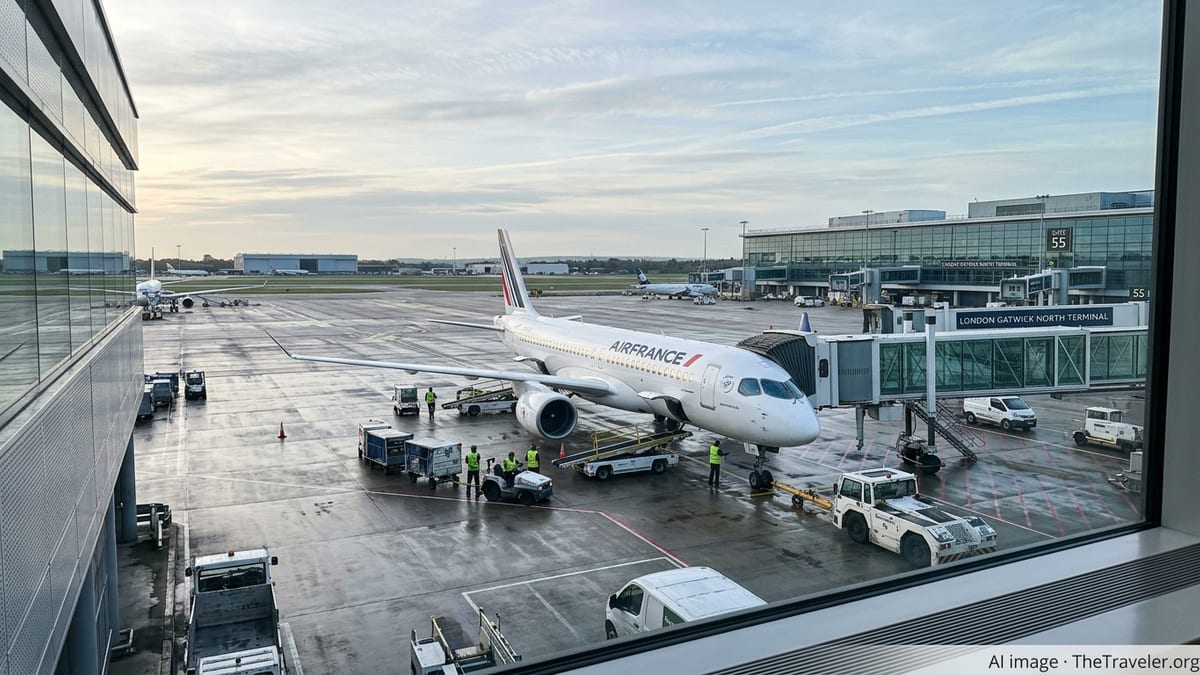
Passenger steps up as “human megaphone”
Reports indicate that the incident unfolded on 10 September at London Gatwick, one of the UK’s busiest airports, as airlines struggled to recover from days of disruption following a major air traffic control systems failure. With flights cancelled, departure boards frequently changing and service desks overwhelmed, long queues formed at easyJet counters as passengers tried to find out if and when they could travel.
According to coverage from UK-based outlets, 36-year-old passenger Kurtis Toy had already endured more than four hours on board a Gatwick to Aberdeen flight without food before the service was ultimately cancelled. After being asked to disembark, Toy joined hundreds of others in a packed departures hall where a small number of staff attempted to communicate rebooking options to an increasingly frustrated crowd.
Witness accounts shared online describe Toy volunteering to act as a “human megaphone,” positioning himself where staff could brief him, then relaying information at full volume so that people at the back of the queue could hear. Video clips circulating on social platforms show the passenger repeating instructions on voucher arrangements and alternative flights while urging travelers to stay calm.
The improvised crowd-control effort quickly gained traction under the label “Hero of Gatwick,” as users reposted footage and stills from the scene. Public posts praised the intervention for cutting through confusion at a time when many travelers reported struggling to get clear updates from airline channels or airport information screens.
Viral moment highlights scale of UK flight chaos
The episode at Gatwick has become a focal point in broader coverage of what has been described as one of the most disruptive weeks for UK aviation since the pandemic. National Air Traffic Services (NATS), which oversees much of UK airspace, experienced a technical failure earlier in the week that forced significant limits on the number of flights allowed to operate, triggering widespread knock-on delays and cancellations across multiple days.
Published reports suggest that more than 1,000 flights to and from the UK were initially cancelled as a result of the systems issue, with subsequent days bringing further disruption as carriers tried to reposition aircraft and crews. Major hubs including Heathrow, Gatwick and Manchester saw passengers stranded both in terminals and overseas, with some travelers spending the night on terminal floors or in makeshift waiting areas while they tried to secure new bookings.
At Gatwick specifically, local and national outlets have documented scenes of long queues for service desks, crowded seating areas and passengers describing hours-long waits onboard aircraft before flights were eventually turned back to the gate. Some arriving travelers also reported congestion at immigration and baggage reclaim as staff worked through backlogs created by the cascading disruption.
Within that context, the “Hero of Gatwick” moment has resonated as an emblem of passengers attempting to support one another while formal systems strained under the pressure of the crisis.
Social media turns frustration into folk hero status
Clips of Toy relaying instructions near an easyJet desk spread rapidly across platforms such as X, Instagram and TikTok on Thursday, shared alongside commentary about the strain on front-line airline staff and the frayed tempers of exhausted travelers. Some posts framed the scene as a rare point of solidarity during a week otherwise dominated by complaints about poor communication, lack of clear information and difficulties accessing customer service channels.
Commenters also pointed to the video as an illustration of how quickly informal leaders can emerge in high-stress travel situations. With microphones and public address systems focused on broader terminal announcements, the use of a volunteer “human megaphone” helped bridge the gap between staff and passengers in a localized queue, according to eyewitness descriptions published online.
The viral attention has in turn drawn more focus to the circumstances that led to the chaotic scenes, including the technical fragility of air traffic control systems and the limited resilience of airline operations when those systems fail. In user discussions on travel forums and social networks, Toy’s intervention is often contrasted with accounts of people queuing for hours only to receive minimal or conflicting information about their options.
While the “Hero of Gatwick” label is light-hearted, the reaction underscores how tense the atmosphere has been across UK airports in recent days, with many travelers facing disrupted holidays, missed connections and unexpected expenses for accommodation and food while they wait for flights to resume.
Questions over resilience as recovery continues
Industry-focused commentary following the NATS outage has raised questions about how quickly the UK aviation system can rebound from large-scale technical incidents. Publicly available information from flight-tracking and airport data suggests that, even as air traffic control restrictions eased, airlines were left with aircraft and crews out of position, forcing further cancellations and last-minute schedule changes as they tried to restore normal operations.
Passenger accounts from Gatwick and other major airports describe long queues not only at airline service counters but also at security checkpoints and border control. Some travelers reported that electronic gates were intermittently unavailable, adding to delays for arriving passengers already facing missed onward connections and limited rebooking options.
Travel analysts quoted across several outlets note that such incidents often expose the limited buffer in tightly scheduled airline operations. Once a significant number of flights are grounded for several hours, later services can be affected for days, creating a domino effect that is difficult to unwind during busy travel periods.
Against this backdrop, individual stories such as the “Hero of Gatwick” have helped to humanize an episode that, for many, has been defined primarily by technical jargon and operational statistics. The viral videos serve as a reminder that behind every data point about cancellations or delays are passengers making on-the-spot decisions about how to cope with uncertainty.
Passenger experiences reshape public perception of disruption
The latest disruption has also prompted renewed scrutiny of how airlines and airports communicate with passengers during crises. In recent years, parliamentary committees and consumer groups have repeatedly highlighted communication breakdowns as a key source of traveler frustration during major episodes of aviation disruption, from staff shortages to weather-related delays.
Coverage of the Gatwick scenes suggests that, in the absence of clear, audible and timely updates, passengers increasingly turn to peer-to-peer channels, from impromptu announcements in the terminal to live threads and real-time video posts on social media. The “Hero of Gatwick” figure embodies this shift, effectively acting as an informal information hub at a moment when official channels were overloaded.
As airlines work through backlogs and air traffic control operations stabilize, attention is likely to focus on whether lessons from this week’s events will translate into changes in crisis planning, staffing levels and communication strategies. For now, however, the enduring image of the episode for many travelers is that of a fellow passenger standing on the concourse, shouting updates to a weary crowd in an effort to bring a measure of order to an otherwise chaotic night.
NetFM: ‘Hero of Gatwick’ becomes human megaphone at easyJet desk
AP News: Airlines scramble to recover from UK air traffic control problems
The Guardian: Passengers hit by UK airport IT and ATC chaos
Sussex News: Gatwick airport chaos continues after air traffic control failure