


More news on this day
From jammed freeways to hours long airport lines, summer 2026 is testing the patience of American travelers as record demand collides with storms, staffing challenges and crowded infrastructure.
Get the latest news straight to your inbox!
Record Holiday Crowds on the Roads
Early season forecasts signal one of the busiest U.S. summer travel periods on record. AAA projections for Memorial Day 2026 estimated about 45 million people traveling at least 50 miles from home over the long weekend, a level that would edge past pre-pandemic volumes and mark a new benchmark for the unofficial start of summer. Road trips remain the dominant choice, with tens of millions expected to drive despite higher fuel prices.
Independence Day travel is pushing those numbers even higher. AAA’s national outlook for the July 4 period projects more than 72 million travelers between late June and early July, again setting a record compared with 2025 and earlier years. Publicly available summaries of traffic analytics from INRIX and state transportation agencies indicate that the most severe highway congestion is concentrated in the late afternoon and early evening hours before and after the holiday, when commuters and vacationers converge on the same corridors.
These patterns mean that familiar choke points around major metropolitan areas are seeing extended delays. Traffic models built on past holiday weekends show multi hour backups on key interstates leading to popular beaches, mountain destinations and lake regions, especially on the Thursday and Friday before a long weekend and the Monday return. Agencies are urging drivers to travel early in the day or later in the evening when possible, and to factor significant buffer time into their plans.
The surge is not limited to national holidays. Travel organizations report that strong consumer spending and a preference for domestic trips continue to support heavy weekend traffic throughout June, July and August. That demand, layered on top of summer construction projects and recurring storm systems, is sustaining a level of congestion that many travelers are experiencing as a nearly continuous peak season.
Airports Face Packed Terminals and Weather Disruptions
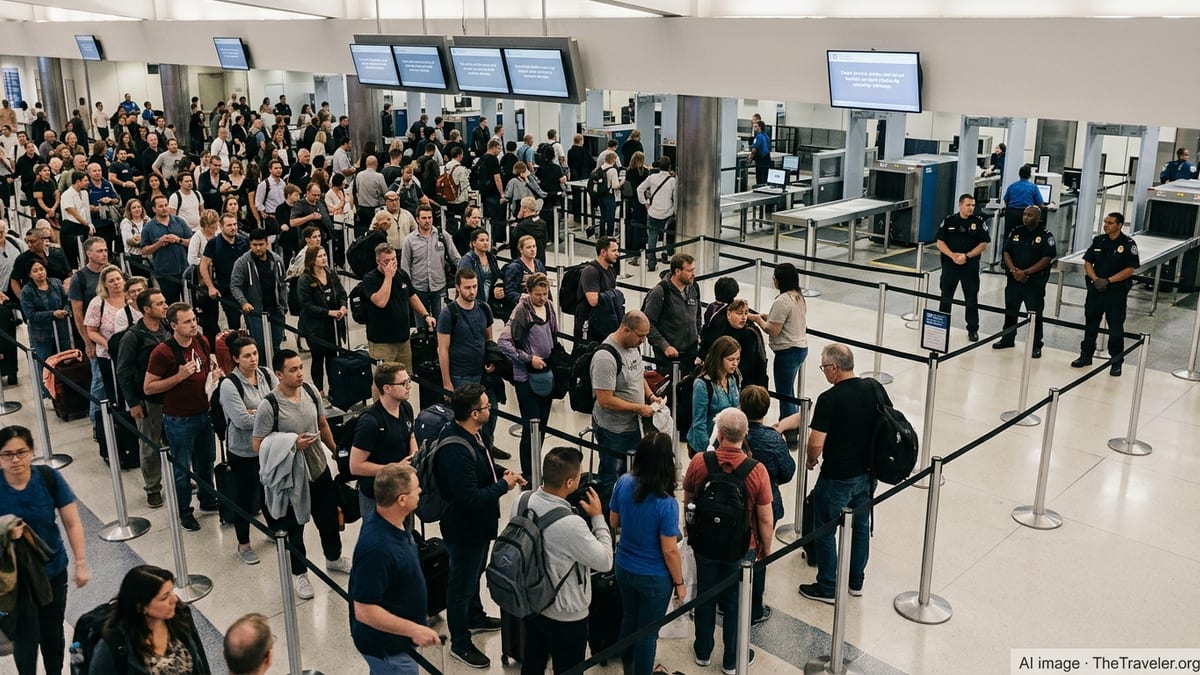
Air travel demand is climbing in parallel. Federal Aviation Administration updates describe a summer pattern in which daily flight counts are approaching or surpassing records set in 2025, with several days exceeding 54,000 flights across the national airspace system. Transportation Security Administration statistics, summarized in year in review documents and weekly updates, show screening volumes that have repeatedly topped prior highs, translating into crowded checkpoints at many large hubs.
The pressure is most visible around major holiday periods and in storm prone regions. Recent reporting describes severe thunderstorms along the East Coast in July that triggered ground stops at large airports and led to thousands of delays and cancellations in a single day. FAA summaries of delay causes continue to identify weather as the leading factor, accounting for a majority of disruptions, with airspace volume and runway capacity also contributing.
On busy days, passengers encounter the combined effect of these pressures: full flights, long lines at check in and security, and boarding areas that fill to capacity. Airlines have been operating with relatively low cancellation rates so far this year according to federal statistics, but the trade off is that rebooking options can be limited when storms roll through and most seats are already sold.
Travelers are increasingly encouraged, through airline advisories and federal travel guidance, to monitor flight status closely, sign up for alerts and consider earlier departures on days with forecast thunderstorms. For those passing through large hubs, publicly available information from airports suggests arriving well ahead of departure times, particularly during early morning bank departures and late afternoon peaks when both security lanes and concessions tend to be busiest.
Staffing, Schedules and Bottlenecks in Key Hubs
Beyond weather and demand, staffing and infrastructure constraints are shaping the experience at certain airports. FAA documentation on New York area operations describes continuing arrival and departure limits at major regional hubs into late 2026, a measure intended to relieve congestion and reduce extreme delays while the agency addresses controller staffing and equipment issues. Similar capacity management steps and ground delay programs have been used episodically at other congested hubs when staffing or runway work intersects with heavy traffic.
News coverage in late July highlighted how these vulnerabilities can converge. As storms moved through the Northeast, the FAA temporarily slowed traffic into the three main New York City airports and Philadelphia, citing a combination of severe weather and air traffic staffing shortages. Ground delays stretched to more than an hour at times, rippling through airline schedules as aircraft and crews fell out of position.
Labor strains are not confined to control towers. Government reports over the past two years have raised concerns about specialized aviation meteorology staffing, while the broader travel shutdowns and budget stand offs of 2025 and early 2026 showed how quickly unpaid or reduced staffing at TSA checkpoints and other federal functions can translate into longer lines and missed flights. Even when those acute episodes are resolved, it can take months for schedules and hiring pipelines to normalize.
Airlines and airports are responding with a mix of schedule adjustments, added staffing and technology. FAA planning documents for the summer season describe coordination with carriers on realistic scheduling, use of larger aircraft on some routes and investments in modernized equipment to improve throughput. Airports, for their part, are seeking to expand lane capacity at checkpoints and streamline passenger flows, but those projects often lag behind the immediate surge in demand.
What Travelers Can Do to Reduce Risk
Travel experts and official guidance point to a consistent set of strategies for passengers trying to navigate this crowded season. On the roads, transportation agencies recommend avoiding peak afternoon departure windows before holidays, traveling early in the morning when traffic and temperatures are lower, and building in extra time around known bottlenecks and work zones. Real time traffic apps and state transportation alerts can help drivers reroute around incidents that turn heavy traffic into standstill conditions.
In the air, publicly available FAA and airline resources emphasize preparation and flexibility. Booking the first flight of the day, especially from delay prone hubs, can reduce exposure to the cascading disruptions that accumulate by afternoon during stormy periods. Selecting longer connection times, traveling with carry on luggage when possible and enabling airline app notifications all improve the odds of finding alternatives if schedules unravel.
Passengers are also encouraged to watch weather forecasts not only for their destination but along their route, particularly during thunderstorm season in the Midwest and East and during extreme heat events in the Southwest that can affect aircraft performance. When significant systems are predicted, many carriers post travel waivers that allow customers to shift flights within a defined window, easing pressure on the most vulnerable departure banks.
For both drivers and flyers, the message emerging from this summer’s data and forecasts is less about avoiding travel altogether and more about adjusting expectations. With record numbers of people on the move and complex systems operating near capacity, delays and crowded terminals are likely to remain a defining feature of the 2026 summer travel season.