


More news on this day
Miami International Airport has been at the center of a turbulent week for American Airlines customers, as a sweeping technology outage combined with existing operational strains to trigger a wave of delays, cancellations, and missed connections at one of the carrier’s busiest hubs.
Get the latest news straight to your inbox!
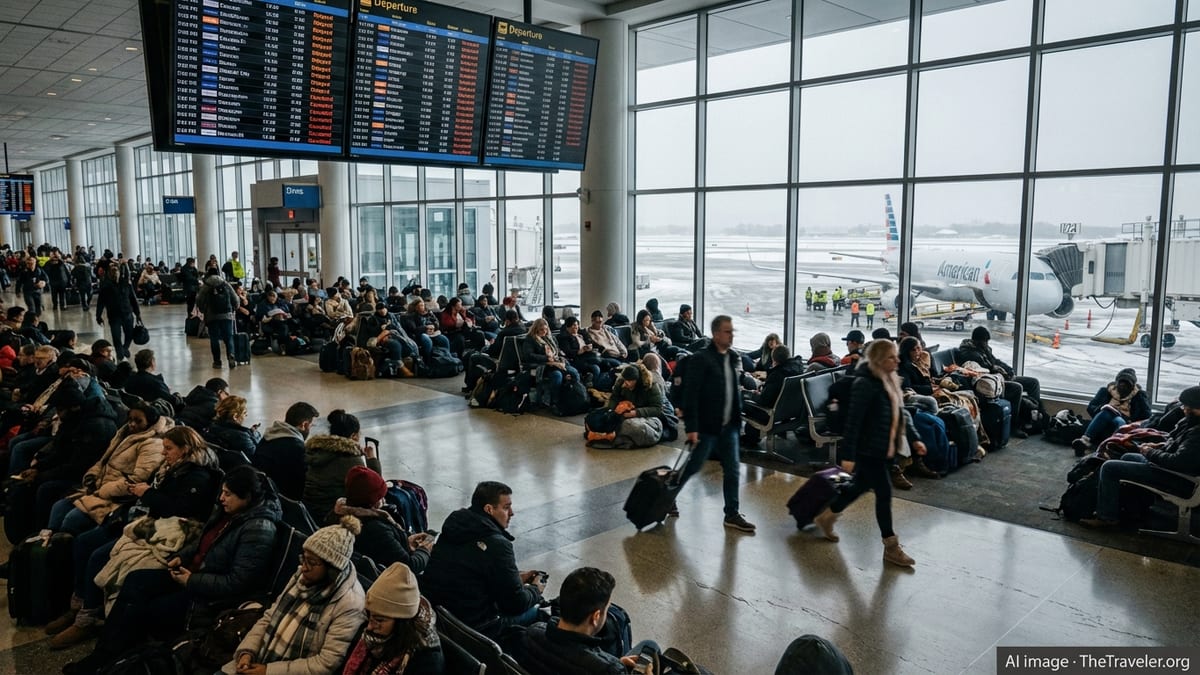
A System Outage Brings Operations to a Standstill
Publicly available flight tracking data and passenger accounts indicate that American Airlines experienced a large-scale technology outage affecting core systems used to dispatch flights, check in customers, and handle rebookings. Reports shared on travel forums and social platforms on July 28 describe aircraft and crews ready at gates but unable to depart because internal systems were not processing key operational tasks.
Information posted by passengers suggests that, for several hours, flights across the American network were effectively frozen, with only aircraft already in the air allowed to continue to their destinations. Grounded planes accumulated at major hubs, including Miami International Airport, where American runs a dense schedule of flights across the United States, Latin America, and the Caribbean.
By the time systems began to come back online, the airline was contending with a severe backlog. Standard recovery tools such as automated rebooking, dynamic crew assignments, and baggage routing had all been disrupted, intensifying the impact on Miami, where tight banked departure waves are designed around precise timing.
In the hours that followed, travelers in Miami described long lines at customer service counters, difficulty obtaining updated information about new departure times, and uncertainty over whether flights would operate at all. The outage exposed how dependent modern airline operations are on complex technology that, when it fails, can quickly ripple across an entire network.
Miami’s Role as a Hub Amplifies the Chaos
Miami International Airport is one of American’s most important hubs, particularly for traffic between the United States and Latin America. Local government reports highlight the carrier’s dominant market share at the airport and its extensive bank of daily departures feeding connecting traffic across the hemisphere. When disruptions hit, Miami feels them acutely because so many itineraries rely on tight connections there.
During the outage and its aftermath, even flights that did depart from Miami often did so behind schedule. Public flight-status feeds show multiple American departures from Miami in late July leaving later than originally scheduled, a pattern consistent with an operation working through a large queue of delayed aircraft and crews.
Miami’s role as a connection point for long-haul international flights further complicated recovery. Late-arriving feeder flights from elsewhere in the United States meant some passengers missed onward departures to South America and the Caribbean, forcing the airline to find scarce seats on subsequent services that were already heavily booked for peak summer travel.
The structure of the hub itself also contributed to visible congestion. Gate space at Miami is tightly scheduled, so aircraft holding for new departure slots or awaiting crews remained parked at occupied gates longer than planned. That created knock-on delays for incoming flights waiting for an open position, adding another layer to the operational logjam.
Weather, Staffing, and Maintenance Add to the Strain
While the technology outage was the immediate trigger for the latest wave of disruptions, Miami travelers have been contending with a broader pattern of operational strain at American this year. Earlier in the summer, stormy weather around South Florida led to sizable numbers of delays and cancellations at Miami, with data compiled by passenger-rights services showing that American and its regional partners bore the brunt of those weather-related problems because of their dominant presence at the airport.
Passenger accounts shared in recent weeks describe repeated multi-hour delays across American’s network attributed to maintenance checks and late-arriving aircraft. Some frequent flyers report that a significant share of their 2026 trips on the carrier have been affected by equipment or crew issues, suggesting that tight scheduling leaves little margin when aircraft require additional inspections or repairs.
Industry observers also point to crew availability as a recurring vulnerability. When long delays stack up, pilots and flight attendants can quickly hit regulatory limits on duty hours, forcing cancellations even after weather or technical issues ease. Reports from travelers this summer refer to flights that initially appeared delayed for routine reasons but were ultimately canceled after crews timed out, further complicating recovery in hub cities like Miami.
In combination, summer thunderstorms, maintenance demands on an aging fleet, and tight staffing levels create a fragile environment in which a single large-scale technology failure can push the operation beyond its limits. Miami, with its concentrated schedule and heavy reliance on connections, is particularly exposed to that kind of systemic shock.
Passengers Face Missed Trips and Limited Options
For travelers passing through Miami this week, the practical fallout has been missed vacations, disrupted business trips, and uncertainty over compensation or rebooking rights. Posts from affected passengers describe overnight stays on short notice, last-minute searches for hotel rooms, and long waits to speak with airline representatives either at the airport or by phone.
Consumer advocates note that American, like other U.S. carriers, offers rebooking on the next available flight and, in some cases, meal or hotel vouchers, depending on the cause of the disruption and company policy. However, during mass irregular operations, seat availability can be severely constrained, especially on peak-season flights from Miami to leisure destinations and major domestic hubs.
Travelers caught in the latest wave of disruptions report weighing difficult choices: accepting lengthy layovers and multi-stop routings to reach their destinations, delaying trips by a day or more, or canceling travel altogether. Some passengers have shared experiences of being split across different flights from their traveling companions because only scattered seats remained on outbound services.
Nationally, aviation forums and travel communities reflect a growing frustration among some American customers who feel that repeated disruptions, particularly at key hubs like Miami, are eroding confidence in the carrier’s reliability. For many, the events of this week are the latest in a string of experiences that have reshaped how they plan and insure their trips.
What Travelers Can Do Next Time Disruption Hits
As Miami-based travelers assess the damage from the latest episode, consumer groups are emphasizing steps that can reduce risk when flying during a period of operational volatility. They recommend that passengers build longer connection times at busy hubs such as Miami, particularly during summer and hurricane season when weather disruptions are more common.
Travel experts also highlight the importance of monitoring flight status across multiple sources rather than relying on a single app or notification channel, especially when there are reports of technology outages. Independent flight-tracking services, airport information displays, and carrier mobile apps can each provide partial glimpses of the situation, helping passengers act quickly when rebooking opportunities appear.
Another recurring recommendation is to take the earliest practical flight of the day from Miami, when schedules are less affected by the cumulative impact of delays. For critical trips, travelers may also consider booking backup options, such as fully refundable fares on alternative carriers, though this approach is typically only feasible for those with flexible budgets.
The events unfolding at Miami highlight how vulnerable modern air travel can be to a combination of technical, operational, and environmental pressures. For American Airlines and its customers, the latest disruptions underscore the importance of resilient systems and transparent communication when thousands of journeys depend on everything running smoothly.