


Anse La Raye is one of Saint Lucia’s most atmospheric west coast fishing villages. Its reputation rests on a lively Friday night fish fry, brightly painted wooden houses, and a dramatic backdrop of rainforest-clad hills. Yet it sits on a busy coastal road between more famous names like Marigot Bay and Soufrière, which leaves many travelers wondering: is Anse La Raye actually worth a stop on a short Saint Lucia itinerary? This guide breaks down what you can really expect, who will enjoy it most, and when you might be better off choosing another west coast destination.
Get the latest updates straight to your inbox!
Getting Oriented: What Anse La Raye Is (and Is Not)
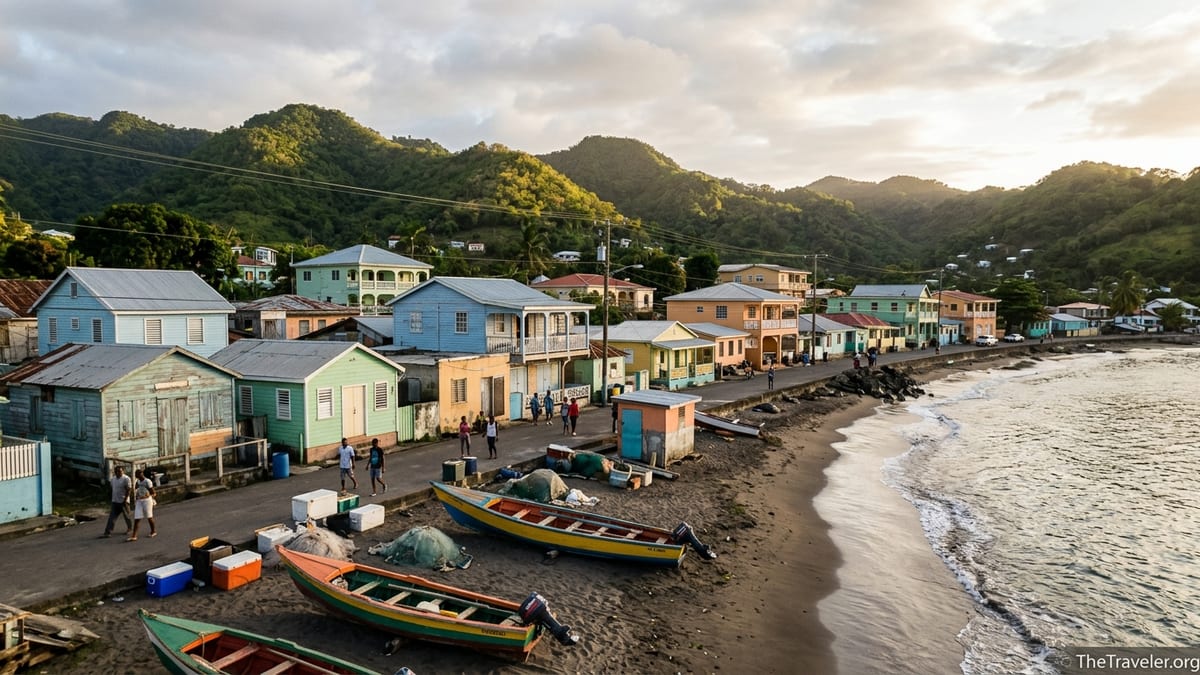
Anse La Raye lies roughly 25 to 30 minutes’ drive south of Castries on Saint Lucia’s west coast, on the main road that continues to Canaries and Soufrière. It is first and foremost a working fishing village, not a built-for-tourism resort town. The main street runs close to the shoreline, where you will usually see wooden fishing boats pulled up on the dark sand and locals repairing nets or chatting in the shade. The backdrop is dramatic, with steep green hills rising almost immediately behind the village, and the coastal drive in either direction offers classic Saint Lucia viewpoints.
What you will not find here is a long strip of beach clubs, all inclusive resorts, or curated shopping areas. Anse La Raye’s beach is functional rather than postcard-perfect, with a mix of dark sand, boats, and some litter if there has been recent heavy rain. Facilities for day visitors are basic: no row of sun loungers with waiter service, no big-name restaurants, and only a handful of small guesthouses and local bars. That contrast is important when you compare it with west coast neighbors like Marigot Bay, which centers around a large marina and resort complex, or Soufrière, which is surrounded by upscale properties at Sugar Beach and Anse Chastanet.
Because the village is compact, most visitors experience Anse La Raye in one of three ways: as a short photo stop on a west coast scenic drive, as part of a guided jeep or catamaran tour that pulls into the bay, or as a deliberate evening trip for the Friday night fish fry. The question of whether it is “worth it” depends heavily on which of these scenarios fits your travel style, and on your expectations for comfort versus cultural immersion.
The Famous Friday Fish Fry: Atmosphere, Food and Practicalities
The Friday night fish fry, often called Seafood Friday, is the main reason many travelers hear about Anse La Raye at all. From early evening, usually around 6 p.m., the waterfront street fills with temporary stalls and grills as vendors prepare freshly caught fish, lobster when in season, and island staples like fish cakes, bakes, and grilled corn. Speakers push out a mix of soca, dancehall, and local hits, and as the night goes on you can expect dancing in the street, casual liming at plastic tables, and the occasional impromptu performance from local musicians.
Prices are generally reasonable for fresh seafood, though they can creep up compared with inland spots because this is a known event for visitors. A fillet of grilled fish served with sides like green fig salad and macaroni pie may cost in the region of what you would expect to pay for a casual dinner at a mid range Saint Lucia restaurant, while a plate of fish cakes or fried snapper pieces is usually in the budget-friendly category. Drinks are straightforward: bottles of Piton beer, rum punches mixed to individual vendor recipes, and soft drinks in plastic cups. Expect to pay roughly the same as in local bars elsewhere on the island for basic drinks, and a bit more for elaborate cocktails.
For logistics, most visitors arrive by taxi from the north or south, often arranged through their hotel. From a resort around Rodney Bay, the drive can take 45 minutes to an hour each way depending on traffic and curves on the hill roads. From Soufrière, figure around 35 minutes. Shared transfers are commonly arranged on Friday nights, so it is worth asking if your hotel can group you with others to keep costs moderate. Many travelers choose to arrive between 7 and 8 p.m., when grills are in full swing but before the music is at peak volume, then head back before midnight.
Safety-wise, the fish fry is a lively but generally relaxed community event. As with any crowded night market, normal precautions apply: keep valuables to a minimum, carry cash in a money belt or inside pocket, and avoid wandering into dark, unlit backstreets. The village layout means you will mostly stay on the single waterfront street where food stalls, police presence, and other visitors are concentrated. If you prefer a quieter version of the scene, aim to come early, eat, and leave before the biggest party phase starts later at night.
Cultural Travelers: Daily Life, Architecture and Local Interaction
Outside Friday night, Anse La Raye appeals most to travelers who want to see a real west coast village in motion rather than a manicured resort. Colorful wooden houses line narrow streets, often with hand painted signs for small bars, rum shops, and barbers. In the morning you might see schoolchildren in uniforms heading to class, fishermen unloading the dawn catch, and women selling produce from small tables. The atmosphere is more low key than the fish fry party vibe and gives you a sense of how a Saint Lucian coastal community functions from day to day.
For cultural travelers, one of the main reasons to visit is the chance for small, unscripted encounters. Ordering a juice or a local beer at a corner bar, buying snacks from a roadside vendor, or chatting with a fisherman about the day’s weather patterns gives texture to an itinerary that might otherwise be dominated by resort spaces. Some tours that pass through Anse La Raye on the way to the rainforest or Soufrière include a short guided walk around the village, pointing out the church, primary school, and local murals that reflect the area’s fishing heritage.
It is worth preparing for the fact that Anse La Raye has its share of visible economic challenges. Infrastructure is not polished and you may notice abandoned buildings or stretches of uneven pavement. For some visitors, this reality is part of understanding the broader social context of Saint Lucia, where not every community benefits equally from tourism. For others, particularly those expecting a “cute” Caribbean village that looks like a film set, the contrast can be surprising. If you travel with an open, respectful attitude and modest expectations for facilities, you are more likely to appreciate Anse La Raye for what it is.
Compared with other west coast villages like Canaries, which is quieter and perched more dramatically above the sea, or Laborie further south, which some travelers choose as a base for a more offbeat stay, Anse La Raye feels more accessible from the main resort hubs and more connected to organized excursions. That makes it a convenient place to get a taste of village life in a shorter timeframe, even if it is not the most untouched or picturesque option on the island.
Beach Visitors and Water Lovers: How Does Anse La Raye Compare?
If your priority on the west coast is a relaxing beach day, Anse La Raye is rarely the top recommendation. The main village beach fronts a working harbor where fishing boats are moored and where the sand is a mix of dark volcanic grains and areas used for launching and landing boats. On calm days the water can be pleasant for a quick dip, but conditions vary and there are no formal sun lounger setups, lifeguard stations, or beach restaurants like you would find at more established leisure beaches.
Most travelers based in the north or south choose to day trip to beaches such as Sugar Beach, Anse Chastanet, or Anse Mamin near Soufrière, or to Reduit Beach and Pigeon Island in the north, where facilities cater clearly to visitors. These options usually offer chair and umbrella rentals, watersports desks, and several dining choices steps from the sand. In that context, Anse La Raye’s shoreline functions more as a scenic backdrop to village life than a dedicated recreational zone.
However, the bay itself is a frequent stop for west coast boat trips. Catamaran or small-boat excursions from Castries or Marigot Bay often cruise close to the Anse La Raye coastline to showcase the contrast between the dense green hills and the narrow strip of village along the water. Some itineraries include a swim stop near a quieter pocket of beach outside the village, giving you the chance to enter the water away from the working harbor. In that sense, you might experience Anse La Raye more from the sea than from a towel on the sand.
If you are a strong swimmer and comfortable with minimal facilities, a short swim from the village end of the beach can still be enjoyable, especially in late afternoon when the hills throw soft shadows over the bay and the fishing boats create a distinctive scene. Just adjust expectations: this is not a classic sunbathing beach, and families with small children or travelers seeking a full-service beach club will generally be happier focusing beach time elsewhere on the west coast.
Cruise Passengers and Time-Crunched Visitors
Cruise itineraries that dock in Castries often offer combined west coast excursions that include Anse La Raye as one of several stops. A typical day tour might leave the port, drive through the city, then follow the west coast road with viewpoints over Marigot Bay, a short photo or shopping break in Anse La Raye, a stop in Canaries, and then continue on to Soufrière for the Pitons, Sulphur Springs, and perhaps a plantation or waterfall. In that format, you might only spend 20 to 40 minutes in Anse La Raye, enough to walk one or two streets, snap photos of the church and waterfront, and buy a drink or souvenir.
For many cruise passengers, this is an ideal way to experience the village. The short visit slots naturally into a broader highlights tour and minimizes concerns about logistics or safety, since you are with a guide and vehicle throughout. You also gain context from the guide’s commentary about local history, the importance of fishing to the community, and current development efforts along the west coast. If you are comparing tour options, choose those that emphasize small group sizes and time actually out of the vehicle rather than just drive-by photo stops.
Independent cruise travelers who prefer to arrange their own day often choose to hire a private driver for a personalized west coast loop. In that case, you can ask specifically to include Anse La Raye for a coffee and village walk, then continue either south to Soufrière or north back to the ship. Given limited port time, it is rarely worth dedicating more than an hour solely to Anse La Raye unless you have already seen the island on a previous cruise and are now focusing on slower village experiences.
If your ship overnights or you are on a small expedition-style vessel that stays late into the evening, it is possible to coordinate a visit to Seafood Friday in Anse La Raye and then return to Castries later at night. This is more complex and usually best handled through the cruise line or a trusted local operator so that transport and timing are guaranteed. In that scenario, the fish fry can provide a memorable contrast to life onboard, but you will want to confirm return times carefully and avoid cutting it too close to all-aboard.
Families, Facilities and Accessibility
Families with children can certainly visit Anse La Raye, but it is not designed as a family-oriented stop in the way some larger beaches or attraction complexes are. There are no playgrounds along the waterfront, and public restrooms may be limited or basic, especially outside organized events. If you are traveling with young kids, it is sensible to time a stop for mid-morning or late afternoon when the temperature is slightly lower and to make sure everyone has used bathrooms at your hotel or a restaurant with reliable facilities before you arrive.
During Seafood Friday, the streets can become crowded and noisy quite quickly. Early evening is the best window for families who want to experience the atmosphere without the more raucous late-night elements. You might opt for an early dinner at the stalls, a short stroll, and then a pre-arranged taxi back to your accommodation by around 9 p.m. Bringing ear protection for sound-sensitive children and sticking close together in the crowd will help reduce stress.
For travelers with mobility challenges, Anse La Raye presents both opportunities and obstacles. The village is compact and relatively flat along the main street, which is useful if you can walk short distances but prefer to avoid hills. At the same time, sidewalks can be uneven or non-existent, and you may need to share space with vehicles on narrow roads. Wheelchair users will likely require a strong companion or local assistance to navigate curbs and potholes, and accessible restrooms are not guaranteed. For some visitors, it may be more comfortable to experience Anse La Raye as a short scenic drive-through with brief photo stops instead of an extended walk.
In general, facilities such as ATMs, pharmacies, and full-service supermarkets are better accessed in Castries or Soufrière rather than in Anse La Raye. Plan to arrive with cash in small denominations for food and drinks, carry any required medications with you, and treat the village as a cultural and scenic stop rather than a place to run errands or restock supplies.
Comparing Anse La Raye to Other West Coast Stops
To judge whether Anse La Raye is worth your time, it helps to compare it with the main alternatives on the same stretch of coast. Marigot Bay, just to the north, is one of the island’s most photographed natural harbors, ringed by hills and filled with yachts. Here you will find marina-front restaurants, a small but well-managed beach area, and several mid to high-end accommodations. The atmosphere is nautical and somewhat upscale, and many visitors come for a leisurely lunch overlooking the harbor rather than for a deep dive into local village life.
Canaries, to the south of Anse La Raye, is another fishing village that feels even more quiet and unchanged, with houses spilling down a steep hillside toward the bay. It sees fewer organized tours and has less of a signature event like Seafood Friday, which means fewer visitors but also fewer structured ways for travelers to engage. Those who are driving the west coast road often pause at a panoramic viewpoint above Canaries to capture the classic image of clustered houses, church tower, and sparkling sea below.
Further along, Soufrière is the main hub for the island’s iconic landscapes: the twin Pitons, Sulphur Springs, botanical gardens, and some of the most famous west coast beaches. The town itself is larger than Anse La Raye and has more shops, services, and guesthouses, though it still shows the contrast between daily life and high-end tourism. Many travelers who are short on time ultimately choose to base themselves near Soufrière or to dedicate their west coast touring to that area, using smaller villages only as brief scenic stops.
In this context, Anse La Raye’s personality sits between Marigot Bay’s marina polish and Canaries’ quiet hillside charm. It offers a more lived-in feel than Marigot and more structured visitor experiences than Canaries, thanks especially to Seafood Friday and its inclusion in west coast tours. If your goal is a single representative village stop along the drive between Castries and Soufrière, Anse La Raye is a strong candidate, particularly if you appreciate being able to buy a snack, drink, or souvenir while you explore.
Who Will Love Anse La Raye, and Who Should Skip It?
Food lovers with a taste for straightforward, grilled seafood and street food ambiance are prime candidates for a visit, especially on a Friday evening. If the idea of sitting at a plastic table under string lights, eating fish straight from the grill while music plays and kids run around the square appeals more than a multi-course resort dinner, Anse La Raye is likely to be a highlight. Just remember that this is not a chef-driven gastronomic festival but a community party: the joy lies in freshness and atmosphere rather than in elaborate presentations.
Cultural travelers who prioritize local color over polished infrastructure will also find Anse La Raye rewarding. Time spent wandering the backstreets, watching fishermen at work, or chatting with vendors offers insight into the rhythms of a Saint Lucian coastal community that you will not fully grasp from within resort walls. Photography enthusiasts who enjoy capturing candid scenes, colorful facades, and boats on the shore will come away with strong images, particularly in the soft light of early morning or late afternoon.
On the other hand, travelers whose main objective is a comfortable, facility-rich beach day may be disappointed if they allocate precious hours solely to Anse La Raye. Families needing reliable restrooms, shade structures, and safe shallow water for small children will typically do better at beaches like Reduit, Pigeon Island, or the resort-managed stretches near Soufrière. Visitors who are uneasy in areas with visible poverty or who prefer a tightly managed, resort-style environment may feel out of their comfort zone here.
If your schedule is limited to two or three full days on Saint Lucia, you might reasonably choose to focus on the Pitons, a top-tier beach, and perhaps Marigot Bay, and simply enjoy Anse La Raye as a scenic drive-by. But if you have more time, appreciate authentic village energy, or are visiting on a Friday night, Anse La Raye can become one of the more memorable chapters of your west coast journey.
The Takeaway
So, is Anse La Raye worth visiting? For travelers looking for a polished beach resort or a long list of structured attractions, the honest answer is that it is more of a characterful supporting act than a headline destination. The shoreline is functional rather than glamorous, facilities are basic, and some aspects of the village reflect the economic realities of a working fishing community more than the fantasies of a tropical brochure.
Yet for food lovers, cultural travelers, and anyone curious about daily life along Saint Lucia’s west coast, Anse La Raye offers exactly what many resort areas lack: noise, flavor, and unvarnished authenticity. A plate of grilled fish at Seafood Friday, a morning walk past painted wooden houses, or a quick stop for a drink on a west coast road trip can round out an itinerary that might otherwise be all views and no people.
Ultimately, the decision comes down to expectations and time. If you have at least a few days on the island and value human stories as much as landscapes, plan a short stop in Anse La Raye during daylight or commit to an evening at the fish fry with transport arranged. If your priority is lounging on a perfect beach with full services and your schedule is tight, focus on the better-equipped west coast stops and treat Anse La Raye as a bonus sight along the road. Either way, knowing what the village does best will help you make a choice that fits your style, budget, and appetite for local flavor.
FAQ
Q1. Is Anse La Raye safe to visit during the day?
During daylight hours Anse La Raye is generally considered safe for visitors who take normal urban travel precautions, such as keeping valuables out of sight, staying on main streets, and avoiding isolated areas. Most travelers experience the village as part of a guided tour or a brief independent stop without issues.
Q2. What time does the Friday night fish fry in Anse La Raye usually start and end?
Vendors typically start setting up in the late afternoon, with food service picking up around 6 p.m. The atmosphere is liveliest between about 7 and 10 p.m., and the event can continue later into the night depending on turnout, music, and weather.
Q3. Do I need a car to visit Anse La Raye, or can I rely on taxis and tours?
You do not need your own car. Many visitors come via organized jeep, minibus, or boat tours that include Anse La Raye as a stop, or by hiring a taxi through their hotel. Driving yourself offers more flexibility, but the west coast road is winding, so some travelers prefer to leave the driving to local professionals.
Q4. Is Anse La Raye a good place to stay overnight, or just for a short visit?
Anse La Raye has only a small handful of guesthouses and limited tourist infrastructure, so most visitors treat it as a short stop rather than a base. If you want to stay in the area, many travelers choose nearby Marigot Bay or Soufrière, which offer a wider range of accommodations and easier access to beaches and attractions.
Q5. Can vegetarians or non-seafood eaters enjoy the Anse La Raye fish fry?
While seafood is the star, stalls usually offer side dishes such as macaroni pie, salads, bakes, and fried plantains that can work for vegetarians. However, strict vegetarians and vegans will find choices limited, so it is wise to eat a light meal beforehand or bring snacks if you have specific dietary needs.
Q6. How does Anse La Raye compare to Gros Islet’s Friday street party?
Gros Islet, in the north, hosts a larger and more established Friday night street party with more bars, sound systems, and visitors. Anse La Raye’s event is centered more on grilled seafood and village atmosphere, with a smaller footprint and fewer dedicated tourist services, which some travelers find more intimate and others find less convenient.
Q7. Are there ATMs and card payment options in Anse La Raye?
Card facilities are limited, especially at temporary stalls during the fish fry, where cash is usually preferred. While you may find an ATM in or near the village, it is best to withdraw Eastern Caribbean dollars or US dollars in Castries, Rodney Bay, or Soufrière before visiting.
Q8. Is the beach in Anse La Raye suitable for swimming and snorkeling?
The village beach is a working harbor for fishing boats, so while you can sometimes swim, it is not ideal for snorkeling and lacks the clear water and reef structure found at beaches like Anse Chastanet or Anse Mamin. If snorkeling is a priority, plan specific trips to those dedicated snorkeling areas instead.
Q9. What should I wear when visiting Anse La Raye, especially for the fish fry?
Casual, comfortable clothing is appropriate. Lightweight fabrics, flat shoes suitable for uneven pavement, and a light cover-up for the evening breeze work well. Beachwear should be covered when you are not on the sand, and it is considerate to dress modestly when walking through village streets.
Q10. Is Anse La Raye worth visiting if I only have two days on Saint Lucia?
If you have just two full days, your top priorities will likely be the Pitons and a standout beach or two. In that situation, Anse La Raye is best treated as a short scenic stop on a west coast drive or as an optional evening outing for the fish fry, rather than the main focus of your limited time.