


Dugi Otok is one of Croatia’s most atmospheric Adriatic islands, a long, skinny strip of limestone and pine stretching northwest from Zadar. With steep cliffs on its wild western shore and gentle bays and villages strung along the east, where you stay on Dugi Otok has a huge impact on what your holiday feels like. This guide compares the island’s key bases Sali, Božava, Veli Rat, Verunić, Luka, Brbinj and Zaglav, and helps you decide whether to come with a car or rely on boats and buses.
Get the latest updates straight to your inbox!
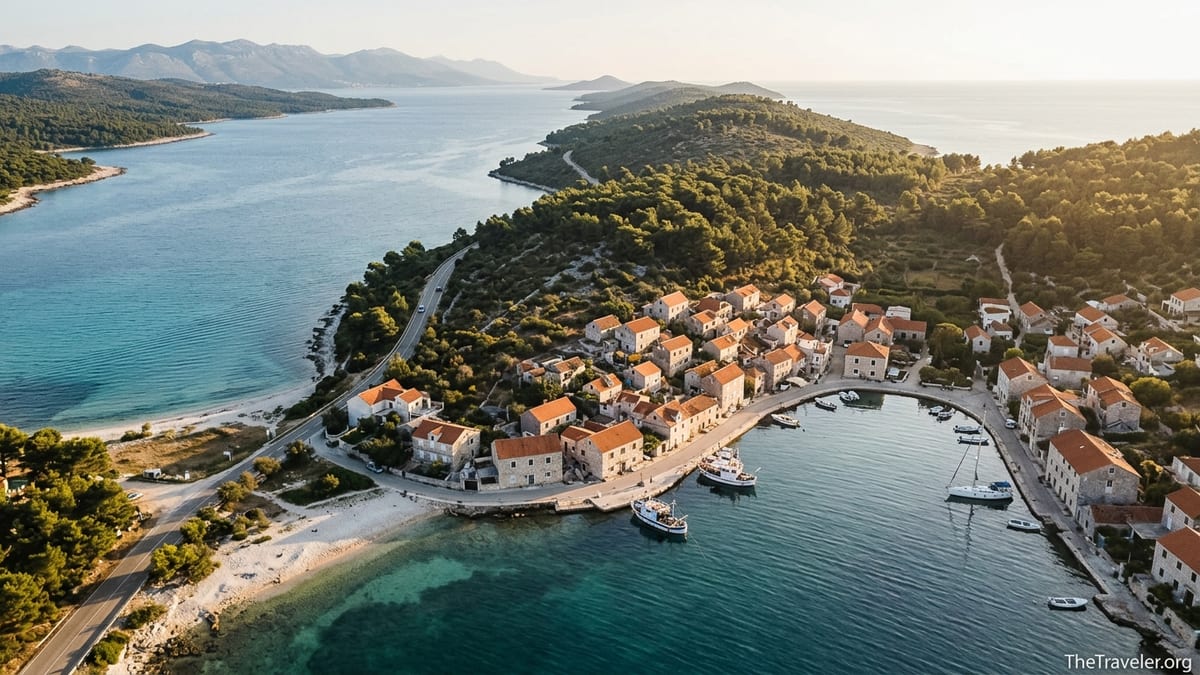
How Dugi Otok is Laid Out and How You Get Around
Dugi Otok is about 45 kilometers long, with a single main road running from the northern lighthouse at Veli Rat down to Sali in the southeast. Most settlements line the more sheltered eastern side, while the dramatic cliffs and many of the best beaches sit to the west. The car ferry from Zadar docks at Brbinj roughly in the middle of the island, and from there it is around a 30 minute drive south to Sali or about 25 minutes north to Božava and Veli Rat. Because everything is strung along one road, it is technically possible to explore the whole island from any base, but in practice travel times and bus schedules make your choice of village important.
From the mainland you have two main options. The Zadar Gaženica to Brbinj car ferry, operated by Jadrolinija, runs several times a day in high season and takes around 90 minutes. Foot passengers and cars board this boat, making it the gateway if you are bringing a rental car or campervan. There are also passenger catamarans run by different companies connecting Zadar’s old town harbor to Sali and Zaglav at the southern end of the island. These fast boats are foot passenger only and take roughly an hour. Many visitors choose to arrive without a car and base themselves in or near Sali, hiring bikes or scooters for local exploring.
Buses on Dugi Otok exist, but they are timed to connect with the main ferry arrivals and departures at Brbinj. In peak months there are typically a couple of services in each direction linking Brbinj with Sali and with Veli Rat via Božava. It is enough to get you from the ferry to your accommodation with planning, but not enough for spontaneous beach hopping across the island. Taxis are limited and must often be prearranged by your hotel or apartment host, and a one way transfer from Brbinj to Sali can easily cost as much as a modest dinner for two. Because of this, the first decision you should make is whether your stay will be car free and focused on a single area or car based, using one village as a hub while you explore by road.
Car Free vs Car Based: Choosing the Right Style of Stay
Staying on Dugi Otok without a car works best if you are happy to slow down, spend most of your time in one or two nearby bays and rely on boats for day trips. A classic car free choice would be to come by catamaran directly into Sali or Zaglav, book an apartment on the waterfront in Sali, and then spend your week walking to swims in the village coves, taking a boat excursion into Telašćica Nature Park, and perhaps joining an organized trip to Kornati National Park. Kayak rentals in Sali make it easy to paddle to quiet inlets, and several tour operators run full day small boat tours that pick you up from the main pier, so you never need to worry about parking or driving after a long day in the sun.
If your dream is to criss cross the island in search of hidden bays, sunset lookouts and remote beaches, bringing a car on the ferry to Brbinj changes the experience completely. With a vehicle you can drive up to Saharun (Sakarun) beach near Veli Rat, explore the coves around Dragove and Soline, visit the Veli Rat lighthouse at golden hour, and still make it back to dinner in Sali or Božava. Parking at Saharun is at a paid lot a short walk from the sand, and most major rental companies in Zadar allow cars on the Brbinj ferry, although you should always confirm this in your contract and allow for extra ferry cost in your budget.
For many visitors, a hybrid approach works best. One option is to rent a car in Zadar for just a few days, bring it over on the ferry to explore Dugi Otok’s full length, then return it and spend the rest of your trip car free in Sali or Zadar’s old town. Another is to travel as foot passengers but rent scooters or bicycles once you arrive. In Božava and Veli Rat, small local agencies and some guesthouses rent scooters in high season, which is often enough mobility to reach beaches like Saharun, Veli Žal or the lighthouse without the expense of a full car rental and ferry fees.
Sali: The Lively Southern Hub for Car Free Travelers
Sali is the largest settlement and de facto capital of Dugi Otok, a working fishing port wrapped around a deep, sheltered bay at the island’s southern end. It has the best infrastructure on the island: a waterfront promenade with cafes and ice cream stands, a small but useful supermarket, ATM, bakery and pharmacy, and the broadest choice of restaurants, from simple pizzerias to seafood konobas serving grilled fish and black risotto. Places like Konoba Trapula, Restaurant Bocac and Spageritimo often come up in recent traveler reviews for reliable local dishes and fresh seafood. For most visitors arriving without a car, Sali is the simplest base because you can walk to everything you need.
Accommodation in Sali is dominated by private apartments and small guesthouses, but there are also a few hotel style options. A typical one bedroom apartment with a sea view balcony a short walk from the harbor in July or August might start around a mid range nightly rate, while simpler rooms up the hill come in slightly cheaper. The village steps back steeply from the harbor, so even accommodations that appear distant on a map may only be a 10 to 15 minute downhill walk to the waterfront, with a slightly more strenuous climb home. Many apartments advertise free parking, which is a bonus if you are driving, but Sali still works very well for those on foot.
From Sali you can easily reach Telašćica Nature Park, a protected area of cliffs, coves and saltwater lake Mir at the very southern tip of the island. Organized boat trips run from the main quay, while the park entrance is also a short drive or bike ride away. Swimming options are mostly rocky coves and concrete bathing platforms cut into the shore, typical of Croatia, though there are a few pebbly spots suitable for children. Evening life concentrates on the harbor, with families strolling, yachts moored along the quay and bars filling up after sunset. Sali’s combination of services, transport connections and atmosphere make it the most practical all round base on Dugi Otok.
Božava and Verunić: North Coast Villages for Beach Lovers
Božava sits on the northeast coast of Dugi Otok, surrounded by pine forest and looking across to smaller nearby islets. It has traditionally been one of the island’s main tourist centers, with a cluster of low rise hotels and a handful of restaurants and cafes on the waterfront. From Brbinj it is about a 15 kilometer drive north, and there is a bus connection that generally meets the ferry in high season. Božava is especially attractive for visitors focused on beach time because of its relative proximity to Saharun beach and to the west facing coves near Soline.
The sandy arc of Saharun beach lies on the opposite, western side of the island, around 4 kilometers from Božava and Verunić. In summer a tourist train style road train often runs between Božava and Saharun, shuttling visitors between hotel clusters and the beach car park. From Božava you can also hire bicycles for the gentle ride to Saharun or to quieter pebbly spots like Veli Žal, a long shingle and sand bay with incredibly clear water on the west coast. Verunić itself is a tiny settlement on a protected bay close to Saharun, with a handful of apartments and holiday homes, some with small pools and direct access to the sea.
Staying in Božava or Verunić makes sense for travelers who want relatively easy daily access to Saharun and the northwestern beaches while still having a few restaurants and a small shop in walking distance. Božava’s hotels and apartments often offer half board packages, and families appreciate the compact layout where children can safely roam between the hotel grounds and the pine shaded seaside paths. Without a car you will feel a little more limited than in Sali, but with bikes or scooters you can comfortably move between Božava, Verunić, Saharun and the nearby lighthouse area. Evening options are quieter than Sali, with a low key promenade culture rather than nightlife.
Veli Rat and Luka: Quiet Bases Near Lighthouse and Nature
At the very northwest tip of Dugi Otok, Veli Rat is a small village best known for the nearby Veli Rat lighthouse, one of the most photogenic on the Croatian coast. The lighthouse sits on a low, pine lined point looking out to the open Adriatic, and the rocky coves around it are especially beautiful around sunset when the western sky glows over the sea. Accommodation in Veli Rat and its hamlets is almost entirely private apartments and holiday homes, often with terraces right above the water. For example, you will find listings with two bedroom apartments that share a small pool and look across the bay toward Saharun, a short drive or bike ride away.
Veli Rat is a good choice for couples and independent travelers who value quiet, scenery and easy access to coves over a wide choice of restaurants or services. There is usually a small grocery shop and at least one or two simple bars or konobas, but you should not expect the same density of facilities as Sali or even Božava. To stay here comfortably without a car you would need to arrange transfers and be content to spend most of your time in the immediate area. With a car or scooter, though, Veli Rat becomes a superb base for exploring northern Dugi Otok, combining Saharun, Veli Žal, the lighthouse and hidden bays reached down short gravel tracks off the main road.
On the eastern side further south, Luka sits in a deep, protected bay roughly halfway between Sali and Brbinj. Historically it has hosted one of the island’s small hotels along with a scatter of villas and apartments around the waterfront. Luka is one of the quietest bases on Dugi Otok, with calm water ideal for morning swims and kayaking and very limited through traffic. It works particularly well for those who want an almost village like retreat while still being within a 15 to 20 minute drive of Sali’s restaurants and services. Families with young children and older travelers often appreciate the gentle pace and sheltered setting.
Brbinj and Zaglav: Practical Ferry Bases and Central Locations
Brbinj is the main car ferry port on Dugi Otok, roughly mid island on the sheltered eastern coast. The ferry dock lies in a broad bay with a few stone houses, a couple of cafes and small groceries, and scattered apartments. Most visitors pass through Brbinj on their way to other villages, but it can also serve as a practical base if you want to minimize driving, especially on a short visit. Accommodation around Brbinj typically consists of self catering apartments advertised through regional booking platforms, with some located within a few minutes’ drive of the ferry ramp. Staying here means that on departure day you can have a relaxed morning and roll straight onto the ferry without worrying about traffic on the island road.
Because of its central position, Brbinj can also work for travelers who want to split their beach time between the north and south of the island. For example, with a car you might drive north to Saharun or Božava on one day and south into Telašćica or Sali on another, each within roughly 30 to 40 minutes. The trade off is that Brbinj itself is quieter and has fewer dining choices compared with Sali or Božava, so most evenings may involve a short drive if you are looking for more atmosphere or variety of restaurants. It is a base that appeals more to independent travelers who prioritize logistics and value being right at the ferry.
Further south, Zaglav is a small settlement just north of Sali, connected to Zadar by passenger catamaran routes in addition to the island road. Its little harbor sometimes acts as an alternative landing point for foot passengers arriving from Zadar city, and it also hosts a fuel station that serves local boats and yachts. A handful of apartments cluster around the bay, and the surroundings feel more rural and spread out than Sali’s compact port. For travelers arriving without a car on the Zaglav catamaran, booking an apartment here or in Sali and arranging a pickup with your host is a simple way to settle in quickly.
Beaches, Swimming Spots and How They Relate to Each Base
Dugi Otok’s beaches are varied, ranging from the sandy shallows of Saharun to polished white stone shelves beneath the cliffs of Telašćica. Where you stay affects which of these are realistic daily options. From Sali, the easiest swims are in the village coves and along the coast toward Telašćica, where you will find concrete terraces, ladders into the water and pockets of rounded stones suitable for entering the sea. Many accommodations advertise that they are “only 50 meters from the sea,” meaning a short walk down to one of these platforms rather than a classic sand beach. For sandy shallows, Sali based travelers typically plan a full day trip north to Saharun or Veli Žal by car, scooter or organized excursion.
If sandy beaches and long, shallow waters are a priority, basing yourself in Božava, Verunić or Veli Rat gives you the easiest access. Saharun is around 800 meters long, with a white sand and fine pebble bottom that creates a turquoise lagoon effect on sunny days. The bay is shallow for quite a distance, which is ideal for families with children. Above the high water line there is a mix of coarse sand and pine shade, with simple beach bars offering drinks and light meals in summer. Parking is in a designated lot behind the trees, and a short walk brings you to the water. Veli Žal, further south on the west coast, is a long beach of white pebbles with patches of sand where the sea is exceptionally clear and there is more space to spread out even on August afternoons.
Travelers who stay around Veli Rat or in Luka enjoy quick access to rocky coves and more intimate bays rather than large beaches. The coves near the Veli Rat lighthouse are typical: flat rock shelves leading into deep, transparent water, fringed with pine forest that offers natural shade. It is easy to spend a whole day there with just a towel and a picnic, swimming off the rocks and watching sailboats pass in the distance. In contrast, those based in Brbinj have a central location that makes both northern and southern beaches feasible, but will still need to drive 20 to 40 minutes in either direction. For fully car free travelers, be realistic: without wheels or organized tours, your beach options will mostly be the coves and platforms within walking distance of your chosen village.
Restaurants, Supplies and Everyday Practicalities
Sali has by far the most diverse dining scene on Dugi Otok. Along the waterfront and up a few side streets you will find seafood konobas, pizzerias, grill restaurants and cafes. Many specialize in grilled fish caught locally, octopus salad, black risotto and simple pasta dishes. A typical dinner for two with a shared starter, two mains and house wine in a mid range konoba might come to the sort of total you would expect in a smaller Croatian coastal town, more affordable than Dubrovnik but higher than inland villages. Reservation is advisable in July and August at the most popular spots, especially on weekends and holidays.
Božava and the northern villages offer a more limited but still adequate selection of restaurants and bars. Hotel complexes often have their own buffet style dining rooms, while independent places along the harbor grill fish and meat or serve pizza and pasta. In Verunić and Veli Rat you may find just one or two konobas within walking distance of your accommodation, so if food variety is important to you, plan on driving or cycling to nearby settlements for a change of scene. Luka and Brbinj are quieter still, with perhaps a cafe, a small konoba and a seasonal beach bar or two.
For groceries, Sali’s supermarkets have the widest choice, including fresh fruit and vegetables, basic meat and dairy products, and beach essentials like sunscreen and inflatables. Božava, Veli Rat and Brbinj have smaller shops where you can stock up on basics, but selection is more limited and opening hours can be shorter, particularly outside peak season. Most visitors staying in apartments do at least one big shop in Sali during their stay. Cash is useful, especially for smaller bars and rural restaurants, though card payments are increasingly accepted. An ATM in Sali and sporadically in other larger villages handles withdrawals, but it is wise to bring some kuna equivalent in euros with you from Zadar in case of technical issues.
The Takeaway
Choosing where to stay on Dugi Otok is fundamentally about matching your base to how you want to move around and what you want to see most. If you arrive without a car and imagine evenings on a lively harbor with plenty of restaurant choices and easy access to boat trips, Sali is almost always the best fit. If your priority is walking to sandy Saharun beach and spending day after day in shallow turquoise water, look at Božava, Verunić or Veli Rat, ideally with a bike or scooter to extend your range. For a quieter retreat with easy sea access and a village feel, Luka, Veli Rat and the smaller bays near them can be wonderfully peaceful.
Travelers focused on logistics, short breaks or onward journeys might prefer Brbinj for its step off the ferry convenience, or Zaglav for its catamaran connections to Zadar. And for those who want to explore the whole island, from the cliffs of Telašćica to the lighthouse at Veli Rat, bringing a car on the Brbinj ferry and choosing any central base between Sali and Božava makes beach hopping and viewpoint chasing simple. Whatever you choose, Dugi Otok’s scale, single main road and mix of wild nature and traditional villages mean that even the most relaxed stay will still give you a real sense of the island.
FAQ
Q1. Is it better to stay in Sali or Božava for a first visit to Dugi Otok?
Sali is usually best for a first visit, especially without a car, because it has the most restaurants, shops and boat tours, while Božava suits beach focused stays near Saharun.
Q2. Do I need a car on Dugi Otok or can I rely on buses?
You can manage without a car if you stay in Sali or near the catamaran ports and focus on local coves and boat trips, but a car or scooter gives you far more freedom to reach beaches like Saharun and Veli Žal.
Q3. Which village is closest to Saharun (Sakarun) beach?
Verunić and the Veli Rat area are closest to Saharun, with Božava also nearby. From these villages you can reach the beach by a short drive, bike ride or in summer by tourist train style shuttle.
Q4. Where should I stay if I want to visit Telašćica Nature Park?
Sali and Zaglav are the most convenient bases for Telašćica, with boat excursions leaving from Sali’s harbor and a short drive or bike ride bringing you to the park’s entrances and walking trails.
Q5. Is Brbinj a good place to stay or just a ferry port?
Brbinj is primarily a ferry port, but it can be a practical base for short trips or for travelers who want a central location and minimal driving on arrival and departure, provided you are happy with a quieter scene and limited dining choices.
Q6. Which area is best for families with young children?
Families often choose Božava, Verunić or Veli Rat for easy access to shallow sandy Saharun, or Luka for its sheltered bay. Sali also works well if you value services and do not mind mostly rocky swimming spots.
Q7. Can I explore Dugi Otok by bicycle from one base?
Yes, for reasonably fit cyclists the island’s single main road makes it possible, but summer heat and some hills can be challenging. Basing yourself in Božava or Sali and using bikes mainly for nearby beaches and villages is more comfortable.
Q8. Are there many restaurants in Veli Rat and Luka?
Both Veli Rat and Luka are quiet, with perhaps a couple of konobas or bars and a small shop. For more choice you will likely drive or cycle to nearby villages or to Sali on some evenings.
Q9. How far in advance should I book accommodation in July and August?
In peak season it is wise to book several months ahead, especially in Sali and near Saharun, as the island’s limited accommodation stock fills up quickly for school holiday weeks and festival periods.
Q10. Is it realistic to stay in Zadar and visit Dugi Otok as a day trip?
It is possible as a long day trip using early ferries or organized excursions, but to experience multiple beaches and the island’s quieter evening atmosphere, staying at least one or two nights on Dugi Otok is strongly recommended.