


The Temple of Olympian Zeus sits just a short walk from the Acropolis, yet many visitors are caught out by changing opening hours, last entry rules and occasional heat closures. This guide brings together the latest information on current hours, seasonal patterns and practical timing strategies, so you can plan your visit with confidence and avoid finding the gates locked when you arrive.
Get the latest updates straight to your inbox!
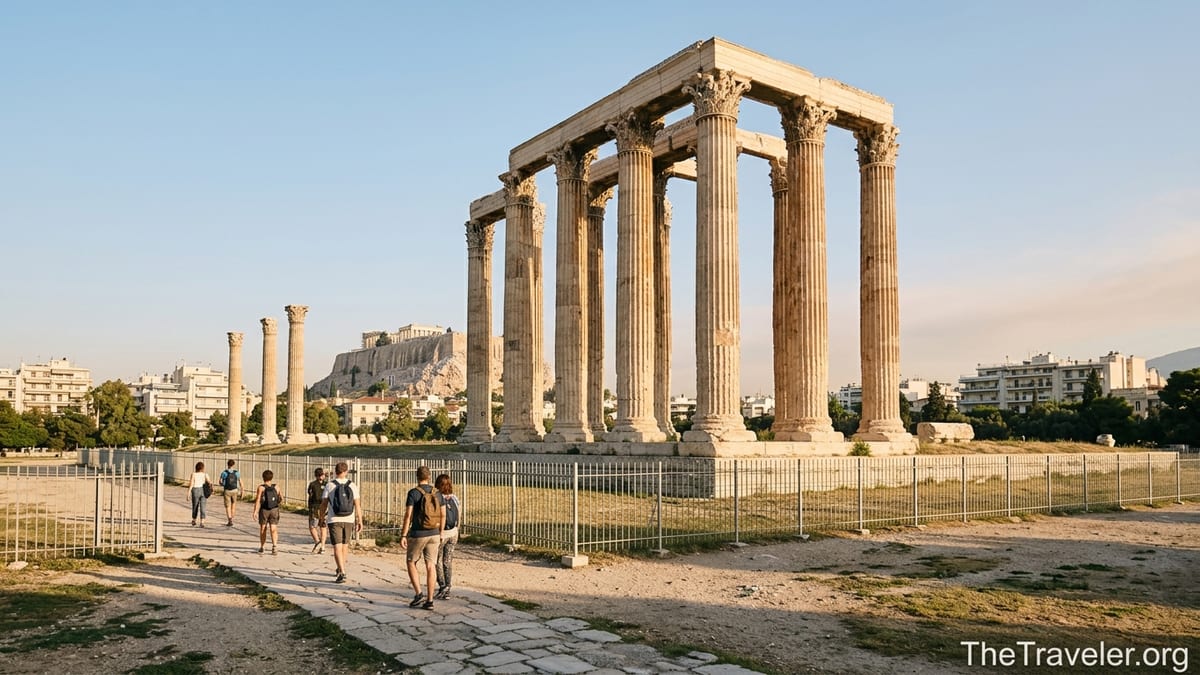
Current Opening Hours at the Temple of Olympian Zeus
The Temple of Olympian Zeus, part of the Olympieion archaeological site in central Athens, generally follows the national schedule set for Greek state-run archaeological sites. In practice, that means longer “summer” hours from roughly April to October and shorter “winter” hours from November to March, with small adjustments most years. As of mid‑2026, most reliable visitor information sources indicate that the site typically opens at 8:00 in the morning throughout the year and closes at around 19:00 in the summer season and 15:00 in the winter season, with slight variations possible year to year.
A common pattern you will see for the Temple of Olympian Zeus is: summer hours approximately 8:00 to 19:00 from April to the end of October, and winter hours approximately 8:00 to 15:00 between November and the end of March. These times are broadly consistent with how the Greek Ministry of Culture sets hours for comparable outdoor sites in Athens, such as the Ancient Agora or Kerameikos. However, closely checking the exact times for the specific dates of your trip is important, because sunset times, staffing levels and conservation work can all lead to modest changes.
It is worth noting that the closing time is not just the moment the ticket booth shuts. For the Temple of Olympian Zeus, the official closing hour is when the site is expected to be empty and the main gate locked. That means last entry is earlier and security staff often begin ushering people toward the exit well before the stated closing time. Travelers who show up only a few minutes before the posted hour often discover they cannot enter at all, so timing your arrival with a buffer is essential.
Because information scattered around the internet can lag behind current practice, many frequent visitors to Athens recommend ignoring generic hours on mapping apps and instead relying on the official Greek Ministry of Culture announcements or up‑to‑date specialist sites that track changes each season. In recent years there have been gradual adjustments to opening policies, such as the introduction of stricter time‑slot management for e‑tickets on some major sites, so what was true a few seasons ago might not exactly match the situation when you travel.
Seasonal Changes: Summer vs Winter Timetables
The most important factor in planning a visit to the Temple of Olympian Zeus is understanding the national split between summer and winter hours for archaeological sites. In Greece, the summer tourism season is officially defined for state sites as running approximately from 1 April to 31 October, while the winter season covers 1 November to 31 March. Within these windows, the Ministry of Culture publishes detailed timetables that assign specific closing times to each site based largely on local sunset times and security requirements.
For the Temple of Olympian Zeus, this typically means that from early April to late October you can expect a long visiting day, commonly from 8:00 or 8:30 in the morning until around 19:00 in the evening, with some slight shortening around the edges of the season if sunset comes earlier. In high summer, roughly late May through August, the late closing allows travelers to visit after the strongest midday heat has passed, which is one of the main advantages of the extended schedule.
In winter, the timetable compresses significantly. Between November and March the Temple of Olympian Zeus generally shifts to opening around 8:00 and closing around 15:00, sometimes 15:30, aligning with the shorter daylight hours in Athens. For example, a visitor arriving in mid‑January should not expect to wander the columns at sunset; by the time the sun is dropping, the site is usually closed and locked. This catches many travelers by surprise, particularly those who are used to city museums staying open into the evening all year.
When you look at real‑world examples from recent seasons, the pattern is clear: someone visiting Athens in February has only roughly seven hours each day to access the Temple of Olympian Zeus, while a July visitor has around eleven. If you are visiting in the shoulder months such as March or November, pay special attention because those are the times when schedules may change mid‑month, for instance moving from winter to summer hours on a fixed date, usually at the start of April, or shortening back in early November.
Last Entry Rules and Why They Matter
Perhaps the single most confusing aspect of visiting the Temple of Olympian Zeus is the difference between the posted closing time and the last entry time. Many visitors assume they can arrive at the ticket booth at, say, 18:55 when the site is listed as closing at 19:00. In reality, Greek archaeological sites usually stop admitting new visitors 15 to 30 minutes before closing, and the Temple of Olympian Zeus follows that pattern. Some official descriptions state a last entry 20 minutes before closing, while popular ticketing sites often round this to “30 minutes before.”
In practical terms, if summer hours are 8:00 to 19:00, you should consider 18:30 the absolute latest realistic arrival time if you want to do more than glance around. Many travelers who attempt to slip in at 18:45 find that the ticket booth is already refusing new entries, even though you can still see people inside the fenced area. Security needs enough time to clear the site and lock the gate by the official closing hour, and they will not adjust this because a late‑running visitor showed up at the last minute.
The same principle applies in winter, but the window is even tighter. With a 15:00 winter closing, you can expect last entry to fall around 14:30 or slightly earlier, and staff may begin discouraging new arrivals even before that on very quiet days. As an example, a traveler coming from the Acropolis who lingers over lunch in Plaka may find that by the time they stroll down towards the Temple of Olympian Zeus at 14:40 in January, new admissions have already stopped.
To avoid disappointment, it is wise to treat the published closing time as the moment by which you should be back outside the gate, rather than the time you are allowed to walk in. Planning to be at the entrance at least 60 minutes before closing gives you a comfortable cushion, especially if you want time for photographs, a slow circuit of the columns and a quick look at the surviving ancient walls within the site.
Holiday Closures and Special Free Days
Like other state‑run archaeological sites in Greece, the Temple of Olympian Zeus fully closes on a limited number of national and religious holidays each year. The core full‑closure days typically include 1 January, 25 March (Greek Independence Day), 1 May (Labour Day), Orthodox Easter Sunday and 25 and 26 December. On these dates, travelers walking past the site will see the gates shut and no staff at the ticket booth, even if the weather is perfect and the rest of the city appears busy.
There are also days when the Temple of Olympian Zeus may operate on a reduced schedule, often closing earlier than usual. Good Friday and Orthodox Holy Saturday are common examples, when archaeological sites may only open for half a day. On 28 October, which is a national holiday known as Ohi Day, the site typically remains open but can be busier than usual, especially when combined with free‑entry initiatives. Checking the exact pattern for the specific year of your visit matters, because the dates of Orthodox Easter shift annually.
Balanced against these closures are several free‑admission days each year when the Temple of Olympian Zeus, along with most other state archaeological sites, waives ticket fees for all visitors. These frequently include dates such as 6 March (in honor of Melina Mercouri), 18 April (International Monuments Day), 18 May (International Museums Day), the last weekend of September for European Heritage Days, 28 October and the first Sunday of each month between 1 November and 31 March. On these free days, the site keeps its usual opening and closing times, but you may encounter larger local crowds, including Greek families and school groups.
In practical terms, if your budget is tight and your schedule flexible, aligning your visit to the Temple of Olympian Zeus with a winter first Sunday or a late‑September European Heritage weekend can save you the standard entrance fee. On the other hand, if you prefer a quieter experience, you may be better off choosing a regular weekday morning instead, accepting the modest ticket cost in exchange for more space around the columns.
Summer Heat, Heatwave Closures and Midday Strategies
Athens summers have become noticeably hotter and more unpredictable in recent years, and that directly affects opening hours at outdoor sites like the Temple of Olympian Zeus. During extreme heatwaves, with temperatures forecast above roughly 40 degrees Celsius, the Greek Ministry of Culture has repeatedly ordered temporary closures of major archaeological sites in the Athens area during the hottest part of the day. Media outlets such as the Athens‑Macedonian News Agency and Kathimerini have reported several instances in recent summers where the Acropolis and other central sites were closed from noon to 17:00 on specific days because of the risk to visitors and staff.
Although the Temple of Olympian Zeus draws fewer visitors than the Acropolis, it is managed under the same city Ephorate of Antiquities, so when a general midday closure is announced for Athens archaeological sites, it normally includes the Olympieion as well. On those days, you might see a revised timetable such as opening from 8:00 to 12:00, closing during the intense afternoon heat, then reopening from 17:00 to 20:00, still within the broader summer hours. Tickets already purchased for closed slots are usually honored in the later window.
Even when there is no official heatwave closure, the site offers very limited shade. The surviving columns rise from a broad, largely open field, and only a few scattered trees provide relief from the sun. In July and August it is common to experience ground temperatures several degrees higher than the air temperature, and the pale stone underfoot reflects light back at you. For travelers unaccustomed to Mediterranean summers, this can be surprisingly draining even in the morning.
The safest strategy is to visit either immediately after opening or during the last 90 minutes before closing, when the sun is lower and the light more flattering for photography. For instance, a traveler staying near Syntagma Square might walk to the Temple at 8:15, explore for an hour while temperatures are still relatively manageable, then head into the National Garden or a nearby cafe as the heat builds. Alternatively, visiting after 17:30 in high summer offers gentler light on the columns and more comfortable conditions, as long as you respect the last entry cutoff.
Why You Should Always Verify Hours Before You Go
One consistent theme in recent traveler reports is that unofficial information about the Temple of Olympian Zeus tends to lag behind real‑world changes. Mapping apps, generic travel blogs and even some ticket resellers often present a simplified “8:00 to 20:00 daily” schedule that does not reflect seasonal cuts, early winter closing or temporary heatwave shutdowns. In a city like Athens, where many sites are open‑air and security rules require them to clear before dark, this can translate into genuine disappointment for visitors who plan too loosely.
The most reliable way to avoid this problem is to check the latest hours as close as possible to your visit. In practice, that usually means looking at the current season’s timetable published by the Greek Ministry of Culture or consulting up‑to‑date specialist guides that track specific sites like the Olympieion. If you buy your ticket on a reputable e‑ticket platform used by the state, you will normally select a defined time slot, which in itself reflects the current operating hours.
Consider a traveler arriving in Athens on a winter Friday evening who hopes to stroll around the Temple of Olympian Zeus at sunset. Relying on outdated information, they might think the site is open until 19:00 year‑round and plan a loose schedule with lunch in Monastiraki, a late coffee and then a wander over around 17:00. In reality, if that Friday falls in January the site probably closed at 15:00 and has been locked for two hours by the time they arrive. Ten seconds of checking the official winter timetable online in the morning would completely change the shape of their day.
Verifying hours is equally important when your visit coincides with national holidays, strikes or weather alerts. Greece occasionally experiences public‑sector work stoppages that affect museum and site staff, while strong winds, heavy rain or heatwaves can trigger last‑minute access restrictions. For a site like the Temple of Olympian Zeus, which is quick to visit but easy to fit around other plans, building flexibility into your schedule and rechecking hours the evening before your planned visit is a low‑effort way to protect your experience.
Practical Timing Tips for Different Types of Travelers
Different travel styles call for different timing strategies at the Temple of Olympian Zeus. If you are an early‑riser photographer, the first hour after opening is typically the best choice. The morning light slants across the columns, the crowds are minimal and you can capture clear shots of the ruined colonnade with the Acropolis hill in the background before the atmosphere heats up. Many travelers combine this with a breakfast stop in nearby Koukaki or Makrygianni once the sun climbs higher.
For visitors with limited time in Athens, such as cruise passengers or those on a short business stopover, the Temple of Olympian Zeus often works well as a quick “bookend” around a visit to the Acropolis. For example, someone with only one free afternoon might enter the Temple at 16:30 in summer, spend 45 minutes walking the perimeter and reading the on‑site signage, then continue on foot through the Arch of Hadrian and into Plaka for dinner. In winter, a similar plan demands an earlier start, perhaps arriving at the Temple immediately after lunch to ensure you finish before the 15:00 closing.
Families with young children or older travelers sensitive to heat should think in terms of shade and rest stops. There is little to no shelter inside the archaeological zone, so scheduling a brief mid‑morning visit followed by time in the leafy National Garden or a cafe along Amalias Avenue can make the experience more comfortable. Carrying water, a hat and sunscreen is essential, particularly in July and August, and closing times mean you should not expect to simply drop in during the cooler late night as you might at an urban park.
Finally, if you enjoy exploring at a slow pace and reading every sign, remember that the Temple of Olympian Zeus, while visually impressive, is a relatively compact site compared with the Acropolis or the Ancient Agora. Most visitors spend between 30 and 60 minutes inside the fence. Factoring in the last entry time, even a cautious planner rarely needs more than a two‑hour block in their day to comfortably visit, take photographs and walk on to the next stop.
The Takeaway
Visiting the Temple of Olympian Zeus is straightforward once you understand how seasonal schedules, last entry rules and weather‑related changes work in practice. The broad pattern is stable: long opening hours from spring through autumn, shorter days in winter, admission stopping before the posted closing time and occasional midday shutdowns during severe summer heat. Where many travelers run into problems is by assuming that a single generic timetable applies year‑round and ignoring the impact of holidays or exceptional weather.
To get the most out of your visit, think of the official closing hour as the time by which you must be out, plan to arrive at least an hour before that, and double‑check the day’s schedule the evening before, especially in mid‑summer or mid‑winter. Whether you weave the Temple of Olympian Zeus into a long day of exploring ancient Athens or treat it as a brief, atmospheric stop on a walk between Syntagma and the Acropolis, a little attention to timing will help ensure that you spend your time admiring Hadrian’s colossal columns rather than staring at a locked gate.
FAQ
Q1. What are the typical opening hours for the Temple of Olympian Zeus?
In recent seasons the Temple of Olympian Zeus has usually opened around 8:00 in the morning, with closing times around 19:00 in summer and 15:00 in winter, although exact hours can vary slightly year by year.
Q2. How early is the last entry before closing?
Last entry is commonly 20 to 30 minutes before the official closing time, and staff may start discouraging new arrivals a little earlier, so you should aim to be at the gate at least an hour before closing.
Q3. Are the opening hours the same in summer and winter?
No, summer hours from roughly April to October are significantly longer, often until about 19:00, while winter hours from November to March usually shorten to a mid‑afternoon closing around 15:00.
Q4. Is the Temple of Olympian Zeus open every day?
On most days of the year the site is open daily, but it normally closes completely on major public holidays such as 1 January, 25 March, 1 May, Orthodox Easter Sunday and 25 and 26 December.
Q5. Does extreme heat affect opening hours?
Yes, during severe summer heatwaves the Greek authorities sometimes close Athens archaeological sites, including the Temple of Olympian Zeus, during the hottest hours of the day, typically from around noon to late afternoon.
Q6. Are there days with free entry to the Temple of Olympian Zeus?
Yes, like other state‑run sites, the Temple of Olympian Zeus usually offers free entry on specific dates such as 6 March, 18 April, 18 May, the last weekend of September, 28 October and the first Sunday of the month from November to March.
Q7. How long do I need for a visit?
Most visitors spend between 30 and 60 minutes inside the site, so allowing a one‑hour window works well, especially if you arrive comfortably before last entry to avoid being rushed.
Q8. Can I visit the Temple of Olympian Zeus around sunset?
In summer you can sometimes visit in the early evening, but you must enter well before the last entry time, and in winter the site usually closes long before sunset, so an evening visit is not realistic.
Q9. Should I trust the hours shown on mapping apps?
You should treat mapping‑app hours as a rough guide only, because they often miss seasonal changes, heatwave closures and special holiday schedules; always verify against current official or specialist sources.
Q10. How close to my visit should I check the latest hours?
It is sensible to confirm the hours a few days before you go and then again the evening before your planned visit, especially in peak summer, in winter or if your date falls on or near a public holiday.