


More news on this day
Thailand’s deepening travel partnerships with China and other key markets are reshaping regional tourism and property investment, setting the stage for Bangkok-listed developer AssetWise to accelerate its expansion across the country’s most sought-after resort hubs.
Get the latest news straight to your inbox!
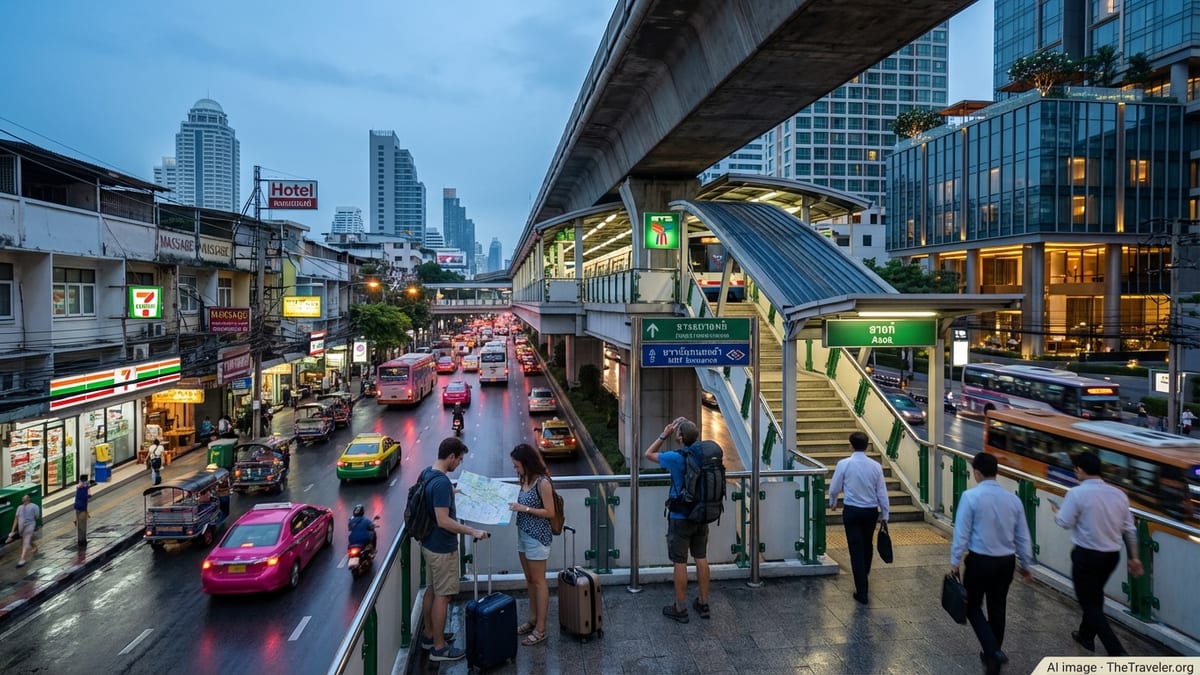
Visa-Free Travel Between Thailand and China Resets Regional Tourism
Thailand and China introduced a reciprocal visa exemption in March 2024, allowing visitors from both countries to enter for short stays without prior visas. Publicly available information shows that the policy aims to restore Chinese arrival numbers closer to pre-pandemic peaks and strengthen Thailand’s role as a regional tourism gateway.
China remains one of Thailand’s most important tourism markets, both for short-stay holidaymakers and for longer-term lifestyle visitors who frequently combine tourism with education, medical travel or business activities. The visa-free arrangement is being introduced alongside broader Thai efforts to ease entry rules for travelers from several high-potential markets, including India and Russia, as part of multi-year tourism stimulus campaigns.
According to official economic assessments and research coverage, these visa measures are intended not only to lift hotel occupancy and travel-related spending, but also to stimulate real estate linked to tourism, particularly in coastal and cultural destinations where international buyers have historically been active. Property analysts note that Chinese nationals continue to represent one of the largest foreign purchaser groups for condominiums in Thai resort cities.
China, for its part, has been widening its own unilateral visa waivers for selected countries and has included Thailand in a series of pilot schemes designed to encourage two-way travel. The mutual easing of entry requirements has therefore become a central plank of expanding China–Thailand people-to-people ties, reinforcing long-standing trade and investment links.
Tourism Revival Lifts Resort Property Demand in Phuket and Pattaya
Tourism-dependent destinations such as Phuket and Pattaya stand at the forefront of this new cross-border travel environment. Market studies published over the past year indicate a clear rebound in international arrivals to Phuket, with flight volumes and hotel performance tracking upward as leisure and long-stay visitors return.
Research on the island’s villa and condominium market points to a rapid recovery in sales volumes and pricing, driven in large part by renewed interest from overseas buyers, including those from China, Russia and Europe. Higher-yield resort assets and branded residences are attracting investors who see opportunities in short-term rentals and long-term capital appreciation, especially in neighborhoods close to beaches and lifestyle districts.
Pattaya and nearby areas in Chonburi province show a similar pattern. Surveys by Thai real estate information centers suggest that the province has emerged as a leading destination for foreign property transfers, supported by the city’s repositioning as a family-friendly resort and its proximity to the Eastern Economic Corridor. After a period of oversupply in the condominium segment, renewed tourism and infrastructure upgrades have begun to absorb inventory and underpin new launches.
In northern Thailand, Chiang Mai is also drawing increasing attention from international buyers, many of whom combine tourism with longer-term stays and education or retirement planning. Discussions in academic and policy circles highlight how sustained foreign demand is transforming parts of the city into mixed tourism and residential zones, with implications for local housing markets and planning.
AssetWise Steps Up Strategy in Prime Tourism Hubs
Against this backdrop, AssetWise Public Company Limited has been sharpening its focus on tourism-led property hubs. Company disclosures and research coverage describe a multi-year strategy known as “The New Frontiers,” under which the developer has shifted from a primarily Bangkok-centric portfolio to include major resort and lifestyle destinations.
A key pillar of this strategy is Phuket, where AssetWise, through its affiliated brand The Title, has rolled out a series of leisure condominium projects aimed at both domestic and foreign buyers. Recent launches near Rawai Beach and other southern coastal areas have reported strong take-up, with units marketed as fully equipped holiday homes backed by professional management and rental services.
The company is also advancing plans in Pattaya and the Eastern Economic Corridor, notably through the Aquarous Jomtien Pattaya project close to Jomtien Beach. Publicly released information describes the development as a high-rise, fully furnished condominium concept designed for resort living and investment, with a high proportion of sea-view units and amenities targeted at both Thai and international clientele.
Analysts following AssetWise note that tourism-oriented projects have become an increasingly important contributor to the firm’s presales and revenue growth. The combination of improving visitor numbers, limited prime beachfront land and favourable visa policies is seen as supportive for pricing and absorption in well-located developments.
Targeting Foreign Buyers With Long-Stay and Lifestyle Offerings
AssetWise is not only building in tourism hotspots but also refining its offerings to match the expectations of foreign purchasers, including those from China. Recent company announcements outline collaborations under Thailand’s long-stay and residency support schemes, making it easier for overseas buyers who meet certain investment thresholds to secure extended-stay privileges.
Through its partnership with The Title and related long-stay programs, the developer promotes packages that combine property ownership with assistance on residency documentation, rental management and after-sales services. The approach is intended to appeal to investors who may not be permanent residents of Thailand but seek a managed asset that can generate income while offering a ready-to-use holiday base.
Project marketing materials emphasize features valued by international buyers, such as professional building management, hotel-style amenities, co-working spaces and proximity to established tourist infrastructure. In Phuket, for example, AssetWise has focused on locations with convenient access to beaches, marinas and dining areas, while in Pattaya the emphasis is on connectivity to Bangkok and the wider Eastern Economic Corridor.
Industry observers suggest that Chinese buyers, in particular, are drawn to turnkey properties in destinations they already know well as tourists. The combination of visa-free travel, direct flight connections and structured management programs reduces perceived barriers to ownership, positioning developers such as AssetWise to benefit from any sustained rebound in outbound Chinese travel.
Regional Competition and Risks for Thailand’s Tourism Property Play
While Thailand’s expanded visa ties with China and other countries are reshaping the tourism landscape in favor of destinations like Phuket, Pattaya and Chiang Mai, the country faces growing competition across the region. Several neighboring nations are similarly easing entry rules and promoting seaside and cultural hubs to the same pool of travelers and investors.
Analysts caution that visa facilitation alone may not be sufficient to sustain the recent momentum in tourism-linked real estate. Issues such as infrastructure capacity, environmental management in coastal zones, and regulatory clarity on foreign property ownership remain central to investor confidence. Local communities in some cities have also raised concerns about affordability and the impact of speculative purchases on housing supply.
In Chiang Mai and other emerging lifestyle destinations, debates continue over the balance between attracting international capital and safeguarding long-term residents’ access to housing. Monitoring of ownership structures, enforcement of land and condominium regulations, and transparent data on foreign participation are widely viewed as necessary to ensure a healthy market.
For developers like AssetWise, this environment presents both opportunity and risk. If tourism partnerships with China and other markets translate into consistent, high-quality visitor flows, demand for well-managed resort properties is likely to remain strong. At the same time, the company’s concentration in a limited number of high-profile hubs means its performance will remain tightly linked to the broader trajectory of Thailand’s tourism sector and the evolution of regional travel policies.