


More news on this day
A severe midweek disruption across the United States air network has left travelers facing what many described as a rolling aviation crisis, with 4,367 flight delays and 210 cancellations centered on the major hubs of Atlanta, New York John F. Kennedy, and Boston Logan, according to live tracking data and published operational reports.
Get the latest news straight to your inbox!
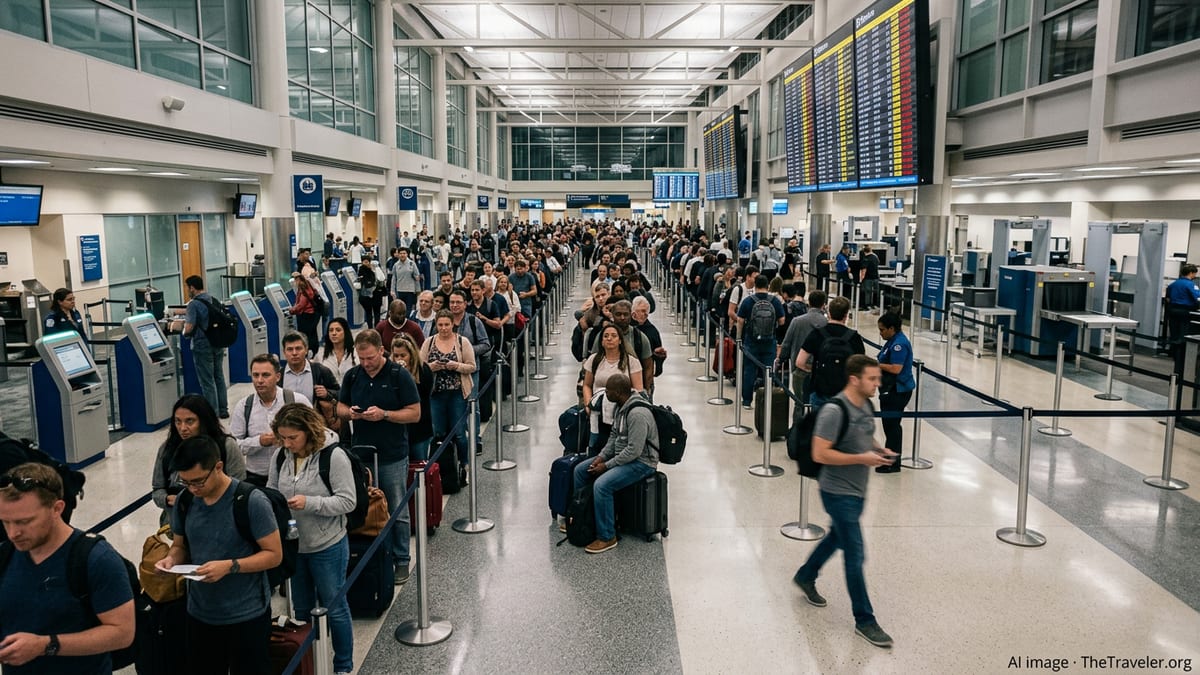
Storm Systems and Strained Infrastructure Converge
The latest wave of disruptions unfolded as intense summer storm cells swept across the Eastern Seaboard, intersecting with already stretched airport and airline operations. Publicly available radar summaries and traffic advisories show storms repeatedly building over Georgia and the Northeast corridor, forcing ground stops, extended arrival metering, and rerouted traffic into and out of the three hubs.
Operational data compiled from flight-tracking dashboards indicates that the brunt of the impact fell on departures and arrivals scheduled during the afternoon and evening peaks. As convective weather pushed into key arrival paths, aircraft were held on the ground, departure slots were throttled back, and crews bumped up against their duty-time limits, leading to a cascade of rolling delays that increasingly converted into outright cancellations by nightfall.
Industry analysts note that the pattern fits a broader 2026 trend in which weather acts as the trigger, but underlying infrastructure limitations magnify the fallout. High utilization of fleets, tight crew rotations, and crowded airspace in the Northeast make it difficult to absorb even short-lived weather disruptions without creating multi-hour knock-on delays well beyond the immediate storm zone.
Federal statistics released in recent Air Travel Consumer Reports point to growing pressure on the national aviation system from both traffic volume and weather events, with system-related causes and extreme weather combining to account for a significant share of delays in recent months. Those structural vulnerabilities were on full display as the latest disturbances rippled through Atlanta, JFK, and Boston.
Atlanta: World’s Busiest Hub Hit by Rolling Delays
Atlanta Hartsfield-Jackson, consistently ranked among the world’s busiest airports by passenger volume, once again emerged as a focal point for disruption. Tracking services logged hundreds of delayed departures and arrivals in a single day, as thunderstorms flared across northern Georgia and into key en route sectors that feed the hub.
Recent operational summaries and dispatch bulletins have highlighted how even localized issues can deepen the impact. Fueling bottlenecks reported earlier this summer in parts of Atlanta’s domestic concourses, combined with high utilization of long-haul aircraft, mean that once weather slows operations, turn times lengthen and aircraft fall out of their planned rotations. The result is a queue of departures waiting on both weather improvement and ground resources.
Passengers connecting through Atlanta reported extended tarmac waits and missed onward flights as banked departure windows were pushed back or broken apart. With many transatlantic flights operating in tightly scheduled evening waves, delays at the hub quickly translated into schedule changes on long-haul routes to Europe and beyond, extending the reach of the disruption far outside the United States.
Publicly available performance data shows that major carriers using Atlanta have maintained relatively strong on-time percentages over the longer term, but the latest disruption underscores the particular vulnerability of mega-hubs when severe weather and peak travel demand coincide.
JFK: Congested Airspace Amplifies the Shock
At New York’s John F. Kennedy International Airport, the latest disruption added to what has already been a challenging summer. Live tracking logs for the affected day show a surge in both departure and arrival delays, many stretching beyond two hours, before a rising number of flights were ultimately cancelled as crew duty time and overnight curfews approached.
JFK sits at the heart of one of the most complex and congested airspace regions in the world, sharing approaches and departure corridors with LaGuardia and Newark. When storms settle over the New York metropolitan area, air traffic managers typically reduce arrival rates and reroute aircraft, which can lead to holding patterns, diversions to nearby airports, and extended ground delays for departures waiting for viable slots.
Public discussion on traveler forums from the New York area describes aircraft returning to gates after extended taxi times, late-hour cancellations when flights could no longer depart before curfew or crew timeout, and crowded terminals as passengers sought rebooking options. These individual reports align with the aggregate data indicating that JFK accounted for a significant share of both delays and cancellations during the event.
Regulatory filings and performance summaries have previously highlighted the concentration of long-haul international operations at JFK, which complicates recovery once a large disruption takes hold. When widebody aircraft and long-haul crews are out of position overnight, the impact can persist into the following day’s schedule, even if weather has improved.
Boston Logan: A Difficult Summer Gets Worse
Boston Logan International Airport, which has already seen a challenging summer of irregular operations, also experienced a sharp spike in delays during the latest wave of disruptions. Live-flight data reflected several hundred delayed movements at Logan, alongside dozens of cancellations, as storms moved through New England and upstream delays from the New York area spilled into Boston’s arrival and departure flows.
Accounts shared in local media and regional travel forums in recent days describe Boston-based crews and passengers grappling with repeated schedule changes, rolling delays, and short-notice cancellations. Some travelers have reported multiple rebookings within a single week, suggesting that day-to-day operations have remained fragile following earlier episodes of weather and staffing strain.
Boston’s layout, with closely spaced runways and limited room to expand, has long been recognized as a constraint during peak demand and adverse weather. When ceilings drop or crosswinds pick up, the airport may be forced to operate with fewer runway configurations than in clear conditions, which limits arrival and departure rates. When combined with heavy summer schedules, this can create backlogs that take many hours to unwind.
Operational data from recent months indicates that disruptions at Logan do not remain local. Because Boston serves as a focus city and crew base for several carriers, irregular operations there can radiate outward across domestic and transatlantic networks, compounding the wider national impact when the airport experiences a bad day.
What the Numbers Reveal About a Broader 2026 Pattern
The figure of 4,367 delays and 210 cancellations tied to the latest disruption is striking, but aviation statistics for 2026 show that days with several thousand delayed flights nationwide are no longer exceptional during peak travel periods. Federal performance reports summarizing the first half of the year point to a system where relatively small changes in capacity or weather can produce outsized operational consequences.
Published data attributes a large share of delays to national aviation system factors, including air traffic control programs, runway and airspace constraints, and congestion in key corridors, with extreme weather adding an additional layer of stress. Airlines also report significant delay minutes linked to late-arriving aircraft, reflecting how a single disruption in one part of the network can propagate widely.
Travel demand across the United States has remained strong through 2026, supported by leisure and business traffic that has largely surpassed pre-pandemic levels on many routes. That demand translates into fuller aircraft, tighter schedules, and less slack in the system to absorb unexpected shocks. When an event like a major storm complex hits critical hubs such as Atlanta, JFK, and Boston, the combined effect is a rapid escalation from manageable delays into a network-level challenge.
Consumer advocates and industry analysts have renewed calls for investment in modernization of air traffic control technology, additional runway and taxiway capacity at pressure-point airports, and more resilient crew and fleet planning. While such changes take years to implement, the latest episode of 4,367 delays and 210 cancellations suggests that the pressures shaping US aviation in 2026 are unlikely to ease without structural adjustments.