


More news on this day
Thanksgiving air travel across the United States remained fragile on Saturday, November 28, as the fallout from an East Coast nor’easter, earlier technology outages and a Southern California earthquake combined with record holiday demand, prompting federal officials to warn that flight delays and cancellations could continue through Tuesday.
Get the latest news straight to your inbox!
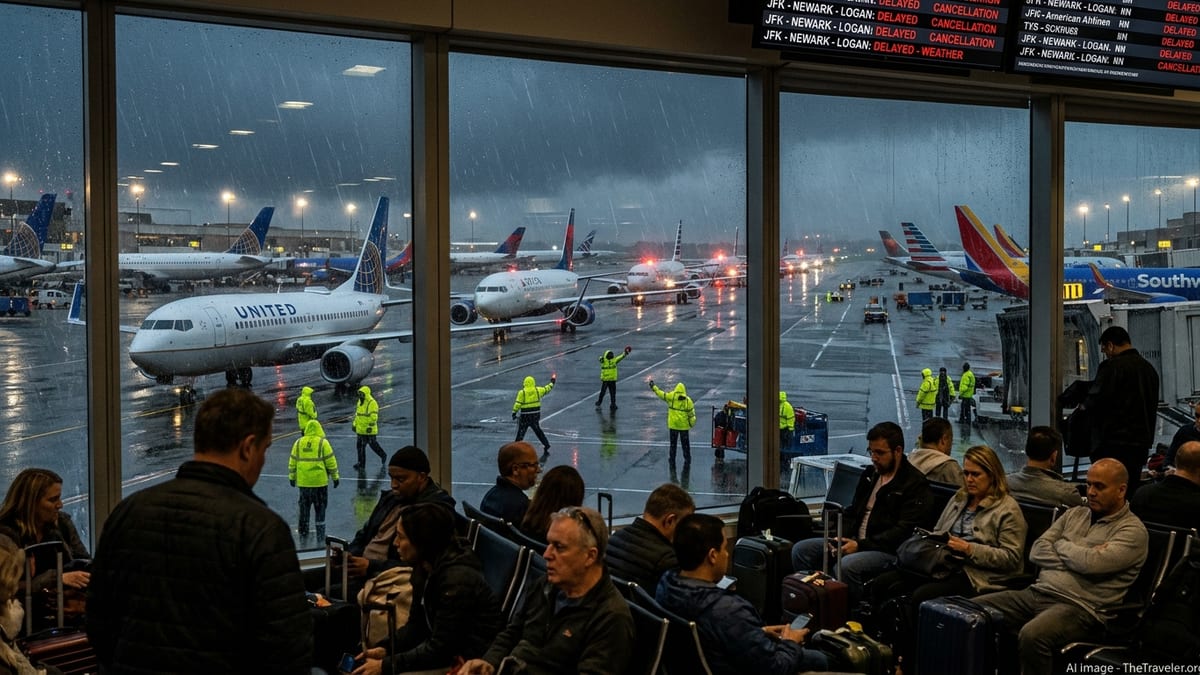
Weather and record traffic drive this year’s holiday disruption
U.S. Transportation Secretary Sean Duffy said Saturday that severe weather has been the dominant factor behind Thanksgiving week flight delays, followed closely by the sheer volume of traffic moving through the national airspace. According to figures he released covering Tuesday through Friday, weather accounted for about 45% of delays, while heavy flight volume contributed roughly 35%, with runway construction, air traffic control staffing and equipment problems making up the remainder. The period included Tuesday, November 24, which the Department of Transportation identified as the busiest U.S. flying day in 16 years, with around 52,000 departures.
Duffy has repeatedly described the U.S. airspace as both highly complex and among the safest in the world, highlighting the role of controllers, pilots, flight attendants, gate agents, baggage handlers and security staff working through the holiday. Federal data released this week show airlines operated tens of thousands of flights each day from Tuesday through Friday despite the storms, and the secretary said roughly 167,000 flights in that period reached their destination, even as many arrived late. He warned that more than 50,000 flights per day are scheduled from Sunday through Tuesday as travelers return home, creating little slack in the system if additional weather or operational problems arise.
Thanksgiving 2026 has unfolded against the backdrop of several recent aviation technology disruptions. Earlier in November, a Federal Aviation Administration system upgrade triggered a rare nationwide ground stop, and separate outages at United Airlines and Delta Air Lines in the days before the holiday led to hundreds of delayed flights. While those issues had largely been resolved by the middle of Thanksgiving week, they left schedules tight across many hubs, making it more difficult for airlines to recover quickly when the nor’easter and other storms moved in.
East Coast nor’easter hits New York region and other key hubs
The most disruptive weather system during the core holiday period has been a powerful coastal storm that evolved into a nor’easter, tracking from the Southeast into the Mid-Atlantic and Northeast between Wednesday, November 25 and Friday, November 27. Forecasts issued by federal emergency and weather agencies earlier in the week warned of heavy rain, coastal flooding, strong winds and potential power outages along the corridor from Florida to New England, with high confidence that conditions would deteriorate on Thanksgiving Day in the major metropolitan areas of Washington, Philadelphia, New York and Boston.
By Thursday and Friday, those warnings translated into significant operational impacts at major East Coast airports. New York’s three main airports saw some of the heaviest disruption: data cited by Duffy and flight-tracking services showed more than 150 delays and several cancellations across Newark Liberty International, John F. Kennedy International and LaGuardia as the storm brought low visibility, wind gusts and periods of heavy rain. The same system affected airports throughout the region, including Philadelphia, Washington-area fields and Boston Logan, where airlines implemented ground delay programs and extended spacing between aircraft to maintain safety.
The nor’easter’s effects extended beyond aviation. High winds in the New York area contributed to the unprecedented postponement of the 100th Macy’s Thanksgiving Day Parade from Thursday to Saturday after gusts reached well over 50 miles per hour in Central Park and at LaGuardia. That decision underscored the broader impact of the storm on holiday plans, as both spectators and air travelers adjusted or scrapped itineraries. For passengers, the combination of constrained airport operations, full flights and limited spare aircraft meant that even relatively short weather suspensions often cascaded into missed connections and overnight delays, particularly for those traveling through already busy connecting hubs on the East Coast.
Magnitude 4.7 earthquake rattles LAX during peak travel
On the opposite coast, Southern California’s holiday operations were complicated on Saturday by an earthquake near Los Angeles International Airport. According to the U.S. Geological Survey, a magnitude 4.7 quake struck late Saturday morning, November 28, just offshore from Manhattan Beach, only a few miles from LAX. Local authorities reported shaking across the west side of Los Angeles and in surrounding communities, prompting an immediate safety assessment of critical infrastructure.
Los Angeles Fire Department officials placed the city into their standard earthquake response mode, sending crews to survey key facilities, including transportation assets. Early statements from emergency services indicated no major structural damage or injuries, but local media and airport officials reported that some windows at or near the LAX terminal complex were broken by the shaking. Maintenance and operations teams moved quickly to cordon off affected areas, clear glass and check concourses, jet bridges and runways for debris before allowing passengers back into impacted zones.
As of Saturday afternoon, there were no confirmed reports of large-scale flight cancellations directly attributable to the earthquake, and the FAA was still assessing whether any short-term ground stops or airspace restrictions were needed around LAX to accommodate inspections. Airlines serving Los Angeles continued to advise passengers to allow extra time at the airport and to monitor their flight status closely throughout the day in case gate changes, minor delays or temporary terminal closures became necessary. With LAX projecting nearly 2.6 million passengers across the 12-day Thanksgiving travel period and averaging more than 200,000 travelers daily, even brief disruptions to normal operations can create longer lines at security, congested roadways and delays in baggage delivery.
How airlines and regulators are managing the holiday rush
Airlines entered the holiday period with ambitious schedules designed to meet near-record demand. Forecasts from the U.S. Department of Transportation and major carriers anticipated the busiest Thanksgiving air travel in more than a decade, with Tuesday, November 24 singled out as the peak day for departures and steady traffic projected through the return window ending Tuesday, December 1. That left relatively little room to absorb irregular operations. Many carriers implemented flexible travel waivers for key regions ahead of the storms, allowing passengers to change flights without standard penalties when severe weather was forecast.
The FAA has been using a combination of ground delay programs, reroutes and flow control measures to manage congestion while preserving safety. In practice, this has meant planned spacing between arrivals and departures at constrained hubs such as New York, Chicago and Atlanta, which can translate into longer waits at the gate and on taxiways even when skies appear clear. Federal officials said earlier this week that they would prioritize reducing long-duration ground holds and tarmac delays, in part by encouraging airlines to adjust schedules where repeated bottlenecks were likely. The agency also pointed to accelerated hiring of air traffic controllers as a medium-term measure to ease staffing pressure at the most overburdened facilities, though those gains are not expected to fully materialize in time for this year’s winter travel season.
For travelers, one notable feature of this Thanksgiving compared with some past years is the relatively limited role of mechanical issues and airline-specific operational problems in the aggregate delay picture. While high-profile IT outages at Delta, United and during the earlier FAA upgrade did cause widespread disruption in preceding weeks, the latest government breakdown of causation shows equipment and air traffic control staffing accounting for only small single-digit shares of delays during the Tuesday to Friday window. Instead, the combination of severe weather on both coasts and unprecedented numbers of flights has dominated, leaving even well-prepared airlines with few options when key routes or hubs are temporarily shut down by storms.
What travelers should expect through Tuesday
Looking ahead to the close of the Thanksgiving travel period, federal transportation officials and airport operators are signaling that conditions may gradually improve but that pockets of disruption remain likely, especially on Sunday and Monday, traditionally among the busiest return days. Forecasts from major meteorological agencies show the East Coast storm system lifting out of the region, with more benign conditions for many airports. However, residual delays from aircraft and crews being out of position, together with full flights that leave little spare capacity, could extend the knock-on effects of earlier cancellations into the start of the new week.
The Transportation Department expects more than 50,000 flights a day across the United States from Sunday, November 29, through Tuesday, December 1, with heavy volumes at large connecting hubs such as Atlanta, Dallas Fort Worth, Denver, Chicago O’Hare and the New York area airports. Travelers on those days should be prepared for longer than normal security lines and boarding processes, even where weather is favorable. Officials continue to urge passengers to check directly with their airline for the latest flight status before leaving for the airport, to leave additional time for parking and public transport, and to monitor airport and FAA status dashboards for information on delay programs or ground stops that could affect their route.
In Southern California, seismologists warn that aftershocks are possible in the hours and days following Saturday’s earthquake near LAX, although most are expected to be smaller than the initial magnitude 4.7 event. Airport and city authorities say additional inspections are underway and contingency plans remain in place should any subsequent tremors affect critical infrastructure. For now, operations at LAX are expected to continue with heightened vigilance rather than widespread cancellations, but passengers with flights in or out of Los Angeles over the weekend and into early next week may want to arrive early and stay alert for gate changes or minor schedule adjustments as inspections proceed.
Travelers planning trips in the coming days who have not yet departed are being encouraged by transportation agencies to build flexibility into their itineraries where possible. That includes considering earlier or later flights on less congested days, leaving longer connection times, and keeping accommodation plans flexible in case an unplanned overnight stay becomes necessary. With much of the holiday rush still moving and more than 50,000 daily flights scheduled through Tuesday, conditions remain fluid, and officials stress that up-to-date information from airlines, airports and the FAA will be essential for minimizing disruption on the final legs of this year’s Thanksgiving journeys.