


More news on this day
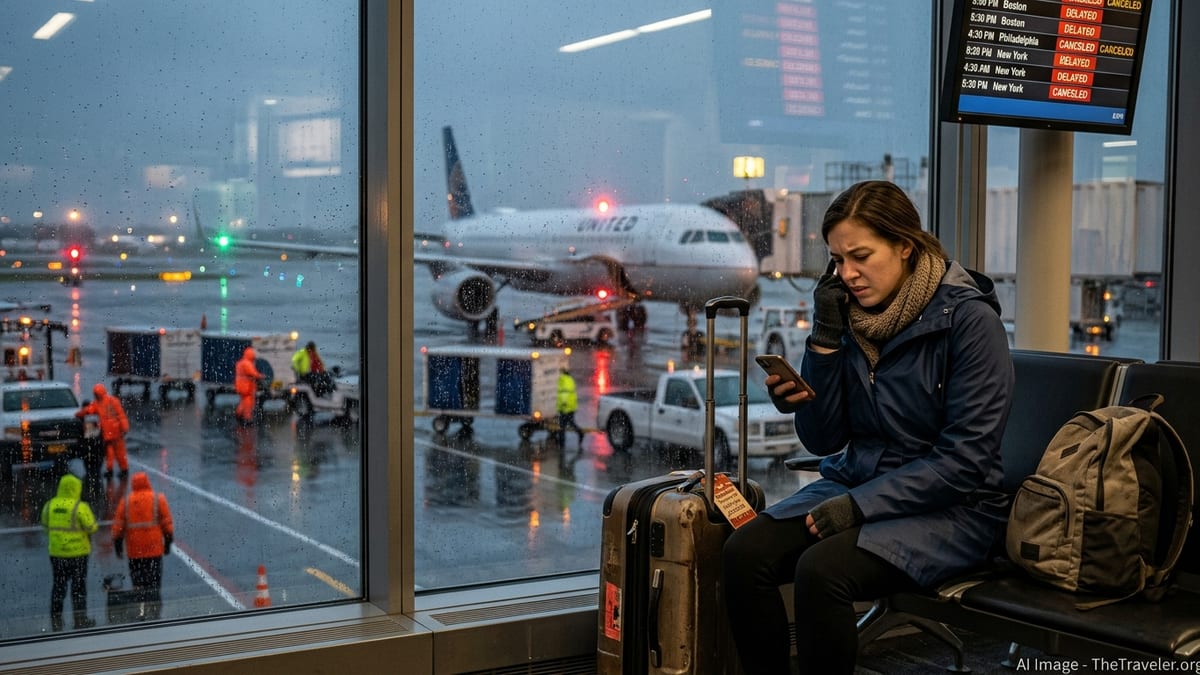
A powerful Thanksgiving nor’easter sweeping across the eastern United States on Thursday, November 26, 2026, has disrupted one of the busiest travel days of the year, with more than 2,000 flights delayed and over 400 canceled nationwide, as heavy rain, strong coastal winds and flooding hit key corridors from Washington to Boston and ripple through the wider U.S. air network.
Get the latest news straight to your inbox!
Disruption by the numbers and where it is worst
By Thursday evening on November 26, real-time data from FlightAware indicated that more than 2,000 flights to, from or within the United States had been delayed and just over 420 canceled, as the coastal storm intensified along the East Coast. The totals continued to change into the night, but they confirm that the nor’easter has moved from forecast risk into active, systemwide disruption for travelers trying to reach Thanksgiving gatherings.
The heaviest impact is concentrated at major East Coast and Mid-Atlantic hubs situated directly under the storm band. New York’s John F. Kennedy and LaGuardia airports, Newark Liberty International, Boston Logan and Philadelphia International have all reported high volumes of weather-related delays and a growing list of cancellations as the day has progressed. Baltimore/Washington International Thurgood Marshall has been among the hardest hit relative to its schedule, with data from multiple outlets citing a significant share of its daily flights either delayed or unable to operate during the afternoon and early evening peaks.
Federal Aviation Administration traffic management initiatives have further reduced capacity into the most weather-affected airfields, with flow control programs slowing arrival rates at New York City, Philadelphia, Baltimore and Washington area airports. Even at airports with fewer outright cancellations, longer-than-normal taxi times, extended departure queues and airborne holding have all contributed to missed connections and last‑minute rebookings across many domestic and transatlantic routes.
Weather conditions behind the Thanksgiving slowdowns
The travel disruption is being driven by a vigorous coastal low that consolidated into a nor’easter along the Eastern Seaboard in the 24 to 36 hours leading up to Thanksgiving Day. Forecast discussions from the National Weather Service and the Weather Prediction Center on Thursday highlighted a corridor of heavy, wind‑driven rain from coastal Virginia through New Jersey, Long Island and southern New England, with widespread gusts above 40 miles per hour and localized coastal flooding at times of high tide.
For aviation, the combination of strong low‑level winds, low cloud ceilings and periods of poor visibility has been particularly challenging around the tightly packed airports of the Northeast corridor. While the conditions have largely remained within thresholds that allow aircraft to land and depart safely, air traffic controllers have reduced the rate at which flights can arrive and leave, especially at parallel‑runway airports such as JFK, Newark and Boston. Those throughput restrictions have triggered arrival metering, temporary ground stops for individual airports at various points in the day, and knock‑on delays for flights that connect into the region from the rest of the country.
Beyond the runways, the same storm system has inundated some coastal and low‑lying roads serving airports around New York, New Jersey and parts of New England, and it has affected rail operations in sections of the busy Northeast Corridor. Local and national outlets have reported service adjustments and reduced frequencies on some commuter and intercity rail lines where track flooding or high water near electrical infrastructure has been a concern. For air passengers, that has meant that even when flights were running, journeys to or from the airport have often taken longer than usual, reducing the margin for making tight connections.
Strains on a system already tested earlier this month
The Thanksgiving nor’easter is hitting after an already difficult November for U.S. aviation, in which a series of technology‑related disruptions exposed how little slack is built into peak‑season schedules. Earlier in the month, a nationwide ground stop linked to an artificial intelligence‑based air traffic management system problem forced the cancellation or delay of thousands of flights over several days. In subsequent weeks, Delta Air Lines and United Airlines each reported separate outages affecting internal operational software, which temporarily halted departures and led to hundreds of additional delays and cancellations at hubs such as Atlanta, Denver and others.
By Thanksgiving week, most of those issues had technically been resolved, but the ripple effects had not entirely worked their way out of the system. Aircraft and crews were still being repositioned to restore normal rotations, and some routes were operating with limited spare capacity or tighter turn times than scheduled. As a result, Thursday’s weather‑related cancellations and delays have landed on top of an already stretched operation, limiting airlines’ ability to absorb new shocks or to quickly find alternative seats for stranded passengers.
At the same time, demand for Thanksgiving travel in 2026 remains very high. Forecasts ahead of the holiday anticipated tens of millions of Americans traveling at least 50 miles from home between Tuesday, November 24, and the Monday after Thanksgiving, with several million expected to fly. Transportation Security Administration projections and pre‑holiday screening totals pointed to passenger volumes at or above those seen before the pandemic. In that context, even a relatively modest national cancellation rate on Thanksgiving Day still means that hundreds of thousands of travelers have been affected by missed connections, rerouted journeys or, in some cases, the loss of entire holiday trips.
How airlines and rail operators are responding for travelers
Major U.S. airlines responded to the storm’s approach earlier in the week by issuing weather‑related travel waivers for parts of the Mid‑Atlantic and Northeast. Those waivers, which vary by carrier, generally allow customers booked through the affected airports to change their flights once without paying change fees, provided they travel within a set rebooking window and maintain the same origin and destination. At least one large network airline has confirmed that passengers using airports including Boston, Baltimore, New York’s JFK and LaGuardia, Newark, Philadelphia, Washington Dulles, Washington Reagan National and Westchester County can rebook travel on or before Saturday, November 28, with fare differences waived in many cases if they keep to comparable cabins and routes.
Other carriers, including several low‑cost and ultra‑low‑cost airlines with significant presence along the Eastern Seaboard, have advertised more flexible same‑day change policies in selected markets. These may include waiving same‑day confirmed change fees or allowing free standby on earlier or later flights where seats are available. Because the exact rules differ by airline and even by specific city pair, travelers are being urged by operators and travel agents to check the latest waiver bulletins and conditions on their airline’s official channels before making any changes.
On the ground, intercity rail operators have adjusted timetables and equipment allocations along sections of the Northeast Corridor to account for speed restrictions, localized flooding and heavier‑than‑usual holiday demand from passengers looking for alternatives to flying. Some services have seen minor reductions in frequency at the worst of the weather, while others have run with additional carriages where tracks and power systems have allowed. However, advance reservations for peak Thanksgiving departures were already tight before the storm arrived, so same‑day rail alternatives have remained limited on many popular routes between Washington, Philadelphia, New York and Boston.
What travelers should do in the next 48 hours
Forecasts from the National Weather Service indicate that the nor’easter will gradually move away from the coast late Thursday night and into Friday, November 27, with rain tapering across much of the I‑95 corridor and winds slowly easing inland. Coastal flooding and rough surf may linger into subsequent high‑tide cycles, particularly along exposed sections of New Jersey, Long Island and southern New England, but the most intense combination of wind and rain is expected to subside as the low tracks northeastward.
For air travelers, that means that the worst weather‑driven constraints on airport operations are likely to diminish heading into the weekend. However, airline schedulers and air traffic managers warn that the storm’s effects will not end as soon as the rain stops. Aircraft and crews displaced by Thursday’s cancellations and long delays will need time to reenter normal rotations, and connecting hubs in the Midwest, Southeast and on the West Coast are already seeing some secondary delays as they work through aircraft arriving late from the East. Passengers flying on Friday and, to a lesser extent, Saturday should therefore be prepared for elevated risk of schedule changes even if their local weather has improved.
Travelers scheduled to fly in the next 24 to 48 hours are being advised to begin monitoring their flight status at least a day before departure, using airline apps, text alerts and official websites. Given the pace of schedule adjustments on Thursday, relying only on printed boarding passes or older confirmation emails risks missing updated departure times, gate changes or aircraft swaps that could affect seat assignments. Airlines and airports are also recommending that passengers arrive earlier than they might in a normal year, particularly in the morning and late afternoon peaks, to allow for possible traffic delays, longer‑than‑usual security lines and congestion around check‑in counters handling rebookings.
For those whose flights are canceled or substantially delayed, the specific rights and options depend on both U.S. regulations and individual airline policies. In cases where a flight is canceled and a passenger decides not to travel, U.S. rules generally entitle them to a refund of the unused portion of their ticket, regardless of the cause of the disruption. When passengers still wish to travel, most airlines will attempt to rebook them on the next available service at no extra cost, although the limited spare capacity typical of Thanksgiving week can mean that same‑day alternatives are scarce, especially on heavily booked nonstop routes.
Accommodation, meal vouchers and other on‑the‑ground support for stranded passengers remain largely at the discretion of the airline during weather‑related disruptions. Some carriers have indicated that they may provide hotel or meal assistance in gateway cities when overnight delays occur and inventory allows, but they are not obliged to do so under current U.S. rules for events categorized as outside the airline’s control. With many hotels near major hubs already busy with holiday guests and rebooked travelers, passengers facing an overnight stay are encouraged to secure accommodation as soon as a significant delay or cancellation is confirmed, whether through airline channels or directly with hotels.
Looking beyond this specific storm, early‑season coastal systems such as the current nor’easter are consistent with winter outlooks that highlight an elevated risk of strong storms across portions of the eastern United States during the 2026–27 season. For upcoming trips later in the winter, travelers may wish to build extra buffer time into tight connections, favor early‑day departures where feasible and maintain flexible contingency plans for important journeys. In the meantime, the most practical steps for those traveling over the remainder of the Thanksgiving period are straightforward: check flight and rail status repeatedly, keep contact details up to date with airlines and booking platforms, and be prepared for residual delays as the system works through the backlog created on Thanksgiving Day.