


More news on this day
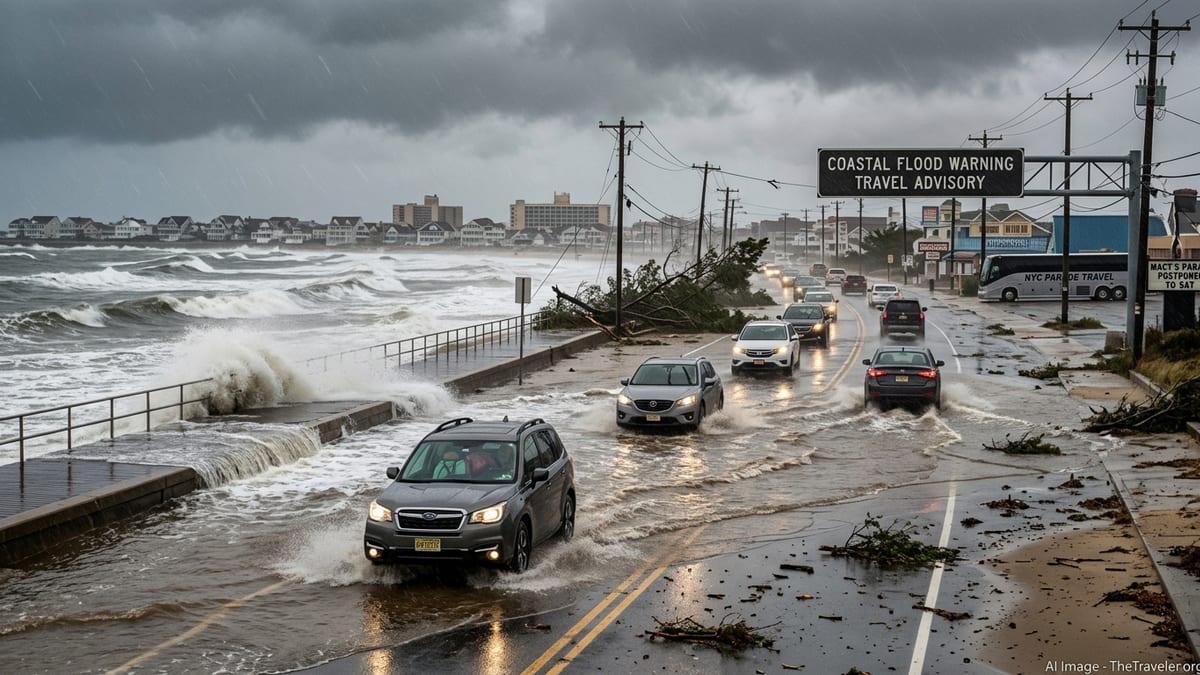
A powerful coastal storm is disrupting Thanksgiving travel across the United States on Thursday, November 26, bringing heavy rain, strong winds, flooding, widespread power outages and hundreds of flight delays, while New York City has taken the unprecedented step of postponing the 100th Macy’s Thanksgiving Day Parade to Saturday for safety reasons.
Get the latest news straight to your inbox!
Coastal storm slams holiday corridor with wind, rain and flooding
The National Weather Service says a strong coastal storm is tracking up the Eastern Seaboard on Thanksgiving Day, concentrating its worst impacts from the Mid-Atlantic into New England. Forecast discussions issued early Thursday highlight the risk of heavy rain, damaging wind gusts and coastal flooding that will continue into Friday in some areas, especially around high tides.
Along the Atlantic coastline from North Carolina to New Jersey and New York, coastal flood warnings, high wind warnings and storm warnings cover many shoreline communities. Authorities in New Jersey and New York had already declared states of emergency on Wednesday in anticipation of what forecasters described as multiple rounds of moderate to major coastal flooding, particularly during Thursday’s and Friday’s tide cycles. Local briefings for the tidal Delaware River and Chesapeake Bay also warn of elevated water levels, beach erosion and dangerous marine conditions.
Rainfall totals are varying by region, but meteorologists expect some of the heaviest bands to set up near and east of the Interstate 95 corridor, raising the risk of flash flooding on urban roadways. The storm is also interacting with colder air farther inland, producing winter weather warnings from parts of the Mississippi Valley into the Midwest, where heavy, wet snow is affecting highways and regional airports serving some Thanksgiving travelers driving or flying across the central United States.
More than a million lose power as winds batter multiple states
Thanksgiving morning began with more than 1 million customers without power nationwide as the storm intensified, according to aggregated outage data from utilities across the country. The highest concentrations of outages were reported in parts of the Mid-Atlantic and Northeast, including coastal sections of Virginia, Maryland, Delaware, New Jersey and southeastern Pennsylvania, where saturated ground and strong gusts combined to topple trees and damage power lines.
Outage numbers have been fluctuating through the day as crews restore service in some neighborhoods while new damage is reported elsewhere. Officials in several states have warned that some customers in hard-hit coastal and riverside communities may face prolonged interruptions as high winds continue and access for repairs is limited by flooding. Emergency management briefings stress that those planning holiday gatherings should prepare for the possibility of celebrating without electricity, particularly in low-lying areas prone to tidal inundation.
Local authorities have urged residents to keep mobile devices charged when possible, use battery-operated lights instead of candles and avoid driving through flooded streets, which remain a major source of storm-related injuries. Travelers staying with friends or in short-term rentals along the coast are being reminded to monitor local alerts, as repeat high-tide cycles on Thursday evening and Friday could trigger additional evacuations or road closures even after the heaviest rain ends.
Historic postponement of Macy’s 100th Thanksgiving Day Parade
In New York City, the forecast for wind gusts strong enough to threaten overhead balloons and street-level safety led to an historic decision: the 100th Macy’s Thanksgiving Day Parade will not take place on Thanksgiving itself. On Wednesday night, November 25, Mayor Zohran Mamdani announced that, in coordination with Macy’s and city agencies, the parade has been rescheduled to Saturday, November 28, marking the first postponement in the event’s century-long history.
City officials said the move came after consultations with meteorologists and emergency managers who warned that gusts in New York City and Long Island on Thursday could approach 60 miles per hour in exposed locations. Federal aviation and local weather data from Thursday morning show that LaGuardia Airport, one of the city’s three major airports, has already recorded wind gusts in the 40 to 45 mile per hour range, with higher values possible in coastal and bridge areas as the day progresses.
For visitors already in New York, the postponement means the signature holiday spectacle will still go ahead, but with a two-day delay. Organizers and city transportation officials are working to adapt street closures and viewing arrangements for Saturday, and participants such as marching bands and performance groups are adjusting accommodation and logistics. Travelers with parade-focused itineraries are being advised to reconfirm hotel bookings, restaurant reservations and any time-specific tickets, especially for Saturday morning and early afternoon, when the rescheduled procession is expected to take place.
Hundreds of flights disrupted and a runway overrun in Miami
The storm and its associated weather systems are also affecting air travel on one of the busiest weeks of the year. By early Thursday afternoon, flight-tracking services were reporting more than 1,500 delays and over 400 cancellations on flights within, into or out of the United States. The disruption builds on already heavy delays recorded on Wednesday, when more than 6,500 flights were delayed and around 160 canceled as the holiday exodus peaked.
The impact is uneven across the network. Baltimore/Washington International reported one of the highest cancellation rates among major airports on Thanksgiving morning, with approximately one in four departures scrubbed as low clouds, strong winds and regional congestion rippled through schedules. In the New York area, the Federal Aviation Administration has warned that gusty winds could slow operations at LaGuardia, Newark Liberty and John F. Kennedy airports throughout the day, potentially leading to airborne holding patterns and ground delays even if the majority of flights ultimately depart.
Farther south, separate weather and operational issues have compounded problems. On Wednesday evening, a FedEx cargo aircraft overran a runway at Miami International Airport, temporarily closing all but one runway. Authorities reported no injuries, but the incident forced inbound flights to be held or diverted while crews inspected the airfield and moved the aircraft. By early Thursday morning the FAA was reporting knock-on delays of several hours at Miami, while thunderstorms in southern Florida increased the risk of further disruptions at both Miami and Fort Lauderdale-Hollywood International Airports.
Record Thanksgiving travel volumes face new weather test
The severe weather is hitting as the Transportation Security Administration prepares for one of its busiest holiday periods on record. In guidance issued ahead of the break, TSA said it expected to screen nearly 17.6 million passengers nationwide between Sunday, November 24, and Saturday, November 30, with more than 3 million travelers forecast on Sunday, November 29 alone. That would place this year’s Thanksgiving week among the most heavily traveled in recent memory for U.S. aviation.
While historical data show that Thanksgiving Day itself typically sees fewer delays than the surrounding days, this year’s nor’easter is testing that pattern, particularly at major East Coast hubs. Aviation planners had already been contending with residual effects from recent technology outages and sporadic airline-specific system issues earlier in November that highlighted the fragility of peak-period operations. Traffic management initiatives, including speed restrictions in busy airspace and ground-delay programs at congested hubs, are being deployed as needed to keep flows manageable through the storm.
For travelers, the combination of record volumes and adverse weather means that even small local disruptions can cascade into missed connections and longer-than-usual waits for rebooking. Airlines are encouraging passengers to use mobile apps or websites to track real-time gate and schedule information, and to accept free changes where waiver policies are in place for affected airports. Those flying through coastal hubs on Thursday and Friday may find that mid-morning and evening departures are particularly vulnerable, when poorer visibility and high winds often coincide with peak traffic.
What Thanksgiving travelers should expect next
Forecasts from the National Weather Service indicate that the worst of the coastal storm for the Mid-Atlantic and Northeast will generally occur from Thursday afternoon into late Thursday night, with gradual improvement on Friday as the system moves away. However, lingering rain, strong gusts and elevated tides could continue to disrupt some road and rail corridors, especially near estuaries and barrier islands, into the start of the weekend.
For air passengers, airlines and airport authorities suggest planning for ongoing disruption through at least Friday morning on the East Coast, and for residual delays at downline airports even after conditions begin to improve. Travelers with flexible plans may find fewer problems on Friday afternoon or Saturday, although those attending the rescheduled Macy’s parade in New York will need to factor in additional crowds and traffic in Midtown Manhattan. As of Thursday afternoon, most New York City-area airports are operating, but with weather-related flow restrictions that can extend connection times and increase the chance of missed onward flights.
Anyone traveling over the remainder of the long weekend is advised to monitor official forecasts for both their origin and destination, check airline or rail apps before leaving for the station or terminal, and allow extra time for security screening and ground transport, particularly in regions still recovering from power outages. Those headed to New York for the parade or to coastal areas affected by flooding should verify event times, local transit changes and any remaining advisories on Friday, since city agencies and organizers may refine plans as the storm’s actual impacts become clearer.