


More news on this day
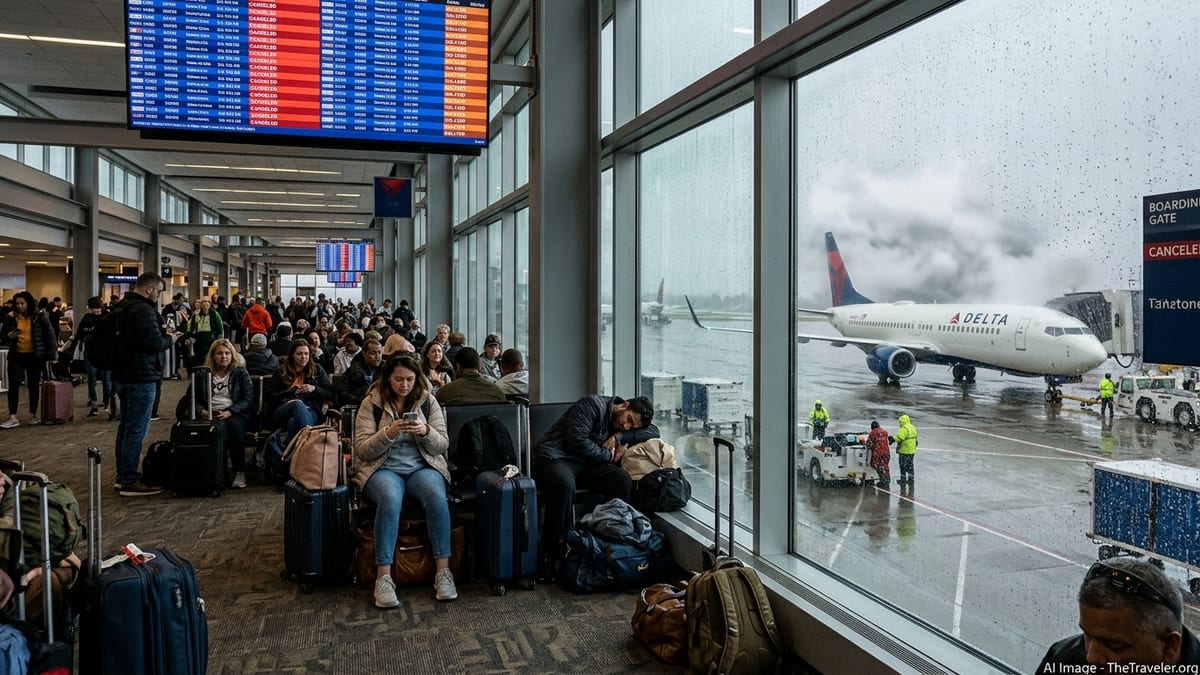
A powerful Thanksgiving nor’easter racing up the U.S. East Coast has snarled one of the year’s busiest travel periods, with heavy rain, strong winds and coastal flooding contributing to more than 2,200 delayed flights and over 400 cancellations nationwide on Thursday, November 26, according to flight-tracking data, while rail schedules, road travel and even New York City’s iconic Macy’s Thanksgiving Day Parade have also been disrupted.
Get the latest news straight to your inbox!
Storm track and scale of disruption
The coastal storm intensified off the Southeast and Mid-Atlantic shoreline on Wednesday, November 25, before tracking northward along the Eastern Seaboard into Thanksgiving Day. Forecasters had warned of a classic nor’easter pattern, with onshore winds, bands of heavy rain and pockets of coastal flooding from the Carolinas to New England. By Thursday afternoon, the system was bringing gusts of 40 to 50 miles per hour and several inches of rain to some metropolitan areas, including New York City and parts of New Jersey and Long Island, leading to localized flash flooding and travel hazards.
FlightAware and other tracking services reported more than 2,200 delays and in excess of 400 cancellations involving U.S. airports and carriers on Thanksgiving Day, with disruptions heavily concentrated along the I‑95 corridor. New York-area airports, Boston Logan, Philadelphia, Washington National and Baltimore/Washington all showed elevated delay totals as low clouds, wind shear and saturated runways slowed arrivals and departures. Some Midwest and Southern hubs also recorded secondary delays as aircraft and crews fell out of position because of East Coast bottlenecks.
In addition to aviation impacts, the storm knocked out electricity to well over 900,000 customers across East Coast states by Thursday evening as trees and power lines came down in saturated ground and gusty conditions. Flooded roadways in low-lying coastal neighborhoods, especially in the mid-Atlantic and New England, forced local closures and added extra time for those driving to holiday gatherings, reinforcing the storm’s broad effect across multiple modes of Thanksgiving travel.
Airports, airlines and ground operations under strain
At the largest East Coast hubs, airlines and airport operators shifted into weather-disruption mode, activating de-icing plans where temperatures required it, adjusting runway configurations to account for crosswinds and working with air traffic control to meter arrivals and departures. Strong low-level winds and reduced visibility prompted the Federal Aviation Administration to implement flow-control measures and intermittent ground delay programs at some airports, effectively spacing out flights to maintain safety while further lengthening passenger wait times.
Carriers used standard tools for irregular operations, including proactive cancellations on routes most exposed to the storm, aircraft swaps and consolidation of lightly booked services. Major U.S. airlines also issued travel waivers for specified East Coast airports, allowing customers booked on affected dates and routes to change flights without standard change fees or fare differences in certain fare classes, subject to rebooking within a defined window. These waivers focused on cities along the Atlantic seaboard where coastal flooding and crosswinds were most likely to impact airport access and runway use.
On the ground, ramp and baggage operations slowed significantly during periods of heavy rain and stronger gusts. To comply with safety rules that limit outdoor work in severe conditions, ground handlers temporarily paused loading and unloading when lightning or extreme winds were nearby, adding knock-on delays even for flights that ultimately departed. Wet surfaces further lengthened aircraft taxi times, while queues for de-icing developed at some northern airports as the storm’s colder backside brushed interior sections of the Northeast.
Rail, road and city impacts, including the Macy’s parade
The nor’easter’s effect extended beyond airports into the broader Thanksgiving travel network. On heavily used Northeast rail corridors, operators reduced some frequencies, imposed speed restrictions in exposed coastal segments and warned passengers to expect crowding and extended journey times, particularly where coastal flooding encroached on track beds. In New York and other major cities, transit agencies reported scattered service changes as standing water, wind-blown debris and downed trees disrupted individual lines, especially in low-lying neighborhoods close to rivers and bays.
Road travelers encountered hazardous driving conditions on key interstates from the Carolinas to New England, with heavy rain reducing visibility, causing ponding on highways and increasing the risk of hydroplaning. State transportation departments cautioned against driving through flooded underpasses and coastal roads and recommended extra time for holiday trips. In several states, transportation and emergency management agencies activated joint operations centers to monitor highway conditions, coordinate response to incidents and, where necessary, close vulnerable coastal routes during periods of peak flooding.
In New York City, the storm had an unusually high-profile cultural impact. Organizers of the 100th Macy’s Thanksgiving Day Parade, working with city officials and forecasters, postponed the event from Thursday to Saturday for the first time in its history because of concerns about unsafe wind conditions and heavy rain along the parade route. The postponement left tens of thousands of visitors recalculating travel logistics, from extending hotel stays and adjusting flights to reshuffling local tourism plans that had been built around the centennial parade.
How this Thanksgiving compares and what is driving delays
The nor’easter hit during an already challenging Thanksgiving travel week shaped by recent airline technology issues and tight capacity. In the days leading up to the storm, Delta Air Lines and United Airlines both reported outages affecting reservation or flight-planning systems, triggering hundreds of delays and compounding the pressure on network reliability heading into the holiday period. Although both carriers reported that the immediate causes of those glitches had been resolved earlier in the week, residual crew and aircraft misalignments left less margin in schedules once severe weather arrived.
Federal data show that weather is only one of several main drivers of U.S. flight delays, alongside airline-controlled causes and late-arriving aircraft. However, peak holiday periods magnify the impact of any disruption because aircraft are operating at or near full capacity and spare seats for reaccommodating disrupted travelers are limited. For this Thanksgiving, early Transportation Security Administration figures indicated that the overall number of passengers passing through checkpoints between Tuesday, November 24, and Monday, November 30, was likely to be similar to, or slightly below, last year’s record volumes, meaning crowded flights and busy terminals even before the storm’s arrival.
Separate forecasts for the 2026 Thanksgiving period pointed to higher average domestic round-trip fares compared with 2025, a factor that had already prompted some travelers to reconsider flying during the peak window. Those who did choose to travel by air found that the nor’easter amplified a pattern seen in many recent holiday periods: a combination of full aircraft, constrained staffing and complex hub-and-spoke scheduling that can turn a localized weather system into a network-wide challenge once crews and planes are stranded in the wrong locations.
What travelers can do next and how long disruption may last
While the strongest impacts of the nor’easter are expected to ease as the storm moves into Atlantic Canada and weakens, operational ripples for air and rail travel are likely to extend at least into Friday, November 27, and potentially into the weekend. Airlines typically need additional time to reposition aircraft and crews once weather-related ground delays and cancellations subside, especially when disruptions have affected multiple major hubs simultaneously. Travelers booked on early-morning departures on Friday and Saturday may still encounter delays if their aircraft arrive late the previous night or if crew duty-time limits require last-minute staffing changes.
Passengers whose flights were canceled during the height of the storm generally have several options, depending on the ticket they purchased and the airline’s policies. These can include rebooking at no additional cost on the next available flight, accepting a refund if the flight was significantly disrupted or, on a space-available basis, being rerouted through alternative hubs less affected by the storm. Given the tight seat availability over the remainder of the holiday period, some travelers may find that the most realistic options involve shifting their return or onward journeys to early next week, when demand and fares typically begin to ease.
For those with travel still ahead of them, the most practical steps involve closely monitoring airline apps and airport websites for gate and schedule changes, confirming whether weather waivers apply to their origin or destination, and allowing additional time for check-in, security and ground transportation, particularly at major East Coast airports and train stations. Drivers should continue to watch local weather and transportation advisories, especially in coastal and low-lying areas where lingering flooding or debris could persist after the heaviest rain has moved offshore. As airlines and transport agencies work through the backlog created by the Thanksgiving nor’easter, conditions are expected to gradually stabilize through the second half of the holiday weekend, but schedules will remain more vulnerable than usual to even minor operational hiccups until equipment and crews are fully back in place.