


More news on this day
A powerful coastal storm sweeping up the eastern United States on Thanksgiving Day, November 26, 2026, caused widespread travel disruption, with several thousand flights delayed or canceled nationwide as heavy rain, strong winds and coastal flooding hit some of the country’s busiest air corridors at the height of the holiday rush.
Get the latest news straight to your inbox!
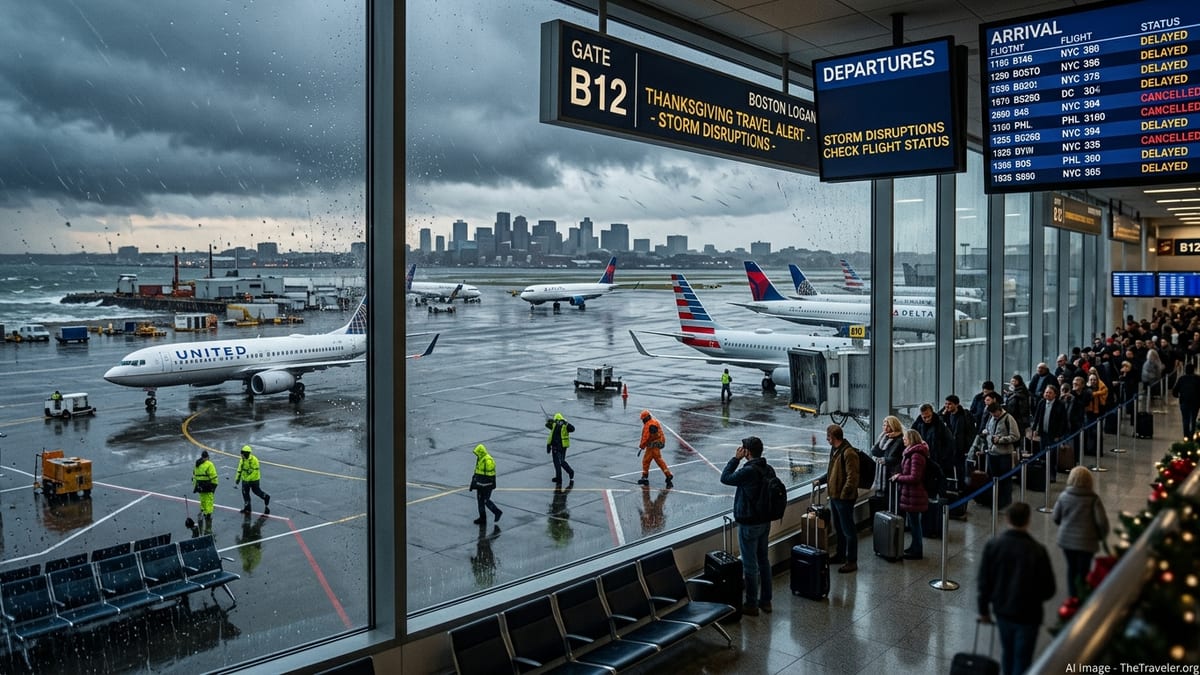
Storm hits key East Coast hubs at peak Thanksgiving period
The coastal system intensified through Thursday morning and afternoon, bringing bands of heavy rain and wind gusts over 50 mph to major population centers from the Carolinas to New England. Authorities reported coastal flooding along parts of New Jersey and New York, along with scattered power outages affecting hundreds of thousands of customers across the broader region. The adverse conditions coincided with one of the busiest air travel days of the year, with airports along the Interstate 95 corridor already operating near capacity.
By Thursday afternoon, national flight-tracking data showed that more than 2,900 U.S. flights scheduled for Thanksgiving Day had been disrupted, combining delays and cancellations. This included over 2,200 delays and more than 400 outright cancellations attributed largely to the storm’s impact on operations at major East Coast airports, including New York-area hubs, Philadelphia, Washington and Boston. The figures continued to evolve through the evening as airlines adjusted schedules and weather conditions shifted.
While the storm’s most severe effects were concentrated along the Mid-Atlantic and Northeast coasts, knock-on impacts were felt throughout the domestic network as aircraft and crews fell out of position. Travelers flying on routes with no direct exposure to the bad weather still encountered delays as airlines reworked rotations and implemented ground stops or slower arrival rates at affected hubs.
States of emergency and safety measures in New York and New Jersey
In anticipation of the storm, officials in New York and New Jersey declared states of emergency ahead of Thanksgiving. New Jersey’s statewide order, effective from the evening of Wednesday, November 25, cited forecasts of heavy rain, damaging winds and significant tidal flooding, particularly for coastal and bayside communities. The declaration enabled the pre-positioning of equipment and personnel and eased procedures for deploying additional resources to areas expected to be hardest hit.
In the New York City area, state and local emergency management offices warned of hazardous travel conditions due to strong winds and localized flooding on Thursday. A high wind warning was in place for New York City, Long Island and parts of coastal New Jersey through the late evening, with forecasters cautioning that gusts could affect elevated structures and make travel difficult, especially for high-profile vehicles. Authorities emphasized that the emergency declarations did not in themselves ban travel but were intended to highlight the severity of the storm and to encourage residents and visitors to adjust plans where possible.
The combination of high winds and wet surfaces also prompted operational changes beyond aviation. Traffic restrictions were periodically imposed on major river crossings and coastal routes, and some communities along the Jersey Shore and in low-lying parts of New York enacted local travel advisories while tides peaked. These measures, aimed at ensuring safety and keeping key corridors open for emergency access, contributed indirectly to longer journey times for travelers heading to and from airports or driving to holiday gatherings.
Airline and airport operations under strain
Airlines serving the Northeast had already been contending with residual operational pressures from earlier in the week, when technical issues at two major U.S. carriers led to hundreds of delays. The arrival of the Thanksgiving storm on top of these existing strains further reduced schedule resilience, particularly for afternoon and evening departures on November 26. Several major carriers issued weather waivers for passengers traveling to, from or through a broad list of East Coast airports, allowing changes without standard fees on specified dates, subject to seat availability and fare conditions.
At major hubs such as Newark Liberty, New York’s LaGuardia and John F. Kennedy, and Philadelphia International, air traffic controllers periodically implemented ground delay programs, spacing out arrivals because of lower landing rates in heavy rain and strong crosswinds. These measures, standard in bad weather, led to knock-on delays across the network as inbound aircraft waited for departure clearance from their origin airports, and departure banks were pushed back to later time slots.
Smaller regional airports in the Mid-Atlantic and New England also saw schedule changes when conditions deteriorated. Short-haul flights using turboprop or regional jet aircraft were especially vulnerable to disruption, as high winds and low visibility limited operating windows. In certain cases, airlines chose to preemptively cancel select flights on vulnerable routes to avoid last-minute turnbacks or diversions, consolidating affected passengers on later services once conditions were forecast to improve.
Impact on travelers during one of the busiest travel weeks
The timing of the storm meant its effects were magnified for travelers. According to earlier forecasts and travel projections, tens of millions of Americans were expected to journey at least 50 miles from home over the extended Thanksgiving period, with the bulk of air travel concentrated between Wednesday, November 25, and Sunday, November 29. While Thanksgiving Day itself can be less congested than the days immediately before and after, the 2026 coastal storm struck directly during a dense wave of morning and afternoon departures from the East Coast.
Passengers departing from or connecting through storm-affected hubs on November 26 reported extended waiting times, with some flights facing multi-hour delays as airlines waited for crosswinds to subside or for departure slots to open at arrival airports. For travelers headed to family gatherings that could not be rescheduled, even relatively short delays disrupted carefully planned itineraries involving connections to regional flights, rental cars or onward rail services. In cases where cancellations occurred, passengers competed for limited seats on later flights, with some rebookings stretching into Friday or the weekend, depending on route and carrier.
For those already at their destinations, the impact was often felt through changes to return plans. Some airlines advised customers with flexible schedules to consider shifting their travel to less affected days at the start of the following week. Travelers bound for international destinations via East Coast gateways also encountered challenges when missed connections required rerouting through alternative hubs or overnight stays near major airports.
What travelers should know and what happens next
Meteorological guidance as of Thursday evening indicated that the heaviest rain and strongest winds would gradually move northeast and offshore into Friday, November 27, although lingering showers, gusty conditions and coastal flooding were expected to persist in some locations. Airlines were planning to rebuild schedules through Friday and into the weekend, but residual disruption was expected to continue as aircraft and crew rotations were brought back into balance following Thursday’s interruptions.
Passengers with flights scheduled through the remainder of the Thanksgiving holiday period were advised to monitor airline communications closely. Carriers typically update departure and arrival times in their own apps and websites before third-party tools, and may proactively rebook travelers when schedules are adjusted. In storms of this type, U.S. regulations do not generally require airlines to provide financial compensation for weather-related disruptions, though they may offer voluntary fee waivers, flexible rebooking options or limited assistance such as hotel vouchers when overnight stays become necessary, subject to individual airline policies.
For travelers yet to return home, practical steps included confirming flight status before leaving for the airport, allowing additional time to reach terminals in areas still experiencing flooding or traffic restrictions, and checking for any updated travel waivers that could permit shifting travel to a different day. Those with tightly timed connections through East Coast hubs were encouraged to consider whether alternative routings with longer connection windows or via less affected airports might reduce the risk of missed onward flights. As airlines and airports assess the full operational impact of the Thanksgiving Day storm, further schedule adjustments through the weekend remain possible, and travelers are likely to see the most accurate information through direct channels from their carriers.