


More news on this day
Heavy holiday travel, recent nationwide ground stops and high rates of winter disruption are putting a spotlight on what U.S. airline passengers are actually owed when flights are delayed or canceled, as new federal refund rules and an updated Department of Transportation dashboard reshape the minimum protections and voluntary promises that apply this season.
Get the latest news straight to your inbox!
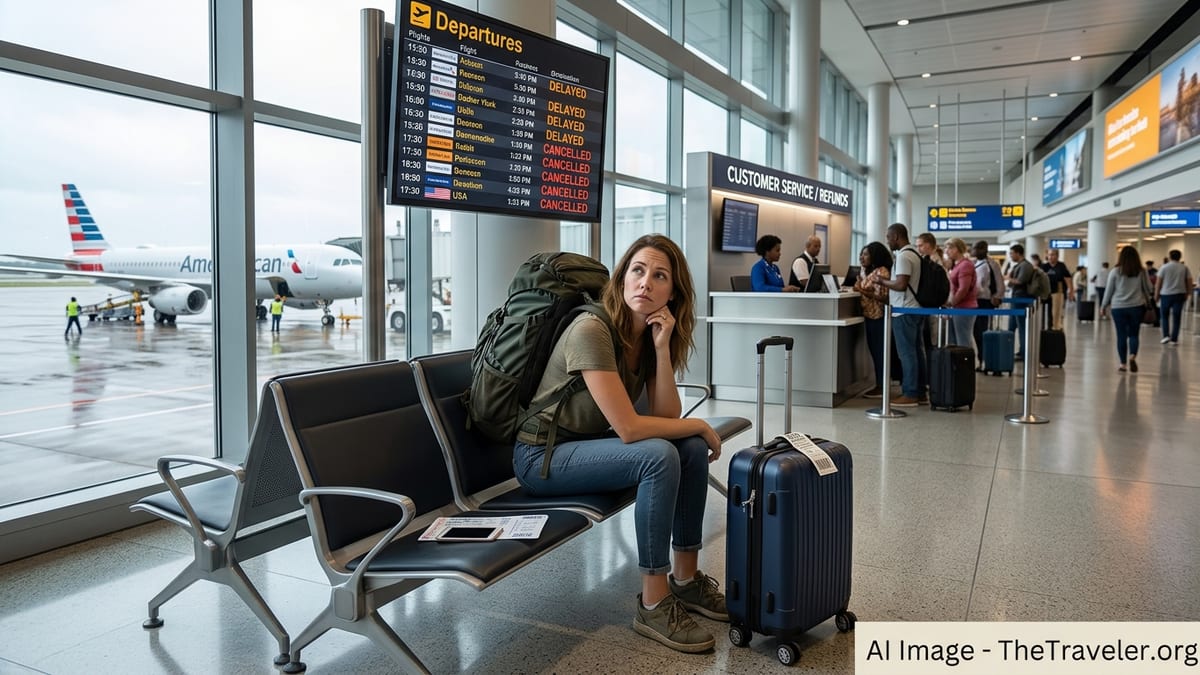
Refunds After Cancellations and Long Delays: What Federal Law Guarantees
The clearest protections U.S. flyers have today concern refunds when a flight is canceled or significantly changed and the traveler decides not to go. Federal law now requires airlines and foreign carriers operating flights to, from or within the United States to provide a full cash refund, including taxes and ancillary fees such as seat selection or baggage, to passengers holding nonrefundable tickets if their flight is canceled or significantly delayed and they choose not to travel or accept a voucher or rebooking instead. The obligation applies across the board to scheduled flights and is no longer limited to “refundable” fares.
The United States Code and subsequent Department of Transportation (DOT) rules define a significantly delayed or changed flight in objective terms rather than leaving the phrase to each airline’s contract. A significant delay now includes, at minimum, cases where a passenger reaches the destination airport several hours later than originally scheduled, with specific thresholds spelled out in regulation. Airlines must treat such events similarly to outright cancellations for refund purposes when the passenger declines the new itinerary, and they may not force travelers to accept credits in place of money back if the traveler prefers a refund.
DOT guidance further requires that these refunds be “prompt.” When a passenger is owed a refund and paid by credit card, the airline must return the money to the original form of payment within seven business days; for cash or check purchases the deadline is 20 calendar days. Refunds must cover the fare as well as government taxes and carrier-imposed fees that were tied to the affected flight. If an airline offers an alternative itinerary or a voucher but the passenger rejects it, the carrier’s obligation to refund is the same as if no alternative had been offered, and DOT can take enforcement action if airlines refuse.
Delays, Cancellations and Weather: What Is Not Automatically Compensated
Many holiday travelers discover that there is an important distinction between a right to a refund when they give up on the trip and a right to compensation when they still intend to travel. Unlike the European Union’s regime, U.S. federal law does not require airlines to pay cash compensation for long delays or cancellations when passengers continue to their destination, even if the disruption is lengthy. Nor is there a legal requirement to provide hotels or meals when weather, air traffic control orders or other factors outside the airline’s control lead to missed connections or overnight stays.
DOT and major consumer resources repeatedly emphasize that there is no statute or regulation in the United States that grants automatic cash compensation for routine delays or for disruptions caused by uncontrollable events such as storms, air traffic system outages or broader infrastructure failures. In those situations passengers with nonrefundable tickets who eventually travel on the airline’s revised schedule are not entitled to a refund solely because they arrived late, and any assistance with vouchers or lodging is a matter of airline policy rather than federal mandate.
Even when an airline is responsible for the disruption, such as a crew scheduling issue or maintenance problem, current federal rules still stop short of mandating cash compensation. Proposals to require airlines to pay travelers for controllable delays or cancellations were explored at the policy level but were not adopted in binding form. Today, the primary legal remedy is a refund if a passenger decides not to travel after a cancellation or significant schedule change. Additional concessions, such as hotel or meal vouchers during an overnight delay, are governed by each carrier’s customer service plan.
The DOT Airline Customer Service Dashboard and Carrier Promises
To help passengers navigate the patchwork of voluntary commitments, the Department of Transportation maintains an Airline Cancellation and Delay Dashboard that compares how major U.S. airlines say they will treat travelers when flights are canceled or significantly delayed for reasons within the airline’s control. The dashboard, which is mandated by federal law and was most recently updated in September 2025, lists each large carrier’s written promises regarding rebooking, meals, hotels and ground transport in defined disruption scenarios.
The dashboard distinguishes between controllable and uncontrollable causes of disruption. Controllable causes include issues such as mechanical problems, crew availability, cleaning and baggage handling that an airline is expected to manage in normal operations. Uncontrollable causes typically cover weather, security incidents and air traffic control directives. The commitments displayed apply only to controllable events, so passengers affected by winter storms or government-ordered ground stops should not expect the same level of assistance unless their carrier voluntarily extends benefits.
Policies vary by airline but follow broad patterns. Most large U.S. carriers now commit to offering free rebooking in the same cabin, at no extra fare, when a cancellation or significant delay under their control forces a change in plans. Several promise meal vouchers when the delay reaches about three hours and a hotel room or reimbursement if an overnight stay is required because of a controllable cancellation. Travelers should be aware that at least one ultra-low-cost carrier offers more limited commitments, often providing meal vouchers but not hotel accommodations in these situations. Because DOT can hold airlines accountable for the promises they publish, printed or online customer service plans and the dashboard itself can serve as useful evidence if a passenger later files a complaint.
Oversales, Baggage Problems and Tarmac Delays: Separate Sets of Rights
Not all holiday disruptions stem from schedule changes. When flights are oversold and a passenger is involuntarily denied boarding, separate federal rules apply. U.S. regulations require airlines to provide written notices of a bumped passenger’s rights and, in many cases, cash compensation based on the one-way fare and the length of the delay to the passenger’s final destination. The amounts increase when the arrival delay passes key time thresholds and are subject to caps that are adjusted periodically. These rights differ from delay-related refunds, because they apply specifically to oversales where the airline cannot accommodate a ticketed passenger on the flight.
Baggage problems are governed by yet another framework. When a checked bag is lost, damaged or delayed, airlines are liable up to a regulated maximum amount on domestic itineraries, provided the passenger can document their loss. Separate DOT rulemaking has focused on requiring refunds of checked baggage fees when bags are not delivered within a set timeframe, with draft provisions contemplating thresholds such as 12 hours on domestic flights and 25 hours on international services. While not all proposed standards have taken full effect, passengers should keep receipts and file claims promptly when bags go missing, since compensation in these cases depends heavily on documentation.
Holiday travelers can also be affected by extended tarmac delays, where an aircraft waits on the ground with passengers aboard. Federal tarmac delay rules, which predate the newest refund requirements, obligate airlines to provide food, potable water, working lavatories and medical attention during lengthy ground holds, and to allow passengers to deplane if delays exceed specific time limits with narrow safety and air traffic exceptions. These protections apply regardless of whether the underlying cause is weather, congestion or operational issues, although they do not address separate questions of refunds or trip cancellation.
How Travelers Can Protect Themselves During the Holiday Season
The practical impact of these rules during peak travel periods is that passengers must decide early whether they intend to complete their trip or take a refund and walk away when schedules fall apart. If a flight is canceled or significantly changed and a traveler no longer wishes to travel, requesting a refund instead of a voucher locks in the legal protections available under current law. Airlines are required to process that refund within the specified timeframes, and flyers who encounter resistance can file a written complaint with DOT, which uses such reports in its oversight and enforcement.
For those who still need to reach their destination, understanding each airline’s customer service plan before booking is critical, especially around busy holidays when the system is under stress. The DOT dashboard can be used in advance to compare carriers on their commitments in controllable disruptions, such as whether they provide hotel rooms during overnight delays or cover meals after a set number of hours. Because coverage is not mandated in uncontrollable events like major storms or nationwide air traffic system outages, some travelers choose to supplement federal and airline protections with travel insurance that explicitly covers delays, missed connections or additional accommodation costs. The scope, exclusions and claim procedures for such policies vary and need to be checked carefully.
Looking ahead to the remainder of the 2026 holiday season and into 2027, no broad federal requirement for cash compensation for delays has been scheduled to take effect, but the refund standards and dashboard obligations already in place will continue to shape how airlines handle major disruptions. Flyers facing crowded airports and a higher risk of weather and system-related delays should monitor their bookings closely, keep written records of the reasons airlines provide for cancellations or delays, and verify directly with their carrier and official DOT resources what they are entitled to before accepting vouchers or alternative arrangements.