


More news on this day
As millions of Americans head to airports for Thanksgiving and winter holidays, U.S. regulators have clarified when delayed, changed or cancelled flights trigger automatic cash refunds, while airlines and consumer advocates urge travelers to understand what they are, and are not, entitled to if trips are disrupted.
Get the latest news straight to your inbox!
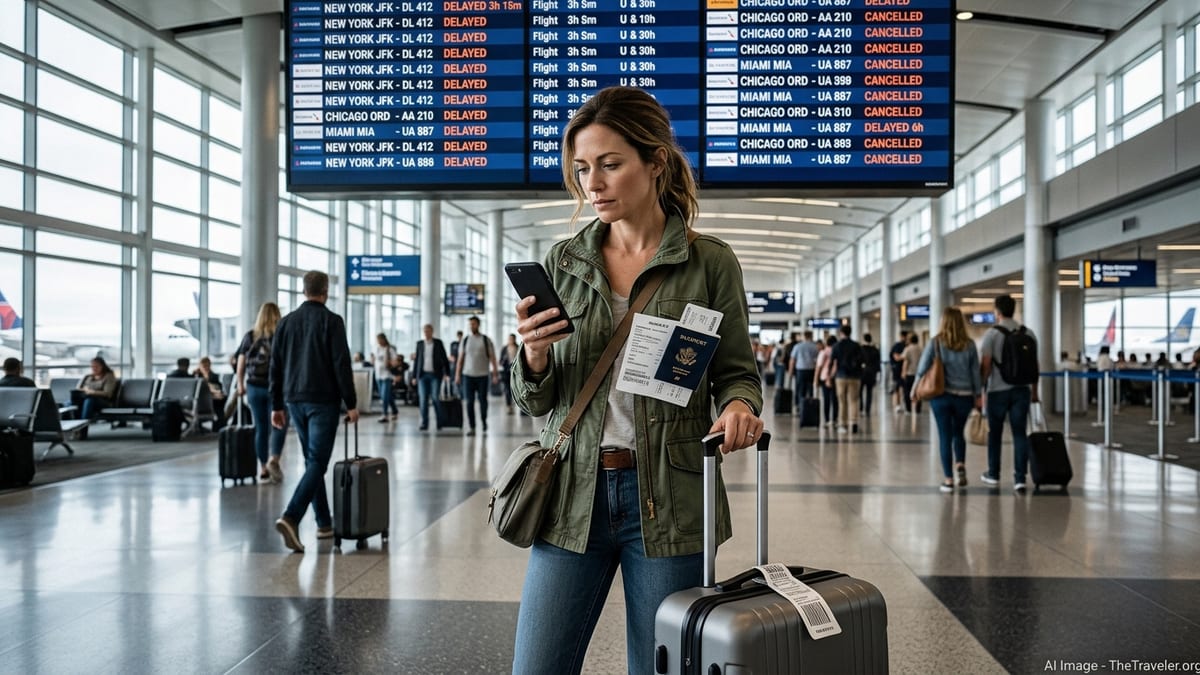
New federal rules: when delays and changes trigger a refund
For flights to, from or within the United States, the U.S. Department of Transportation now has a clear federal standard for when disrupted itineraries must be refundable. Under a final rule adopted on April 26, 2024, and in force since October 28, 2024, airlines must provide a cash refund of the ticket price when a covered flight is cancelled or “significantly changed” and the passenger does not accept the alternative offered.
The rule defines a significant change largely in terms of time and routing. If a domestic itinerary is rescheduled so that arrival at the final destination is three hours or more later than originally planned, or an international itinerary arrives six hours or more late, passengers who choose not to travel are entitled to a refund rather than just a credit. Significant changes also include departure or arrival from a different airport than originally booked, adding connection points compared with the original itinerary, or downgrading a passenger into a lower cabin than the one they paid for.
Importantly, the clock for these delays runs from the original schedule. Regulators specify that airlines cannot “reset” the delay by repeatedly issuing small schedule changes. If a series of rolling updates ultimately leaves a domestic flight more than three hours late, a traveler who decides not to fly can request their money back instead of accepting a voucher or rebooking. The refund must go back to the original form of payment, within seven business days for credit card purchases or within 20 days for cash or check payments, once the traveler declines the alternatives and the airline processes the refund.
What counts as an automatic refund, and what does not
The federal standard does not mean every delay results in money back. A refund is tied to whether the schedule disruption meets the “significant change” threshold and whether the traveler chooses not to accept the replacement itinerary, voucher or other compensation. If a domestic flight arrives two hours late but still within three hours of its original arrival time, the new DOT rule does not automatically entitle the traveler to a ticket refund, although the airline may still choose to offer meal vouchers or frequent flyer miles under its own customer service policies.
The new regulation also extends beyond airfare. Checked baggage fees must be refunded when a bag is lost or delivered much later than promised. Under the rule, airlines must return checked bag fees if a domestic checked bag is not delivered within 12 hours of the passenger’s arrival, or if an international checked bag arrives outside specified windows that can run up to 30 hours depending on distance and itinerary. Similarly, optional services such as advance seat assignments, Wi‑Fi or priority boarding must be refunded if the airline fails to provide them. For example, if a traveler pays for a specific extra-legroom seat and is involuntarily moved to a standard economy seat, they can claim back the seat fee even if they still take the flight.
There are also limits built into the rules. Refund rights focus on disruptions within the airline’s control or on the airline’s decision to change a schedule. Weather, air traffic control restrictions and other external events can still cause long delays without necessarily triggering additional compensation beyond what the regulation requires. The federal rule does not, by itself, mandate that U.S. airlines cover hotels, meals or ground transportation expenses when flights are cancelled or severely delayed, although many carriers commit to some level of support through their own customer service plans when disruptions are within their control.
Lost luggage and "reasonable" incidentals
When bags do not arrive, travelers’ rights are governed by both U.S. regulations and each airline’s contract of carriage. In addition to the new requirement to refund checked bag fees for significantly delayed delivery, airlines remain liable up to a set maximum amount for lost, damaged or delayed baggage on domestic itineraries. The U.S. liability limit is periodically adjusted, and airlines must publish it in their contracts and on request at the airport. Within that cap, passengers can seek reimbursement for both the contents of the bag if it is declared lost and for reasonable incidental expenses while it is missing.
To preserve these rights, travelers are advised to report missing baggage to the airline as soon as they discover it is not on the carousel, typically before leaving the airport arrivals area. Filing a written report and keeping copies of boarding passes, bag tags and receipts helps if there is a later dispute. Airlines may ask for proof of purchases for high-value contents, and they generally will not reimburse for items such as cash, jewelry or certain electronics that their contracts exclude from checked luggage coverage.
What qualifies as "reasonable" incidental expenses varies with circumstances but usually includes basic clothing and toiletry purchases required while a bag is delayed, particularly if the delay covers at least one overnight. Travelers who are forced to buy a toothbrush, a change of clothes or other essentials because their checked bag did not arrive can usually seek reimbursement within the liability limits, provided they keep itemized receipts. If the bag is ultimately declared lost, airlines process a claim for the bag’s contents, taking into account depreciation and any previous interim payments for incidentals.
How airline policies and foreign rules interact with U.S. protections
Federal refund rules apply to flights operated by U.S. and foreign carriers that depart from, arrive in or operate within the United States, but they are not the only set of passenger protections that may apply to an itinerary. On many international routes, foreign frameworks can provide additional entitlements. For example, under European Union Regulation 261/2004, travelers departing from an EU or Schengen airport, or flying into one on an EU carrier, may qualify for standardized compensation and care when they are denied boarding, experience long delays on arrival, or face short-notice cancellations that are not caused by extraordinary circumstances such as severe weather.
These European rules are structured differently from U.S. regulations. EU 261 focuses on lump-sum monetary compensation and guaranteed assistance such as meals, refreshments and hotel rooms after certain thresholds are met, sometimes regardless of whether the passenger ultimately accepts an alternative flight. By contrast, the updated U.S. framework centers on the right to a refund when the airline fails to deliver the service purchased or significantly changes the itinerary, and it largely leaves decisions about additional vouchers or care to each carrier’s own policies. For transatlantic travelers, this can mean that a single disruption may trigger both an EU compensation claim and a U.S. refund right, depending on the route and ticket type.
Within the United States, travelers can also consult the DOT’s Airline Cancellation and Delay Dashboard, which compiles each major carrier’s written commitments on meals, hotel rooms and ground transportation during “controllable” disruptions, such as crew scheduling problems or mechanical issues. While these commitments are not separate laws, airlines are required to adhere to what they promise in their customer service plans. For passengers stranded overnight by a disruption the airline acknowledges as its responsibility, checking both the federal baseline and the carrier’s published policy can clarify whether they may claim a hotel room, meal vouchers or reimbursement for self-arranged lodging.
Practical steps for travelers facing holiday disruptions
Because many refund and reimbursement rights now depend on whether the traveler accepts or declines alternatives, documentation has become especially important. Consumer advocates recommend monitoring airline notifications closely in the days before departure, taking screenshots or saving emails that show original and revised flight times, and noting when delay estimates cross the three-hour domestic or six-hour international threshold. If a traveler decides they no longer wish to take a significantly delayed or changed flight, they should explicitly inform the airline that they are declining the new itinerary and are requesting a refund under the DOT rule, rather than accepting credits or rebooking.
At the airport, travelers who prefer to continue their trip can still ask gate agents or customer service staff what the airline is prepared to offer while they wait. During busy periods like Thanksgiving week, many U.S. airlines add staff and encourage customers to use mobile apps, text channels and self-service tools to rebook themselves on alternative flights. For some passengers, reaching their destination for a family gathering will matter more than securing a refund, and taking an offered replacement flight the next morning may be the more practical choice even if the original disruption technically met the refund threshold.
Looking ahead to the rest of the winter travel season, passengers can reduce uncertainty by reviewing both federal guidance and their airline’s contract of carriage before departure, especially for complex itineraries involving connections or codeshares. Those planning trips that cannot easily be rescheduled may also consider how trip insurance, credit card travel protections and flexible ticket options interact with statutory rights. While none of these products removes the risk of delays or cancellations, understanding in advance when U.S. law now guarantees a cash refund, and when help is discretionary, can make it easier to decide on the spot whether to wait for a later flight, reroute the journey or walk away and reclaim the cost of the ticket.