


More news on this day
A powerful Thanksgiving nor’easter swept up the US East Coast on Thursday, November 26, flooding coastal communities, knocking out power to hundreds of thousands of homes and businesses and disrupting one of the busiest travel days of the year, including the historic postponement of New York City’s 100th Macy’s Thanksgiving Day Parade.
Get the latest news straight to your inbox!
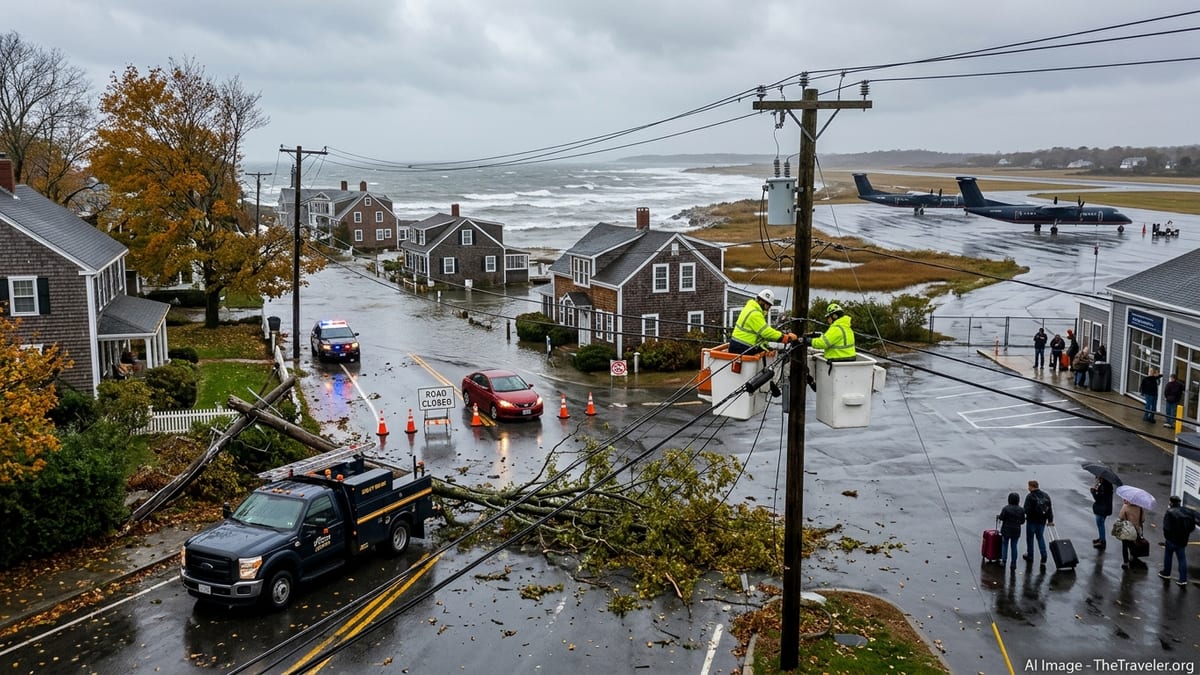
Power outages and coastal flooding from the Mid-Atlantic to New England
The storm, driven by a deepening low-pressure system offshore, produced wind gusts of up to about 70 mph across parts of the Mid-Atlantic and Northeast through Thursday, toppling trees and power lines across a wide area. At the peak on Thursday evening, PowerOutage.us data showed just under 1 million customers without electricity nationwide, with the vast majority in East Coast states from North Carolina to New Jersey and Pennsylvania.
Outage levels fluctuated through the day as utilities restored service and new damage occurred. Around 9:56 p.m. Eastern time, about 908,000 customers remained without power, down from roughly 961,000 at about 7:30 p.m. Eastern. States including Virginia, Maryland, Pennsylvania and New Jersey were among the hardest hit, each seeing well over 100,000 outages at various points in the evening as saturated soil and high winds combined to bring down large trees.
Along the coastline, strong onshore winds coincided with high astronomical tides, contributing to coastal flooding in low-lying communities. Forecasters and local officials reported flooded streets and waterfront properties from the New Jersey shore northward into parts of coastal New England. In some locations, sea levels during high tide approached or exceeded typical thresholds used by forecasters to classify minor to moderate coastal flooding, leading to road closures and warnings for drivers to avoid inundated routes.
While detailed damage assessments are still in progress, early reports indicated localized structural damage from falling trees and power poles, as well as scattered flooding of basements and ground floors in vulnerable shoreline neighborhoods. Emergency managers had warned ahead of the holiday that residents in flood-prone areas should be prepared for road closures and potential evacuation requests if water levels rose more quickly than expected.
Holiday air travel snarled by wind, rain and low visibility
The severe weather hit at a critical moment for US transportation networks, coinciding with one of the busiest air travel days of the year. By late Thursday, flight-tracking service FlightAware reported more than 2,000 flights to or from US destinations delayed and in excess of 400 canceled as the storm system affected major hubs along the eastern seaboard.
Figures from Thursday afternoon showed at least 454 US-related flight cancellations and around 2,400 delays attributed in part to the storm’s impact on operations at key airports. Facilities in the Washington, Baltimore and New York City areas reported some of the worst disruption, with a mix of low clouds, driving rain and strong crosswinds periodically slowing arrivals and departures. At some airports, temporary ground stops were implemented as air traffic controllers and airlines worked to manage spacing between aircraft in challenging conditions.
Passengers traveling through these hubs on Thanksgiving reported extended waits on the ground and in terminals as crews repositioned aircraft and airlines adjusted schedules. With many flights fully booked for the holiday period, rebooking options were limited for some travelers whose journeys were canceled outright, increasing the likelihood of knock-on disruption into the weekend as carriers worked through backlogs.
Rail and road networks along the I‑95 corridor also faced weather-related delays. Heavy rain led to standing water on some highways, while high bridge crossings in exposed coastal locations experienced brief restrictions for high-profile vehicles. Several states urged motorists to reduce speed, allow extra time and monitor local advisories, particularly near tidal rivers and barrier islands where water levels rose close to road surfaces.
Macy’s 100th Thanksgiving Day Parade postponed for the first time
One of the storm’s most high-profile consequences for travelers and holiday visitors was the postponement of New York City’s 100th Macy’s Thanksgiving Day Parade. City officials and parade organizers confirmed earlier in the week that the procession, traditionally held on Thanksgiving morning, would be moved to Saturday, November 28, because of the projected combination of strong winds and heavy rain.
It is the first time the parade has been rescheduled due to severe weather in its century-long history. Organizers cited concerns about safely operating the event’s giant balloons amid forecast gusts channeled between Manhattan’s tall buildings, as well as the broader safety of spectators lining the route from the Upper West Side to Midtown. New York authorities had already implemented standard street closure plans for the parade route but indicated that conditions on Thursday were not compatible with running the event as scheduled.
The postponement has practical implications for thousands of performers, marching band members and out-of-town visitors who had timed their trips specifically around Thursday’s parade. Many groups are now working to extend hotel stays, adjust bus and air travel bookings and reconfirm logistics for the rescheduled Saturday morning start. For spectators already in the city, tourism officials have noted that Friday is expected to bring improving, though still breezy, weather, allowing for some sightseeing and indoor attractions before the parade now planned for the weekend.
Broadcasters have also adjusted their plans. Networks that typically air the parade live on Thanksgiving morning are instead relying on alternate holiday programming on Thursday, with updated schedules indicating live coverage of the rescheduled parade on Saturday. Travelers planning to watch from hotel rooms or vacation rentals are being advised to confirm local broadcast times, as schedules may differ from traditional Thanksgiving morning lineups.
Regional variations in impact and early signs of improvement
While the nor’easter’s footprint was extensive, its effects varied regionally. In parts of the interior Northeast and the Midwest, the storm delivered heavy rain accompanied by lower wind speeds, leading primarily to ponding on roads and isolated power interruptions. In contrast, coastal zones from the Carolinas to New England experienced the sharpest combination of strong gusts, storm surge and tidal flooding.
Some hospitals, businesses and public facilities reported temporary power losses. In Pennsylvania, one hospital experienced a partial outage on Thursday afternoon, but backup systems and rapid utility work allowed power to be restored before patients needed to be moved. Elsewhere, local transit agencies reported scattered service delays where blocked tracks or flooded underpasses briefly impeded trains and buses, though most primary routes continued operating with weather-related adjustments.
By late Thursday night, forecasters indicated that the most intense phase of the storm was shifting northeastward into Atlantic Canada, with conditions beginning to gradually improve across much of the Mid-Atlantic and parts of New England. Winds, while still blustery in many locations, were expected to ease into the 25 to 35 mph range on Friday, reducing the risk of additional widespread tree damage. However, lingering showers, saturated soils and elevated rivers meant that localized flooding and smaller-scale outages remained possible into the start of the weekend.
Authorities in several states cautioned residents and visitors not to underestimate post-storm hazards. Downed power lines, weakened trees and debris on trails and beaches can remain dangerous even after skies begin to clear. Travelers venturing out for Black Friday shopping or onward holiday journeys were advised to avoid touching any fallen wires, heed road closure signs and allow extra time on routes that pass through hard-hit coastal areas or wooded stretches.
What travelers should do next
For air passengers, the most important step in the wake of Thursday’s disruption is to monitor airline communications closely. Schedules for Friday and Saturday remain subject to change as carriers reposition aircraft and crews, and as airports complete inspections of runways, lighting and navigation equipment following strong winds and heavy rain. Travelers are being urged to use airlines’ mobile apps, text alerts and official websites to track flight status and rebooking options, rather than relying on third-party information that may not reflect the latest operational decisions.
Those planning to drive along the East Coast through the weekend should check state transportation department updates for closures, detours and reduced-speed advisories, particularly near coastal causeways, river crossings and low-lying parkways. Overnight refreezing is not a major concern in most affected areas at present, but water-slicked roads, lingering debris and localized flooding can still slow traffic and pose safety risks. Rental car customers whose itineraries were disrupted on Thursday may also find higher demand at some airport locations as stranded passengers seek alternative options.
Visitors in New York City intending to attend the Macy’s Thanksgiving Day Parade should reconfirm the rescheduled timing, route and security guidelines for Saturday, November 28. City agencies are expected to issue updated advisories on street closures, public transit adjustments and recommended viewing areas as the new date approaches. Hotel concierges, official tourism information points and the city’s transit authority channels can provide localized, current information on how best to reach the parade route using subways and buses rather than private vehicles.
More broadly, officials and forecasters emphasize that conditions are improving but not yet fully back to normal along parts of the East Coast. Travelers with flexible plans may wish to allow an extra day for connections or sightseeing to account for residual disruption, while those with fixed itineraries should build in additional time to reach airports, rail stations or bus terminals. As utilities repair remaining outages and transportation networks clear backlogs, the focus over the coming days will be on restoring normal holiday travel patterns without compromising safety in areas still recovering from Thursday’s powerful storm.