


More news on this day
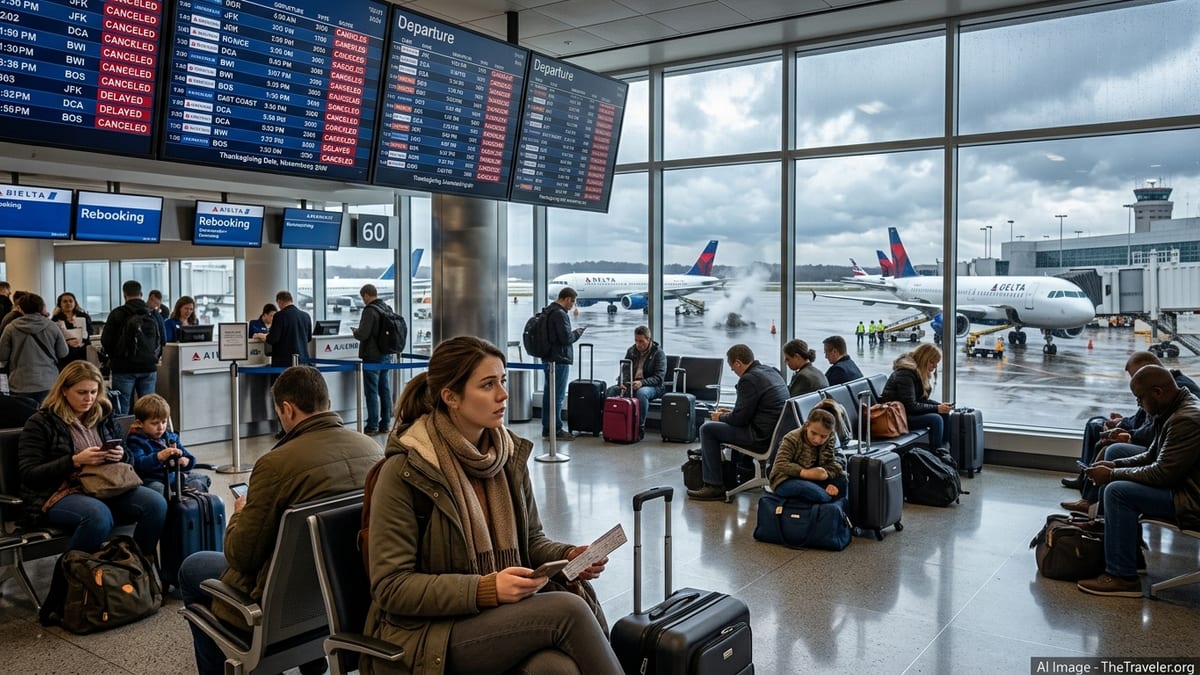
A powerful coastal storm and heavy rain along the US East Coast led to hundreds of flight cancellations and widespread delays on Thanksgiving Day, November 26, 2026, disrupting holiday travel plans just as millions of Americans were making their way to and from family gatherings.
Get the latest news straight to your inbox!
How Many Flights Were Disrupted and Where
By Thursday afternoon on November 26, 2026, more than 300 flights within, into or out of the United States had been canceled, according to multiple trackers that analyze live Federal Aviation Administration status data and airline schedules. The cancellation count moved during the day as airlines adjusted operations, but several independent trackers placed the national cancellation rate at just over 2 percent of the day’s scheduled departures, equivalent to a few hundred flights on a day with roughly 15,000 planned operations. That is higher than a typical Thanksgiving Day, which usually records one of the lowest cancellation rates of the long weekend, but well below the worst days seen on some recent post-holiday Sundays.
The heaviest concentration of cancellations occurred at East Coast airports directly in the path of the coastal storm system. Flight-tracking and delay dashboards that aggregate FAA data showed Baltimore/Washington International Thurgood Marshall Airport with roughly a quarter of its departures canceled at certain points during the day, making it one of the most affected major airports. New York John F. Kennedy, LaGuardia and Washington National also logged a noticeable share of scrubbed flights, along with Boston Logan, as airlines cut back schedules in response to crosswinds, low visibility and air traffic control flow restrictions associated with the nor’easter-like system.
Because major East Coast airports such as New York, Washington and Boston serve as national and international hubs, the day’s cancellations were not limited to the immediate storm zone. Aircraft and crews scheduled to operate later flights from unaffected regions were held up by earlier cancellations and delays, generating knock-on disruption at airports as far away as Chicago, Dallas and Denver. However, outside the hardest hit East Coast gateways, cancellation percentages at most large US airports appeared to remain in the low single digits, and many mid-continent and West Coast airports reported largely routine Thanksgiving Day operations aside from weather-related delays on specific routes.
Storm Impacts Beyond the Airports
The aviation disruption on Thanksgiving formed part of a wider transportation and infrastructure impact from the storm system. Across parts of the Mid-Atlantic and Northeast, heavy rain, localized flooding and strong winds flooded streets, knocked down tree limbs and power lines and left hundreds of thousands of customers without electricity during the holiday. In New York City, the same wind and rain conditions that complicated air traffic contributed to the first postponement of the Macy’s Thanksgiving Day Parade in the event’s near century of history, with city officials citing safety concerns around large balloons and crowd conditions. Performers, marching bands and visitors who had traveled for the parade were left recalibrating plans and in some cases scrambling to extend hotel stays and adjust flights to remain in the city for the rescheduled event.
On the ground, highway travel in affected regions was slowed by ponding on roads and reduced visibility, and rail services in some corridors operated at lower speeds to account for adverse conditions. For air travelers, this combination of factors meant that even those whose flights remained scheduled often faced longer-than-usual journeys to and from the airport and occasional service interruptions on local transit links. However, outside the storm’s main impact zone, road and rail travel over much of the country proceeded broadly as forecast for a major holiday, with congestion peaking on the afternoon and evening before Thanksgiving rather than on the day itself.
Energy and utility disruptions also indirectly affected some travelers. Extended power outages in a few communities near major airports complicated access to travel information for residents relying on home internet or needing to charge devices. Nonetheless, airports themselves generally continued operating on backup power or redundant systems, and there were no widespread reports of terminals closing due solely to loss of electricity. The primary aviation effect of the storm remained weather-driven constraints on safe flight operations, rather than infrastructure failure inside airport facilities.
Airlines’ Operational Response and Waiver Policies
As the Thanksgiving forecast tightened earlier in the week, most major US airlines issued weather waivers for travel to, from or through affected East Coast cities over a several-day window around Thursday, November 26. These waivers typically allowed passengers booked on eligible flights to change their departure dates, adjust routings within the same general origin and destination region, or move to earlier or later services without paying standard change fees. In many cases, any fare differences were also waived as long as customers rebooked into the same cabin and completed travel by a defined date, often between Friday, November 27 and Saturday, November 28.
The scope of each waiver varied by carrier and itinerary, but hubs such as Newark, Washington, Boston and New York area airports featured heavily as covered points. Some carriers also included secondary airports in the Mid-Atlantic and New England, reflecting concern that the storm’s wind field and precipitation could swing inland or linger longer than initially forecast. Airline communications and third-party trackers both indicated that carriers encouraged passengers with flexible plans to shift to flights earlier on Wednesday, November 25 or to off-peak Thanksgiving Day departures in an effort to spread demand and reduce the number of travelers stranded if conditions deteriorated.
On Thanksgiving Day itself, airlines attempted to combine waivers with tactical schedule adjustments. These included proactive cancellations on routes most exposed to the storm’s crosswinds or low ceiling conditions, as well as consolidating lightly booked flights and swapping aircraft types to better match capacity with demand and crew availability. While these strategies helped avoid an even higher rate of last-minute cancellations, they also contributed to complex rebooking patterns. Some passengers reported being moved to nonstops from major hubs to minimize their exposure to connecting flights through multiple at-risk airports, while others accepted routings through less affected mid-continent hubs even if this added travel time, in exchange for a higher likelihood of operating on schedule.
What the Data Shows About Thanksgiving Flight Reliability
Historical data from transportation statistics and independent holiday travel analyses suggest that Thanksgiving Day itself is usually one of the more reliable days for air travel within the broader holiday window. Over recent years, the lowest shares of late or canceled flights have often fallen on the Thursday holiday, with significantly higher disruption rates on the Sunday and Monday that follow, when a surge of return traffic and aircraft repositioning strains networks. Pre-Thanksgiving Wednesdays can also be busy, but in many years they have not recorded the highest cancellation percentages, particularly when weather cooperates.
For 2026, early aggregated figures for the week surrounding Thanksgiving show a pattern broadly consistent with these trends but with important regional exceptions driven by this year’s storm. Data compiled from FAA feeds and airline schedules indicate that the overall national cancellation rate for Thanksgiving Day, November 26, was elevated compared with an average Thursday but still lower than some of the worst days recorded in previous holiday seasons. At the same time, several East Coast hubs experienced localized cancellation percentages that were substantially above both their typical daily averages and the national Thanksgiving mean, confirming how a concentrated weather event can distort the experience for travelers in specific corridors even when national statistics appear modest.
Regulators have also recently updated reporting rules that require airlines to categorize the causes of cancellations and long delays more precisely, including whether they result from weather, air traffic control, airline operational issues, or other factors. While detailed causal breakdowns for November 2026 will not be available until after the reporting period closes, Thanksgiving week data will ultimately be analyzed under these new categories. That may help clarify the extent to which the disruptions on November 26 were directly attributable to the coastal storm and associated safety restrictions, as opposed to knock-on effects from earlier system outages or staffing constraints that some carriers experienced earlier in the month.
What Travelers Should Do Next
For travelers whose flights on Thanksgiving Day were canceled or significantly delayed, the most immediate step is to review their airline’s notifications and official policies. Under longstanding US Department of Transportation guidance, if a carrier cancels a flight or makes a significant schedule change and the passenger chooses not to travel, the customer is typically entitled to a refund of the unused portion of the ticket back to the original form of payment. This applies even when the cause is weather, though airlines are not required to provide meal or hotel vouchers when irregular operations are outside their control. Travelers who accept rebooking rather than a refund generally do so under the terms of the carrier’s weather waiver or contract of carriage, which may limit compensation to alternate transportation.
Those with travel still planned for the remainder of the Thanksgiving period should monitor their flight status frequently, particularly if transiting an airport in the Mid-Atlantic or Northeast or connecting through hubs that saw heavy cancellations on November 26. Even after the core of the storm system moves offshore, residual effects can include aircraft and crews being out of position, leading to delays on Friday and the weekend as airlines work through backlogs. Industry forecasts and historical timekeeping data indicate that the Sunday after Thanksgiving, which in 2026 falls on November 29, is expected to be the busiest and potentially most delay-prone day of the entire period as millions of travelers return home.
Given this backdrop, practical steps for upcoming flights include allowing additional time to reach the airport in case of lingering weather or traffic issues, keeping contact details updated with airlines so that rebooking options arrive promptly if schedules change, and considering early morning departures where possible since those are more likely to leave on time before the day’s disruptions compound. Travelers holding nonessential or flexible itineraries might also weigh the option of voluntarily shifting their return to less congested days, subject to any remaining change-fee waivers and fare conditions, to reduce the risk of extended delays. As always, the most current and applicable information will come directly from individual airlines, airports and official FAA status tools, which are updated throughout the day as conditions evolve.