


More news on this day
A powerful coastal storm swept up the US East Coast over Thanksgiving, flooding roads, cutting power to hundreds of thousands of homes and businesses and forcing the first weather-related postponement of New York City’s Macy’s Thanksgiving Day Parade, while also disrupting air travel and canceling Philadelphia’s long‑running Thanksgiving procession.
Get the latest news straight to your inbox!
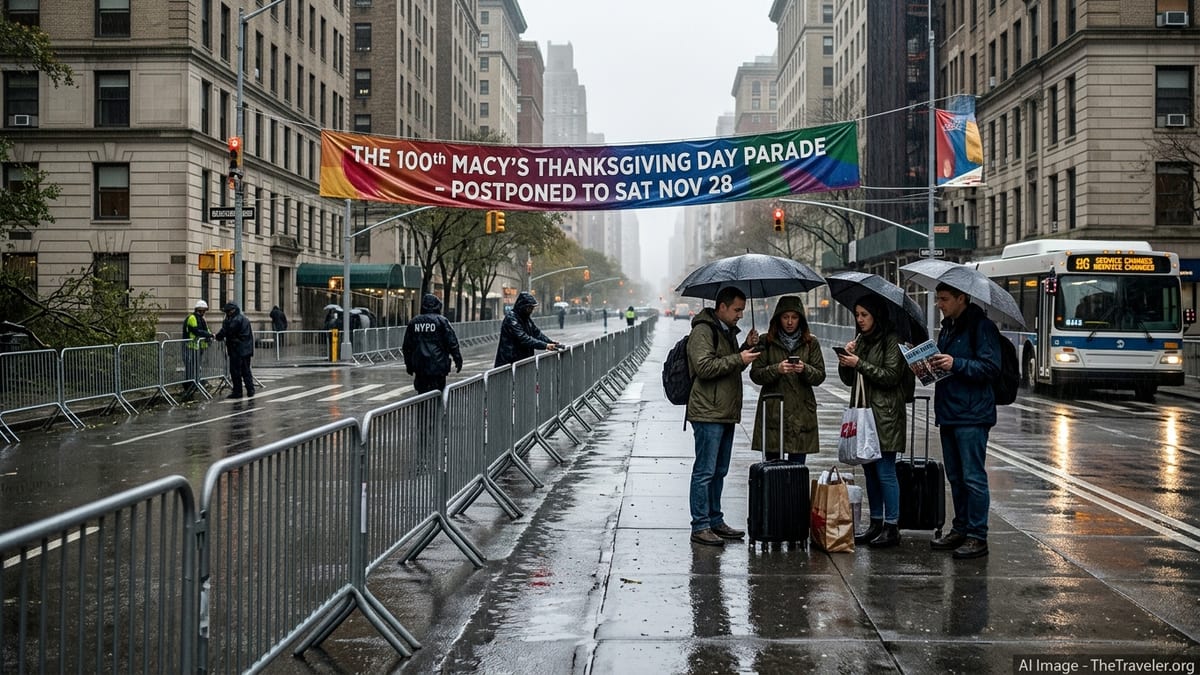
Storm lashes Mid‑Atlantic and Northeast on key holiday
The coastal storm intensified along the Eastern Seaboard through Thursday 26 November 2026, bringing periods of heavy rain, strong winds and coastal flooding from the Carolinas to New England. Forecast discussions from the National Weather Service highlighted expected wind gusts of 40 to 60 miles per hour inland and higher values along exposed coasts, along with several inches of rain in some Mid‑Atlantic and Northeast communities.
By Thursday afternoon, outage‑tracking site PowerOutage.us was reporting roughly 800,000 to 900,000 customers without electricity nationwide, with the largest clusters in Mid‑Atlantic states including Virginia, Maryland and Pennsylvania. State and local emergency managers warned that numbers were fluctuating as utilities restored service in some neighborhoods while trees and power lines fell elsewhere.
Flood and high‑wind warnings were in force along a broad swath of the I‑95 corridor, including Virginia Beach, Washington, DC, Baltimore, Philadelphia, New York City and parts of coastal New Jersey. Forecasters said hazardous conditions were likely to persist into Friday 27 November as the low‑pressure system tracked northward, prolonging rough seas, beach erosion and pockets of inland flooding along tidal rivers and bays.
Parade plans upended in New York and Philadelphia
The storm’s most visible impact on holiday events came in New York City, where organizers postponed the 100th Macy’s Thanksgiving Day Parade for the first time since the event began in 1924. City officials announced on Wednesday 25 November that the parade, traditionally held on Thanksgiving morning, would move to Saturday 28 November at 8:30 a.m. Eastern time because of the forecast high winds and heavy rain.
Macy’s and city emergency management authorities said the call was made in coordination with meteorologists and public‑safety agencies, noting that wind gusts in the 40 to 50 mile‑per‑hour range could have threatened the safe operation of the giant character balloons that are a hallmark of the event. The parade has previously been canceled during World War II but had never before been postponed to a different day due to weather.
Travelers who planned to watch the procession as part of a holiday trip to New York now face a reshuffled schedule. Hotel guests near the parade route on the Upper West Side and in Midtown may see unusually tight security and large crowds on Saturday morning instead of Thursday, while some visitors with fixed Friday or Sunday departure dates will miss the live event entirely unless they change reservations. Local transit operators have advised passengers to allow extra time on Saturday for subway and bus journeys that intersect the revised route.
In Philadelphia, the 6abc Dunkin’ Thanksgiving Day Parade, billed as the nation’s oldest Thanksgiving parade, took a different approach. Organizers canceled the street parade along the Benjamin Franklin Parkway because of the incoming nor’easter and instead produced a studio‑based televised program on Thursday morning. City notices explained that wind, rain and potential flooding made it unsafe to stage floats, marching bands and large crowds outdoors for several hours.
Visitors already in the city were still able to see some performances via local television or online streams but did not have the option of attending in person along the parkway. Tourism officials stressed that indoor attractions and many restaurants remained open, though travelers needed to be prepared for wet, windy conditions and intermittent transit adjustments through the day.
Flight disruptions and transport impacts on one of the busiest travel days
The storm struck during one of the peak travel periods of the year in the United States, resulting in widespread but uneven disruption across transport networks. By Thursday afternoon, data from flight‑tracking services indicated more than 400 flights to, from or within the country had been canceled, with well over 1,800 delayed. The heaviest impacts were concentrated at major East Coast hubs and cities beneath the main rain and wind shield, including New York‑area airports, Philadelphia and Washington‑area facilities.
Airports in the Mid‑Atlantic reported sequences of ground stops and flow‑control programs as air‑traffic managers spaced arrivals for safety amid low clouds, gusty crosswinds and periods of heavy rainfall. Some carriers offered flexible rebooking policies for passengers scheduled to travel on Thursday and Friday, encouraging those with non‑essential trips to consider moving flights to less affected windows later in the weekend.
Rail and road travel were also affected, though conditions varied significantly along the corridor. Intercity rail operators advised of potential delays due to speed restrictions where high winds were reported, as well as isolated power issues affecting signals and overhead lines. On highways from Virginia through New Jersey, surface flooding, downed branches and poor visibility slowed holiday traffic, particularly around coastal inlets and low‑lying sections of interstate highways.
Travel planners had previously warned that a direct hit on Wednesday, traditionally the single busiest air and road travel day around Thanksgiving, could have produced even more severe knock‑on effects. Instead, many travelers reached their destinations before conditions deteriorated, but those moving on Thanksgiving Day itself, or planning to return home on Friday, faced a greater risk of delays and rerouting.
Utilities, coastal flooding and local emergency measures
The storm’s strong onshore flow and full‑moon tides generated coastal flooding from parts of the Southeast through the Mid‑Atlantic and into the New York City region. National guidance from federal emergency agencies ahead of the storm had highlighted the risk of significant coastal inundation and beach erosion in areas including the Outer Banks, the Delmarva Peninsula and barrier islands from New Jersey northward.
In addition to the widespread power cuts, some utilities and local agencies implemented specific conservation measures to keep critical systems online. In suburban Maryland, the Washington Suburban Sanitary Commission asked about 1.9 million water customers in Montgomery and Prince George’s counties on Thursday afternoon to limit usage to essential needs only, citing intermittent power disruptions at water facilities linked to the storm.
Residents in the affected Maryland communities were urged to conserve water by limiting toilet flushes, postponing laundry and dishwasher use, and avoiding non‑essential outdoor water consumption until utility systems stabilized. Authorities emphasized that the request was precautionary and that tap water remained safe to drink, but they warned that higher‑than‑normal demand during power fluctuations could strain pumping and treatment operations.
Along the Jersey Shore and in parts of coastal New York, local governments prepared temporary barriers at vulnerable spots and encouraged residents in flood‑prone neighborhoods to move vehicles to higher ground. Some municipalities reported street closures where tidal waters overtopped seawalls and where strong waves undercut dunes. Emergency managers reminded visitors staying in beachfront rentals to monitor local alerts, avoid driving through standing water and respect any temporary closures of boardwalks, piers and oceanfront parks.
What travelers should expect through the weekend
Forecasts from the National Weather Service indicated that the core of the coastal storm would continue to affect the Mid‑Atlantic and southern New England into Friday 27 November 2026, with gradually improving conditions from south to north. Rainfall rates were expected to diminish through the day, although lingering showers, blustery winds and pockets of minor coastal flooding could persist into the evening along parts of the New Jersey, Long Island and Southern New England coastlines.
By Saturday, forecasters expect more seasonable and comparatively calm weather for much of the Northeast corridor, a shift that informed New York’s decision to reschedule the Macy’s Thanksgiving Day Parade for that day. Travelers planning to attend the parade should anticipate pre‑dawn street closures, dense crowds along Central Park West and Sixth Avenue, and heightened security screening around staging areas. Those with Saturday morning departures from New York‑area airports may wish to allow extra time to reach terminals if their road routes intersect closed or congested streets near Midtown and the Upper West Side.
Elsewhere in the country, a separate series of Pacific storms is forecast to affect portions of the West Coast into the following week, bringing rain, mountain snow, strong winds, coastal flooding and high surf to some coastal communities. While these systems are distinct from the Thanksgiving nor’easter impacting the East Coast, they could present additional travel challenges for itineraries that combine cross‑country flights with regional hops, particularly at West Coast hubs.
Travelers with plans over the remainder of the holiday weekend are being urged by forecasters and transport operators to keep checking real‑time information before heading out. That includes verifying flight status with airlines, reviewing rail service alerts, and monitoring local weather and emergency notifications for any remaining high‑wind, flood or coastal‑flood advisories. For those visiting New York or Philadelphia specifically for holiday parades, the key practical change is that New York’s procession is now set for Saturday morning, while Philadelphia’s 2026 event has shifted entirely to a studio broadcast format, with no outdoor parade taking place this year.