


Cades Cove is the drive everyone tells you not to miss in Great Smoky Mountains National Park: an 11-mile one-way loop of barns and cabins, misty pastures, and near-guaranteed wildlife sightings. Yet every summer and fall, visitors come away frustrated, exhausted, and vowing never to do it again. The reason is almost always the same single mistake: underestimating how Cades Cove really works. If you treat this beautiful valley like a quick scenic detour, it can ruin a day of your vacation. Plan it like a half-day backroads expedition, and it becomes the highlight of your Smokies trip.
Get the latest updates straight to your inbox!
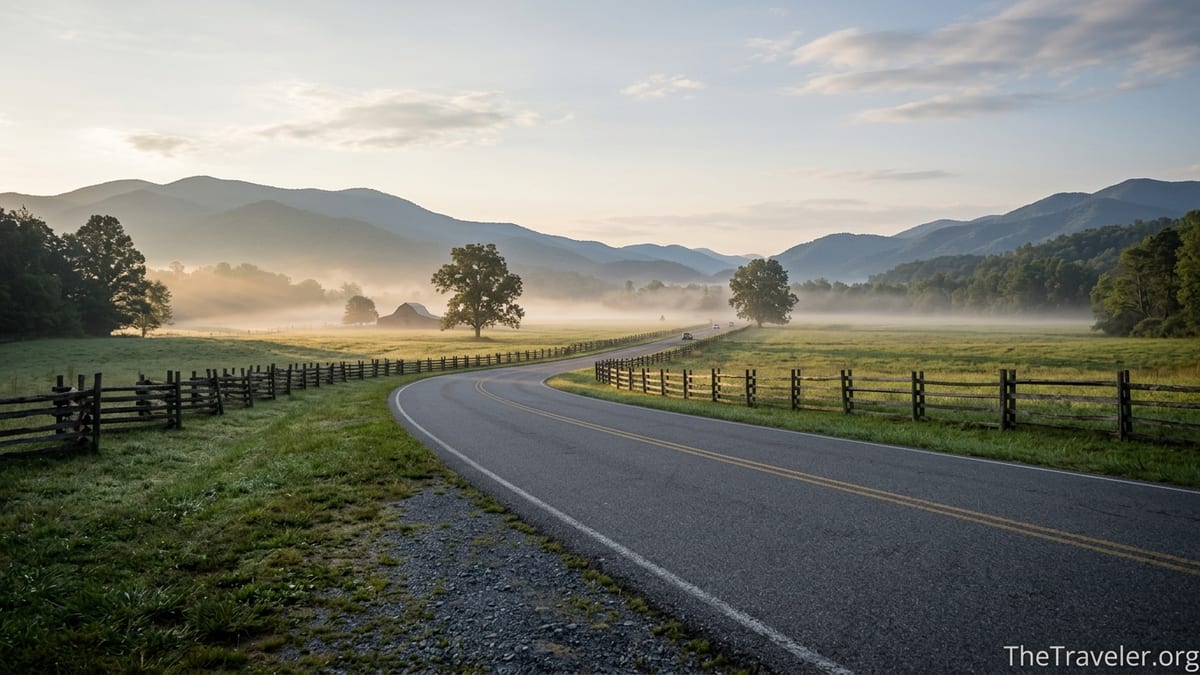
The One Mistake: Treating Cades Cove Like a Quick Scenic Drive
The biggest mistake that ruins Cades Cove for first-time visitors is assuming it is a simple 11-mile scenic drive you can “knock out” in an hour between breakfast in Pigeon Forge and an afternoon hike. On a map, 11 miles at a posted 35 mph speed limit looks trivial. In reality, on a busy summer Sunday or during October leaf season, that loop can easily take three to four hours in stop-and-go traffic, even if you never step out of your vehicle. Rangers and local guides routinely warn travelers to allow at least two to four hours for the loop in normal conditions, and that is without a major wildlife jam.
In practice, this miscalculation looks like a family leaving a hotel in Gatlinburg at 9:30 a.m., grabbing drive-through coffee in Townsend, and reaching the start of the loop around 11:00 a.m. By then, lines of cars can already be stacked up behind a slow-moving RV or a knot of vehicles pulled half off the road to look at a distant black bear. With no alternate route and very few places to turn around, that family can be stuck crawling forward at walking speed for miles as the kids get carsick and tempers fray.
Compounding the problem, many travelers do not realize that Cades Cove Loop Road only opens from sunrise to sunset, not 24 hours a day. Arriving late in the afternoon and finding yourself only halfway around as the light fades can be just as frustrating as the midday gridlock. The loop is designed for meandering and exploration, not for checking off a box between outlet shopping and a dinner reservation in Pigeon Forge.
Think of Cades Cove as an immersive valley experience, not a road. When you budget time accordingly, pauses for deer in the meadow or a historic cabin suddenly feel like part of the charm instead of delays wrecking a schedule.
Why Cades Cove Bogs Down: Traffic, Wildlife Jams, and Human Nature
To understand why the “quick drive” mindset fails, it helps to picture how Cades Cove actually functions on the ground. The loop is a paved, one-way road that encircles a wide mountain valley. There are multiple pullouts and side roads, but the basic flow is a single-file procession of cars, RVs, tour vans, and bicycles all moving in the same direction. When even one driver decides to stop in the travel lane to take a photo from the window or creep along at 5 mph scanning every field for bears, the entire loop can back up.
Wildlife sightings are the single biggest cause of full-stop traffic. A single black bear close to the road or a group of whitetail deer in the morning fog can trigger what locals call a “bear jam,” where dozens of cars pile up as people slow, pull halfway off the road, or stand in the lane with cameras. Rangers frequently have to respond to clear these jams for safety reasons, further slowing the flow. On a busy July afternoon, it is not unusual for a bear jam to add 30 to 45 minutes to an already crowded loop.
Human behavior at the historic sites can also choke the route. The John Oliver Cabin, the three historic churches, and the Cable Mill area near the midpoint of the loop are major magnets. Drivers who intend only to “roll past” find themselves boxed in by cars waiting for a parking space or pedestrians wandering across the road between the parking area and the cabins. On peak weekends, parking near the Cades Cove Visitor Center and Cable Mill can be full continuously from late morning through midafternoon.
All of this is compounded by the fact that there is essentially no cell signal on the loop and only limited pullouts that allow a true bypass. If you hit the loop at the wrong time with the wrong expectations, you cannot re-route like you might around a traffic snarl in a city. You are committed. That is why the fundamental error is not simply “going when it is busy” but going when it is busy with a city-driver mindset.
Timing It Right: When to Drive, Bike, or Skip the Loop
Avoiding the classic Cades Cove meltdown starts with timing. The loop is open to motor vehicles from sunrise to sunset every day except Wednesdays in the main season, when it is set aside as a vehicle-free day for cyclists and pedestrians from May through at least September. If you want to drive, that alone makes Wednesday a poor choice in summer unless you are intentionally planning to bike or walk.
For drivers, the best windows are typically right at sunrise and later in the afternoon, especially on non-holiday weekdays. A couple staying in Townsend in June, for example, can leave their motel at 6:15 a.m., reach the loop entrance around 6:30 a.m., and often complete the full circuit before 9:00 a.m. with cool temperatures, soft morning light, and far fewer cars. The same loop starting at 10:30 a.m. may still be crawling at 1:30 p.m., especially if a thunderstorm has pushed wildlife back out into the open fields.
For cyclists and walkers, those vehicle-free Wednesdays are a gift. From early May through September, the park closes the entire 11-mile loop to motor vehicles all day. On a sunny June Wednesday, you will see everything from serious road cyclists knocking out the loop in under an hour to families renting cruisers at the Cades Cove Campground Store and wobbling through their first mile. If you are not an experienced cyclist, plan for the loop to take you significantly longer than you expect. The road is paved but rolling, and many first-timers underestimate how hilly 11 miles can feel without shade in the afternoon.
Travelers who only have one full day in the Smokies and are visiting in peak leaf season may reasonably decide to skip Cades Cove entirely rather than gamble four hours in the car. In that case, consider a sunrise drive up Newfound Gap Road or a hike to Laurel Falls instead. The key is being honest about your tolerance for crowds and traffic. Trying to squeeze Cades Cove into an already packed weekend simply because “everyone says you have to” is often how the day unravels.
Planning Essentials: Parking Tags, Vehicle-Free Days, and Facilities
Another variation of the core mistake is assuming that Cades Cove operates like an older, frictionless national park experience, where you can drive in at any time and simply cruise around. Great Smoky Mountains National Park remains one of the few major parks with no entrance fee, but since 2023 it has required a valid parking tag for any vehicle parked more than 15 minutes anywhere in the park. If you plan to stop at Cades Cove overlooks, trailheads, or the visitor center, you need to purchase a daily, weekly, or annual parking tag and display it on your dashboard or windshield. Rangers do cite vehicles without tags in popular areas like Cades Cove.
On vehicle-free Wednesdays during the main season, logistics change again. The loop is closed to cars, but the campground store and bike rental operation typically open in the morning, and their bikes are first-come, first-served. Summer visitors regularly report that rentals can sell out for the late morning hours on nice days. If you plan to rent instead of bringing your own bike, you will want to arrive near opening time or wait until midafternoon when some bikes cycle back in.
Facilities inside the loop are limited. There is a visitor center and restrooms at the Cable Mill area roughly halfway around, vault toilets at the picnic area near the entrance, and a small campground store with basic snacks, drinks, and limited supplies. There are no full-service restaurants once you leave Townsend or Gatlinburg, and there is no gas station in Cades Cove. It is common to see frustrated visitors stuck in traffic with empty water bottles and hungry kids because they assumed they would “grab something in the cove.” Bringing your own picnic or at least snacks and plenty of water is one of the simplest ways to keep a long loop from becoming miserable.
Finally, it is worth noting that Cades Cove is at the end of Laurel Creek Road, a scenic 7-mile approach from the park’s main Little River Road corridor. Construction, fallen trees after storms, or bear activity can close this access road on short notice. Before you commit a morning to Cades Cove, stop at a park visitor center or check recent alerts to make sure the road is open and the loop is operating normally.
Real-World Scenarios: How Trips Go Wrong (and How to Fix Them)
It is easy to talk about planning mistakes in the abstract, but the patterns repeat so often that they have become a kind of unofficial lore among rangers and regular visitors. One common story involves a family staying in Pigeon Forge on a summer weekend. They eat a hearty pancake breakfast on the Parkway, spend an hour in traffic heading toward Townsend, and do not actually reach the Cades Cove entrance until almost noon. By the time they hit the loop, temperatures are in the 80s, the kids are already restless, and a cluster of vehicles stopped for a bear sighting near Sparks Lane has traffic backed up for more than a mile. With no water in the car and the toddler’s nap time looming, the parents turn the experience into a stern lecture about people who “don’t know how to drive” rather than a memory of wild turkeys in the fields.
Another frequent scenario plays out on vehicle-free Wednesdays. A couple from Nashville reads glowing online reviews about biking Cades Cove without cars and spontaneously decides to rent bikes at the campground store. They arrive around 10:30 a.m. on a sunny June day, only to discover that all the comfortable cruisers and kids’ bikes are already out on the loop, with an estimated wait time of more than an hour. They end up starting their ride in the heat of the day, with sunburn setting in by the time they reach the halfway point near Cable Mill. What could have been a gentle, misty morning ride becomes a sweaty death march they vow never to repeat.
The solution in both examples is not to avoid Cades Cove but to flip the script. The first family could have packed a cooler lunch, left Pigeon Forge by 6:30 a.m., and reached the loop by 8:00 a.m., enjoying cooler air and open pullouts. After a leisurely drive and picnic, they could be back in town by midafternoon with time to rest before dinner. The Nashville couple could have reserved bikes in Townsend the day before, arrived at the loop by 7:30 a.m., and finished riding before the asphalt turned hot. With a bit of intentional planning, the same place transforms from a traffic headache into the serene valley that fills postcards and calendars.
Even if your timing is not ideal, a willingness to adapt can salvage a day. If you reach the entrance and see a solid line of brake lights stretching into the cove, consider taking a short hike from one of the trailheads outside the loop, such as the trail to Abrams Falls, and returning later in the afternoon after the heaviest car traffic has passed. Flexibility, more than any specific “secret tip,” often separates disappointed visitors from those who leave with glowing reviews.
Respecting Wildlife and Other Visitors
The “quick drive” mindset does not just affect your mood. It can also lead to unsafe or inconsiderate behavior when wildlife appears. Bears, deer, coyotes, and turkeys are all common sights in Cades Cove, and rangers emphasize that pulling fully off the roadway into designated pullouts is the proper way to stop and observe them. Yet every season, you will see drivers slam on the brakes in the travel lane, throw open doors, and walk into traffic to snap a photo of a bear that is already under stress from the crowd. This is how minor delays turn into full closures and how animals become habituated to humans in ways that can ultimately lead to them being relocated or euthanized.
Visitors on bikes and on foot also deserve space and patience. On vehicle-free Wednesdays, experienced cyclists sometimes forget that families with children on rental bikes share the same road. Passing too closely or at high speeds on downhills can startle nervous riders and cause crashes. On days when cars are allowed, drivers should remember that bikes are legally sharing the road and often hugging the right side where the pavement edges can be rough or crumbling. Taking the loop slowly and accepting that delays are part of the experience is not just courteous; it is a safety measure.
Then there is the simple etiquette of sound. The valley amplifies noise, and a car stereo blaring or someone repeatedly honking in frustration can shatter the quiet for hundreds of yards. If your goal is to hear birdsong, wind in the grass, and perhaps the murmur of a sermon echoing off a historic church’s walls, turning the volume down is an easy way to restore the sense of peace that draws people to the cove in the first place.
Ultimately, respecting wildlife and fellow visitors reinforces the central lesson: Cades Cove is not a drive-through attraction. It is a living landscape and a shared space. Treating it with patience and humility not only improves your own experience but also helps preserve the quality of the valley for everyone who comes after you.
The Takeaway
If you remember nothing else about Cades Cove, remember this: the loop is not an 11-mile errand. The one mistake that ruins most visits is assuming you can slide it casually between other plans without adjusting your expectations. Crowds, wildlife jams, vehicle-free days, and limited facilities all conspire against a rushed, tightly timed drive. When you plan like a local instead of an impatient passerby, the same factors become part of the charm.
Give Cades Cove a real place on your itinerary. Aim for early morning or late afternoon. Decide deliberately whether you will drive, bike, or walk, and choose your day accordingly. Bring water, snacks, a valid parking tag if you plan to stop, and enough time to let the valley set its own pace. Accept that you might spend a few unexpected minutes watching a bear cross a field or waiting as deer graze near the road.
Done right, Cades Cove becomes more than a box to check. It turns into the Smokies at their most intimate: mist lifting off fields, church bells echoing across the valley, and evening light on weathered barns. With a little strategy and a willingness to slow down, you can avoid the one mistake that spoils it for so many and instead leave with the kind of memories that bring people back to this quiet Tennessee valley year after year.
FAQ
Q1. How long does it really take to drive the Cades Cove Loop?
On a quiet weekday at off-peak times, you might complete the loop in about two hours with a few short stops. During busy summer weekends and October, it can easily take three to four hours or more, especially if there are wildlife jams.
Q2. When is Cades Cove closed to cars?
From roughly early May through at least September, the loop is typically closed to motor vehicles all day on Wednesdays to create a vehicle-free experience for cyclists and pedestrians. Outside that window, the loop is generally open to cars daily from sunrise to sunset, barring weather or road closures.
Q3. Do I need a reservation or permit to visit Cades Cove?
You do not need a timed-entry reservation to drive the loop, but you do need a valid Great Smoky Mountains National Park parking tag if you plan to park for more than 15 minutes anywhere in the park, including at Cades Cove pullouts, trailheads, and the visitor center.
Q4. Is Cades Cove worth visiting during peak season?
Yes, but you should adjust your expectations. In summer and fall, go at sunrise or late afternoon on non-holiday weekdays if possible. If you can only visit at midday on a busy weekend, be prepared for slow traffic and consider focusing on a few key stops rather than trying to see everything.
Q5. Can I bike the Cades Cove Loop if I am not very experienced?
Many casual riders bike the loop each year, but the 11 miles include rolling hills that can be challenging. If you are not a regular cyclist, plan for plenty of rest breaks, start early to avoid the heat, and consider turning around at the halfway point near the visitor center instead of committing to the entire loop.
Q6. Are there services like food, gas, or bike rentals in Cades Cove?
Inside the cove you will find a campground store with basic snacks, drinks, and bike rentals in season, plus restrooms at the picnic area and visitor center. There are no gas stations or full-service restaurants on the loop, so you should fuel up and bring food and water from Townsend, Gatlinburg, or Pigeon Forge.
Q7. What is the best time of day to see wildlife in Cades Cove?
Wildlife is most active in the early morning and late afternoon or evening, when temperatures are cooler and light is softer. Deer and turkeys are common at these times, and black bear sightings are more likely during quieter periods when vehicle noise is lower.
Q8. Can I rely on my phone for maps and communication in Cades Cove?
Cell service in and around Cades Cove is spotty to nonexistent for most carriers. You should not count on being able to call, text, or use navigation apps once you enter the loop. Download offline maps ahead of time and pick up a paper park map at a visitor center.
Q9. Is Cades Cove open year-round?
The loop road is usually open year-round from sunrise to sunset, but winter weather, fallen trees, maintenance, or bear activity can cause temporary closures. Before you go, check current park alerts or ask at a visitor center in Townsend, Gatlinburg, or Sugarlands.
Q10. Should I skip Cades Cove if I only have one day in the Smokies?
Not necessarily, but you should weigh the trade-offs. If your only available time is a busy weekend midday in October and you dislike traffic, you might choose a hike or another scenic drive instead. If you can visit early or late in the day, even a single loop can be a worthwhile centerpiece to a one-day Smokies itinerary.