


More news on this day
Hundreds of flights at Houston’s George Bush Intercontinental Airport were delayed or canceled on September 1 and 2 as Tropical Depression Edouard dumped heavy rain and low clouds across southeast Texas, slowing arrivals and departures during one of the busiest late summer travel weeks.
Get the latest news straight to your inbox!
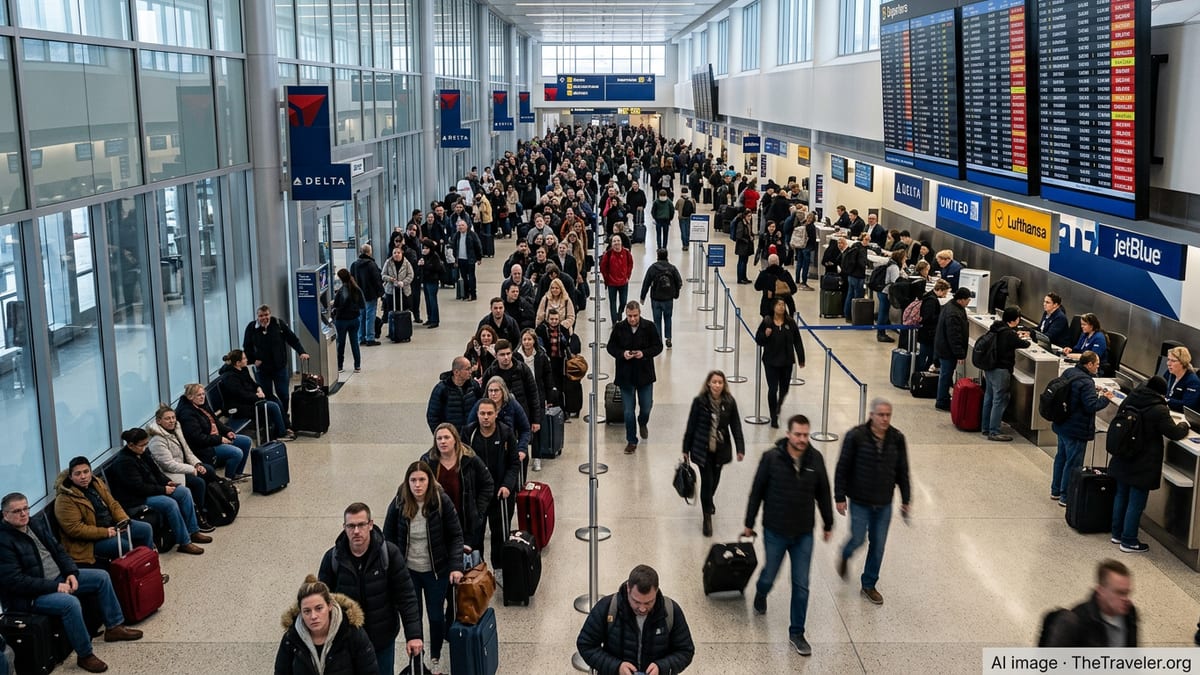
Storm-Soaked Skies Slow a Major US Hub
Publicly available flight-tracking boards and airline status feeds for September 1 and 2 show widespread disruption at George Bush Intercontinental Airport, with hundreds of arrivals and departures running late or scrubbed altogether as the remnants of Edouard drifted inland over Texas. The combination of saturated runways, low ceilings and shifting wind patterns forced a steady stream of schedule adjustments throughout the day.
The Houston hub typically handles tens of thousands of passengers daily as one of the nation’s key connecting gateways, and the timing of Edouard’s arrival during a peak travel period magnified the impact. Delays in Houston rippled outward across airline networks, affecting flights connecting through IAH from other US cities as well as international destinations in Latin America, Europe and Asia.
Data compiled by aviation-focused coverage and tracking tools indicate that the worst of the disruption coincided with bands of heavier rain and the thickest low cloud cover over the metro area. While runways remained open, reduced arrival and departure rates meant aircraft spent longer in holding patterns or on the ground as air traffic managers slowed the flow for safety.
Arrival and Departure Delays Stretch Across Carriers
According to published coverage that analyzed airline status boards, delays at Bush Intercontinental were not confined to a single carrier. United Airlines, which operates a major hub at IAH, saw dozens of departures pushed back on September 1, with knock-on delays into September 2 as aircraft and crews fell out of their planned rotations. Other domestic and international airlines also reported late departures or diversions into alternate airports when weather around Houston temporarily dropped below approach thresholds.
Comparisons with Federal Aviation Administration and airport system information suggest that the majority of flights were able to operate, but often outside their scheduled windows. Departure delays of 30 to 60 minutes were common on the most heavily affected routes, with some long haul services leaving several hours behind schedule. A smaller share of flights were canceled outright when crews or aircraft could no longer be repositioned effectively.
The pattern mirrored previous Houston weather events in which extended rainfall has slowed operations rather than shutting them down entirely. Historical storm case studies show that the airport system has occasionally seen far larger numbers of cancellations during more intense systems, but Edouard still proved disruptive enough to reshape travel plans for thousands of passengers over a two day period.
Edouard’s Track Brings Prolonged Rain Over Southeast Texas
National Hurricane Center advisories and local weather statements show that Edouard came ashore along the upper Texas coast after strengthening over the warm waters of the northwest Gulf of Mexico, then weakened into a tropical depression while continuing to drop significant rain. Forecasts highlighted the potential for 3 to 6 inches of rainfall across the greater Houston area, with locally higher totals along the upper coast.
As the circulation moved inland, the Houston region experienced periods of intense showers interspersed with lighter rain, along with low, dense cloud cover that limited visibility around Bush Intercontinental. While winds around the airport stayed below the most damaging thresholds, the persistent moisture and unstable air over southeast Texas translated into changing approach minimums and occasional traffic management initiatives in the busy Houston airspace.
Publicly available radar analysis showed that some of the most active rain bands passed near or over key approach paths into IAH at various points on September 1. When these bands coincided with peak arrival banks, controllers reduced arrival rates, prompting holding patterns, vectoring around heavier cells and in some cases temporary reroutes that lengthened flight times into Houston.
Travelers Confront Long Lines and Missed Connections
Reports from airline status feeds and social media postings by travelers describe crowded terminals, long rebooking lines and missed connections for passengers attempting to connect through Houston during Edouard’s passage. With many flights arriving late, carefully timed domestic and international connections became harder to protect, forcing airlines to reassign customers to later departures or alternate routings.
Travel waiver programs advertised by major carriers in advance of Edouard’s landfall gave some passengers the option to move trips earlier or later, but the volume of disruption at the hub still led to significant same day inconvenience. Travelers who chose to proceed with original itineraries often faced extended waits at departure gates, on tarmacs awaiting release, or in the air while circling for a landing slot.
Airport wayfinding and ground transport were also affected as the storm’s heavy rain periodically slowed highway traffic into and out of the terminals. For some passengers, that meant longer drive times or additional uncertainty reaching IAH, compounding stress alongside the shifting flight schedules.
Edouard Adds to a Pattern of Weather Vulnerability
The disruptions triggered by Edouard fit into a broader pattern of severe weather shaping reliability at Houston’s primary airport. Previous systems such as Tropical Storm Imelda and Hurricane Beryl have demonstrated how extended rainfall and localized flooding can temporarily close runways, force mass cancellations and leave aircraft and crews out of position for days. In comparison, Edouard brought a lower category of impacts, but still underscored the sensitivity of hub operations to prolonged rain events.
Analyses of these past storms show that even when terminal buildings and critical infrastructure remain largely intact, airside conditions and regional airspace constraints can rapidly curtail capacity. For airlines relying on complex hub and spoke networks, that creates cascading challenges as delays in Houston disrupt schedules across multiple continents.
As the Atlantic hurricane season continues, publicly available guidance encourages travelers with connections through coastal hubs such as Houston to monitor forecasts closely and consider flexible booking options when tropical systems threaten. Edouard’s slow, soaking track across Texas serves as another reminder that even a weakening tropical depression can significantly reshape air travel at one of the country’s busiest airports.
TheTraveler.org: Hundreds of Flight Delays Snarl Houston Bush Airport as Edouard Drenches Texas
Houston Chronicle: Bush Airport warns of possible flight delays as Edouard approaches Texas
National Hurricane Center: Local statements on Tropical Storm Edouard for Houston and Galveston
AP News: Edouard weakens into a tropical depression after Texas landfall