


More news on this day
A second consecutive day of Federal Aviation Administration stoppages centered on Chicago O’Hare International Airport has triggered the cancellation of hundreds of flights, disrupting travel plans for thousands of passengers and underscoring the fragility of the United States air traffic system during the late summer peak.
Get the latest news straight to your inbox!
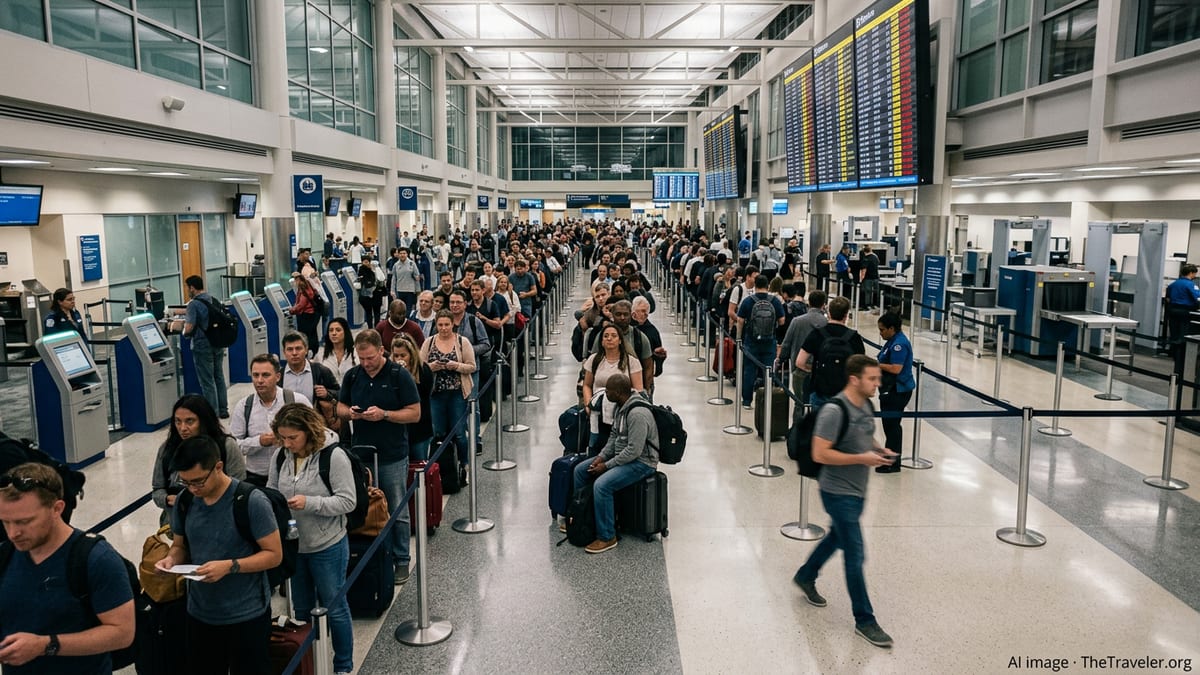
Second Day of FAA Restrictions Turns a Busy Hub into a Bottleneck
According to published coverage, the latest stoppages began with a series of flow restrictions and departure holds on Tuesday and remained in place into Wednesday, focusing on operations into and out of Chicago O’Hare. Real-time advisory feeds drawing on FAA data show a string of ground stops and ground delay programs affecting O’Hare arrivals and departures, significantly reducing the number of flights that airlines can operate in and out of the hub on a typical travel day.
Tracking services that compile Federal Aviation Administration operational advisories indicate that hundreds of flights touching O’Hare have been canceled as carriers trim schedules to cope with the second straight day of constraints. The impact is magnified because O’Hare sits at the center of extensive national and international route networks, making it a critical node for both domestic connections and long haul services.
Publicly available information shows that the restrictions have arrived at a moment when O’Hare is already running near capacity. Federal Register filings released earlier this year describe how scheduled operations at the airport for the peak 2026 summer travel season are projected to exceed its declared capacity, prompting regulators to closely manage flight volumes in order to keep congestion in check.
Ripple Effects Across Domestic and International Networks
The immediate cancellations at O’Hare are only one part of the disruption. Because many of the affected flights are hub connections, each scrapped departure can translate into multiple missed onward flights, especially for travelers attempting to connect between smaller U.S. cities and international destinations. Aviation analytics platforms that monitor same day disruptions show elevated cancellation and delay rates across several major carriers that rely heavily on O’Hare as a connecting point.
Published reports highlight that a disproportionate share of cancellations nationwide over the last 24 hours can be traced back to O’Hare, either as an origin, destination, or intermediate stop. Routes that typically feed traffic into the Chicago hub, including services from medium sized Midwest and Great Plains airports, display higher than usual disruption rates as airlines attempt to keep aircraft and crews positioned for later departures once FAA limits are eased.
International services are also feeling the strain. Long haul flights depend on tight aircraft rotations and crew duty windows, and disruptions of more than a few hours in a central hub can force airlines to scratch or significantly delay wide body departures. Historical precedent, such as the nationwide ground stop linked to the FAA’s NOTAM system outage in January 2023, shows how quickly hub related cancellations can spread globally when key airports experience extended constraints.
Ground Stops, Weather, and System Capacity Under Scrutiny
FAA operational summaries for early September show that ground stops and other traffic management initiatives have been in use at several large U.S. airports in response to weather and capacity pressures, including low ceilings and thunderstorms in busy corridors. On the same day that O’Hare faced continued stoppages, separate ground stops were in place for flights bound for major East Coast airports such as Baltimore/Washington, where thunderstorms prompted rolling holds and delays, demonstrating how localized constraints can overlap to create nationwide disruption.
Industry watchers point to a pattern of recent strain on the national airspace system. Historical FAA documentation details how earlier large scale ground stops, including the NOTAM outage in 2023, led to thousands of cancellations in a single day before airlines could reset their operations. More recently, IT outages at third party providers and airport specific disruptions have also produced multi day cascades of delays, suggesting that the system remains vulnerable when unforeseen stoppages coincide with already high traffic levels.
Regulatory filings outlining capacity management at O’Hare for the current summer season note that scheduled flights on the busiest days are projected to rise by nearly 15 percent compared with last year. That growth, combined with persistent staffing and weather related challenges, leaves less margin for the kind of multi day FAA restrictions now affecting the airport.
Travelers Face Long Lines, Rebookings, and Limited Options
For passengers on the ground, the operational nuances translate into crowded terminals, long customer service queues, and limited rebooking options. When stoppages extend into a second day, the pool of open seats on later flights shrinks quickly, particularly on popular trunk routes and transcontinental services that already operate near full capacity during late summer.
Consumer advocacy analyses of previous disruption episodes, including large scale IT outages that snarled airports in 2024, show that many travelers ultimately face overnight stays, missed events, or the need to reroute through alternate hubs at their own expense. With O’Hare serving as a key midpoint for journeys that start and end far from Chicago, those ripple effects are likely to be felt well beyond the immediate region.
Public guidance from airlines and airport authorities consistently encourages travelers to monitor flight status apps, enable notifications, and check in as early as possible on days when stoppages are in effect. During similar disruptions in recent years, carriers have often responded by issuing travel waivers that allow customers to change flights without standard penalties, though the availability and scope of such waivers can vary widely.
Why This Episode Matters for Future U.S. Air Travel
While day to day disruptions are not unusual in a complex aviation system, a second consecutive day of FAA stoppages at one of the country’s busiest hubs is drawing renewed attention to questions about resilience and redundancy. Analysts reviewing past nationwide disruptions note that the combination of aging infrastructure, tight staffing at key facilities, and a dense schedule at major hubs increases the likelihood that targeted stoppages will translate into widespread travel problems.
Federal planning documents and historical chronologies show that large scale stoppages have become infrequent since the sweeping airspace shutdowns in the early 2000s, but recent events suggest that technology failures and network congestion can have similar practical effects for travelers. The current O’Hare disruption, coming at the tail end of a heavy summer schedule, is likely to feed into ongoing policy debates about investments in air traffic technology, staffing, and airport capacity.
For now, travelers connecting through Chicago face another day of uncertainty as airlines and air traffic managers work through a backlog that could take multiple days to fully resolve, even after formal FAA stoppages are lifted. The episode offers a fresh reminder that when a single busy U.S. hub slows down under regulatory constraints, the effects can quickly spread throughout the country’s air travel network.
TheTraveler.org coverage of FAA stoppages at Chicago O’Hare
Federal Aviation Administration National Airspace System status summary
Federal Register notice on O’Hare summer 2026 capacity and scheduling