


More news on this day
Typhoon Noul has severely disrupted air travel across southern China and Hong Kong this weekend, with publicly available flight data and media coverage indicating that well over 10,000 flights have faced delays or cancellations as the powerful storm made landfall.
Get the latest news straight to your inbox!
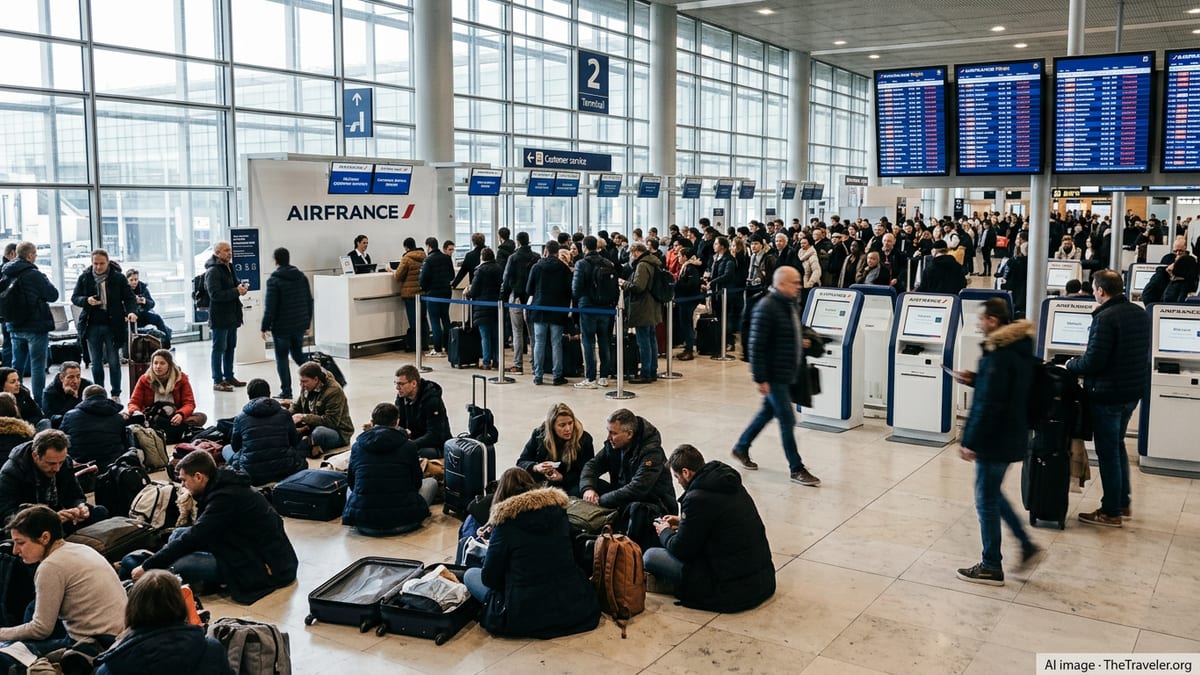
Storm Slams Key Aviation Hubs in Southern China
Typhoon Noul made landfall in southern China on Sunday, July 26, bringing gale force winds and intense rainfall to Guangdong province and neighboring Hong Kong, according to multiple news reports. The system moved across the northeastern South China Sea before intensifying near the coast, triggering high-level storm signals in the region and prompting transport operators to curtail or suspend services.
Coverage from international and regional outlets indicates that Hong Kong, Guangzhou, Shenzhen and other major cities in the Pearl River Delta have borne the brunt of the storm’s impact on aviation. Hong Kong raised one of its highest storm warnings as Noul passed close to the territory, while meteorological agencies on the mainland issued alerts for damaging winds, storm surges and flooding across coastal areas.
Authorities across Guangdong and neighboring provinces have relocated hundreds of thousands of residents from low-lying and exposed areas as the storm approached. Rail links, ferry services and some urban transport routes were suspended as a precaution, adding further pressure on regional mobility just as airlines began canceling large numbers of flights.
While Noul is expected to weaken as it continues inland, forecasters warn that heavy rainbands trailing the system could sustain disruption for at least another day, particularly at airports with limited spare capacity in peak summer travel season.
Flight Cancellations and Delays Mount Across the Network
According to publicly accessible airport departure boards, airline statements and aggregated flight-tracking data, aviation in southern China has experienced a sharp spike in disruption linked to Typhoon Noul. Hong Kong International Airport alone has listed hundreds of cancellations for Saturday and Sunday, with many more flights subject to extended delays as ground operations contend with high winds and safety restrictions.
Major mainland hubs including Guangzhou Baiyun and Shenzhen Baoan have reported large-scale schedule changes as well. Domestic carriers have consolidated services, brought forward some departures ahead of the storm’s arrival and then suspended or drastically reduced operations as conditions deteriorated. Regional coverage from Chinese and international media highlights “large numbers” of affected flights, particularly on busy routes within the Pearl River Delta and to other major Chinese cities.
When combined with knock-on effects across the wider network, industry observers note that the total number of delayed or canceled flights attributable to Noul this weekend appears to exceed 10,000. This tally reflects not only services grounded directly by the storm but also onward disruptions as aircraft and crews are left out of position, causing waves of secondary delays across China’s tightly scheduled aviation system.
In Hong Kong, local media reports show that some airlines preemptively canceled all flights in and out of the territory during the peak of the typhoon warning period, effectively shutting down regular passenger operations for much of Sunday. Flights scheduled to operate overnight or early Monday face heightened risk of further changes while airlines work to reposition aircraft and clear backlogs.
Airlines Activate Waivers as Passengers Scramble
Publicly available statements from major carriers serving Hong Kong and southern China show that airlines have introduced a range of passenger waivers in response to Typhoon Noul. Several operators have announced that rebooking and rerouting fees will be waived for customers holding tickets on affected dates, and that refunds are being offered in cases where travel is no longer possible or practical.
Aircraft operators have also encouraged travelers to use online self-service tools and mobile apps to manage changes, citing limited staffing at some airport desks while storm signals remain in force. Social media posts and traveler forums suggest that call centers and digital channels have experienced heavy traffic as passengers seek alternative routings, later departure dates or entirely new itineraries.
In practice, the options available to stranded travelers depend heavily on route, carrier and the speed with which they act. On some high-frequency domestic and regional sectors, airlines can consolidate passengers onto later flights once conditions improve. On long-haul routes, however, the combination of aircraft rotation, crew duty limits and continued weather uncertainty can mean delays that stretch well beyond 24 hours or, in some cases, the cancellation of entire rotations.
Travelers already in transit have faced additional complications where connecting flights in Hong Kong, Guangzhou or Shenzhen were canceled at short notice. Reports circulating on traveler discussion platforms describe overnight stays in airport hotels, lengthy rebooking queues and last-minute efforts to secure seats on remaining services before capacity is fully absorbed.
Ripple Effects Expected Beyond the Immediate Storm Zone
Aviation analysts note that the disruption triggered by Typhoon Noul is unlikely to be confined to southern China. Given the region’s role as a major hub for both domestic and international traffic, prolonged operational constraints in Hong Kong and Guangdong are expected to send shockwaves through airline schedules across East Asia and beyond.
Aircraft that were scheduled to cycle through Hong Kong, Guangzhou or Shenzhen this weekend are now out of position, which can lead to delays and cancellations on subsequent legs in cities far from the storm’s core. Flights linking southern China to Southeast Asia, Japan, South Korea, Europe and North America may therefore continue to experience irregular operations even after local weather conditions begin to improve.
Summer is traditionally one of the busiest periods for travel in the region, amplifying the impact of any large-scale disruption. Load factors on many routes are already high, limiting airlines’ ability to easily accommodate displaced passengers on alternative services. Travel industry commentators suggest that in the coming days some travelers may need to consider flying into or out of secondary mainland airports less directly affected by Noul in order to bypass lingering congestion at primary hubs.
Infrastructure managers are also expected to carry out inspections of runways, taxiways and airport buildings once winds drop below critical thresholds, a process that can delay the resumption of normal operations if any damage or flooding is identified. Ground handling and air traffic control staffing levels may take additional time to normalize if transport links for workers remain compromised by residual flooding or local safety restrictions.
Guidance for Travelers Navigating the Disruption
Publicly available advisories from airports, airlines and consular services emphasize that passengers with upcoming flights to or through southern China should monitor their bookings closely over the next 24 to 48 hours. Same-day information on airline websites and apps is being positioned as more reliable than printed itineraries or earlier confirmations, given the fast-moving nature of the situation.
Travel industry guidance suggests that passengers avoid traveling to the airport until their flight is shown as operating and within its normal check-in window, particularly while higher storm signals remain in place. For those already at airports in the region, information screens and airline service counters remain the primary channels for real-time updates, although wait times may be extended during peak disruption.
For travelers with flexible plans, some operators are permitting date changes at no additional charge within a defined rebooking window, allowing passengers to defer their journeys until conditions stabilize. Travel insurers may also play a role where policies include coverage for weather-related delays and cancellations, although coverage terms vary and typically require supporting documentation from airlines.
While Typhoon Noul is expected to gradually weaken as it moves inland, meteorological agencies and transport operators continue to advise caution. With a large volume of aircraft, crew and passengers still out of position, observers expect that the aviation system in southern China and Hong Kong will need several days to fully absorb the shock of one of the region’s most disruptive weather events of the current typhoon season.