


More news on this day
More than 2,600 flights across the United States have been delayed and at least 76 canceled in July, according to flight-tracking data, underscoring how vulnerable the peak summer travel season remains to storms, congestion and operational strains.
Get the latest news straight to your inbox!
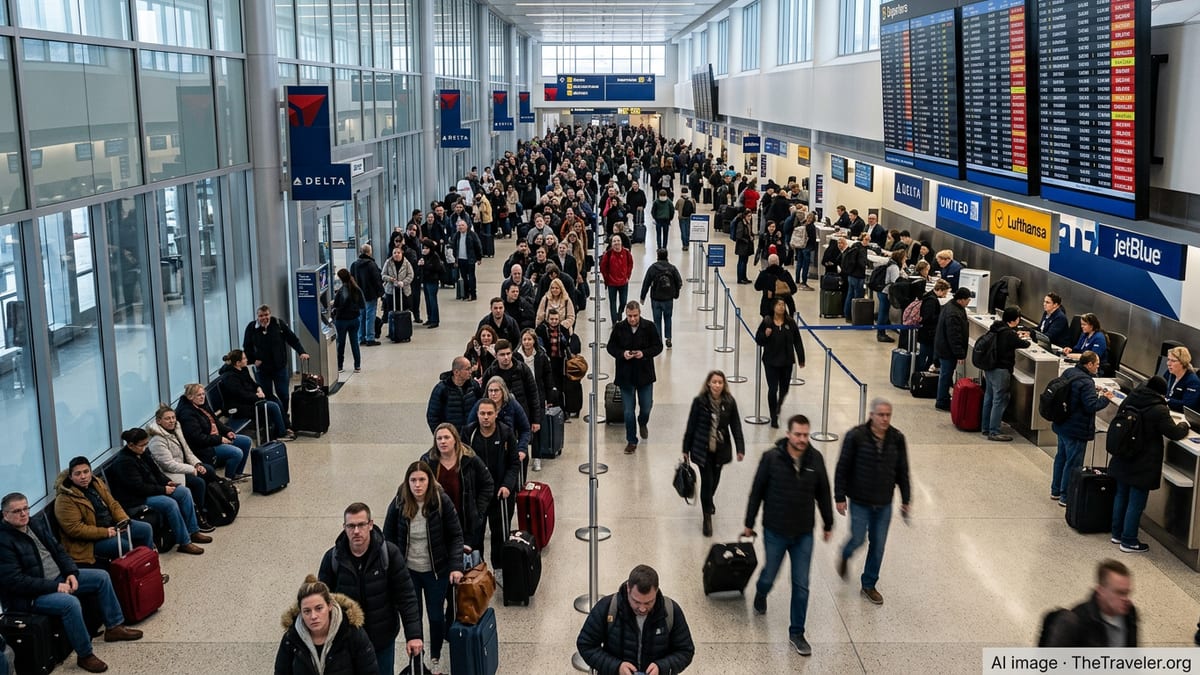
Summer Sky Slowdowns Hit Major Hubs Hard
Publicly available statistics from flight-tracking platforms indicate that the latest wave of disruptions has been concentrated at the country’s busiest airports, where summer traffic is approaching or exceeding pre‑pandemic levels. Large hubs such as Atlanta, Chicago O’Hare, Denver, Dallas–Fort Worth and the New York area airports repeatedly appeared among the airports with the highest numbers of delayed and canceled departures on several July days.
The pattern mirrors broader federal transportation data showing that heavy schedules at large hubs leave little margin when thunderstorms, ground stops or air traffic control constraints ripple through the system. Even modest delays at one major hub can quickly cascade, turning late‑arriving aircraft into missed connections for passengers at smaller regional airports.
While 76 cancellations represent a small share of total scheduled flights for the month to date, the 2,600 delays reflect a wider experience for travelers: late inbound aircraft, rolling departure times and missed connections that can add hours to journey times without necessarily appearing in headline cancellation statistics.
Weather, Congestion and Tight Crews Drive Disruptions
Reports from aviation data providers and federal transportation summaries point to a familiar mix of causes behind this July’s disruptions. Convective summer storms across the Midwest and East Coast have forced ground stops and reroutes. At the same time, high demand has encouraged airlines to operate dense schedules that leave limited room to recover when storms, technical glitches or air traffic restrictions occur.
Industry and government data over recent years show that a significant share of delays are categorized as related to the national aviation system, including air traffic management, runway and taxi congestion, and volume‑related holds. Carrier‑related causes, such as aircraft servicing or crew availability, also account for a substantial portion of late departures and arrivals, particularly during peak travel weeks.
Operational experts have noted that tight crew scheduling can amplify even short weather disruptions. When an aircraft and crew arrive late at a hub, the knock‑on effects can extend through the rest of the day and into subsequent rotations, especially if crews reach regulated duty time limits before a new flight can depart.
Travelers Face Longer Days, Even Without a Cancellation
For many passengers, the practical impact of July’s numbers has been longer travel days rather than outright trip cancellations. Data from federal on‑time performance reports show that a flight is considered delayed when it arrives or departs at least 15 minutes later than scheduled, but in busy summer periods it is not uncommon for rolling delays to stretch well beyond that threshold.
Travel‑forum posts and social media accounts frequently describe multi‑hour waits at gates as departure times are repeatedly adjusted. While such personal reports are anecdotal, they align with the broader delay statistics and with federal findings that late‑arriving aircraft and air carrier delays together account for a sizable share of all disruptions.
Even when flights eventually depart, extended delays can mean missed connections at intermediate hubs, forcing travelers onto later flights or, in some cases, overnight stays. For those traveling on tight itineraries for events, cruises or international connections, a delay of several hours can prove as disruptive as a cancellation.
How July’s Disruptions Fit Recent Aviation Trends
This July’s interruption figures arrive against a backdrop of several high‑profile airline meltdowns and technology‑related outages over the past few years that led to far larger waves of cancellations and delays. In those earlier episodes, tens of thousands of flights were disrupted across multi‑day periods, prompting regulatory scrutiny and new discussions about passenger protections.
In contrast, the July pattern to date reflects steady, day‑to‑day operational strain rather than a single dramatic breakdown. Transportation Department reports on prior months show that overall cancellation rates have generally remained below the spikes seen during major storms or system outages, but delay rates remain sensitive to summer weather, tight schedules and airport congestion.
Industry analysts observe that as demand for air travel continues to recover and grow, airlines and airports are attempting to balance efficiency with resilience. Schedules built for maximum aircraft utilization can help keep fares competitive, but leave operations more exposed when anything goes wrong. The numbers from July highlight how even a relatively modest level of cancellations can coincide with a larger pool of passengers facing delayed or re‑timed flights.
What Prospective Flyers Should Expect for the Remainder of Summer
With several weeks of the summer high season still ahead, publicly available forecasts and aviation data suggest that travelers should be prepared for continued pockets of disruption, particularly on peak days such as Thursdays, Fridays and Sundays and around major holiday weekends. Afternoon and evening departures, which are more exposed to the cumulative impact of earlier delays and recurring thunderstorms, may remain more vulnerable than early‑morning flights.
Consumer advocates recommend that travelers build extra time into itineraries, especially when connecting to long‑haul or cruise departures, and that they monitor flight status closely in the 24 hours before departure. While U.S. carriers publish policies on meal vouchers, hotel accommodations and rebooking during significant disruptions, these vary by airline and by the cause of the delay or cancellation.
As July’s tally of more than 2,600 delays and 76 cancellations illustrates, the statistical likelihood of reaching a destination on the planned day remains high, but the odds of a completely smooth, on‑time trip are lower during the busy summer period. For many passengers, managing expectations and allowing more slack in travel plans may be the most practical response to a system that continues to operate near its limits.