


More news on this day
Typhoon Noul has disrupted air travel across Asia, prompting mass flight cancellations and delays at key hubs in southern China, Hong Kong, Singapore and beyond as airlines reroute aircraft and suspend services in response to severe weather.
Get the latest news straight to your inbox!
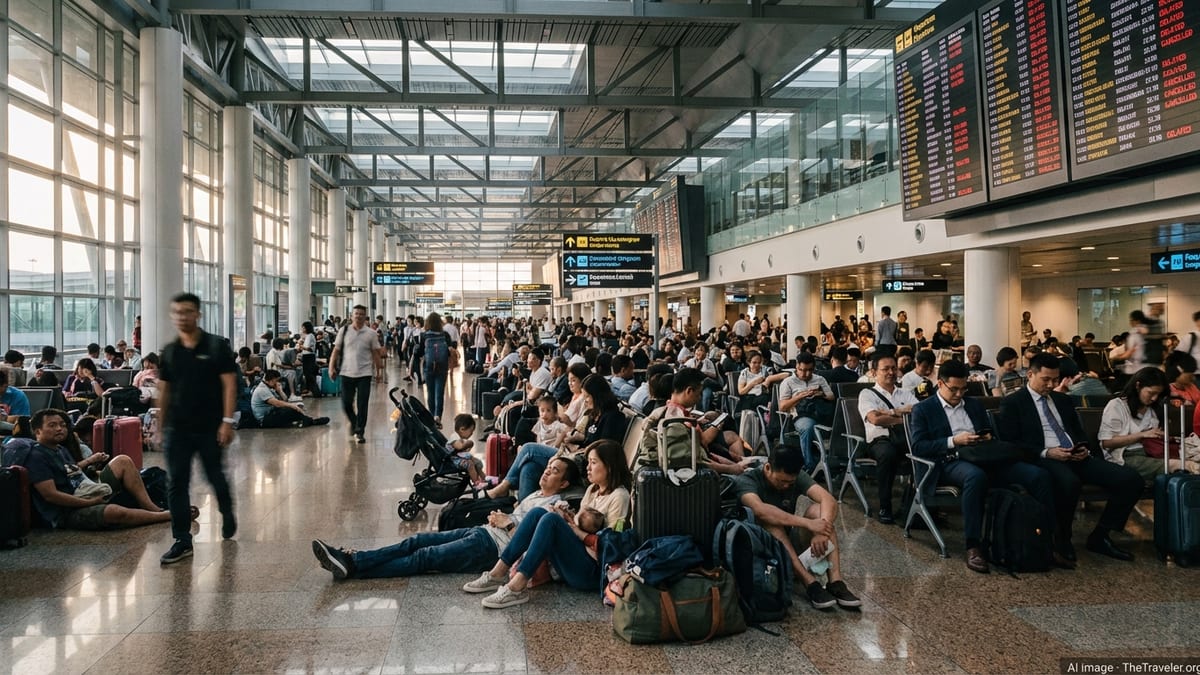
Major Hubs in Southern China and Hong Kong Hit Hardest
Air travel disruption has been most severe in southern China and Hong Kong, where Typhoon Noul made landfall over the weekend with heavy rain and strong winds. Publicly available data from Hong Kong International Airport shows that several hundred flights scheduled across Saturday and Sunday were cancelled or delayed as the storm moved close to the city and nearby Guangdong province.
Reports indicate that carriers serving Hong Kong and airports in Shenzhen and other parts of Guangdong preemptively cancelled services as wind speeds increased and local storm signals were raised. Many of the affected flights were regional routes connecting southern China with the rest of Asia, limiting options for travelers who rely on Hong Kong and Shenzhen as major transit points.
Airport authorities and airline operations teams have been working to gradually restore normal schedules as Noul weakens and moves inland, but residual delays and aircraft rotations continue to affect departures and arrivals. Passengers with departures scheduled in the coming days are being advised through public channels to monitor flight status closely, as timetables may change at short notice.
Singapore, Kuala Lumpur and Other Southeast Asian Gateways Affected
The impact of Typhoon Noul has rippled across Southeast Asia, particularly in Singapore and Kuala Lumpur, which handle dense traffic to and from southern China. Information published by Changi Airport and regional media shows that more than 20 weekend flights between Singapore and southern Chinese cities such as Hong Kong and Shenzhen were cancelled as the storm approached landfall.
Regional carriers including Singapore Airlines, its low-cost arm Scoot and several Chinese and Hong Kong airlines suspended selected services on Saturday and Sunday on routes linking Singapore with Hong Kong, Shenzhen and nearby cities. Travel updates released by the airlines point to weather conditions associated with Noul as the primary reason for the cancellations, with some flights consolidated or rescheduled once conditions improved.
In Malaysia, publicly available announcements show that Malaysia Airlines and other operators cancelled or adjusted flights between Kuala Lumpur and both Shenzhen and Hong Kong. While core services outside the storm-affected corridor continued to operate, disruptions on these high-demand links created knock-on effects for connecting passengers heading onward to long-haul destinations in Europe, North America and Australasia.
Spillover Disruptions for India and Long-Haul Connections
Travel disruption has extended beyond East and Southeast Asia as airlines adjust their networks in response to closed or constrained airports in the storm’s path. Coverage from regional outlets in India highlights cancellations on services between Chennai and Hong Kong, with at least one overnight flight suspended due to typhoon-related warnings. Passengers on that route were accommodated in local hotels after the aircraft remained grounded.
Because Hong Kong functions as a key connecting hub, cancellations on the Chennai route also affected travelers bound for other destinations including London, Tokyo, Melbourne, Seoul and Chicago. With one segment of the journey cancelled, many passengers found that their onward long-haul itineraries could no longer be honored as originally booked.
Similar patterns are emerging at other Asian gateways where flights to southern China have been reduced or delayed. Long-haul passengers traveling via Hong Kong, Shenzhen or other nearby hubs are experiencing missed connections and extended layovers as airlines work through backlogs and reposition aircraft once weather conditions permit.
Airlines Offer Waivers and Urge Flexible Travel Plans
Airlines across the region have responded to Typhoon Noul by publishing travel advisories, offering varying degrees of flexibility for affected customers. Publicly available information from major carriers indicates that date-change fees are being waived on select routes touching Hong Kong, Shenzhen and other impacted airports, subject to revised travel windows and seat availability.
Some airlines are also allowing passengers to reroute their journeys through alternative hubs in Asia where capacity is available, although these options remain limited on peak travel days. Travelers whose flights have been cancelled outright are generally being offered rebooking on the next available service or refunds in line with published fare rules.
Operational updates emphasize that flight schedules remain fluid while weather conditions stabilize and airport infrastructure is inspected. Transport authorities in affected regions have advised the public through official channels to avoid non-essential travel during periods of strongest winds and rain, a message echoed in airline advisories that recommend postponing trips where possible.
Guidance for Travelers Currently in Transit or Yet to Depart
With residual delays and scattered cancellations expected to continue even as Noul weakens, travelers with upcoming journeys in the region are being encouraged, through publicly available guidance, to adopt flexible plans. Passengers are advised to check the latest flight information on airline and airport status pages before leaving for the airport, and to allow additional time for check-in and security in case of congestion.
Travel experts note that those with tight connections through Hong Kong, Shenzhen, Guangzhou, Singapore or Kuala Lumpur may wish to explore options to rebook onto earlier flights or adjust itineraries to reduce the risk of missed onward services. For tickets booked through travel agencies or online platforms, customer service channels remain an important resource for exploring alternative routings and accommodation if overnight stays become necessary.
For travelers already stranded at airports, standard passenger rights, where applicable, may provide for meal vouchers, hotel stays or rebooking assistance, depending on the airline and jurisdiction. With Typhoon Noul now weakening and moving away from the main coastal hubs, aviation networks across Asia are expected to gradually normalize, but schedules may remain uneven for several days as carriers clear backlogs and reposition crews and aircraft.