


More news on this day
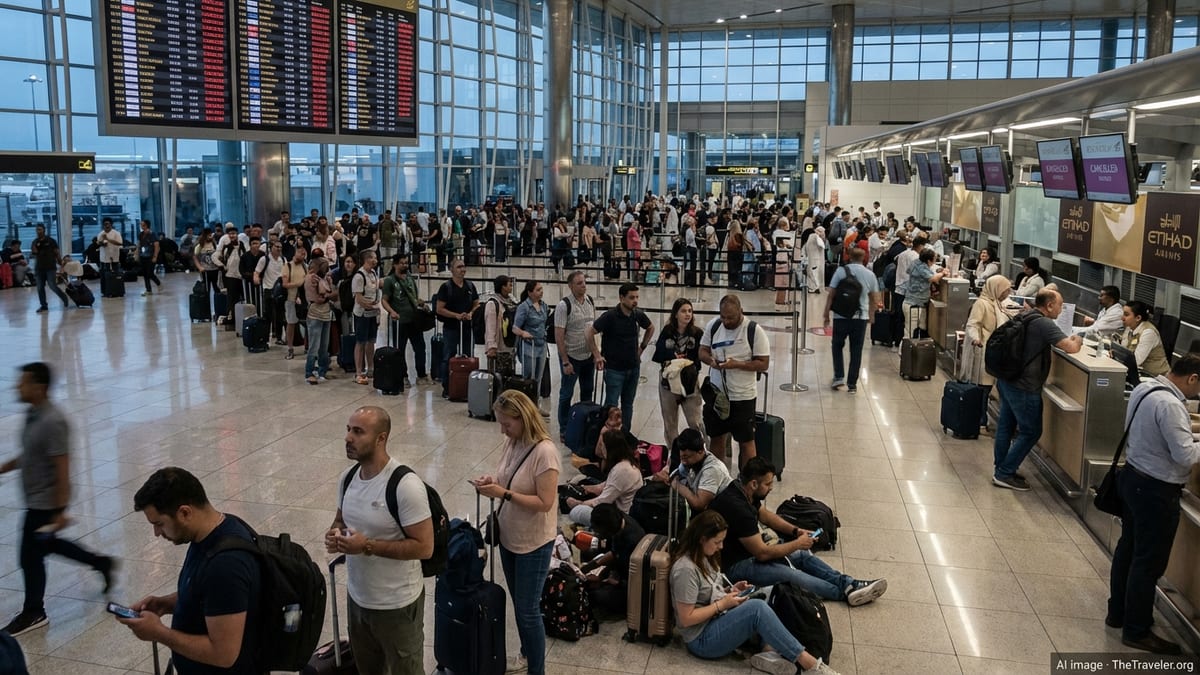
Passengers flying through Dubai International and Abu Dhabi’s Zayed International airports are facing another week of schedule disruption, as airlines adjust operations in response to regional tensions, UK air traffic issues and a volcanic eruption in Indonesia.
Get the latest news straight to your inbox!
Fresh disruption after UK outage and regional tensions
Publicly available information shows that flights at Dubai International Airport (DXB) and Abu Dhabi’s Zayed International Airport (AUH) remain under pressure following a new wave of disruption linked to an air traffic control outage in the United Kingdom and renewed instability in the Middle East. Coverage on September 9 described multiple Emirates services from London Heathrow to Dubai, including EK004 and EK006, as cancelled, with knock-on effects for connections across the Dubai hub.
Reports also point to additional cancellations from the UAE to regional destinations as operators respond to evolving security assessments. Recent summaries list services such as Saudia flight SV597 to Riyadh, Sepehran Airlines flight IS7353 to Tehran and flydubai flight FZ027 to Bahrain among those removed from schedules or cancelled, reflecting ongoing adjustments on routes closest to areas of heightened tension.
While many flights continue to operate, the combination of UK airspace issues and regional developments has reduced operational flexibility at both UAE hubs. Airlines are re-timing departures, consolidating frequencies and, in some cases, suspending specific rotations to manage crew duty limits and aircraft positioning.
Travelers connecting through Dubai and Abu Dhabi are being advised by airlines and airports, via public channels, to monitor their flight status closely on the day of departure and to allow extra time for potential rebooking or rerouting if their services are affected.
Jakarta volcanic ash adds to schedule strain
The disruption has been compounded by the temporary closure of Jakarta’s Soekarno–Hatta International Airport following a volcanic eruption in Indonesia. Emirates’ travel updates page, last revised on September 6, details a series of cancellations on the Dubai–Jakarta route, including flights EK356, EK358, EK357 and EK359 across several days, as volcanic ash made operations into the Indonesian capital unsafe.
Similar challenges have been reported for Etihad Airways and other carriers serving Indonesia from Abu Dhabi, with some flights delayed or rescheduled as operators wait for clearer conditions and updated assessments from aviation and meteorological bodies. The impact is particularly significant for passengers using the UAE as a long-haul transit point between Europe, the Middle East and Southeast Asia.
These Jakarta-related cancellations reduce available capacity through Dubai and Abu Dhabi and can cause aircraft and crew to be out of position for subsequent services. That, in turn, increases the likelihood of rolling delays, especially during already busy peak travel periods.
Advisories urge passengers booked on Indonesia routes to check airline notifications frequently, because schedules may change at short notice as authorities review airspace conditions and airport availability.
Overall delay and cancellation trends at Dubai and Abu Dhabi
Data aggregators tracking punctuality at major hubs indicate that Dubai International has experienced elevated levels of disruption in recent days compared with longer-term averages. One recent analysis of DXB performance for early September shows average departure delays in the range of several minutes, alongside a noticeable number of daily cancellations, with some days recording double‑digit cancelled departures.
Separate consumer-facing disruption trackers report that, as of September 8, delays, cancellations and schedule changes were still affecting operations at both DXB and AUH, with Emirates, Etihad, flydubai and Air Arabia among the airlines adjusting their timetables. These adjustments include later departure times, aircraft substitutions and, in some instances, rerouting flights around sensitive airspace to maintain safety margins.
Despite the challenges, the broader picture suggests that the vast majority of flights at Dubai and Abu Dhabi are still operating, albeit in some cases behind schedule. Average delays remain measured in minutes rather than hours on most routes, but the pattern of disruption has persisted across several consecutive days, which can complicate travel planning and connections.
Travelers with tight onward connections are particularly exposed to these ripple effects, and airline advisories recommend allowing longer minimum connection times where possible or considering more flexible itineraries during this period of operational uncertainty.
How airlines and airports are managing the fallout
Airlines serving the UAE have activated a range of contingency measures to cope with the evolving situation. Public guidance from carriers highlights the use of dynamic rebooking tools, flexible change policies on selected affected routes and additional staff at call centers and airport desks to handle increased customer inquiries. Online check‑in and mobile notifications are being emphasized to keep passengers informed of last‑minute changes.
Operationally, carriers are prioritizing long‑haul trunk routes and high‑demand regional services, sometimes consolidating lower‑demand flights or deploying larger aircraft to absorb displaced passengers from cancelled sectors. Weather briefings and air traffic updates are being closely monitored, particularly for flights traversing affected parts of the Middle East or heading toward Indonesia.
Airport operators in Dubai and Abu Dhabi continue to direct passengers to live flight‑status tools on their official websites, where travelers can search by airline, city or flight number to confirm if a service is running, delayed or cancelled. These portals are updated throughout the day and provide the most current view of departures and arrivals, complementing information provided directly by airlines.
Industry observers note that while the current disruption is significant, airports and carriers in the UAE have experience managing complex operational environments. Their large transfer traffic base and extensive route networks, however, mean that even localized events in Europe or Asia can quickly create global repercussions for passengers transiting through the country.
Advice for passengers traveling through Dubai and Abu Dhabi
Given the fluid situation, publicly available travel advisories consistently stress the importance of checking flight status before leaving for the airport. Passengers are encouraged to use official airline websites and apps rather than relying solely on third‑party platforms, because changes can occur close to departure as airlines react to updated airspace, weather and security information.
For those whose flights are delayed or cancelled, airline policies typically outline options including rebooking on the next available service, rerouting via alternative hubs or, in limited cases, refunds. Eligibility for compensation can vary depending on the operating carrier, the cause of disruption and the jurisdiction under which the ticket was issued, so passengers may wish to review fare rules and local regulations or seek guidance from reputable consumer‑rights resources.
Travelers with imminent trips through Dubai or Abu Dhabi may benefit from building extra flexibility into their plans, such as avoiding extremely tight onward connections, confirming hotel bookings that allow for late arrivals, and keeping essential items in carry‑on luggage in case checked bags are delayed in transit. Monitoring regional news developments can also help passengers anticipate where further changes might arise.
With air traffic control challenges in the UK, regional tensions in the Middle East and the situation in Indonesia all still evolving as of September 10, schedules at Dubai and Abu Dhabi airports remain subject to change. Anyone due to travel in the coming days is advised to stay alert to updates from airlines and airports and to verify the latest information as close as possible to departure time.
The National: Dubai and Abu Dhabi flight delays and cancellations
Khaleej Times: UAE travel advisory on delays and cancellations