


More news on this day
Major UAE carriers are maintaining most core services but continue to adjust schedules, cancel select Gulf routes and warn of last-minute changes as Iran-related tensions ripple across regional airspace.
Get the latest news straight to your inbox!
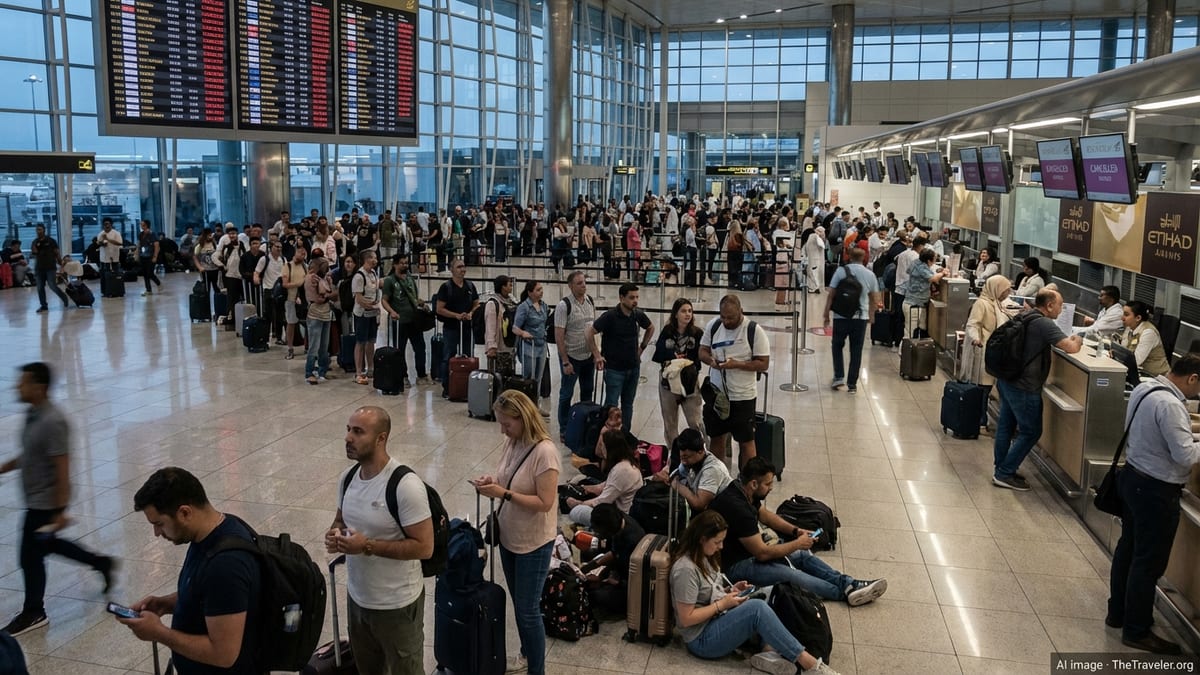
Fresh escalation triggers new wave of schedule changes
Publicly available information shows that a new flare-up between the United States and Iran, including recent strikes and missile exchanges across parts of the Gulf, is adding pressure to already fragile aviation schedules. Reports indicate that airspace capacity remains constrained on some routings, prompting airlines to trim frequencies, reroute services and extend existing suspensions.
Coverage from regional outlets notes that Emirates, Etihad Airways, flydubai and Air Arabia are still operating the bulk of their networks, but with a patchwork of cancellations and delays on routes closest to the areas of heightened tension. Flights linking the UAE with Bahrain and Kuwait, as well as selected services to Iraq and other nearby destinations, remain the most affected.
Travel advisories published over recent weeks also highlight that global carriers have pared back their Middle East operations, in turn reducing connectivity into the UAE. Some European and North American airlines continue to avoid Iranian and Iraqi airspace altogether, tightening traffic flows over alternative corridors and adding to congestion.
While flight operations continue at Dubai and Abu Dhabi hubs, passengers flying over or near conflict-affected areas are being advised to expect potential changes at short notice, including diversions and extended flight times due to rerouting.
Emirates adjusts Gulf network while long-haul largely intact
According to recent flight-status roundups, Emirates is maintaining most of its long-haul schedule from Dubai International but continues to fine-tune its operations within the Gulf. Earlier this week, coverage in UAE-based media described a “mixed picture” of operating, delayed and cancelled services as the airline balanced demand with evolving risk assessments linked to Iran-related tensions.
Selected Emirates flights to Bahrain and Kuwait have faced intermittent cancellations or frequency reductions over the past several weeks, even as at least one daily Bahrain service has resumed. Some services to Iraqi destinations such as Basra have also been cancelled on specific days, with reports indicating that these adjustments are linked both to security considerations along preferred flight paths and to wider regional airspace constraints.
Emirates-focused travel updates emphasize that passengers are being encouraged to monitor the carrier’s digital channels on the day of departure. This reflects the possibility that routing decisions may change quickly if airspace restrictions tighten, or if additional traffic-management measures are introduced to separate civilian and military activity in the region.
Industry analysts quoted in open-source commentary suggest that while Emirates’ global network remains resilient, its tactical cuts on shorter Gulf routes help free up aircraft and crews, providing additional flexibility should further disruptions emerge.
Etihad faces delays at Abu Dhabi as regional disruptions mount
At Abu Dhabi’s Zayed International Airport, Etihad Airways has experienced clusters of delays alongside targeted cancellations as it navigates the same regional pressures. A live travel advisory from a UAE news outlet on September 2 detailed multiple late departures on Etihad routes out of Abu Dhabi, reflecting knock-on effects from congested airspace and earlier disruptions.
Previous weeks have already seen Etihad extend the suspension of some Kuwait services and scale back select Bahrain flights, according to earlier travel bulletins. These measures were introduced after missile activity and security alerts around parts of Bahrain and Kuwait, which lie closer to the core of the US–Iran confrontation.
Airport-focused reporting describes how delays to inbound flights can cascade across the schedule, pushing back subsequent departures and occasionally prompting same-day cancellations. Etihad has therefore been promoting the use of its website and mobile app for real-time status checks, particularly for passengers connecting through Abu Dhabi to Europe, North America and Asia.
Despite these challenges, Etihad’s long-haul operations remain broadly stable, and the airline continues to market Abu Dhabi as a functioning transfer hub, albeit one where travelers should build in extra time and be prepared for schedule changes.
flydubai and Air Arabia trim regional services
Low-cost carriers flydubai and Air Arabia, both significant players in point-to-point travel across the wider Middle East, have also pared back some regional services. Recent coverage on Gulf travel disruptions notes that Air Arabia has cancelled or reduced several flights linking Sharjah and Abu Dhabi with Kuwait and Bahrain, two markets that have seen repeated interruptions since missile incidents earlier in the summer.
Updates tied to the ongoing US–Iran standoff further indicate that Air Arabia Abu Dhabi has reported delays on routes to Bahrain, Cairo, Sialkot, Faisalabad and Tbilisi, as aircraft and crews navigate increasingly constrained air corridors. These delays add to the pattern of sporadic disruptions affecting the carrier’s wider Gulf and near-regional schedule.
flydubai, meanwhile, continues to operate from Dubai International but has participated in broader UAE–Kuwait and UAE–Bahrain schedule reductions at various points in recent weeks. Travel-industry roundups suggest that the airline is managing its network dynamically, with some flights cancelled or consolidated when route-specific risks or airspace restrictions rise.
Both carriers are emphasizing flexible rebooking options within fare rules, and passengers on affected services are generally being offered alternative dates or destinations where operationally feasible.
Global airlines extend suspensions as risk maps evolve
The UAE flight picture is also being shaped by decisions taken in other capitals. Travel advisories compiled by regional media show that multiple international carriers, including several from Europe and North America, have prolonged suspensions of flights to key Gulf gateways amid persistent concerns over US–Iran hostilities.
One recent survey of Middle East operations reported that airlines such as Air Canada, KLM, British Airways and Finnair are continuing to suspend certain services into the region, including flights to Dubai, Riyadh and Dammam. These carriers are also maintaining routings that avoid Iranian, Iraqi and parts of Gulf airspace, adding to the overall complexity of traffic management in the skies around the Arabian Peninsula.
The pullback by some foreign airlines places a greater share of regional connectivity in the hands of local carriers like Emirates, Etihad, flydubai and Air Arabia. While these airlines are leveraging their familiarity with regional airspace and regulatory frameworks, they are also operating under tighter margins for disruption, especially when conflict-related developments occur with limited warning.
For travelers, the practical consequence is a more volatile operating environment in which published timetables are subject to late-stage change and journey times may be extended due to circuitous routings and longer ground handling windows.
What passengers flying from the UAE should do now
Given the fluid situation, passenger-focused guidance across multiple outlets converges on a few consistent recommendations for anyone flying from the UAE in the coming days. The first is to treat booking confirmations as provisional, checking flight status repeatedly in the 24 hours before departure and again before leaving for the airport.
Travel reports suggest that those with onward connections or time-sensitive itineraries should allow extra buffers both on the ground and in the air, as diversions or en-route holding patterns may lengthen journeys. Arriving earlier than usual at Dubai, Abu Dhabi or Sharjah airports can also help mitigate the impact of longer check-in and security queues when schedules are disrupted.
Passengers whose flights are cancelled or significantly delayed are being encouraged, by consumer-rights advisories, to review airline policies on rebooking, refunds and accommodation, particularly for itineraries touching multiple countries. Some guidance also recommends keeping documentation of disruption, such as delay notifications and boarding passes, in case of later claims under applicable compensation regimes.
Ultimately, while UAE airports remain open and core networks are operating, the combination of Iran-related tensions and constrained regional airspace means that flexibility and real-time information are becoming essential tools for anyone planning to travel through the country’s major hubs.
Gulf News: UAE flight update as Iran tensions escalate
The National: Middle East flights overview and suspensions