


More news on this day
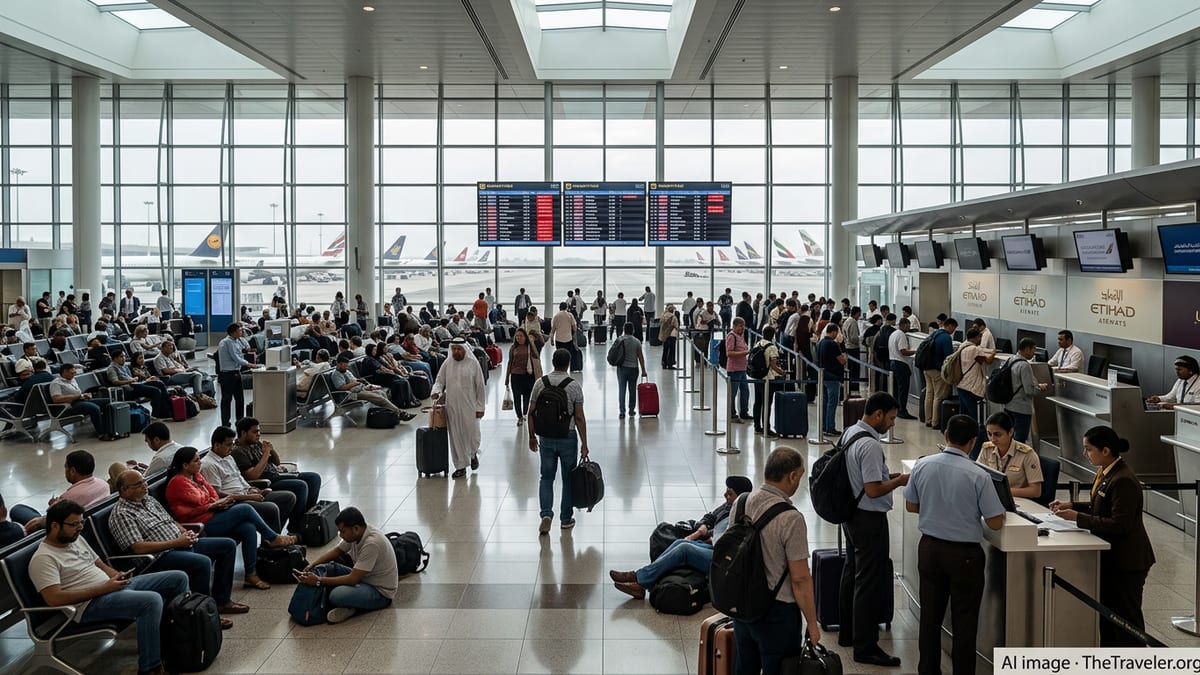
Passengers travelling through Dubai International and Abu Dhabi’s Zayed International Airport on September 2, 2026 are being urged to prepare for significant disruption, as dozens of flights face delays or cancellations amid heightened regional tensions affecting UAE airspace.
Get the latest news straight to your inbox!
Regional tensions trigger fresh disruption in UAE skies
Published coverage on September 2 indicates that renewed military tensions between the United States and Iran have led to airspace restrictions across parts of the Gulf, affecting commercial routes serving the United Arab Emirates. Flight paths into and out of Dubai and Abu Dhabi are being adjusted or rerouted in response, increasing congestion across already busy corridors.
Reports show that Abu Dhabi’s Zayed International Airport is seeing knock-on delays to both arriving and departing services on Wednesday morning, with a cluster of late-running flights across regional and long haul networks. Several Etihad Airways services, in particular, are listed as operating behind schedule on routes linking the UAE capital with Europe, Asia and neighboring Middle Eastern destinations.
Carriers based in the wider region are also affected. According to regional media, Air Arabia Abu Dhabi services to Cairo, Sialkot, Bahrain, Faisalabad and Tbilisi, as well as an Air India Express departure to Delhi, are among those experiencing schedule disruption. While some flights are taking off with extended departure times, others have been cancelled outright as airlines adjust operations to evolving airspace conditions.
These developments follow a broader advisory trend seen throughout 2026, in which governments and travel agencies have cautioned that periodic airspace closures and short-notice route changes remain possible for flights across the Middle East. Travellers with connections across the region, including those transiting via the UAE, are being advised to remain flexible and monitor itineraries closely.
Impact felt at Dubai and Abu Dhabi hubs
Dubai International Airport, one of the world’s busiest hubs, has not published a formal tally of cancellations linked to the latest regional flare-up. However, recent performance data and live tracking tools underline how even modest changes in airspace availability can cascade into visible disruption across packed schedules. With more than 31 million passengers passing through Dubai International in the first half of 2026 as capacity continues to recover, any constraint on routings or departure flows can quickly translate into delays for connecting passengers.
Abu Dhabi’s Zayed International, which typically handles around 260 flights a day across more than 120 destinations, is also experiencing a measurable increase in delays compared with its usual operations. Independent analytics show that average departure and arrival delays over recent days are noticeably higher than the longer term 30 day trend, alongside a small but rising number of cancellations.
For travellers, the practical impact varies from minor schedule adjustments to missed connections and overnight stays. Some airlines are proactively rebooking passengers onto later flights or alternative routings where possible, while others are operating reduced schedules in order to maintain buffers within the network. Passengers with tightly timed connections through Dubai and Abu Dhabi are particularly exposed to the risk of missed onward flights if their inbound service departs late.
Airlines serving the UAE emphasise, through publicly available updates, that safety and compliance with air traffic control measures remain the primary drivers of any schedule changes. That means some flights may take longer routes than usual, extend flight times, or be held on the ground until a revised departure slot is available, even when conditions on the ground at the airports themselves appear normal.
Travel advisories urge passengers to check flights early
Travel advisories issued by a number of foreign governments and national travel portals in recent weeks highlight the possibility of flight cancellations and airspace closures affecting the UAE without extensive prior notice. Guidance from at least one major government travel advice service notes that airspace in and around the country may open or close at short notice and recommends that passengers check airport and airline operations before travelling.
Regional outlets also recall that earlier in 2026 airlines including Emirates, Flydubai, Air Arabia and Etihad Airways issued advisories around unstable weather and related operational challenges, urging travellers to verify flight status before heading to the airport. While the current disruption is linked to geopolitical tensions rather than meteorological conditions, the underlying message to passengers is similar: schedules can change quickly, and day of travel checks are essential.
UAE based carriers publish travel alerts and disruption notices on their official websites and customer apps, and many large international airlines operating to Dubai and Abu Dhabi offer similar services. Some carriers highlight that affected customers may receive notifications by email, SMS or app alert if flights are rescheduled, and may in some cases be rebooked automatically when significant changes occur.
For those planning imminent trips, publicly available advice from airlines and travel agents commonly suggests allowing extra time for airport formalities, particularly for early morning and late evening departures when traffic peaks. Travellers are also encouraged to keep contact details updated with airlines so that any last minute information reaches them promptly.
Options for affected passengers and future outlook
Airlines operating out of the UAE typically maintain disruption policies that outline options when flights are delayed or cancelled for reasons beyond the carrier’s control. Publicly available guidance from major Gulf carriers indicates that, where services are significantly disrupted, passengers may be able to shift travel dates within a defined window, reroute via alternative gateways, or apply unused tickets toward future travel, subject to specific fare rules.
Some international airlines serving the UAE also provide flexible rebooking options when wider regional events, such as airspace closures, have a material impact on a route. Online travel alerts for global carriers currently referencing Middle East disruption indicate that customers whose flights are affected may, in certain cases, move their departure to another date within a specified period without change fees, though fare differences can still apply.
Looking ahead, published government travel advice stresses that the security environment in the broader region can shift quickly, with resulting impacts on civil aviation networks. Travellers with onward plans across the Gulf, the Levant or South Asia are being urged to keep contingency time in their itineraries where possible, and to follow updates from airlines, airports and official travel advisory channels in the days leading up to departure.
While both Dubai and Abu Dhabi airports continue to operate, the pattern of delays and selective cancellations on September 2 underlines how sensitive the region’s air transport system remains to external shocks. For passengers, the most practical response is to stay informed in real time, maintain flexibility around non essential trips, and treat any official airline or government travel advisory as a key planning tool rather than a formality.
What travellers should do now
Passengers scheduled to fly to, from or through Dubai and Abu Dhabi in the coming days are being encouraged, through multiple public channels, to take a few concrete steps. These include checking the status of every flight segment on the airline’s website or app before leaving for the airport, confirming connection times on multi stop itineraries, and keeping an eye on any live flight trackers provided by carriers or airports.
Travel insurance policies that include disruption cover can also play an important role for those with non refundable elements such as hotels or prepaid ground transport. Policy wording varies, but some insurers consider airspace closures and certain security related events as covered causes for trip interruption or delay benefits, which may help offset additional accommodation or rebooking costs.
Finally, travellers are advised by official and independent sources alike to register for local travel alerts issued by their home country’s foreign ministry or travel advisory service when visiting the UAE. These alerts, which can be delivered by email or app notification, often flag changes in security assessments or new advice related to transport and airspace that may not yet be widely reported by media, giving passengers more time to adjust their plans if needed.
UAE travel advisory: Flights delayed and cancelled at Dubai and Abu Dhabi airports
United Arab Emirates travel advice & safety
Middle East airspace and travel disruption coverage
UAE flights and airport updates: Airlines issue travel advisories