


More news on this day
Air travel across Asia is facing a fresh wave of disruption as more than 3,600 delays and 471 cancellations have been recorded in a single day across 39 airports, affecting key hubs from Jakarta and New Delhi to busy transit gateways that connect the region with the Middle East, Europe and North America.
Get the latest news straight to your inbox!
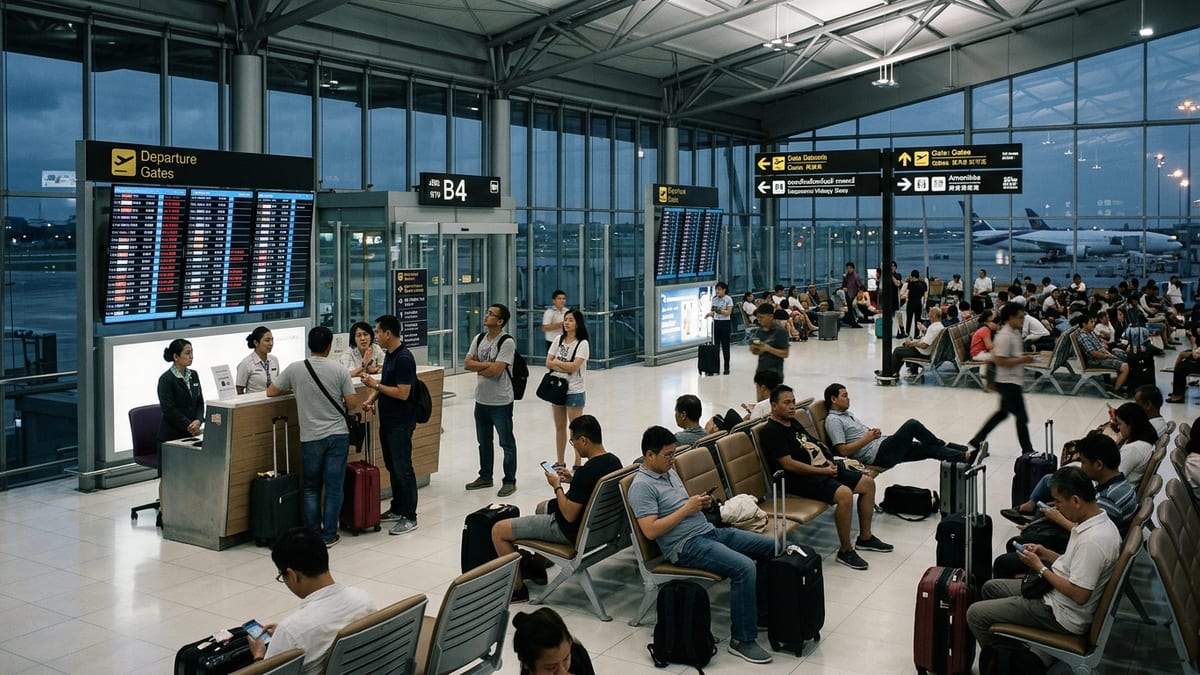
Operational Strain Across a Widely Connected Network
Published aviation data compiled on September 1 and 2, 2026, indicates that a cluster of 39 airports across Asia recorded 3,618 flight delays and 471 cancellations in a 24 hour window, creating a ripple effect throughout regional and long haul schedules. Major airports in Jakarta and New Delhi are among the worst affected, with delays cascading through onward connections to Southeast Asia, East Asia and the Gulf.
Reports indicate that the disruption is being driven less by any single incident and more by accumulated operational pressures at airports running close to capacity. When high traffic volumes converge with constrained runway slots, limited spare aircraft and tight crew rotations, even short hold ups can lead to a backlog of late departures and arrivals that take hours to clear.
Aggregated performance figures from analytics providers and travel industry coverage show that Asia Pacific has been a global hotspot for flight disruptions in recent months, with the region contributing a significant share of worldwide cancellations and delays. In this latest episode, the impact has been amplified by the sheer number of interconnected hubs involved, making it harder for airlines to re route aircraft and crews quickly.
The result for travelers is a patchwork of conditions. Some flights continue to operate near schedule, while neighboring departures and arrivals on the same routes run hours late or are canceled outright, leaving passengers reliant on airline apps and airport displays for rapidly shifting information.
Weather, Haze and Volcanic Activity Add to Delays
Weather remains a key trigger in the current disruption cycle. Recent monsoon storms around New Delhi pushed regional totals above 6,500 delays and more than 450 cancellations on a single day in late August, underscoring how quickly conditions at one major hub can reverberate across Asia, according to passenger rights and disruption tracking services.
In Indonesia, haze and environmental conditions have complicated operations at Jakarta’s Soekarno Hatta International Airport, one of the busiest gateways in Southeast Asia. Airport operators and state linked companies have highlighted forest fires and reduced visibility as factors behind increasing delays, particularly on domestic routes serving secondary cities.
More recently, volcanic activity has added a further layer of complexity. Published updates from Indonesian authorities on September 2 describe flight disruptions between Jakarta and North Sumatra after an eruption of Mount Sinabung, with cancellations and schedule changes imposed for safety. These localized events feed into a broader regional picture in which weather and natural hazards repeatedly intersect with already tight schedules.
Typhoon conditions along parts of the East and Southeast Asian seaboard have also affected airport operations and cargo movements. Logistics advisories issued on September 1 noted delays at some coastal airports in China, including Xiamen, where flights were operating but not always on time as carriers adjusted routes and ground handling around adverse weather.
Gulf Hub Disruptions Intensify Knock On Effects
The current wave of delays and cancellations in Asia is being compounded by operational challenges at major Gulf hubs that handle a large share of connecting traffic between Asia, Europe and North America. Updated travel advisories on September 2 show that Dubai International Airport and Abu Dhabi’s Zayed International Airport are experiencing multiple delayed and canceled services, affecting both regional and long haul routes.
According to published coverage, heightened geopolitical tensions in the Gulf region and associated airspace restrictions have contributed to schedule changes for airlines including Emirates, Etihad, flydubai and Air Arabia. Flights linking Gulf hubs with cities across South Asia and Southeast Asia have been among those disrupted, adding further uncertainty for travelers already facing delays at origin or intermediate airports in Asia.
Earlier operational summaries for late August highlighted that Riyadh, Dubai, Abu Dhabi and Bahrain collectively saw more than 1,300 delays and several dozen cancellations in a 24 hour period. Those interruptions produced knock on consequences for connecting itineraries involving Asian cities, particularly for passengers traveling via the Gulf to or from South and Southeast Asia.
With the latest data showing a renewed spike in disruptions at both Asian and Gulf airports, travelers on multi segment itineraries are encountering longer journey times, missed connections and last minute rerouting, even when their departure airport appears to be functioning relatively normally.
Impact on Key Asian Hubs and Travellers
Jakarta’s Soekarno Hatta International Airport and New Delhi’s Indira Gandhi International Airport feature prominently in the current disruption data, reflecting their role as high volume hubs with extensive domestic and international networks. Airport performance trackers show that Jakarta typically handles more than 500 scheduled flights per day, meaning that even a modest increase in delays can quickly translate into hundreds of affected services.
In Singapore and other major Southeast Asian hubs, recent reporting from travel outlets has documented several thousand delays and more than one hundred cancellations over a late August weekend, as tight turnaround windows left little margin to absorb minor operational setbacks. While those figures refer to an earlier disruption episode, they illustrate the underlying vulnerability of busy Asian hubs when demand is high and capacity is stretched.
For passengers, the immediate impact is most visible in longer waits at departure gates, congestion at transfer desks and baggage belts, and difficulty securing alternative flights on heavily booked routes. Travel advisories emphasize the importance of checking flight status repeatedly in the 24 hours before departure, using airline apps for rebooking, and allowing additional time at the airport in case of security or check in bottlenecks.
Consumer rights organizations point out that compensation and care rules vary widely across jurisdictions. While some countries in the region have introduced clearer passenger protection frameworks, others rely more heavily on airline policies, leaving outcomes uneven. Travelers connecting between multiple regulatory regimes can find it challenging to determine which protections, if any, apply when a disruption involves airports in several countries.
What the Latest Data Signals for the Months Ahead
Industry performance reports for recent months suggest that Asia Pacific has been contributing a disproportionately high share of global flight cancellations and delays as traffic has returned to or exceeded pre pandemic levels. Analysts note that while airlines and airports have rebuilt capacity, recruitment and training pipelines for pilots, cabin crew and ground staff remain under pressure, limiting flexibility when irregular operations occur.
The tally of 3,618 delays and 471 cancellations across 39 Asian airports in a single 24 hour period highlights how quickly a combination of weather, environmental events and geopolitical tensions can push the region’s aviation system into stress. With the northern winter schedule approaching, carriers are likely to continue fine tuning timetables and fleet deployment in an effort to create more resilience, but much depends on whether external shocks such as storms, volcanic eruptions or airspace closures can be contained.
For now, publicly available disruption trackers and travel advisories recommend that passengers build in additional buffer time, avoid overly tight connections where possible, and stay alert to schedule changes well before arriving at the airport. The recent pattern of rolling delays, rather than isolated airport shutdowns, means that even flights that ultimately operate may do so at significantly different times than originally planned.
As airlines and airports work through this latest period of instability, the data emerging from Asia’s hubs is likely to be closely watched by regulators, industry bodies and consumer advocates seeking to understand how the region’s aviation system can better absorb shocks without leaving thousands of travelers unexpectedly grounded.
Sources: Travel And Tour World; AirHelp Delhi disruption analysis; AirHelp Gulf hubs disruption report; The National coverage of UAE airport delays; ANTARA News report on Sinabung related disruptions