


More news on this day
United Airlines Flight UA366 from San Francisco to Newark was diverted to Chicago on Monday, adding a fresh example of how weather and congestion are disrupting some of the busiest transcontinental routes in the United States.
Get the latest news straight to your inbox!
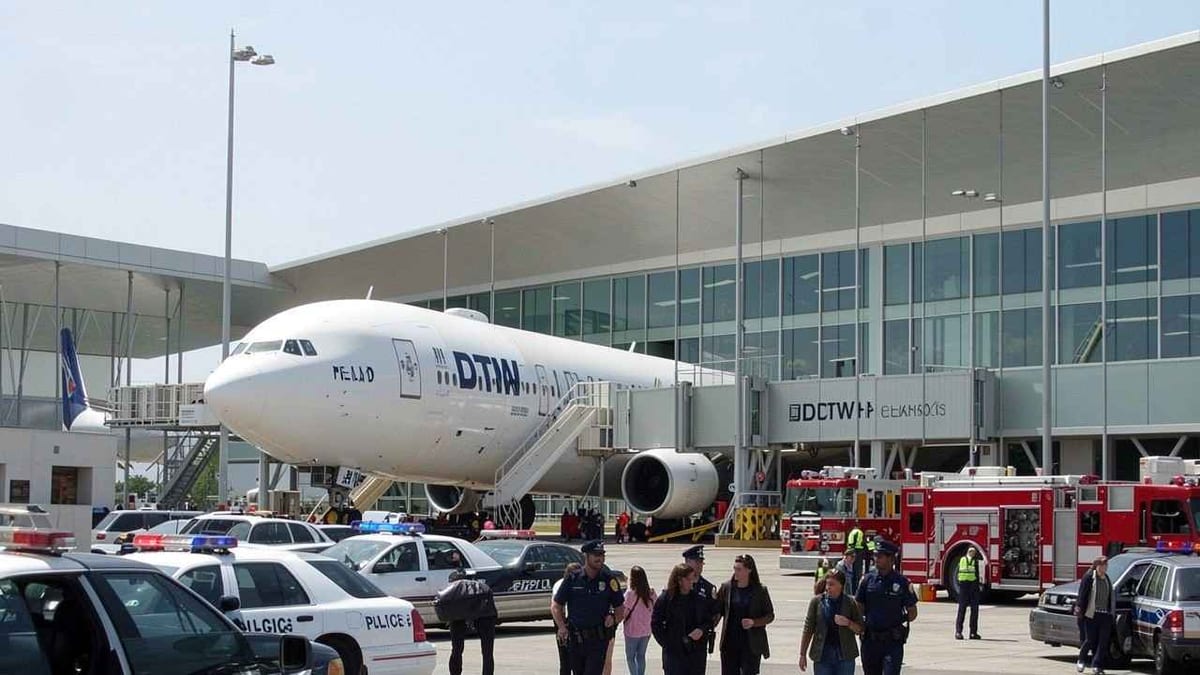
Transcontinental Service Disrupted En Route to Newark
Publicly available flight-tracking information shows that United Flight UA366 departed San Francisco International Airport on schedule for Newark Liberty International Airport before changing course toward Chicago O’Hare International Airport. The aircraft landed in Chicago instead of continuing to the New York region, where storms and air-traffic flow programs have periodically slowed arrivals this summer.
Data from flight-status platforms indicates that the diversion occurred after the aircraft had already crossed a substantial portion of the country, suggesting that conditions near the destination or along the planned arrival path deteriorated as the flight progressed. The change in routing turned what is typically a nonstop West Coast to East Coast journey into an unscheduled stop at one of United’s largest hubs.
Early passenger accounts shared on social platforms describe a routine departure from San Francisco, followed by mounting delays in the air-traffic system as the aircraft approached the Midwest and the Northeast corridor. While individual experiences vary, reports are broadly consistent with a day of widespread disruptions on routes feeding into Newark and other major airports in the region.
There has been no official, detailed incident narrative released through public statements, but the pattern of delays and rerouting affecting multiple San Francisco to Newark flights points to a combination of convective weather and congestion in already busy airspace.
Chicago O’Hare Serves as a Strategic Alternate Hub
Chicago O’Hare functions as a primary hub in United’s domestic and international network, and is frequently used as an alternate airport when long-haul and transcontinental flights encounter operational constraints. Aviation network analyses describe O’Hare as a central node that allows the carrier to reassemble disrupted itineraries by tapping into a dense bank of onward connections.
For a diverted flight such as UA366, Chicago offers several advantages compared with smaller alternates. The airport maintains extensive United ground operations, numerous available gates, and a large schedule of connecting flights to East Coast and Midwest destinations. This infrastructure can help absorb passengers whose original flight paths have been broken up by weather or traffic-control limits further east.
Recent discussions in traveler forums show that diversions into Chicago are common during periods of severe weather, both for flights originally bound for O’Hare and for services scheduled to continue on to Newark, Washington, or other hubs. While the specific causes vary from flight to flight, the decision to route UA366 into Chicago fits a broader operational pattern in which major hubs act as safety valves when parts of the national airspace system become constrained.
Operational reference material circulated to passengers by airlines and airports notes that diversions can arise from a range of factors, including thunderstorms, low visibility, runway closures, and crew duty-time limits. Once a diversion occurs, large hubs such as Chicago typically offer the best chance for travelers to be rebooked or for the flight to continue onward when conditions stabilize.
Passenger Experience Marked by Uncertainty and Rebooking
Passengers onboard Flight UA366 reported a familiar mix of uncertainty and logistical challenges following the diversion. Based on comments shared in public forums, travelers described waiting for information about next steps, including whether the aircraft would continue to Newark later in the day or whether accommodations and rebooked itineraries would be arranged from Chicago.
On days with widespread disruptions, airlines often juggle limited aircraft, available crew, and gate space while also working within federal duty-time rules that cap how long pilots and cabin crew can remain on duty. Publicly available guidance from airline customer-service policies explains that diversions driven by weather and air-traffic issues are typically treated differently from events that carriers can fully control, such as mechanical delays, which can affect the scope of vouchers or hotel arrangements.
Travelers commenting online about the UA366 diversion and similar incidents emphasized the difficulty of making tight onward connections, especially for those with international itineraries or important meetings planned on the East Coast. Some noted that they opted to change plans and remain in Chicago, while others sought alternative routings on later flights once it became clear that original schedules could no longer be met.
Despite the frustration, many reports reflect an understanding that safety considerations and air-traffic control constraints leave limited options once storms or congestion build near key hubs. The experience on UA366 mirrors other recent accounts of flights that have been forced to pause at intermediate airports or divert to major hubs when the intended destination became temporarily unavailable.
Weather, Congestion and a Busy Summer Travel Pattern
The diversion of Flight UA366 has unfolded during an already busy summer for U.S. aviation, characterized by strong passenger demand and frequent bouts of convective weather across the Midwest and Northeast. Meteorological summaries for the period highlight clusters of thunderstorms that can rapidly reduce arrival capacity at major hubs, forcing controllers to space out aircraft and, in some cases, hold or reroute incoming flights.
Industry analyses of recent summer travel seasons show that New York area airports, including Newark, are particularly sensitive to these conditions because they operate in tightly constrained airspace with limited room for schedule recovery. When storms move through at peak hours, carriers can face cascading delays, missed connections, and a growing number of aircraft that must divert or wait for improved conditions.
Airline network research points out that transcontinental services like San Francisco to Newark are especially exposed. These flights are long enough that weather and traffic conditions at the destination can change significantly between departure and arrival, and they often carry high volumes of connecting passengers whose onward travel plans depend on precise timing.
In that context, routing UA366 into Chicago reflects a risk-management approach in which airlines prioritize a safe landing at a well-equipped hub, even at the cost of major inconvenience to travelers. The combination of an active thunderstorm pattern and heavy summer schedules appears to have created the circumstances that made the diversion a necessary choice on this particular flight.
What the Diversion Means for Future Travelers
For passengers planning upcoming trips on busy routes such as San Francisco to Newark, the experience of Flight UA366 underscores the value of preparing for disruption, particularly during peak summer months. Travel advisers often recommend building additional connection time into itineraries that rely on weather-sensitive hubs or involve critical onward commitments.
Consumer-focused aviation guides also encourage travelers to monitor flight status closely on the day of departure, using airline apps and flight-tracking services to stay informed about evolving conditions. When early signs of widespread delays or ground stops appear, same-day itinerary changes or voluntary reroutes may offer more options than waiting until a diversion or extended delay is already underway.
While diversions like that of UA366 remain relatively rare compared with the total number of daily flights, they are an inherent feature of an aviation system that must balance efficiency with safety and regulatory limits. The incident contributes to a growing body of recent examples showing how quickly a standard transcontinental flight can be reshaped by weather and congestion far from its departure point.
As airlines refine their schedules and contingency plans, travelers on routes linking major hubs on both coasts may continue to see day-to-day variation in punctuality. The events surrounding United Flight UA366 demonstrate how, even when flights depart on time from clear skies in California, changing conditions thousands of miles away can still decide where a journey ultimately ends.