


More news on this day
A pivotal US court ruling has preserved the Delta Air Lines–Aeromexico joint venture, overturning a federal order that sought to unwind the alliance and safeguarding a major network of flights between the United States and Mexico.
Get the latest news straight to your inbox!
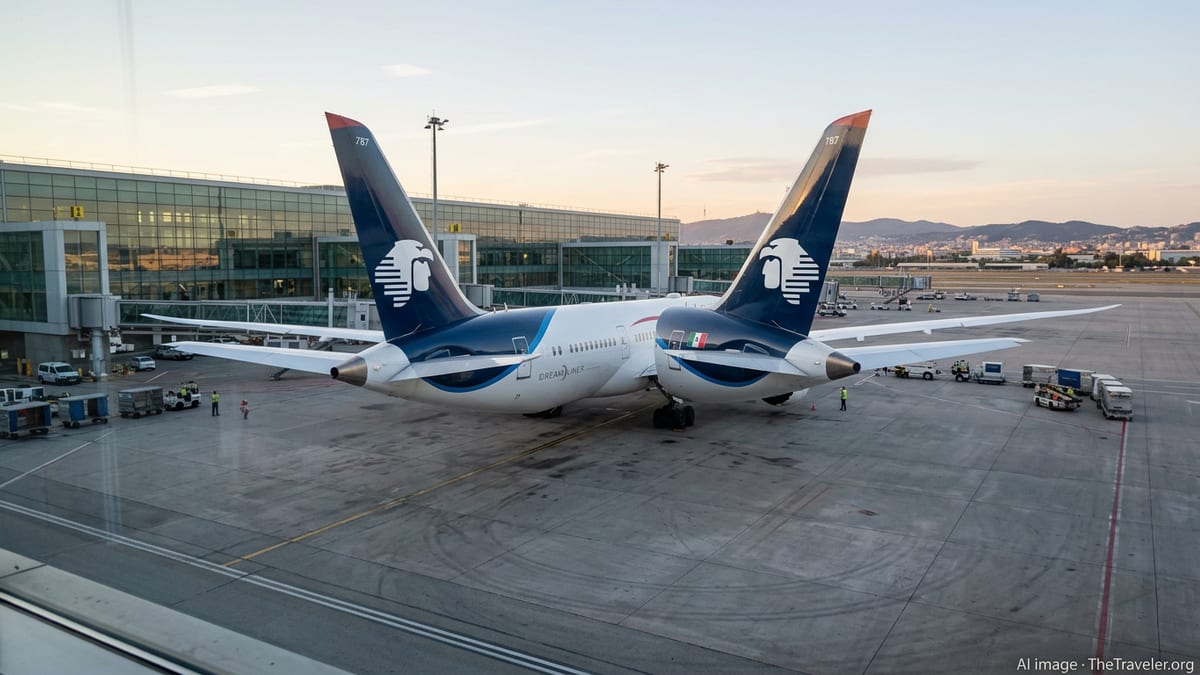
Court Vacates US Order That Threatened the Alliance
The US Court of Appeals for the Eleventh Circuit has vacated a 2025 order from the US Department of Transportation that would have forced Delta Air Lines and Aeromexico to dismantle their transborder joint venture and wind down key elements of their cooperation by January 1, 2026. According to published legal summaries, the court sided with the carriers in their challenge, finding that the DOT’s decision to revoke antitrust immunity and terminate the partnership’s approval was not adequately supported by the record.
Publicly available information shows that the alliance, formally launched in 2017 after initial antitrust immunity was granted in 2016, allowed the two airlines to coordinate schedules, pricing, and network planning on US–Mexico routes. The DOT’s 2025 final order argued that market conditions had changed and raised concerns about slot access and competitive dynamics, particularly at Mexico City’s Benito Juarez International Airport.
The Eleventh Circuit’s August 20, 2026 decision effectively reverses that outcome, removing the obligation to unwind the partnership and restoring long-term regulatory certainty for the carriers’ joint venture. Legal commentary indicates that the court criticized the DOT’s analytical framework and its treatment of evidence about competition and consumer benefits.
What the Ruling Means for US–Mexico Travelers
For travelers, the court’s decision largely preserves the status quo on one of the busiest international corridors from the United States. The joint venture underpins a coordinated network linking US hubs such as Atlanta, Detroit, New York, Los Angeles, and Seattle with major Mexican cities including Mexico City, Guadalajara, Monterrey, and key leisure destinations. Publicly available filings from Aeromexico note that from the start of the agreement in 2017 through the end of 2025, the partners transported more than 60 million passengers on joint venture routes.
Reports indicate that the alliance has enabled the two carriers to align schedules to offer more daylight options, additional frequencies, and improved connections, especially over large hubs like Atlanta and Mexico City. Travelers booking through either airline have been able to access a broader combined schedule, reciprocal loyalty benefits, and coordinated fare products that would have been at risk if the joint venture had been forced to unwind.
Industry analysis suggests that, had the DOT order taken effect, travelers might have faced fewer nonstop options, less schedule coordination, and potentially higher fares on certain city pairs where the partnership enabled additional service. With the court’s ruling, frequent flyers and leisure travelers retain a familiar set of choices on cross-border routes, while travel planners and tour operators can continue to rely on the existing network structure.
Background: Slot Access and Competition at Mexico City
The dispute over the Delta–Aeromexico joint venture has been closely tied to the complex issue of airport slot allocation in Mexico City. The DOT’s 2016 approval of the alliance was conditioned on slot divestitures at Benito Juarez International Airport and a time limit on antitrust immunity, reflecting regulators’ concern that the partners could gain an outsized share of constrained takeoff and landing slots.
Subsequent changes in Mexico’s aviation policy, including a freeze and reallocation of slots at the capital’s airport and the shift of some operations to the newer Felipe Angeles International Airport, intensified the debate. Public DOT documents argued that Mexican regulators’ slot management practices were limiting opportunities for US and other foreign carriers and, in turn, affecting the competitive landscape on US–Mexico routes.
The Eleventh Circuit, however, concluded that the DOT’s final order in 2025 did not sufficiently justify the drastic remedy of terminating the joint venture’s approval and immunities. Legal summaries indicate that the court viewed the agency’s treatment of evidence on slot access and competition as inconsistent and found that its conclusions did not adequately reflect the alliance’s documented consumer benefits.
Strategic Stakes for Delta, Aeromexico and Their Rivals
The outcome carries important competitive implications for the North American aviation market. For Delta, the Aeromexico partnership is a core pillar of its international strategy, giving the US carrier a co-branded, schedule-coordinated presence across Mexico that rivals American Airlines’ partnership with Mexico’s flag carriers over Dallas–Fort Worth, and United Airlines’ strength over Houston and other hubs. Maintaining antitrust immunity allows Delta to continue treating Mexico as an extension of its domestic network rather than a fragmented set of codeshares.
For Aeromexico, the joint venture provides sustained access to US feed and connectivity, funneling travelers from smaller American cities into its Mexico City and regional hubs. Public investor materials characterize the alliance as a source of incremental traffic and revenue, helping to support wider destination offerings within Mexico and beyond to Latin America and Europe.
Competing airlines have been closely watching the outcome, as the DOT’s decision had been framed in part around leveling the playing field for other carriers that argued they were disadvantaged by limited slot access in Mexico City. The court’s ruling does not resolve underlying slot policy disputes, but it does signal that sweeping changes to alliances may face a high bar in US courts, particularly when joint ventures can point to years of documented consumer and economic benefits.
What Comes Next for Policy and Passengers
While the court’s ruling ends the immediate threat to the Delta–Aeromexico partnership, regulatory and policy questions around US–Mexico air services are unlikely to disappear. Public documentation from the DOT highlights ongoing concerns about how slots are allocated and how capacity is distributed between Mexico City’s main airports, issues that can shape which carriers grow and which routes survive.
Aeromexico has indicated through its market communications that it is reviewing the court’s opinion and evaluating next steps together with Delta and legal advisers. Any future regulatory review would need to account for the Eleventh Circuit’s reasoning, including its emphasis on evidence-based analysis of competition and consumer outcomes.
For now, however, passengers planning trips for business, family visits, or vacation across the border can expect the Delta–Aeromexico network to continue operating much as it has in recent years. The preservation of the joint venture provides stability in a market that has seen significant change from pandemic disruptions, infrastructure shifts in Mexico City, and evolving cross-border demand.
Delta News Hub: US Appeals Court vacates DOT order to unwind Delta/Aeromexico joint venture
Grupo Aeroméxico investor filing on court decision and joint venture
Justia summary of Delta Air Lines Inc. v. US Department of Transportation (11th Cir. 2026)
Bloomberg Law coverage of Delta and Aeromexico’s court victory
El Economista report on the alliance’s future for Mexico–US travel