


More news on this day
United States authorities have issued a new regional travel alert for the Middle East warning American citizens to be ready for flight cancellations, temporary airspace closures and sudden changes to security conditions as tensions with Iran continue to escalate.
Get the latest news straight to your inbox!
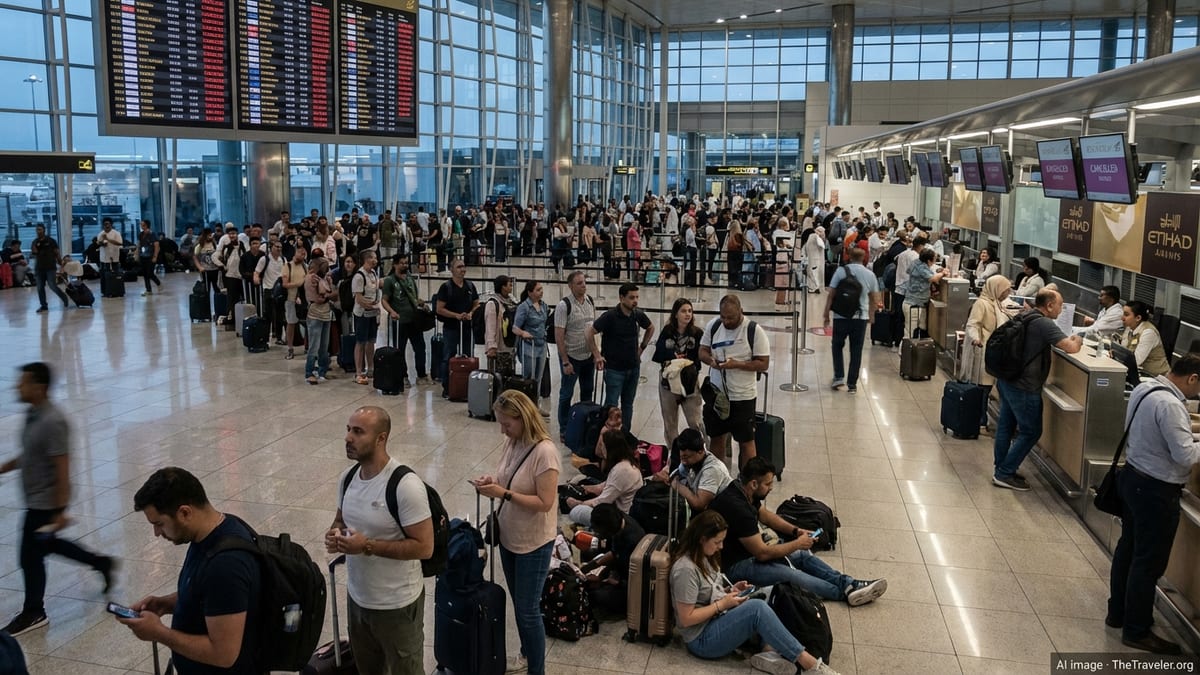
Fresh Alert Targets Key Middle East Hubs
The latest security message, issued over the weekend, reinforces earlier guidance that urged Americans in the region to exercise increased caution and have contingency plans in place if commercial links are disrupted. The alert specifically highlights the risk of cancelled or heavily delayed flights, as well as short-notice airspace restrictions that could strand travelers or force complex diversions.
According to publicly available information, recent security notices have covered major aviation and transit hubs including Bahrain, Israel, Iraq, Jordan, Kuwait, Lebanon, Oman, Qatar, Saudi Arabia and the United Arab Emirates. Many of these states sit on or near the key air corridors that connect Europe, Asia and Africa, meaning any disruption can quickly ripple across global flight schedules.
The new wording reflects a sharper focus on practical travel impacts. In addition to the longstanding warnings about missile and drone activity, maritime risks and protests, the advisory now repeatedly stresses that travelers should be prepared for grounded aircraft, rerouted flights and airport congestion if the conflict with Iran flares again.
The alert comes after months in which airspace closures and sporadic strikes have already forced airlines to suspend routes, reduce frequencies or route around conflict zones, adding hours to some long-haul journeys and increasing operational costs.
Iran Conflict Keeps Aviation On Edge
The advisory is the latest sign of how closely commercial aviation is tied to the trajectory of the Iran conflict. Analysis by aviation consultancies and security firms over recent months has documented how fighting involving Iran, the United States, Israel and regional actors has repeatedly spilled into the skies, closing flight information regions and damaging airport infrastructure.
Industry assessments describe a Middle East airspace map that has been redrawn several times since early 2026, with large swaths of Iranian, Iraqi and Gulf airspace periodically off-limits to civilian traffic. Carriers have responded by pushing more flights onto narrower northern and southern corridors, routing via the Caucasus, Central Asia, Egypt and the Red Sea where possible.
These diversions have had knock-on effects far beyond the region. Longer routings increase fuel burn and crew hours, forcing airlines to trim schedules or raise fares. With demand for summer and autumn travel already high, any additional capacity squeeze risks spilling into major markets in Europe, North America and Asia that depend on Middle East hubs for connecting traffic.
Security analysts also point to the psychological impact on travelers, many of whom now associate stopovers in major Gulf and Levant hubs with uncertainty, even if their final destinations are elsewhere. That perception alone can reshape booking patterns, especially among leisure travelers who have flexibility to reroute.
What the Advisory Means for US Travelers
While the new alert does not impose legal restrictions on travel, it effectively signals that conditions can deteriorate quickly and that relying on last-minute government evacuation is unwise. Recent notices emphasize that commercial flights remain the primary means of departure and that travelers should make use of them while they are available.
Public guidance encourages Americans residing or traveling in the Middle East to have several practical steps in place. These include maintaining valid travel documents, holding sufficient funds and insurance to rebook if flights are canceled, and ensuring that itineraries allow for missed connections or overnight delays if aircraft are rerouted around closed airspace.
Travel risk experts note that passengers connecting through Middle Eastern hubs are particularly exposed to schedule shocks. Even travelers whose journeys start in the United States and end in Europe, Asia or Africa can face disruptions if their itinerary relies on a single transit point that suddenly suspends operations.
For businesses, the advisory serves as a prompt to review duty-of-care policies for staff working or transiting in the region. Many international companies have already updated internal travel approvals, routing rules and emergency contact systems since the conflict intensified, and the latest alert is likely to accelerate that process.
Airlines Juggle Safety, Schedules and Costs
Airlines have been forced into a difficult balancing act as the security environment shifts. Publicly available schedules and company statements indicate that some carriers have suspended services entirely to certain Middle Eastern destinations, while others have maintained limited operations with altered flight paths and extended block times.
Operators are required to comply with national safety directives and aviation notices that may prohibit flights over specific territories or at certain altitudes. As a result, even airlines that wish to maintain service often have little choice but to cancel or consolidate flights if viable routing options disappear or become too congested.
Industry data and financial disclosures suggest that the cumulative impact of diversions, higher insurance premiums and increased fuel consumption is weighing heavily on airline balance sheets. Some low-cost carriers and smaller regional airlines have been especially exposed, cutting back on longer-haul flying that now requires expensive detours.
Larger network airlines have more flexibility to reassign aircraft and crews, but they too are warning of thinner margins on routes that skirt the conflict zone. In previous phases of the crisis, several carriers rebooked passengers through alternative hubs in Europe or South Asia when Middle East gateways were temporarily unusable, but that option is only viable while there is spare capacity elsewhere.
Planning Ahead Amid a Fluid Situation
For individual travelers, the core message of the new US advisory is to plan conservatively. Travel specialists recommend booking itineraries with longer connection times, choosing tickets that allow changes without heavy penalties, and avoiding nonessential last-minute trips that pass through the most volatile areas when possible.
Trip-planning advice circulating among risk consultants and travel-management firms also highlights the importance of monitoring airline notifications and local airport announcements closely in the days before departure. Flight status can change several times within a single day as new security information emerges or as airspace restrictions are tightened or relaxed.
Some travelers are being encouraged to consider alternative routings that bypass the region altogether, even if that means longer flying times. For example, instead of transiting through Gulf hubs between North America and South Asia, passengers may in some cases find more predictable options via European, East Asian or direct point-to-point services where they exist.
Analysts stress that the situation remains fluid and that the language of the latest alert could shift again if diplomacy around the Iran conflict gains traction or, conversely, if hostilities worsen. For now, however, the message from publicly available advisories is clear: anyone traveling to, from or through the Middle East in the coming weeks should be ready for flight cancellations and prepared to adapt their plans at short notice.