


More news on this day
Travelers moving through some of the United States’ busiest air hubs faced another difficult day as a mix of severe weather and operational constraints contributed to 321 cancellations and 2,189 delays centered on Boston, New York and Chicago, according to aviation tracking data and published reports.
Get the latest news straight to your inbox!
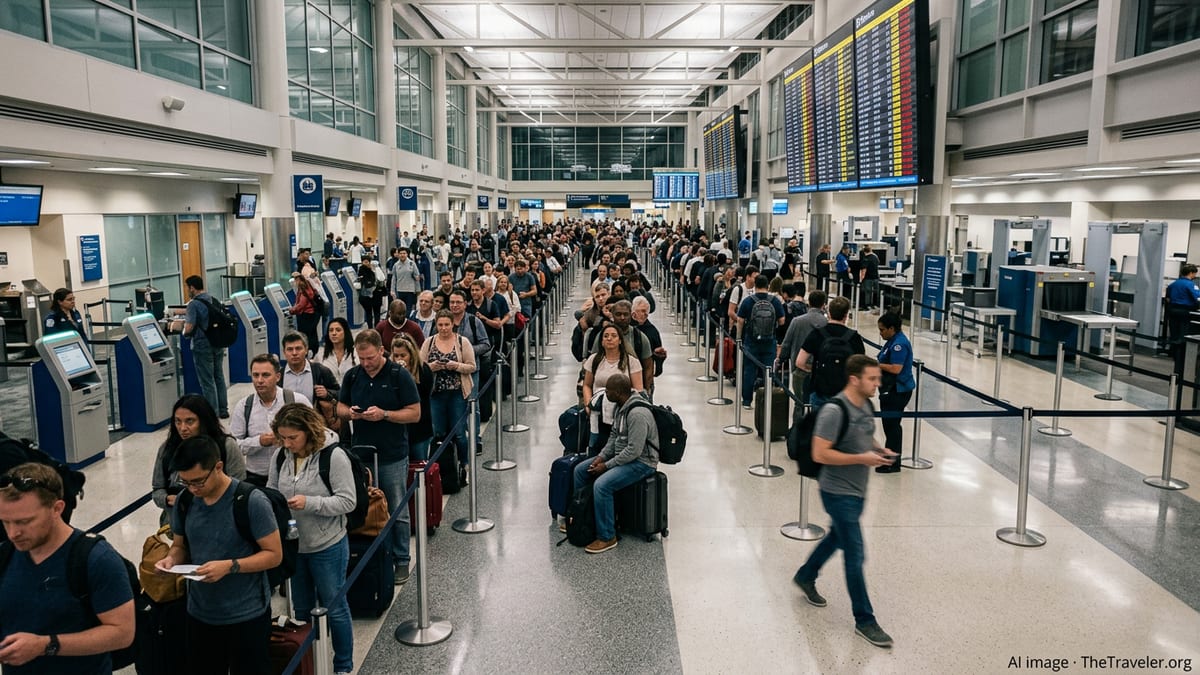
Stormy Skies and Congested Corridors Drive Widespread Disruption
The latest disruption reflects how quickly conditions can deteriorate across the Northeast and Midwest air corridors, where dense traffic and tightly scheduled operations leave limited room to absorb weather shocks. Tracking services reporting on the day’s operations indicate that flight cancellations and delays were spread across multiple carriers but clustered around Boston Logan International Airport, New York–area airports and Chicago O’Hare.
According to a same‑day summary from industry news outlet Travel and Tour World, more than 2,100 flights were delayed and just over 320 were canceled nationwide, with Boston, New York and Chicago listed among the most affected hubs. The report notes that storms moving through the Northeast and Great Lakes region slowed departures and arrivals, forcing airlines and air traffic managers to meter traffic and, in some cases, halt operations temporarily.
This pattern follows a broader trend seen throughout the summer travel period, during which bursts of thunderstorms have combined with already busy schedules to trigger rolling disruptions. Data published by FlightAware and airport operations portals show repeated spikes in delays at Boston, New York and Chicago on days when convective weather crosses the region, often during peak afternoon and evening travel windows.
With major hubs feeding one another across the national network, delays at a few large airports can reverberate throughout the system, contributing to missed connections and late‑night arrivals far from the original weather cells.
Boston Logan, New York Hubs and Chicago O’Hare Bear the Brunt
The latest figures highlight the outsized role played by Boston, New York and Chicago in the day’s disruption. Travel and Tour World’s breakdown attributes 262 delays and 48 cancellations to Chicago O’Hare, while Boston Logan records 247 delays and 60 cancellations. Combined with New York–area airports, these hubs account for a significant share of the 321 cancellations and 2,189 delays noted nationwide.
Recent coverage of Boston Logan shows how quickly operations there can become strained. In late July, Boston.com reported more than 400 delays and over 300 cancellations in a single evening after thunderstorms swept across New England, prompting a ground stop at Logan and at several other East Coast airports. That episode illustrated how the airport’s coastal location and congestion can magnify even a few hours of poor weather into hundreds of schedule changes.
Chicago O’Hare and the New York–area airports, including JFK and LaGuardia, routinely appear near the top of delay rankings due to their role as national and international connecting hubs. Statistics compiled on O’Hare’s performance this week by independent tracking sites show that roughly half of flights have been operating within 15 minutes of schedule, while the remainder experience some level of delay, even on days without headline‑grabbing storms.
When severe weather arrives, these airports must juggle arriving and departing traffic from across the country, and constraints at one hub can quickly spill over to others. A storm line crossing the Great Lakes, for example, can simultaneously affect arrivals into Chicago while also disrupting flights heading onward to New York or Boston later in the day.
Weather, Infrastructure and Staffing Combine to Create Fragile Operations
Published reports from the past several weeks underscore that weather is only part of the story. At Boston Logan, a fueling system problem in July temporarily halted operations and triggered dozens of cancellations and delays, according to coverage from Boston 25 News and other outlets. Even after the immediate technical issue was resolved, residual delays persisted into the following day as airlines repositioned aircraft and crews.
Travelers have also reported persistent congestion at Logan tied to construction and airfield configuration changes, as well as recurring traffic‑management initiatives in the busy airspace around New York and Boston. Public posts from pilots and passengers collected on community forums describe frequent airborne holding, reroutes and ground delays linked to traffic volume and air traffic control constraints, even when skies appear relatively clear at the airport.
Chicago and New York face similar structural challenges, with intense banked schedules, limited runway capacity relative to demand and complex regional airspace. Federal Aviation Administration advisories issued earlier this summer for Boston and other Northeast airports warned of potential arrival delays and holding during periods of heavy traffic and convective weather, signaling the need for passengers to anticipate knock‑on disruptions even when their own departure cities are not under storm warnings.
When these factors converge with peak leisure or business travel periods, the result is a fragile operating environment in which a single line of storms or a localized technical problem can ignite widespread cancellations and delays across the network.
What Travelers Can Do When Cancellations and Delays Mount
For passengers caught in the latest wave of disruptions, the experience often involves long waits, rebooking challenges and uncertainty about when operations will normalize. Aviation data services recommend that travelers monitor both airline channels and independent trackers, which can provide early indications of mounting delays at specific airports such as Boston, New York or Chicago.
Consumer travel advocates commonly advise booking earlier flights in the day, when there is more recovery time if something goes wrong, and opting for nonstop routes when possible to reduce exposure to cascading delays at connecting hubs. On days when Boston Logan, O’Hare or New York–area airports are already showing elevated delays on public dashboards, some travelers may choose to route through alternative hubs or, for shorter regional trips, consider rail or road options.
Published guidance from airports and airlines stresses the importance of checking flight status frequently, signing up for text or app alerts, and building extra time into itineraries when traveling through historically delay‑prone hubs. For international connections, experts often recommend longer layovers than the minimum connection times, particularly when routing through Chicago or New York during storm‑prone seasons.
While the 321 cancellations and 2,189 delays recorded across the United States in this latest event represent a fraction of total daily flights, they illustrate how quickly travel plans can unravel when multiple major hubs are affected at once. With summer and early autumn remaining active periods for thunderstorms in both the Northeast and Midwest, travelers using Boston, New York and Chicago may need to remain especially vigilant in the weeks ahead.
Travel and Tour World: Flights Cancelled Around the US
Boston.com: Logan Airport delays and cancellations due to thunderstorms
Boston 25 News: Fueling issue causes delays and cancellations at Boston Logan