


More news on this day
At least 15 international airlines have suspended or sharply reduced flights to Dubai, triggering major travel disruption across key long-haul routes and forcing thousands of passengers to rethink summer and autumn itineraries through one of the world’s busiest hubs.
Get the latest news straight to your inbox!
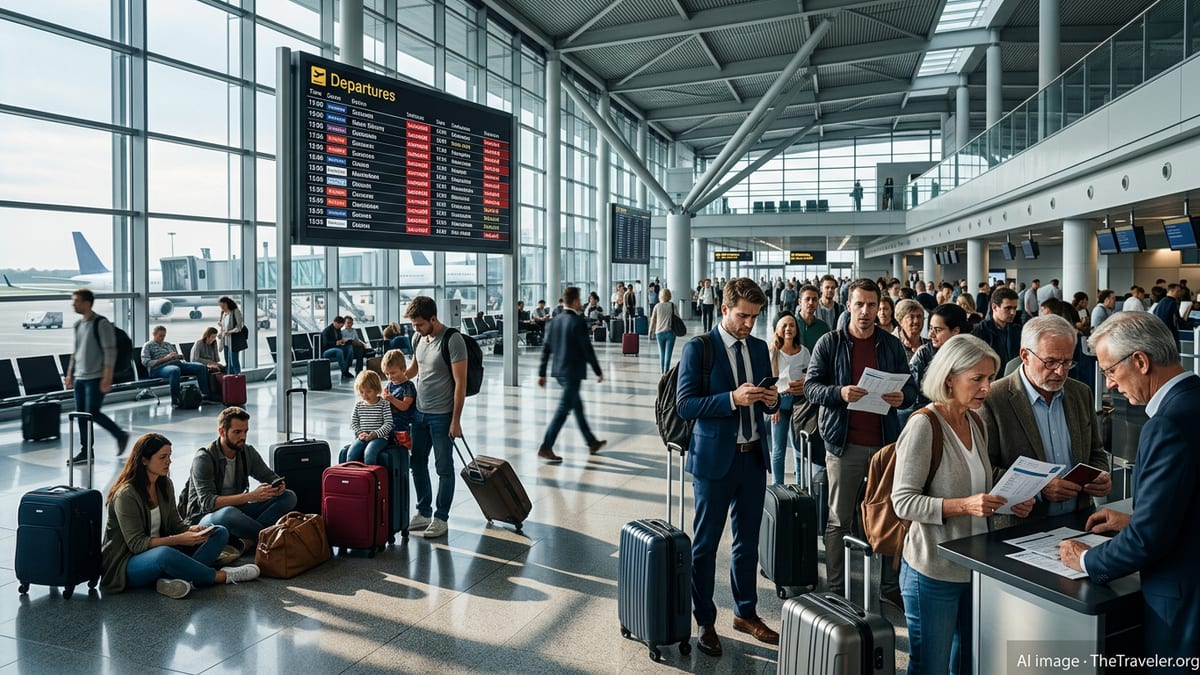
Wave of suspensions hits Dubai-bound traffic
Dubai’s position as a global connecting hub is under pressure as a growing number of foreign carriers scale back or suspend services into the emirate. Recent published coverage tracking schedule changes indicates that more than a dozen airlines across Europe, North America and Asia have halted Dubai flights entirely or trimmed frequencies in response to evolving security and airspace concerns in the wider Middle East region.
Routes most affected include services from major European gateways, secondary Asian cities and select North American hubs that traditionally feed connecting traffic into Dubai. Industry data and timetable updates point to a rolling pattern of suspensions, with some airlines extending pauses into late summer or early autumn, while others have introduced open-ended halts with only broad review dates declared.
The result is a patchwork of route availability that is far less predictable than in previous years. While Dubai-based carriers continue to operate extensive networks, passengers who rely on non-Gulf airlines for specific point-to-point links into the city are facing reduced options, longer journeys and in some cases the need to rebook via entirely different hubs.
Travel industry analysts note that the scale of these temporary withdrawals marks one of the most significant interruptions to Dubai-bound traffic since the pandemic-era shutdowns, though the drivers this time are primarily geopolitical rather than public-health related.
Geopolitical tensions and airspace risks shape decisions
According to recent reporting on regional aviation trends, many of the suspensions are linked to heightened tensions involving Iran and Israel and the resulting caution over routing across parts of the Middle East. Some long-haul airlines have opted to avoid wider Gulf airspace altogether, consolidating operations around alternative corridors viewed as less exposed to potential disruption.
Safety assessments by individual carriers are playing a central role. Publicly available information shows that several European and North American airlines have updated their travel advisories and operational bulletins to reflect revised risk calculations, with Dubai-listed among destinations affected by broader network adjustments across the Gulf.
In parallel, fuel and routing economics are also influencing decisions. Aviation trade commentary in recent months has highlighted rising costs associated with longer detours around sensitive airspace, along with broader concerns over jet fuel availability in parts of the region. For airlines operating marginal or seasonal Dubai routes, these additional pressures have reportedly tipped some services from viable to temporarily unsustainable.
Industry observers stress that the suspensions do not reflect conditions at Dubai International Airport itself, which continues to operate as the primary hub for UAE-based carriers. Instead, they represent route-by-route judgments by foreign airlines balancing safety, cost and demand across their global networks.
Passengers face cancellations, refunds and complex rebooking
The immediate impact for travelers is a surge in cancellations and rebookings on flights scheduled through Dubai during the northern summer and early autumn. Customer notices published by affected airlines typically offer a mix of full refunds, date changes or rerouting via alternative hubs, but the fine print and level of flexibility vary considerably between carriers.
Some airlines have offered free-of-charge rebooking onto later Dubai flights once services are expected to resume, while others are encouraging passengers to reroute via nearby Gulf or European hubs that remain in operation. In cases where carriers have suspended entire city-pair operations for several months, travelers are often being moved to partner airlines under existing alliance or codeshare agreements, subject to seat availability.
Travel agents report that the most challenging cases involve complex itineraries where Dubai was only one segment of a multi-stop journey. With multiple airlines adjusting schedules at the same time, re-accommodating these passengers can require wholesale replanning, new connections and in some instances overnight stops that were not part of the original trip.
Consumer advocates are reminding passengers to review airline policies carefully, particularly on whether compensation is payable, which generally depends on local regulations and the precise cause of the disruption. In many jurisdictions, suspensions explicitly linked to security concerns may fall outside standard compensation schemes, even where refunds and rebooking are offered.
Dubai hub remains operational but connectivity shifts
Dubai International Airport continues to function as a major global hub, with local carriers maintaining extensive networks and many foreign airlines still operating regular services. Airport statistics released over recent quarters have highlighted both strong underlying demand and vulnerability to external shocks, from severe flooding in April 2024 to the recent geopolitical tensions that have reshaped regional airspace usage.
Despite the current wave of suspensions by some foreign airlines, traffic through Dubai is being partially backfilled by increased reliance on Gulf carriers and by rerouted flows through neighboring hubs in Abu Dhabi, Doha and other regional centers. This redistribution is altering traditional passenger flows, with some travelers who once transited Dubai now being automatically rebooked via alternative airports.
For Dubai itself, the changing patterns raise questions about medium-term competitiveness, especially if a portion of the suspended services remain offline longer than initially signaled. Aviation analysts note that hub dominance can erode if key city-pairs are cut or if high-value passengers consistently find smoother itineraries through rival hubs, even after conditions stabilize.
At the same time, there are indications that some carriers view the current suspensions as tactical rather than strategic retreats. Several have published tentative restart dates for Dubai routes, suggesting an expectation that risk levels and routing economics could become more favorable later in the year, though those timelines remain subject to review.
What travelers should do next
For passengers with existing bookings to or through Dubai over the coming months, travel specialists advise a proactive approach. The first step is to verify whether the operating airline is among those that have suspended services on the relevant route, using the carrier’s own website or app rather than relying solely on third-party booking platforms.
If a flight is affected, options typically include rebooking onto an alternative Dubai service on a later date, rerouting via a different hub on the same airline or a partner, or requesting a refund and constructing a new itinerary from scratch. Travelers with time-sensitive plans, such as cruises, tours or onward meetings, are being encouraged in published guidance to prioritize rerouting rather than waiting for suspended flights to restart.
Given the fluid situation, many travel advisors recommend building in additional connection time, considering travel insurance policies that explicitly cover airspace-related disruptions, and keeping contact details up to date with airlines so that schedule changes can be communicated promptly.
While the number of airlines suspending Dubai services is significant, a substantial volume of capacity into the city remains available, particularly via Gulf carriers and routes that have not been directly affected by the current tensions. For now, however, passengers planning to use Dubai as a gateway should expect less choice, fuller flights on remaining services and a greater need for flexibility in routing and timing.
The National: Middle East flights status and suspended routes
Flightradar24 analysis of disruption at Dubai International Airport
Dubai Airports operational updates
AP News coverage of Dubai traffic trends amid regional tensions