


More news on this day
The United States has issued an updated security alert urging its citizens outside the Middle East to “seriously reconsider” travel to and through the region, citing a volatile security environment, the risk of rapid escalation with Iran and the potential for sudden disruption to commercial flights.
Get the latest news straight to your inbox!
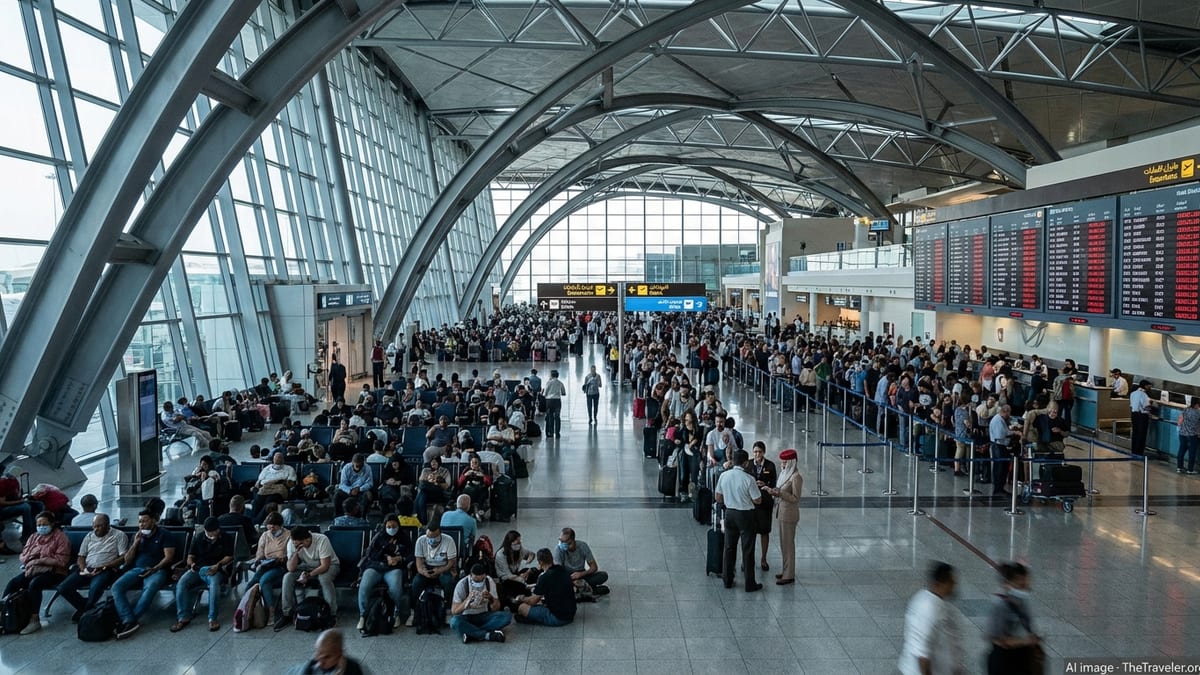
New Regionwide Warning Highlights Escalating Risks
The latest alert, issued in late September 2026 via the State Department’s official travel channels and social media feeds, advises that the overall security picture across the Middle East has deteriorated as tensions with Iran and Iran-aligned groups increase. Publicly available information describes a “complex” environment in which conditions can change quickly, including the possibility of further missile or drone attacks and retaliatory strikes in and around key travel hubs.
According to widely circulated summaries of the alert, Americans currently in the Middle East are urged to exercise heightened vigilance and prepare for potential flight cancellations, periodic airspace closures and other travel disruptions. The message stresses that travelers may have limited options to leave on short notice if routes are suspended or restricted.
While the United States has long maintained country-specific advisories for destinations such as Iran, Iraq, Lebanon, Syria and Yemen, the latest communication stands out for its broad regional framing. It explicitly calls on Americans who are not already in the Middle East to reassess nonessential trips, including holidays and transit itineraries that involve connections through major Gulf and Levantine airports.
Coverage in outlets that monitor State Department advisories notes that the language mirrors earlier security messages issued during sharp spikes in regional tension, but that the current alert reflects the particular risks associated with the latest cycle of confrontation involving Iran and armed groups it supports.
Country Advisories: From ‘Do Not Travel’ to ‘Reconsider’
Alongside the new regional message, the State Department’s country-level advisories continue to assign some of their highest warning levels to parts of the Middle East. Publicly accessible summaries show that Iran, Iraq, Lebanon, Syria and Yemen are currently categorized in the red “do not travel” tier, citing risks that include terrorism, civil unrest, kidnapping, arbitrary detention and armed conflict.
Other destinations popular with international travelers, including Bahrain, Israel, the West Bank and Gaza, Jordan, Kuwait, Oman, Qatar, Saudi Arabia and the United Arab Emirates, fall under an orange “reconsider travel” categorization. These advisories emphasize the potential for cross-border attacks, missile and drone activity, and sudden closures of land borders and airspace, even in countries that otherwise appear stable to visitors.
Recent analysis on travel industry platforms highlights new restrictions affecting official U.S. personnel in Saudi Arabia, where employees now require special authorization for both official and personal travel to the cities of Taif and Yanbu due to the evolving security situation. Similar limitations on the movement of U.S. government staff have been in place for months in parts of Jordan and Kuwait following earlier episodes of regional escalation.
These designations do not bar private U.S. citizens from entering the affected countries, but they signal that Washington sees elevated risk and may have limited capacity to help in the event of a crisis. Travel risk consultants note that many insurers and corporate travel programs rely on the same tiered advisory scale when deciding whether to approve trips or provide coverage.
Impact on Airlines, Hubs and Travel Itineraries
The updated alert is already reverberating across the aviation and tourism sectors. Reports from travel media indicate that airlines serving the region are monitoring the security situation closely, with the possibility of schedule changes or route suspensions if tensions intensify or if civil aviation authorities expand existing restrictions on overflights.
Previous rounds of escalation in the Middle East have seen long-haul carriers reroute flights away from contested airspace, extending journey times and increasing operating costs. Analysts quoted in recent coverage suggest that similar adjustments are possible if hostilities deepen, particularly on routes that typically cross airspace near Iran or conflict zones in Iraq, Syria and Yemen.
Major hubs such as Doha, Dubai, Abu Dhabi and Riyadh are widely used as transit points for passengers traveling between North America, Asia, Africa and Europe. The new U.S. message specifically asks travelers to consider whether itineraries involving connections through these airports are essential, given the potential for rapid changes in security assessments that could lead to temporary closures or restrictions on certain carriers.
Consumer-facing travel outlets advise that Americans with imminent departures should maintain up-to-date contact information with their airlines, monitor airport and carrier announcements for schedule changes, and build in flexibility where possible, including refundable fares or tickets that can be re-routed without excessive penalties.
What the Advisory Means for Travelers
For individual travelers, the heightened U.S. warning does not automatically mean trips must be canceled. Instead, it is intended to prompt a more conservative risk assessment, particularly for tourism, academic exchanges or business travel that can be postponed or relocated to other regions.
Specialists in travel security quoted in recent reports recommend that Americans who decide to proceed with travel to “reconsider travel” destinations should thoroughly review the latest country-specific advisories and emergency contact details published on official U.S. government platforms. They also suggest that travelers share detailed itineraries with family or employers and prepare contingency plans in case local conditions deteriorate.
Travel coverage notes that the U.S. government continues to encourage enrollment in the Smart Traveler Enrollment Program, a free service that allows citizens to receive security updates and facilitates contact from U.S. embassies and consulates during emergencies overseas. Such enrollment can be particularly important in fast-moving situations where telecommunications networks are under strain or where local authorities impose curfews and movement restrictions.
Public advice from consular and risk-management experts likewise highlights the importance of confirming medical and evacuation insurance that explicitly covers regions under heightened advisory levels, as some policies limit coverage in countries listed as “do not travel” or “reconsider travel.”
Travel Industry Response and Traveler Sentiment
The alert arrives at a time when outbound travel from the United States to the Middle East has been gradually recovering after previous downturns linked to the pandemic and earlier rounds of regional conflict. Industry analysts cited in travel trade publications suggest that the new language from Washington is likely to dampen demand for leisure itineraries, group tours and cruise extensions that include time in Gulf and Levantine ports.
Some tour operators and travel advisors report a rise in inquiries from U.S. clients about rerouting upcoming trips to alternative destinations in Europe, North Africa or Asia. Although many bookings remain intact for the immediate weeks ahead, several agencies are reportedly reviewing their portfolios of Middle East product and updating internal risk assessments for itineraries scheduled into 2027.
Online discussions among travelers show a mix of reactions, from those who view the advisory as a prudent warning to others who say they feel comfortable continuing with carefully planned visits, particularly to destinations that have not seen direct attacks. However, there is broad recognition that even countries distant from current flashpoints can experience spillover effects in the form of disrupted air links, heightened security measures and stricter visa or entry procedures.
With the Middle East’s security outlook highly fluid, the U.S. alert signals that Americans considering new trips in the coming months will need to monitor developments more closely than usual and weigh the benefits of travel against the possibility of abrupt changes that could leave them facing limited options to adjust their plans.