


More news on this day
The United States has issued a heightened security alert urging its citizens to “seriously reconsider” nonessential travel to and through the Middle East, citing rapidly escalating tensions with Iran, missile and drone threats, and growing disruption to commercial air links across the region.
Get the latest news straight to your inbox!
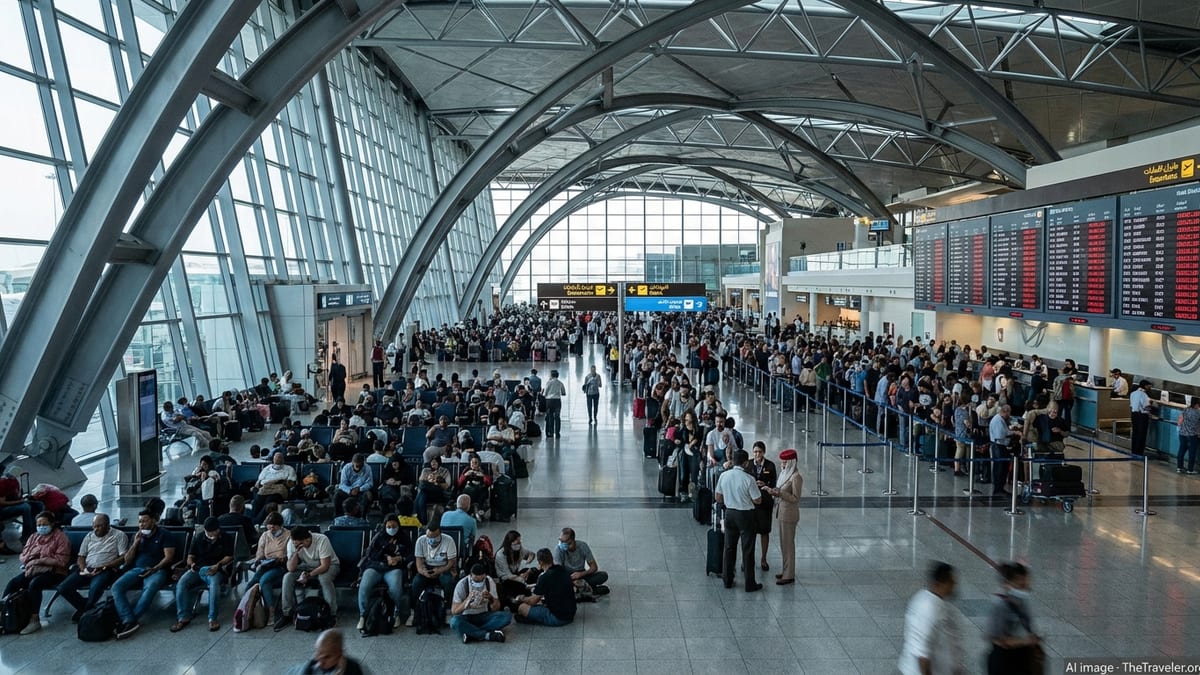
Global alert highlights shifting risk across the region
According to publicly available State Department security messaging, the latest alert was circulated worldwide over the weekend, targeting both Americans already in the Middle East and those planning trips in the coming weeks. The notice warns that the security environment across multiple countries has become increasingly complex, with the potential for sudden escalation that could affect airports, major transport hubs, and locations associated with the United States.
Reports indicate that the alert underscores an elevated risk from Iran and groups aligned with it, including the threat of missile and drone attacks aimed at regional infrastructure. Previous guidance for specific countries has already referenced such dangers, and the new language is framed for a broader regional audience, urging travelers to reassess itineraries even if they are only transiting through major hubs.
Travel industry coverage notes that the wording goes beyond routine caution, advising Americans outside the Middle East to seriously reconsider trips that would take them into or through the region. The alert also emphasizes the potential for security incidents targeting U.S. interests or places where Americans are known to congregate, from hotels and shopping centers to diplomatic districts and business venues.
Publicly available information from recent advisory updates points to a pattern of short-notice changes to operating status at U.S. diplomatic posts, including the reduction or suspension of routine consular services in some Gulf states as a precaution. The new alert frames these steps within a wider concern about regional spillover if hostilities worsen.
Country advisories already at “Reconsider travel” or higher
Even before the latest global alert, several Middle Eastern destinations were already subject to elevated U.S. travel advisories. The State Department’s country-specific guidance for Iran continues to warn against all travel, citing risks including terrorism, unrest, kidnapping, arbitrary arrest, and wrongful detention, particularly for U.S. nationals. Travelers are explicitly advised to have robust personal evacuation plans that do not depend on U.S. government assistance.
In the Gulf, Kuwait and Qatar have seen recent advisory revisions that reference the onset of hostilities between the United States and Iran earlier this year, along with the threat of drone and missile attacks and serious disruption to commercial aviation. Notices for these countries describe the U.S. government’s ability to provide services to citizens as limited, and in some cases urge Americans to depart while commercial options remain available.
Neighboring Jordan and parts of Türkiye are also under heightened levels of caution, with advisories pointing to terrorism, armed conflict, and the risk of Iranian missile activity affecting airspace and border regions. Some areas of southeast Türkiye remain subject to “Do not travel” guidance, reflecting both local security concerns and the possibility of spillover from nearby conflict zones.
These country-level warnings form the backdrop for the broader alert on Middle East travel, which effectively tells U.S. citizens that previously localized risks now interact across borders. For travelers who might once have considered limiting their exposure by flying in and out quickly or confining visits to major cities, the message signals that such strategies may no longer offer the same margin of safety.
Flight cancellations, airspace closures and transit risks
Alongside security concerns on the ground, the alert stresses the potential for widespread disruption to air travel. Publicly available advisories and regional reporting point to periodic flight cancellations, reroutings, and temporary airspace closures, particularly following missile or drone incidents or spikes in tension around the Persian Gulf and Red Sea.
Travel industry outlets note that major carriers have already adjusted schedules on some routes, increasing flying times to avoid sensitive air corridors or, in a few cases, suspending certain services altogether. While many flights continue to operate, the risk of sudden changes has grown, leaving travelers vulnerable to extended layovers, missed connections, or unplanned stays in transit hubs.
Guidance to travelers emphasizes the importance of monitoring airline communications closely in the days leading up to departure and during trips, as well as checking local airport operations through news and official channels. The alert also advises Americans to be ready for enhanced security screenings and crowding at key hubs, particularly after any new incident in the region.
Another key message is that travelers should not assume that the United States will organize emergency airlifts if commercial options become constrained. Official guidance consistently states that individuals should maintain contingency plans for departure that are realistic under current conditions and financially and logistically feasible without government-organized evacuation.
Practical steps for Americans with essential travel
For those who still need to travel for work, family, or other essential reasons, the new alert does not prohibit movement but calls for heightened preparation. Publicly available State Department advice urges U.S. citizens heading to higher-risk environments to enroll in the Smart Traveler Enrollment Program, which connects them with security updates from nearby embassies and consulates and helps officials reach them during crises.
Travel guidance also recommends that Americans in the region maintain a low profile, stay aware of surroundings, and avoid demonstrations or large public gatherings that could quickly turn volatile. Many recent advisories underscore that protests and political events can escalate with little warning, and that foreigners may find themselves affected even if they are not directly involved.
Insurance and logistics are another focus. Travel specialists advise reviewing policy fine print to confirm coverage for war, terrorism, and government travel advisories, as some standard plans exclude claims related to such events. In addition, travelers are encouraged to carry multiple forms of payment, maintain a reserve of local currency, and keep essential documents, medications, and electronics in hand luggage in case of sudden relocations or extended delays.
For families and companies with staff in the region, publicly available security briefings suggest drawing up written contingency plans that specify trigger points for voluntary departure, remote work arrangements, and alternative routes out of the region if primary hubs become unavailable. The new alert reiterates that decisions to leave may need to be made quickly and before a crisis peaks, when seats on commercial flights are still obtainable.
Regional tourism and transit hubs face uncertainty
The warning comes at a challenging moment for Middle Eastern tourism and aviation, sectors that have invested heavily in positioning the region as a global crossroads. In recent years, cities such as Dubai, Doha, Abu Dhabi, and Riyadh have marketed themselves as safe, efficient transit points and leisure destinations, drawing millions of visitors from Europe, Asia, and North America.
While the latest U.S. alert does not single out individual airports or carriers, its call for Americans to seriously reconsider itineraries through the region could dampen demand for stopovers and short visits. Travel media analysis suggests that some leisure travelers may opt to reroute through Europe or other parts of Asia, even at higher cost or with longer journey times, in order to avoid potential hotspots.
Industry observers note that the overall impact will depend on how long the heightened tension persists and whether further incidents affect civil aviation or major tourist centers. For now, regional airlines and tourism boards continue to promote services and events, but also highlight flexible booking policies and real-time travel updates in an effort to reassure hesitant visitors.
For American travelers weighing their options, the emerging picture is one of opportunity intertwined with elevated and fast-changing risk. The latest alert signals that safety assessments for Middle East trips can no longer be made solely on the basis of past visits or general impressions, but must instead be grounded in up-to-date advisories, clearly defined personal risk tolerance, and robust back-up plans.