


More news on this day
US-bound passengers traveling through Montréal–Pierre Elliott Trudeau International Airport are facing cancellations, diversions and mounting delays after a varnish odour forced the temporary shutdown of the US customs and preclearance zone.
Get the latest news straight to your inbox!
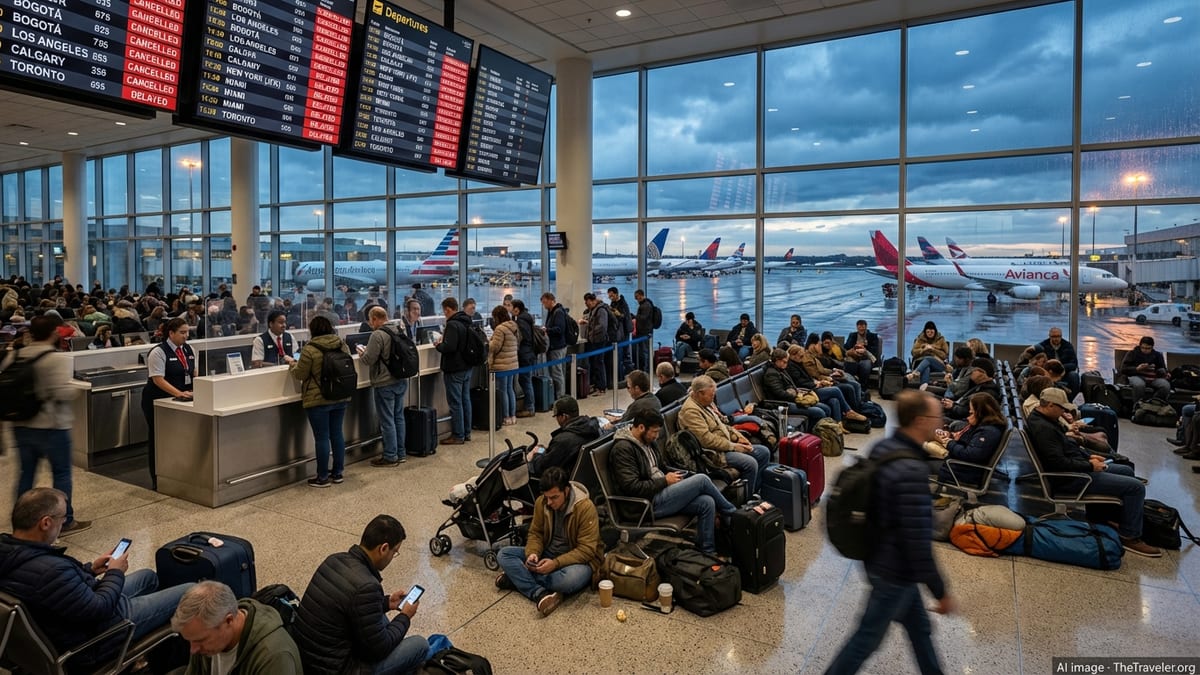
What Happened in the US Departures Zone
Publicly available information from airport operations and airline schedules indicates that US-bound traffic at Montréal–Pierre Elliott Trudeau International Airport was significantly disrupted after a strong varnish odour was detected in the US preclearance area. As a precaution, access to the zone used for US customs and border inspections was suspended, halting the normal flow of departing passengers.
The affected area is the dedicated section of the terminal where passengers clear US entry formalities before boarding flights to American destinations. With that space taken out of service, airlines were unable in many cases to complete check-in and boarding for US departures, leading to a wave of same-day cancellations and extended delays on remaining flights.
Reports from flight-tracking boards and airline updates show that the impact has been concentrated on short-haul US routes such as services to major East Coast hubs, although some longer-haul flights have also been affected where aircraft or crews were out of position. Several US-bound flights from Montreal have been rerouted, delayed on the ground while alternatives were arranged, or removed from the schedule entirely.
Airport updates indicate that the varnish odour was linked to maintenance or refurbishment work in or near the inspection area. Once the odour was detected at a level considered uncomfortable or potentially unsafe, officials opted to suspend access until ventilation and air quality measurements could confirm that conditions were suitable for staff and travelers.
Current Status of Flights and Customs Processing
As of the latest available updates, airlines operating from Montreal to the United States are running a reduced and uneven schedule. Some carriers have resumed limited departures where they can move passengers through alternative processing arrangements or after parts of the customs area were deemed usable again, while others continue to cancel or heavily delay flights whose boarding times conflict with the restricted access period.
Departure boards show clusters of cancellations among certain US destinations and time bands, particularly during the busiest morning and late-afternoon waves that rely on fast-turning aircraft and predictable customs clearance times. Where flights are operating, extended check-in and security times have been reported, with passengers advised to arrive earlier than usual and expect longer queues.
According to airline advisories, same-day rebooking options are constrained on some routes because aircraft and crews are already tightly scheduled at peak summer demand. Travelers whose flights are canceled may be offered rerouting through other Canadian hubs or rebooking on later dates, depending on seat availability. Some itineraries involving connections in the United States may also be affected even if the first leg from Montreal operates late, since misaligned connections can trigger further changes downline.
Customs and border processing itself remains focused on safety and orderly passenger flow. Priority appears to be given to managing the number of travelers in any section of the impacted area at a given time, which is contributing to bottlenecks and the need for airlines to stagger boarding and pushback times. The situation continues to evolve over the course of the day as ventilation and access are adjusted.
What US-Bound Passengers Should Do Today
For travelers scheduled to fly from Montreal to the United States, the most immediate recommendation from travel and airline advisories is to verify flight status repeatedly on the day of departure. Schedules have been changing close to departure time, so information received at booking or even the prior evening may no longer be accurate by the time travelers reach the terminal.
Passengers are being encouraged to use airline apps and airport departure boards to confirm whether their flight is still operating, and whether the departure time or gate has been modified. Where carriers allow it, same-day flight changes online or through call centers may provide more flexibility than waiting at the airport if a cancellation seems likely.
Travel guidance based on the current disruption suggests allowing significantly more time than usual for airport formalities. Arriving at least three hours before a scheduled US departure is advisable, and in peak periods even earlier. Lines at check-in, security screening and the reduced customs area can all be longer than normal, and boarding gates may close promptly once precleared passengers are available.
Passengers with tight onward connections in the United States may wish to explore options to move to earlier flights or to rebook itineraries with longer layovers. Those traveling for time-sensitive events such as cruises, tours or business meetings should check the terms of their tickets and insurance policies in case additional arrangements, such as overnight stays or alternative routing, become necessary.
Impacts on Airlines, Routes and the Summer Travel Rush
The varnish-odour incident comes during an already pressured travel period for Montreal’s main international hub. Data published by Canadian transportation authorities in recent months has shown fluctuating performance on on-time departures and cancellations at major airports, including Montréal–Pierre Elliott Trudeau, as carriers balance strong summer demand with operational challenges.
The latest disruption affects a part of the terminal that is essential for cross-border traffic. US-bound flights from Montreal represent a substantial share of daily movements, serving key hubs such as New York, Boston, Chicago and major southern gateways. Any extended reduction in customs processing capacity can therefore ripple through airline schedules, equipment rotations and crew assignments.
Observers of the airline market note that US routes have already faced schedule adjustments over the past year as carriers reoriented capacity toward transatlantic and leisure destinations. A sudden operational constraint in the US departures area compounds the complexity of managing limited aircraft across a network that is already finely tuned to demand peaks.
While the varnish odour itself is a temporary technical issue, its timing during the busy summer season heightens its effect on passengers. Evening bank departures that rely on tight turnarounds, and morning flights feeding into US hubs for same-day connections, are especially vulnerable to even short-lived interruptions at customs and preclearance.
Looking Ahead: How Long Disruptions May Last
Publicly available information at this stage suggests that the varnish odour incident is expected to be temporary, pending full ventilation and confirmation that air quality levels support normal staffing and passenger throughput. The duration of restrictions in the US customs area will likely depend on ongoing assessments and any follow-up maintenance work that might be required.
Travel analysts point out that once the space is fully reopened, airlines will still need time to reposition aircraft and crews and to absorb the backlog of displaced passengers. For some days after the incident, travelers may continue to experience knock-on effects such as limited seat availability, altered departure times and atypical routing as schedules normalize.
Passengers with upcoming US trips through Montreal are advised to keep monitoring airline notifications and airport announcements over the next several days. Those with flexibility may wish to avoid nonessential same-day changes, and to keep itineraries as simple as possible, minimizing self-made connections across different tickets or carriers while schedules remain unsettled.
For now, the clearest message from publicly available travel guidance is to build in extra time, verify flight information frequently, and be prepared for last-minute adjustments. As air quality improves and the customs area returns to standard operations, the expectation is that Montreal’s US-bound schedule will gradually stabilize, even if some residual disruption persists in the short term.