


More news on this day
As record-breaking wildfires continue to burn across parts of France and Spain in late July 2026, many would-be visitors are asking whether it is still safe to travel to two of Europe’s most popular summer destinations.
Get the latest news straight to your inbox!
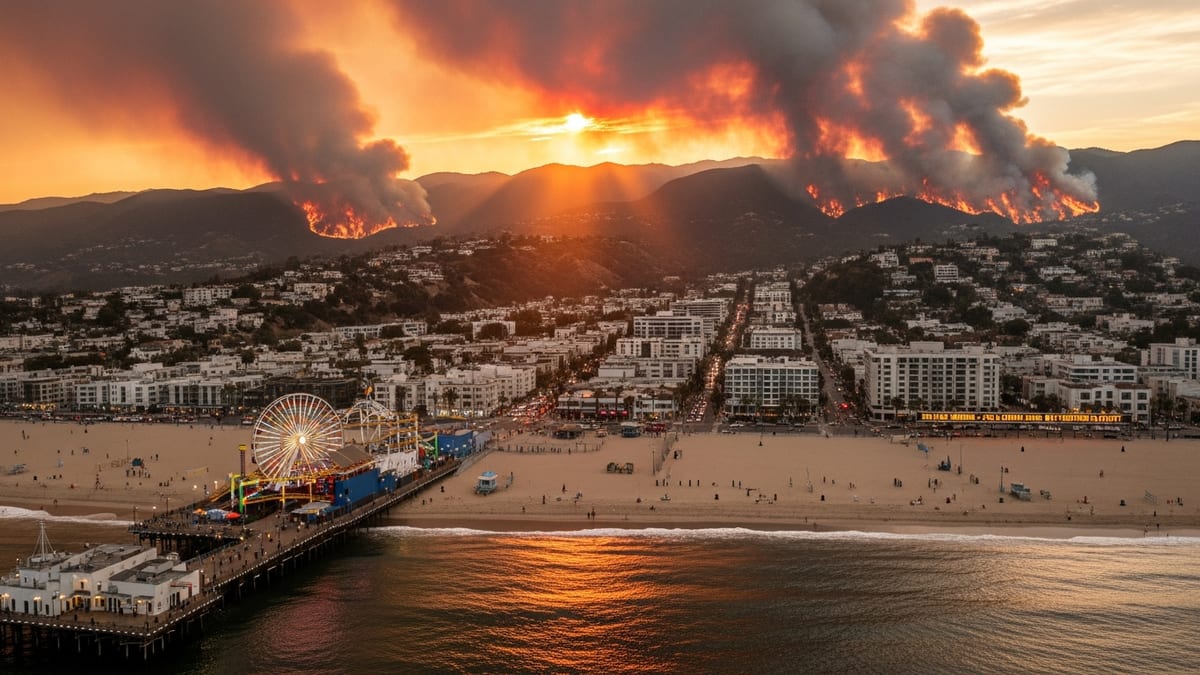
Where the Fires Are and Who Is Affected
Recent wildfires in France have been concentrated in the southwest, particularly in the Gironde and Landes areas near Bordeaux and the Atlantic coast. Large tracts of forest and rural communities have been affected, leading to mass evacuations and significant disruption in some resort towns. Published coverage describes one fire in southwest France that has grown to an area several times the size of Paris, prompting one of the largest peacetime evacuations in modern European history.
In Spain, active fires have been reported in central and eastern regions, including parts of Guadalajara province and the Castellón area of Valencia. These blazes have damaged forest and agricultural land, with local reports indicating that tens of thousands of hectares have burned so far this season. Some villages have seen major disruption, and small tourism businesses in affected rural areas are facing a difficult summer.
Despite the dramatic images, the geography of the fires is still relatively localized. Most of metropolitan France, including Paris, Lyon, Marseille and the French Riviera, continues to function normally. In Spain, major city destinations such as Madrid, Barcelona, Seville and Bilbao, as well as large parts of the Mediterranean coast and the Balearic Islands, remain open and are operating close to normal conditions.
Travelers’ main concern is therefore not countrywide safety but how close their specific itinerary comes to the active fire zones and smoke plumes, and whether transport links may be disrupted on certain days.
Travel Advisories and Official Guidance
Foreign government advisories currently describe the wildfires in France and Spain as regionally significant but do not advise against travel to either country as a whole. Updated guidance emphasizes that conditions can change quickly in hot, dry weather and urges visitors to monitor local news and follow any evacuation or closure notices issued for forested and rural areas.
Publicly available information from French and Spanish authorities highlights persistent heatwave conditions, elevated fire danger in many regions and a legal ban on activities that could spark new blazes, such as lighting barbecues or campfires in or near woodland during high-risk periods. Causing a wildfire, even accidentally, is a criminal offense in both countries, and tourists are expected to comply with local restrictions and signage.
European Union agencies have deployed additional firefighting aircraft, helicopters and specialist teams to both France and Spain this summer, reinforcing national capabilities. The EU’s Copernicus emergency mapping service is being used to monitor active fires and assess damage, helping civil protection agencies to coordinate evacuations and road closures.
For travelers, the practical takeaway is that both countries remain open but are operating under heightened vigilance in high-risk regions. Anyone with imminent travel should review the latest national travel advice for France and Spain, and check airline, rail and ferry updates before departure.
How Wildfires Could Affect Your Trip
The most immediate impact for visitors is in and around the worst-affected fire zones. Evacuation orders in southwestern France and parts of central and eastern Spain have led to short-notice closures of campgrounds, holiday parks and some coastal resorts that are close to pine forests. Travelers with bookings in these areas may face cancellations or re-accommodation offers as operators respond to changing conditions.
Transport disruption is another key concern. In France, reports from the Gironde region indicate that sections of rail lines and regional roads have been temporarily closed when fire or heavy smoke approached tracks and highways. Similarly, in Spain, local roads near active fires have been shut to allow fire crews to operate safely, which can extend journey times or require detours, especially in rural areas.
Air travel has so far been less affected. Major airports in Paris, Madrid, Barcelona, Lisbon-adjacent corridors and other hubs are operating normally, although smoke can occasionally reduce visibility at smaller regional airports. The more common issue for air passengers is indirect: flights may be busier than usual as some travelers switch from train or car to plane to avoid potentially disrupted overland routes.
Health and comfort are also part of the equation. Even outside immediate fire zones, smoke can travel long distances, reducing air quality in nearby towns and cities. People with respiratory conditions, older adults and families with young children may find outdoor activities less comfortable on smoky days, particularly in valleys and low-lying coastal areas where haze can linger.
Regional Differences: Cities, Coasts and Countryside
Urban centers across France and Spain remain the most resilient parts of the tourism network. Paris, Madrid, Barcelona and other large cities have extensive emergency services, robust infrastructure and relatively limited surrounding forest, which reduces direct wildfire exposure. Visitors are more likely to encounter heat-related issues in cities, such as high daytime temperatures and occasional air-quality advisories, than direct fire threats.
Coastal destinations present a more mixed picture. Many of the fires in southwest France are burning in pine forests that sit just inland from popular Atlantic beaches, and some of these resort communities have experienced evacuations, smoke and limited access. Along Spain’s Mediterranean coast, certain rural and mountainous stretches are at elevated risk, while larger resort cities with less forest cover nearby are operating closer to normal, albeit in very hot conditions.
The highest wildfire risk is generally in rural and mountainous areas with dense vegetation, including inland parts of Provence and Occitania in France and interior provinces of Spain such as Guadalajara or forested areas north of Valencia. Travelers planning hiking, camping or road trips through these landscapes need to remain flexible and ready to adjust routes if fire danger escalates or local authorities close trails and parks.
Rail and highway corridors that pass through forested regions are being closely monitored and can be temporarily shut if conditions deteriorate. This is particularly relevant for travelers relying on regional trains or buses to reach small towns and countryside stays, rather than sticking to high-speed rail lines between major cities that are less exposed to nearby woodland.
Practical Advice for Travelers Considering Trips Now
For most visitors, traveling to France or Spain in the current wildfire season is still possible, but it requires more preparation and flexibility than in a typical summer. Prospective travelers should first map their planned route against current fire maps and weather forecasts, paying close attention to southwestern France, central Spain and other regions highlighted in recent coverage as high-risk zones.
Booking accommodation with flexible cancellation policies is advisable, especially for stays in rural or forest-adjacent areas. Larger hotels in cities and established coastal resorts are generally less likely to close at short notice than campgrounds, farm stays or mountain lodges that sit close to vegetation. Travel insurance that covers disruption from natural hazards can provide an additional layer of financial protection.
Once on the ground, visitors should take local heat and fire warnings seriously. That means respecting trail closures, avoiding barbecues or open flames, disposing of cigarettes responsibly and being ready to leave an area quickly if asked to do so. Having a backup plan, such as an alternative city or coastal base, can make it easier to pivot if conditions worsen near an intended destination.
Ultimately, the decision to proceed with travel is personal and will depend on individual risk tolerance, health considerations and itinerary flexibility. Current evidence suggests that while certain regions of France and Spain are experiencing exceptional fire conditions, the broader tourism infrastructure in both countries continues to function. Travelers who stay informed and adapt their plans in response to local information can still visit, though this summer’s wildfires underscore how quickly conditions can change in a warming climate.