


More news on this day
Flights from Montreal–Trudeau International Airport to the United States have resumed after a temporary halt in U.S. preclearance operations prompted by a strong construction-related odour in the transborder area, according to multiple media and airport reports.
Get the latest news straight to your inbox!
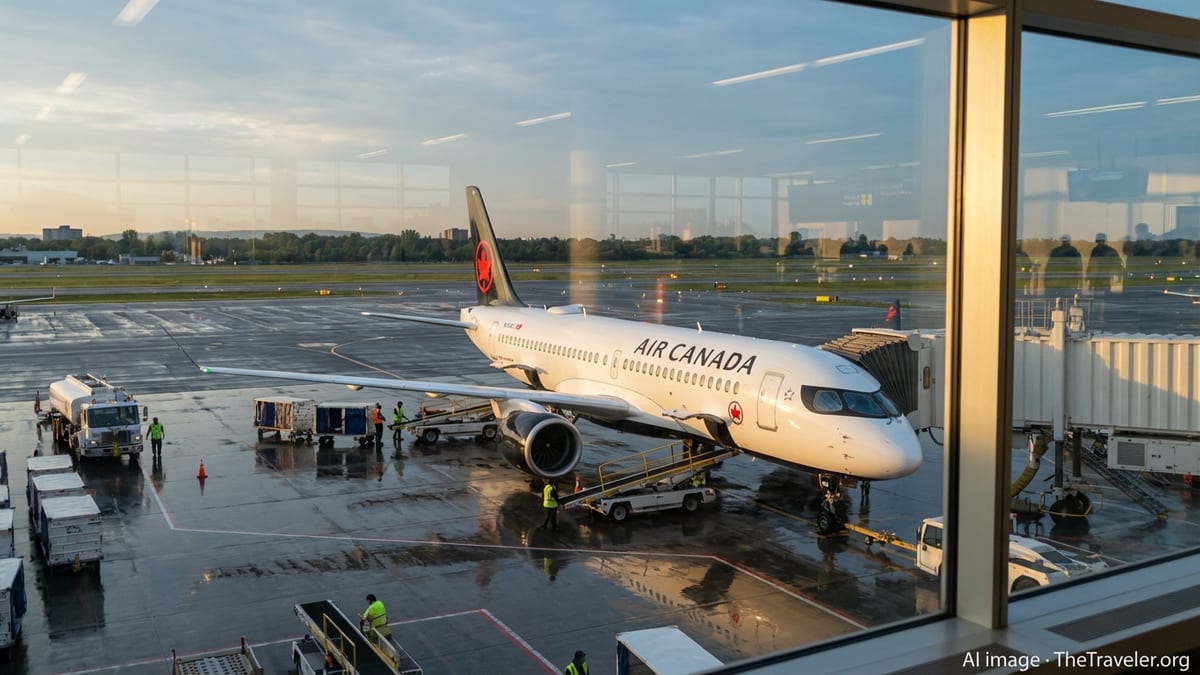
Short disruption in U.S.-bound departures at Montreal hub
Reports from Canadian and international outlets indicate that U.S.-bound flights from Montreal–Trudeau were paused earlier in the day after an unusual odour was detected in an area undergoing construction near the U.S. customs and border preclearance facilities. Airport operations data and airline advisories show that several departures were delayed while the source of the smell was investigated and safety checks were completed.
U.S. preclearance in Montreal allows travelers to complete American customs and immigration procedures before boarding, which means any interruption in that zone can quickly affect the entire schedule of transborder flights. During the pause, some passengers already at the airport were held in waiting areas, while others reported holding patterns on arriving aircraft or delays in boarding U.S.-bound services.
By late afternoon, updated departure boards and airline statements showed that flights to major U.S. destinations were once again leaving Montreal–Trudeau, although with residual delays. Publicly available flight-tracking information suggests that operations ramped back up progressively, with carriers reflowing aircraft and crew to restore regular schedules.
Construction work and odour investigation
Airport modernization and construction projects have been ongoing at Montreal–Trudeau, including work in areas serving international and U.S. transborder passengers. Published coverage and airport planning documents point to upgrades of passenger circulation zones, commercial space and access routes as part of a broader redevelopment program.
In this context, a strong smell reported in proximity to construction activities triggered additional checks around the U.S. preclearance facilities. Information shared through news reports suggests that officials treated the odour as a potential safety concern until it could be linked to construction materials or ventilation issues, a precaution consistent with standard airport safety protocols.
Once inspections were carried out and the odour was assessed as non-hazardous, operations in the affected zone began to return to normal. There were no immediate indications from public reporting of injuries or medical emergencies connected to the incident, though some passengers described discomfort and uncertainty as they waited for more information about their flights.
Impact on passengers and airline operations
The interruption in preclearance activity at Montreal–Trudeau had a cascading effect on both departing and, in some cases, incoming U.S.-bound flights. Airline status pages showed a mix of delays and re-timed departures on routes to cities such as New York, Boston, Chicago and other major hubs, as carriers adjusted aircraft rotations to accommodate the gap in operations.
Travelers at the airport reported longer-than-usual waits at gates and in lineups, along with repeated updates about changing departure times. Standard advice from airlines during such disruptions is for passengers to monitor their carrier’s apps or airport display screens closely, since preclearance issues can be resolved quickly but leave lingering timetable adjustments.
Operationally, even a short suspension in customs processing can ripple through the day’s schedule. When preclearance stops, aircraft may remain at gates longer than planned, reducing gate availability and slowing down boarding for subsequent flights. Recovery typically requires a combination of minor schedule shifts, use of spare aircraft where available, and reallocation of staff to manage backlogs in security and customs lines once service resumes.
Why U.S. preclearance makes disruptions more visible
Montreal–Trudeau is one of several Canadian airports that host U.S. customs and border preclearance facilities, allowing passengers to arrive in the United States as if on a domestic flight. According to publicly available information on preclearance programs, this arrangement benefits airlines and airports by easing congestion at busy U.S. arrival points and simplifying connections for travelers.
The same system, however, means that any disruption in the preclearance area can have an outsized impact on transborder operations. If U.S. customs officers are unable to process passengers for a period of time due to a safety check, technical issue or, as in this case, an odour investigation tied to nearby construction, flights may be held at the gate even when aircraft and crews are otherwise ready.
Because passengers complete immigration and customs procedures before departure, there is limited flexibility to move them to alternative gates or parts of the terminal once they have entered the preclearance zone. This increases the importance of maintaining stable conditions and clear communication in the areas adjacent to customs facilities, particularly when construction work is underway.
Looking ahead: construction, safety and communication
The episode at Montreal–Trudeau highlights the challenges of carrying out major construction projects in active terminal spaces while preserving the reliability of critical functions such as customs, security and screening. Industry analyses of airport disruptions note that odour complaints, ventilation issues and construction-related alarms are among the less dramatic but still consequential triggers for short-term operational interruptions.
Available reporting suggests that normal U.S.-bound operations at Montreal–Trudeau resumed relatively quickly once the odour was investigated, with airlines working through remaining delays over the following hours. For upcoming travelers, the main practical advice remains to arrive with ample time before departure and to monitor real-time updates from their airline whenever significant construction or renovation work is underway at a departure airport.
As work continues on long-term upgrades at Montreal’s main international gateway, the incident is likely to feed into broader discussions about how airports plan construction around sensitive areas such as customs and security. Public information on recent airport projects in Canada and abroad indicates growing emphasis on phasing, temporary ventilation solutions and contingency planning to minimize the likelihood that construction-related issues will stall passenger processing for international flights.