


Vienna International Airport (VIE) is compact by European hub standards, but its layout, multiple terminals and Schengen vs non-Schengen split can still feel confusing on departure. This guide walks you step by step through check-in, security, passport control, lounges, food, shopping and boarding, with real-world examples and tips tailored to how Vienna Airport actually works today.
Get the latest updates straight to your inbox!
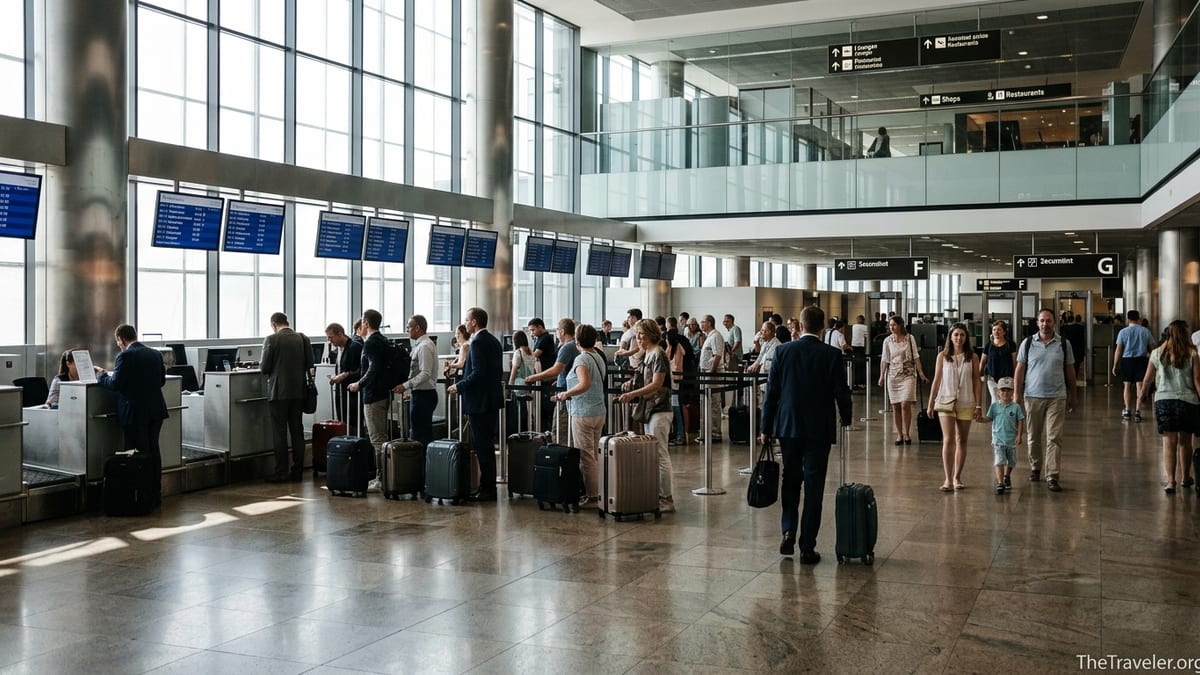
Understanding Vienna Airport’s Layout Before You Go
Vienna International Airport has three main check-in areas, known as Terminals 1, 1A and 3. From these, passengers are funneled to two main pier systems: the B/C/D gates on the west and east side, and the newer F/G concourses to the north. In practice, airlines using Austrian Airlines and Star Alliance generally operate from Terminal 3 with F and G gates, while many low-cost and other carriers use Terminals 1 and 1A to access B, C and D gates.
For departures, it helps to know whether your flight is within the Schengen Area or not. Schengen flights usually use B, C or F gates, while most non-Schengen flights depart from D or G gates. For example, a morning Austrian Airlines flight to Paris will typically leave from an F gate, while a long-haul flight to New York will often depart from a G gate. This split matters for when you pass passport control and which lounges or shops you can reach.
The airport is relatively compact. Typical walks between check-in and nearby gates are 5 to 15 minutes for healthy travelers, and airside shuttle links help connect F/G with C/D gates. Nonetheless, at busy times queues at security or passport control can add significant time, especially for non-Schengen departures. Planning your timings around these known bottlenecks is more important than worrying about the walking distances.
Signage throughout the terminal is clear and color coded, with gate letters prominently displayed on overhead boards. If you get disoriented, look for large yellow signs for “Gates F/G” or “Gates C/D” rather than airline logos. These wayfinding cues are consistent whether you are flying Austrian, Ryanair, Wizz Air or a long-haul carrier such as Qatar Airways or ANA.
Check-In Timing, Baggage Drop and Self-Service Options
For most flights, Vienna Airport functions smoothly when you follow conservative check-in timings. A practical rule of thumb is to arrive 2 hours before departure for intra-Schengen flights and at least 3 hours for non-Schengen and long-haul departures. Austrian Airlines, the dominant carrier at VIE, typically opens check-in counters 2 to 3 hours before departure for European flights and earlier for long-haul services, while low-cost airlines like Ryanair and Wizz Air often specify cut-off times of 40 to 60 minutes before departure.
In Terminal 3 you will find extensive rows of Austrian-branded check-in counters plus self-service kiosks where you can print boarding passes and baggage tags before proceeding to the “Baggage Drop-off” desk. This is especially useful on peak mornings when economy check-in lines grow long. For example, on a busy Monday around 07:30, queues for Austrian economy check-in to Frankfurt can easily be 20 to 30 minutes, while passengers who already checked in online can usually drop bags much faster at the dedicated bag-drop area.
Terminals 1 and 1A, used by carriers such as Eurowings and low-cost airlines, feel slightly more basic but still offer staffed counters and, for many carriers, online and mobile check-in. Some ultra-low-cost carriers may charge an extra fee if you arrive at the airport without having checked in online, so it is worth confirming your airline’s policy in advance. If you are flying light with carry-on only, you can often bypass check-in entirely and proceed directly to security.
Premium passengers and status holders with airlines like Austrian, Lufthansa, Swiss and other Star Alliance members have access to priority check-in zones in Terminal 3. These counters, often labeled “Business Class” or “Star Gold,” usually combine shorter lines with direct access to the nearby fast-track security entrance. For example, a Star Alliance Gold passenger flying economy from Vienna to London can still use a dedicated premium counter to check in a bag and then follow signs for “Fast Track” at security.
Security, Fast Track and Passport Control
After check-in, all passengers must clear security screening before reaching the gate areas. Vienna has multiple security checkpoints aligned with the terminals, and wait times vary by time of day and season. Early morning departures between 06:00 and 08:30 and late-afternoon waves around 16:00 to 18:30 tend to be busiest. On most days you can expect 10 to 20 minutes in line at peak times, but it can be less than 10 minutes off-peak, particularly in the middle of the day.
Vienna Airport sells a product called FastTrack, which allows access to a dedicated security lane. You can purchase this online in advance, at the Airport Service counter, or directly at payment terminals near the boarding pass control in Terminals 1 and 3. The fee is typically a modest surcharge per person, and some premium credit cards or airline tickets include it free of charge. In practice, travelers report that FastTrack can cut a 20-minute queue down to under 5 minutes on busy mornings, especially at the main Terminal 3 checkpoint.
After security, Schengen passengers can usually proceed straight toward their gate areas (B, C or F). Non-Schengen passengers, by contrast, must also clear passport control. Vienna offers both staffed booths and automated e-gates for eligible biometric passport holders. For example, if you are flying Austrian from Vienna to Tokyo, you will pass through security, then follow signs for G gates, where you will clear outbound border control before entering the non-Schengen zone with its own shops, dining and lounges.
At peak times some passengers experience queues at passport control, particularly for morning transatlantic and Asian departures. It is wise to allow an extra 15 to 20 minutes for this step if you are flying outside Schengen, above and beyond the time you budget for security. If you are using an e-gate, keep your passport ready and remove any covers, as the machines may not recognize passports through thick protective sleeves.
Lounges at Vienna Airport: Where to Relax Before Your Flight
Vienna has a well-developed lounge network that combines airport-operated spaces and Austrian Airlines lounges. Two of the best-known airport lounges are the VIENNA Lounge near the C and D gates, and the SKY Lounge in Terminal 3 near the F and G areas. Both can be accessed regardless of airline if you pay a walk-in fee or use certain lounge membership programs, and both are located after security but before passport control, which means they are primarily in the Schengen zone.
The SKY Lounge Schengen in Terminal 3 typically opens early in the morning and operates into late evening, roughly from around 04:30 until 23:00. It offers buffet food, self-service drinks, quiet seating areas, workspaces and showers. Walk-in access is usually available for around 49 euros for a stay of up to three hours, and discounts may apply if you hold a Vienna City Card or specific bank cards. For example, a traveler flying economy from Vienna to Barcelona could arrive at 06:00, clear security, spend two hours in the SKY Lounge enjoying a hot breakfast and coffee, and then walk to an F gate in about 5 to 10 minutes.
The VIENNA Lounge near the C and D gates offers a similar package with comfortable seating, buffet dining and bar service. It is particularly convenient if you are departing from C or D gates on airlines like Eurowings, British Airways or many non-Schengen carriers. Again, you can usually buy access at the door or enter through membership programs such as Priority Pass or DragonPass, although individual program conditions change frequently and should be checked in advance.
Austrian Airlines also operates multiple branded lounges for Business Class passengers and elite frequent flyers, split across Schengen and non-Schengen areas. If you hold a Business Class ticket on Austrian or another Star Alliance carrier from Vienna, or if you are Star Alliance Gold, you will typically be invited to one of these lounges located close to the main F and G concourses. For instance, a Business Class passenger flying Austrian to Chicago might use the non-Schengen Austrian lounge near the G gates after clearing passport control, allowing them to board directly from the same area.
Shops, Duty Free and Dining: What to Expect Airside
Once you have cleared security, Vienna Airport offers a mix of international brands and local Austrian flavors. Near the central plazas and along the main piers you will find duty free stores selling cosmetics, perfume, spirits, wine and chocolates, as well as fashion boutiques and electronics shops. Prices for popular items like branded cosmetics or whisky are typically in line with other major European airports, and there are often multi-buy promotions on items such as Toblerone, Lindt chocolates or Austrian brand spirits and liqueurs.
Food and beverage options cover everything from quick grab-and-go to sit-down meals. In the Schengen areas near F and C gates, you can expect bakeries serving fresh Austrian pastries, coffee bars pouring melange and espresso, and international fast-food chains for burgers or sandwiches. Typical prices for a cappuccino and croissant at an airside café might range from 5 to 7 euros, while a basic burger menu at a fast-food outlet can be around 10 to 12 euros, depending on promotions and size.
In the non-Schengen zones near D and G gates, there are additional restaurants and bars tailored to long-haul travelers, sometimes with extended opening hours to match late-night and early-morning flights. Here you might find more substantial hot meals such as grilled chicken, pasta dishes or salads, often in the 12 to 18 euro range for a main course. Many venues now offer clear vegetarian or vegan choices, and gluten-free snacks are increasingly common in convenience outlets.
Travelers with tight connections will appreciate that several kiosks and smaller stands are positioned close to the gates, selling sandwiches, bottled drinks and snacks you can take on board. For example, if you land from a domestic Austrian flight at F gates and have only 40 minutes before boarding a non-Schengen flight to the Middle East, you can still pick up a prepacked sandwich and water near your gate rather than walking back to the central food court.
Boarding, Gate Areas and Getting to Your Aircraft
Vienna operates a mixture of jet-bridge gates and bus boarding stands. At F and G concourses many aircraft use airbridges, especially for larger jets on long-haul routes, but bus boarding to remote stands is still common for smaller aircraft and low-cost carriers. Gate information is displayed on screens throughout the terminal, and boarding typically starts 30 to 40 minutes before departure for European flights and up to 45 minutes or more for long-haul services.
Airlines usually organize boarding by groups, zones or seat rows. Austrian often uses group numbers, calling passengers who need special assistance and families with young children first, followed by Business Class and elite status holders, then the remaining economy groups. Low-cost carriers like Ryanair may board “Priority” passengers ahead of general boarding. It pays to be at the gate at least 20 minutes before departure time, especially for bus gates where the final boarding call can coincide with the last bus transferring passengers to the aircraft.
Gate seating at Vienna is generally adequate but can be crowded at rush hours. If you prefer a quieter atmosphere, you might remain in a nearby café or general seating area until the first boarding call, then move closer to the gate once your group is announced. Keep in mind that for some non-Schengen gates, secondary document checks can occur at the gate entrance, so having your passport and boarding pass easily accessible can speed things up for everyone.
When boarding from a bus gate, you will scan your boarding pass at the gate, descend to the lower-level waiting area, and then board an airport bus to the aircraft. The ride typically lasts 5 to 10 minutes. In winter, buses are heated and often wait until they are reasonably full before driving, so it is better to board promptly rather than lingering in the terminal and risking a last-minute rush.
Realistic Timing Strategies and Common Pitfalls
Because Vienna is relatively compact, many travelers underestimate queues and overestimate how far they can push their arrival at the airport. A frequent pitfall is arriving 75 minutes before a busy morning non-Schengen departure, only to encounter a 20-minute line at check-in, 15 minutes at security and another 15 minutes at passport control. Even if you ultimately make the flight, the process can be stressful and may leave no time to pick up a snack or use the lounge access included with a premium ticket.
A more realistic strategy is to treat 2 hours as a firm minimum for Schengen departures and 3 hours for non-Schengen, particularly during school holidays, major trade fairs or Christmas markets season when leisure travel surges. If you are checking bags and do not have fast-track access, add another 30 minutes buffer for morning flights. For example, for a 09:00 Vienna to London departure, aim to be in the check-in hall by 06:00 or 06:15, grab coffee after security, and then reach your gate no later than 08:30.
Another common trap involves the Schengen vs non-Schengen lounge locations. Because flagship airport lounges like SKY Lounge and VIENNA Lounge are located before passport control, passengers on non-Schengen flights have to walk back toward the passport control area when it is time to leave the lounge. If you are flying to the United States or Asia, avoid lingering too long in a Schengen-side lounge and leave at least 30 minutes before boarding time to clear border control and walk to your gate, more if you know your gate will be in the G concourse.
Finally, keep an eye on gate changes. Vienna sometimes moves flights between adjacent gate areas, for example from an F pier gate to a nearby remote bus gate. If this happens, staff will make announcements and the change will appear on the screens, but it may not be visible if you only rely on an earlier printed boarding pass. Refresh your airline’s app or check the airport’s display boards regularly, particularly in the hour before departure.
The Takeaway
Departing from Vienna International Airport is usually a straightforward experience, helped by compact terminals and clear signage. The keys to a smooth departure are arriving with enough time, understanding whether your flight is Schengen or non-Schengen, and planning around the main pinch points of security and passport control. Lounges like SKY Lounge and VIENNA Lounge can turn a wait into a comfortable pause, while varied dining and duty free outlets give you plenty of ways to spend any extra minutes.
With realistic timing, a basic sense of the terminal layout and a few practical tools such as online check-in, FastTrack security where useful, and lounge access if you value a quieter space, you can move from city center to aircraft door with minimal stress. Build in a buffer, keep your documents handy, and treat Vienna Airport not just as a place to rush through but as part of your journey. Doing so will make your departure from the Austrian capital feel far more relaxed, whether you are heading to a nearby European city or a long-haul destination on the other side of the world.
FAQ
Q1. How early should I arrive at Vienna Airport for departure?
For most Schengen flights, plan to arrive 2 hours before departure. For non-Schengen and long-haul flights, 3 hours is a safer buffer, especially at busy morning or evening peaks.
Q2. Is FastTrack security at Vienna Airport worth paying for?
FastTrack can be worthwhile during peak morning and late-afternoon waves, when regular security lines can stretch to 15 or 20 minutes. If you value a predictable, shorter queue or are cutting it close, the modest fee can buy useful peace of mind.
Q3. Where are the main lounges located at Vienna Airport?
Key airport-operated lounges include the SKY Lounge in Terminal 3 and the VIENNA Lounge near the C and D gates, both after security but before passport control. Austrian Airlines also runs several branded lounges close to the F and G concourses.
Q4. Can I use a lounge at Vienna if I am flying economy?
Yes. Many lounges accept economy passengers for a paid walk-in fee or through membership programs such as Priority Pass or DragonPass, regardless of airline, as long as you hold a same-day boarding pass.
Q5. How do I know if my flight uses Schengen or non-Schengen gates?
Flights within the Schengen Area typically use B, C or F gates, while flights to non-Schengen countries usually depart from D or G gates. Your boarding pass and airport screens will show the gate letter and number once assigned.
Q6. Are there good food options after security at Vienna Airport?
Yes. You will find bakeries, coffee bars, fast-food chains and sit-down restaurants on both Schengen and non-Schengen sides. Prices are in line with other European hubs, and there are usually vegetarian and some vegan options.
Q7. Does Vienna Airport have plenty of duty free and shopping?
Vienna offers large duty free stores, fashion boutiques and specialty shops across the gate areas. You can buy typical travel items such as cosmetics, spirits and chocolates, as well as Austrian souvenirs and regional products.
Q8. How long does it take to walk between gates at Vienna Airport?
For most healthy travelers, walks between nearby gates or from security to the closest pier take around 5 to 15 minutes. There are also airside shuttle connections helping link the F and G areas with the C and D gates.
Q9. What should I do if I have a short connection at Vienna?
If you have a tight connection, go straight to your next gate, following the transfer signs. Skip nonessential stops until you see your actual gate and check for any gate changes, then consider grabbing food or using a nearby restroom.
Q10. Are there facilities for families and passengers needing assistance?
Yes. Vienna Airport offers priority boarding for families with small children, baby changing facilities in restrooms, and special assistance services that can be requested through your airline in advance if you need help navigating the terminal.