


More news on this day
Late-summer air travel across the United States is facing new disruption as weather-related delays around New York combine with capacity constraints in Chicago and residual operational issues in Boston, leading to longer journeys and missed connections for many passengers.
Get the latest news straight to your inbox!
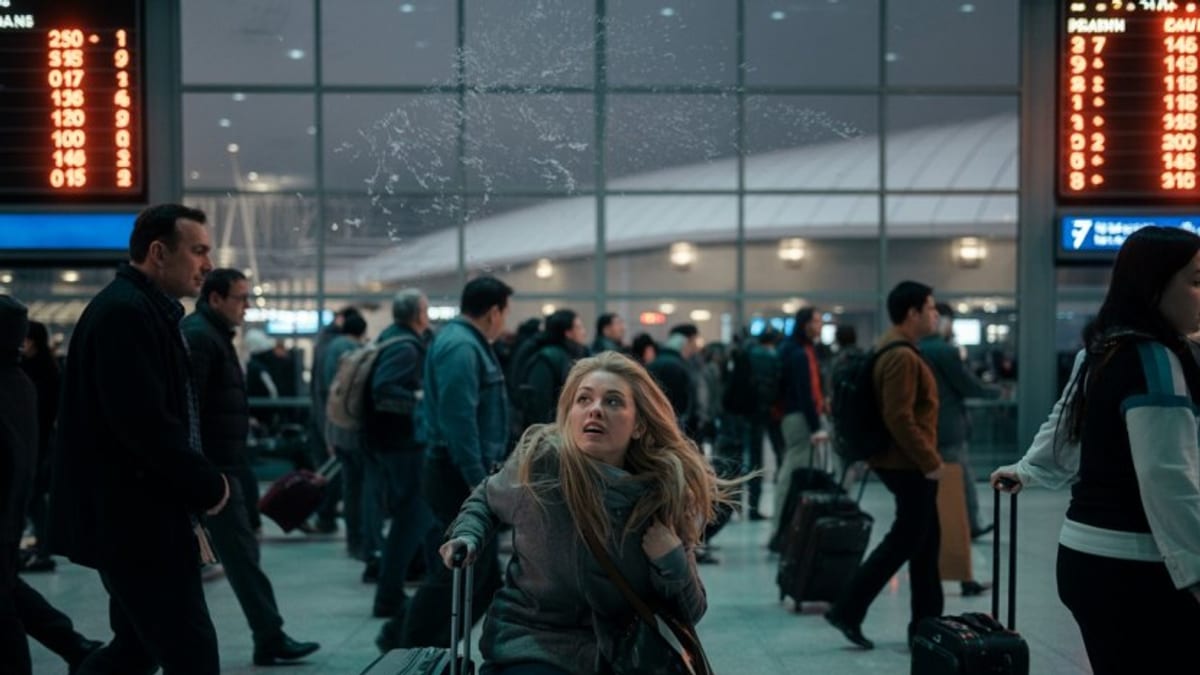
New York Weather Creates Ripple Effect Across Northeast Routes
Publicly available flight-tracking and delay data indicate that New York City’s major airports are once again at the center of disruption, with thunderstorms and unsettled conditions prompting significant departure delays. Live delay summaries drawing on Federal Aviation Administration (FAA) data show that both John F. Kennedy International Airport and LaGuardia Airport are experiencing weather-related departure holds, while Newark Liberty International Airport is reporting additional thunderstorms and knock-on delays.
These constraints in New York’s crowded airspace are affecting flights along the critical Northeast corridor. Recent travel waivers published by major US carriers for the New York area in response to thunderstorms suggest that airlines are preparing for extended irregular operations stretching from August 31 through early September, allowing customers to rebook without change fees when flying through JFK, LaGuardia, Newark and other regional airports.
As aircraft and crews are displaced by rolling ground delay programs and holding patterns around New York, ripple effects are being felt on routes that connect Boston and Chicago with the New York region. Flight history tools show diversions and extended holding for transcontinental flights inbound to New York, with some services diverting to Boston when congestion or weather prevents timely arrivals into JFK. These diversions in turn place extra pressure on available gate space, fueling capacity and departure slots at Boston Logan.
Federal rulemaking published earlier this year also points to a structural backdrop for this volatility. In notices related to slot and schedule waivers at the New York airports, the FAA has warned that without continued flexibility for carriers to trim their schedules, delays and cancellations in the New York region could surpass the disruption seen during the heavy-travel seasons of 2022 and 2023, underscoring how fragile the system remains when storms intersect with congested skies.
Boston Logan Still Recovering From Earlier Ground Stop Shock
In Boston, Logan International Airport is operating close to schedule as of early September, but the memory of recent severe disruption is still fresh for airlines and passengers. In late June and early July, a fuel system issue at Logan triggered a rare ground stop that abruptly halted departures while technicians worked to restore normal fueling operations. Coverage from local outlets at the time described a sudden airport-wide pause followed by hours of cascading delays and cancellations across domestic and international routes.
Social media and community forum posts from Boston-based travelers during that episode detailed diversions from the New York area into Logan, as storms and congestion around JFK and other airports forced aircraft to seek alternates where fuel and ramp space were available. Passengers described being informed of a ground stop at Boston tied to “other” operational reasons, followed later by notices that the restriction had been lifted and flights could resume, highlighting how quickly conditions can shift during such incidents.
Although Logan’s fuel operations have since returned to normal, the event illustrated how a single infrastructure failure can compound broader regional problems. When New York-area thunderstorms demand diversions, and Boston simultaneously experiences an on-airport issue, the combined effect can strand aircraft out of position, disrupt crew schedules and stretch terminal facilities beyond planned capacity. While today’s schedules show Boston departures and arrivals largely on time, those earlier shocks contribute to a backlog of displaced aircraft and crews that can complicate recovery when fresh storms roll through the Northeast.
For travelers connecting between Boston and New York, even on short-haul shuttle services, these residual effects mean that seemingly minor schedule adjustments can quickly spiral into missed onward flights, especially when minimum connection times are tight. Historic runway incidents and prior irregular operations at Boston, documented in airport records, have prompted safety and capacity reviews that continue to inform how airlines plan for disruptions on key business routes.
Chicago Capacity Limits Add Pressure to Midwest Operations
Further west, Chicago’s major hub airports are navigating a different kind of challenge. While real-time delay dashboards show O’Hare International Airport and Midway International Airport largely operating within normal parameters early on September 2, detailed statistics from Chicago’s own operational dashboards reveal dozens of delayed arrivals and departures spread throughout the day. Hour-by-hour tallies suggest a steady background level of disruption rather than a single acute event, with delays clustering in peak mid-morning and early-afternoon periods.
Federal notices and scheduling documents for Chicago highlight growing concern about the long-term capacity of O’Hare. Earlier this year, the FAA proposed capping operations during the busy summer season at around 2,800 movements per day, citing the need to prevent large-scale operational disruption and reduce reliance on aggressive ground delay programs. These documents describe how, when demand for arrivals and departures at O’Hare significantly exceeds what the airfield and surrounding airspace can safely handle, traffic managers must resort to ground-based metering that pushes delays back to departure airports across the country.
In practical terms, this means that flights from Boston and New York into Chicago can be held at the gate or slowed en route when congestion builds beyond O’Hare’s “manageable capacity.” Flight status portals for specific Boston–Chicago services show individual flights arriving late or being managed with extended block times, even when weather around O’Hare itself is relatively benign. The interplay of upstream weather in the Northeast and downstream capacity controls in Chicago can therefore create a two-step disruption: first, a departure delay due to thunderstorms and airspace saturation, followed by an arrival delay driven by constrained arrival slots.
Local airport reporting in Chicago underscores that these issues are not limited to a single day. Rolling counts of delayed flights across O’Hare and Midway, maintained by the city’s aviation department, indicate a persistent pattern of minor delays throughout late summer. While far short of the mass cancellations that mark exceptional storms or system failures, these small disruptions accumulate for travelers attempting tight connections, especially those linking East Coast shuttle flights with Midwestern and West Coast services.
Knock-On Impacts for Passengers and Airlines
For passengers, the combined effect of weather-sensitive New York routes, infrastructure vulnerabilities at Boston Logan and structural capacity constraints at Chicago’s hubs translates into heightened uncertainty when planning late-summer trips. Even when their specific departure airport appears to be operating normally, travelers may find their flights delayed because the aircraft or crew is arriving from a previously disrupted segment in another city.
Airlines are responding with a mix of schedule adjustments and flexible rebooking policies. Travel waiver announcements tied to thunderstorms in the New York area, for example, allow customers ticketed through JFK, LaGuardia or Newark to move their travel dates within a defined window without additional change fees, as long as they remain on the same routing. This approach is designed to relieve pressure on peak travel days and minimize the number of passengers stranded by last-minute cancellations.
Regulators, meanwhile, are seeking to balance operational resilience with competitive access. Federal notices on slot waivers in New York and operating caps in Chicago both point to a strategy of encouraging airlines to trim schedules proactively when staffing, runway availability or airspace congestion threaten to overwhelm the system. While such measures can reduce headline disruption metrics on the busiest days, they also mean that popular business and leisure routes between Boston, New York and Chicago may see fewer flight options at peak times.
For now, publicly available data suggests that conditions remain fluid rather than catastrophic. Major hubs are open, and most flights between the three cities continue to operate, albeit with a heightened risk of delay. Travelers are being encouraged by airlines and independent flight-tracking services to monitor their flight status closely, sign up for real-time alerts and consider longer connection windows when routing through New York or Chicago in the coming days.
What Travelers Can Expect in the Coming Days
Forecasts for continued thunderstorms and unsettled weather in the Northeast, combined with sustained high demand for late-summer travel, suggest that disruption risk will remain elevated on routes linking Boston, New York and Chicago. Even if individual storms are brief, the knock-on effects in congested terminal airspace can last for hours, as departure queues rebuild and arriving aircraft are sequenced back into their allotted slots.
On a structural level, ongoing federal reviews of airport capacity at O’Hare and of slot management at New York’s constrained airports point toward longer-term adjustments rather than quick fixes. Documents outlining proposed operating limits and extended slot-use waivers signal that regulators expect pressure on these hubs to persist through at least the summer 2027 season, reflecting both sustained demand and the time required to complete major infrastructure projects.
For Boston, the recent fuel system incident has reinforced the need for redundancy in critical ground infrastructure. While Logan itself is not subject to the same slot controls as its New York counterparts, its role as both a major origin and a diversion point for Northeast traffic means that any local disruption can quickly reverberate across the region. Detailed accounts of the July ground stop have already prompted questions about how resilient similar systems are at other large coastal airports.
Overall, the pattern emerging across these three cities is one of interconnected vulnerability: weather in New York, infrastructure fragility in Boston and capacity limits in Chicago combine to shape a network where disruption in one node is quickly felt in the others. Travelers planning trips in early September are likely to benefit from flexible tickets, generous connection times and close attention to the latest operational updates from both airlines and official airport and FAA channels.
Live U.S. delay and ground stop overview
FAA National Airspace System status summary
Chicago O’Hare and Midway delay statistics