


More news on this day
When bad weather halts air traffic, many trips unravel at once, leaving travelers unsure what airlines actually owe them and what help is offered only as a courtesy.
Get the latest news straight to your inbox!
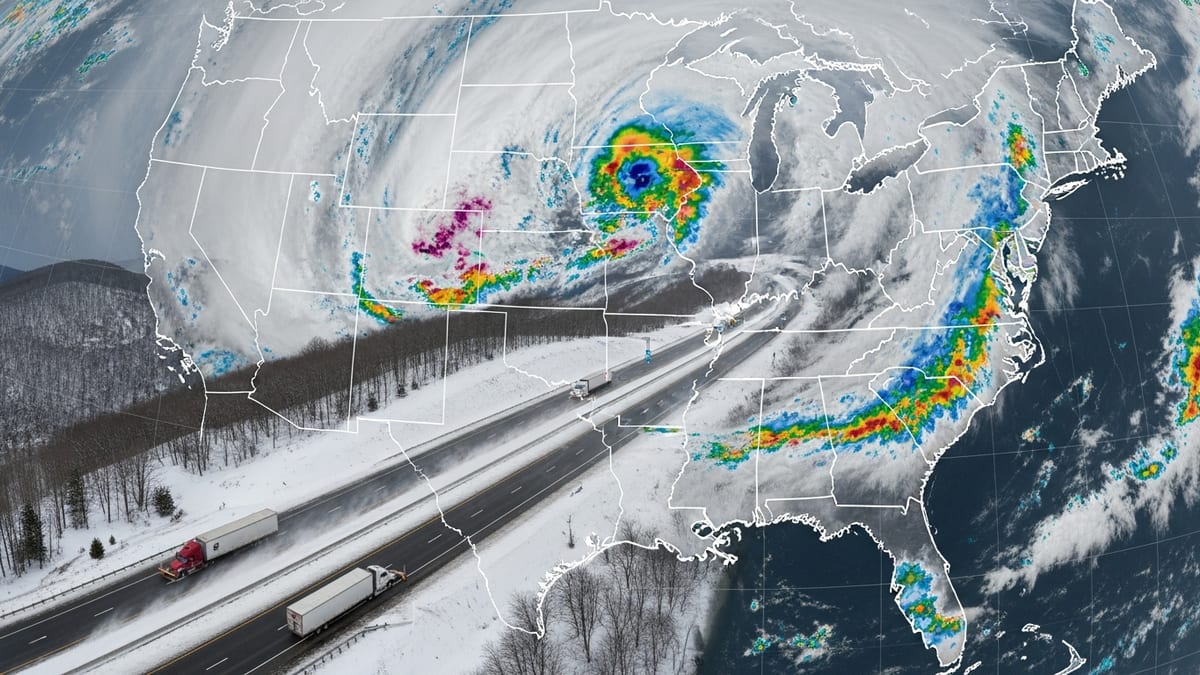
Why Weather Is Treated Differently From Other Disruptions
Most major air travel rules separate flight problems into two broad groups: issues within an airline’s control, such as crew scheduling or mechanical decisions, and events outside its control, including severe weather. Publicly available guidance from regulators in North America and Europe consistently lists storms, fog, hurricanes and related air traffic control restrictions in the outside-the-airline-control category.
This distinction matters because compensation for inconvenience, such as cash payments for delays, generally applies only when the disruption is considered within the carrier’s control. In Canada, for example, the Air Passenger Protection Regulations tie compensation to how much control the airline has over the cause of a delay or cancellation, with weather explicitly treated as an external factor. Similar frameworks appear in European Union rules and in comparison tables published by transport authorities that contrast Canadian, EU and United States regimes.
In the United States, there is no federal law that requires airlines to pay cash compensation when weather disrupts a flight. Instead, the U.S. Department of Transportation focuses on transparency, requiring large carriers to publish customer service plans that spell out what they will and will not do in common irregular operations, including storms and other conditions that force cancellations.
Across these systems, the core theme is that bad weather is framed as an unavoidable safety issue rather than a service failure. That means passengers cannot usually expect legally mandated cash payouts, but they can still claim other forms of assistance and, in some situations, a refund.
Rebooking Options When Weather Cancels or Delays a Flight
When weather causes a cancellation, airlines typically start by offering to move passengers to the next available flight on their own network at no additional fare. Customer service plans filed with regulators describe rebooking on the next available departure as a baseline commitment, even when the trigger is an external factor such as a storm system or air traffic control restriction linked to weather.
In Canada, guidance documents summarizing the Air Passenger Protection Regulations indicate that, when a disruption is outside an airline’s control, the carrier must still complete the passenger’s itinerary as soon as feasible on its own services or those of a partner, though timelines are more flexible than for issues within the airline’s control. Public material from the Canadian Transportation Agency refers to this as a minimum standard of treatment, while noting that compensation for inconvenience does not normally apply when weather is to blame.
European rules take a similar approach on rebooking. Under the EU’s air passenger rights regulation, airlines must offer a choice between reimbursement of the unused ticket and re-routing at the earliest opportunity when a flight is canceled, regardless of the cause. Weather can exempt carriers from paying additional compensation, but not from the obligation to carry the traveler to their destination or refund the ticket if the passenger no longer wishes to travel.
In practice, capacity constraints during major storms can make same-day rebooking difficult. Travelers may find that only connections through alternate hubs or departures on later dates are available. Airlines sometimes publish waiver policies that temporarily relax change fees or fare differences on affected routes, allowing customers to reschedule trips around the weather window without penalty.
When You Can Seek a Refund Instead of Waiting
Even when weather is outside an airline’s control, passengers do not always have to accept a long delay or distant rebooking. In several major jurisdictions, rules and official guidance state that if the airline cancels a flight and the passenger chooses not to travel, they are generally entitled to a refund of the unused portion of the ticket.
In the United States, federal regulations on prompt refunds require airlines to return money when a flight is canceled or significantly changed and the passenger declines the offered alternatives. The U.S. Department of Transportation’s explanations of these rules emphasize that this applies regardless of the reason for the cancellation, including weather, as long as the traveler chooses not to be rebooked.
Canada’s Air Passenger Protection Regulations and associated interpretive guides also point to refund options. Documents issued by transport authorities note that, where the continuation of a trip no longer serves a purpose because of a long delay or cancellation, the passenger can be returned to their point of origin at no additional cost and may be eligible for a refund instead of re-routing. Once again, weather places the disruption in a different compensation category, but does not eliminate the possibility of getting money back when a journey is effectively abandoned.
Within the European Union, the right to choose between re-routing and reimbursement is written into the passenger rights framework for cancellations. If a storm forces an airline to scrub a flight and the traveler no longer wishes to make the trip, the carrier must reimburse the ticket price, even though additional compensation for inconvenience will generally not be owed when extraordinary weather conditions are documented.
Care, Meals and Hotels: What Is Required and What Is Voluntary
One of the most confusing aspects of weather disruptions is the question of meals and hotel rooms. In the United States, there is no legal duty for airlines to provide meal vouchers or overnight accommodation when a delay or cancellation is caused by weather. A comparison of passenger rights regimes published by Canadian authorities notes that, in the U.S. system, these amenities are typically offered as a matter of airline policy rather than regulatory requirement, and only when the problem is within the carrier’s control.
That means that during storms, U.S. airlines may choose to hand out food vouchers or arrange hotel discounts, but they are not required by federal law to do so. Each carrier’s customer service plan describes its own approach, and travelers often find that benefits are more generous when the delay results from mechanical or crew issues than when it stems from a thunderstorm or blizzard.
European Union law takes a more expansive view of care. Under Regulation (EC) No 261/2004, airlines must provide assistance such as meals, refreshments and hotel accommodation when passengers face long delays or overnight stays, even if the disruption is caused by extraordinary circumstances like severe weather. However, subsequent guidance and legislative proposals have suggested limits, such as capping hotel obligations after several nights during large-scale disruptions that are clearly beyond the airline’s control.
In Canada, the framework sits between these two models. Public information on the Air Passenger Protection Regulations explains that minimum standards of treatment, including food and drink in reasonable quantities and access to communication, must be provided after certain delay thresholds regardless of the category of disruption. Hotels, by contrast, are generally required only when the event is within the airline’s control or within its control but required for safety, leaving weather events in a separate, less onerous category for carriers.
What To Expect During Long Tarmac Delays in Bad Weather
Even when runways are closed or departure queues grow because of storms, airlines still face specific rules about how long passengers can be kept on board a parked aircraft. In the United States, federal tarmac delay regulations require carriers to allow passengers to deplane after three hours on domestic flights and four hours on international flights, with narrow safety and security exceptions. Comparison tables produced by transport agencies in other countries cite these timelines alongside their own rules to highlight similarities and differences.
Among those differences is the deplaning standard in Canada, where the Air Passenger Protection Regulations specify that airlines must allow passengers to leave the aircraft after three hours of tarmac delay at a Canadian airport if it is safe and practical to do so, with a possible extension of up to 45 minutes if the carrier reasonably expects takeoff to occur during that window. Guidance on the regulations underscores that this obligation applies regardless of the reason for the delay.
During tarmac delays, carriers across multiple jurisdictions are expected to provide basic necessities such as functioning restrooms, adequate ventilation, and access to food and drinking water once a certain amount of time has passed. Individual airline contingency plans, some of which are published on company websites, echo these regulatory requirements and describe procedures for coordinating with airports and air traffic control when storms create extended ground holds.
For travelers, these rules mean that even when weather causes widespread disruption and prevents immediate departures, there are still enforceable limits on how long they can be kept onboard without the option to return to the terminal. Understanding that distinction can help passengers press for their rights during lengthy ground delays, even in the midst of severe conditions that no carrier can control.
U.S. Department of Transportation: Fly Rights and refunds guidance
Canadian Transportation Agency: Air Passenger Protection Regulations
European Commission: Air passenger rights (Regulation EC 261/2004)