


More news on this day
Hundreds of travelers across Asia are facing major schedule upheaval as live aviation trackers and airport dashboards show 471 flight cancellations and 3,618 delays affecting Jakarta, New Delhi and more than 45 other airports in the region.
Get the latest news straight to your inbox!
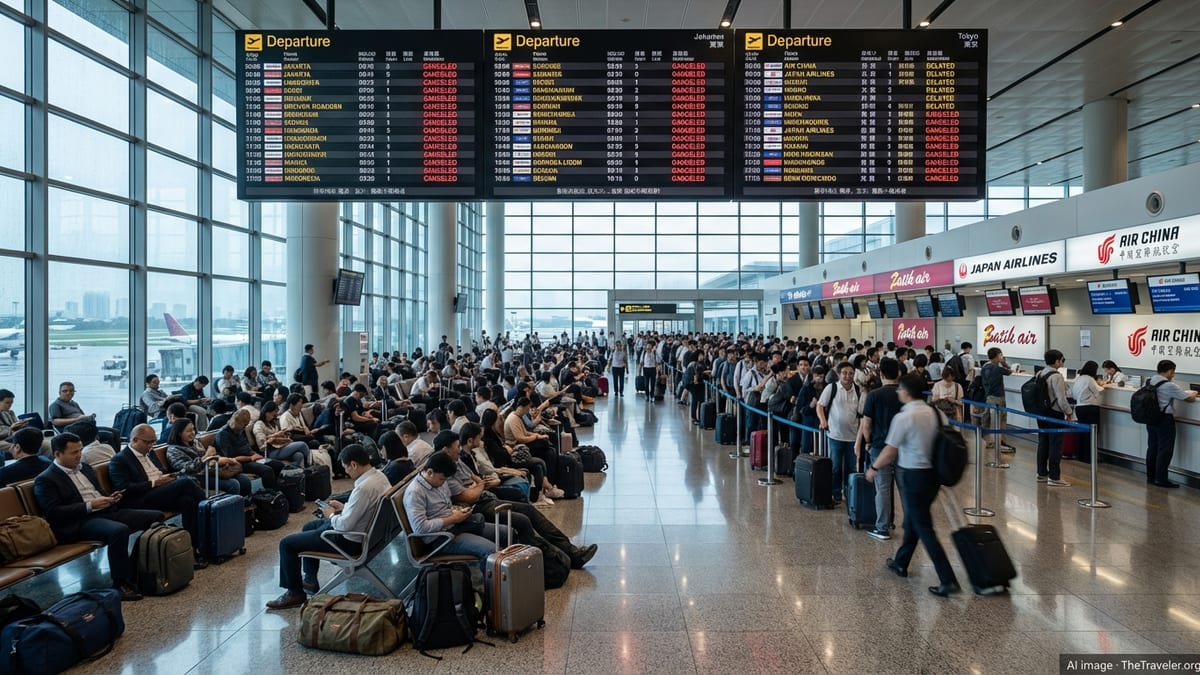
Wide Ripple Effects Across Asian Hubs
The latest operational data from multiple flight tracking platforms on September 1, 2026 indicates a sharp spike in disruption across Asian airspace, with Jakarta and New Delhi among the hardest hit hubs. Aggregated counts from regional dashboards show 471 cancellations and 3,618 delayed departures and arrivals across at least 47 airports, straining airline schedules and airport resources.
The disruption is concentrated at large connecting hubs, where even modest timing issues can cascade through daily schedules. Publicly available movement statistics for New Delhi show that the Indian capital remains one of the busiest nodes in South Asia, handling dense banks of domestic and international departures that are highly sensitive to upstream delays. Similar patterns are visible in Jakarta, which serves as a primary gateway between Southeast Asia, Australia and the Middle East.
Data published by aviation analytics providers also suggests that congestion is amplifying the impact of individual late arrivals. When high frequency routes into New Delhi and other Indian metros run behind schedule, knock-on effects spread quickly to secondary cities and onward Asian destinations, creating longer queues for departure slots and extended turnaround times on the ground.
Although the exact mix of causes varies by airport, operational bulletins from major Asian airlines in recent months have warned that tight summer and early autumn schedules, constrained aircraft availability and heavy demand can magnify even minor weather or technical issues into daylong disruptions for travelers.
Jakarta and New Delhi at the Center of the Disruptions
Jakarta Soekarno Hatta International and New Delhi Indira Gandhi International are appearing frequently in today’s delay and cancellation tallies. Both airports sit at the core of dense regional networks linking Southeast and South Asia, and both have seen schedule changes flagged in recent route planning updates by Asian carriers serving cities such as Incheon, Bangkok and Tokyo.
Recent schedule notices from full service and low cost airlines show Jakarta and New Delhi embedded in complex seasonal timetables that include new routes, temporary suspensions and reduced frequencies on selected days. These adjustments, often labeled as subject to government authorization and operational conditions, indicate that many services in and out of the two hubs are already running with limited slack, leaving less room to absorb unforeseen disruptions.
In India, live flight status pages for carriers operating from New Delhi to regional destinations such as Chandigarh, Dhaka and other South Asian points show minor and moderate delays layering across the day. Historical performance data for these routes highlights how a single late arriving aircraft can affect several subsequent rotations, particularly on short haul services with quick turnarounds.
For travelers connecting through Jakarta, similar pressures are visible on routes to and from Incheon and other Northeast Asian gateways. Network announcements from major Asian airlines confirm that some services on these corridors are operating on tightly banked schedules, which can translate into missed connections and extended airport stays when delays accumulate.
Operational and Seasonal Pressures Driving Irregularities
Publicly available operational updates from Asian carriers underscore the range of factors that can lead to widespread irregular operations days. Airlines cite government slot constraints, aircraft rotation complexities, maintenance windows and seasonal demand peaks as variables that can force last minute adjustments to planned timetables.
On South and Southeast Asia routes, where demand between cities such as Jakarta, Bangkok and Delhi remains strong, schedule bulletins show frequent fine tuning of frequencies and aircraft types across the northern summer and early autumn period. Carriers have warned that these tightly calibrated schedules are vulnerable when weather disruptions, air traffic control restrictions or technical inspections occur at short notice.
Industry analysis of recent flight activity across major Asian cities further indicates that some hubs are still balancing fleet redeployments and capacity shifts after several years of uneven recovery. Reports on business and commercial aviation in the region note that New Delhi has seen double digit quarterly swings in activity, illustrating how quickly conditions can change and how sensitive operations are to demand spikes or infrastructure constraints.
Given this backdrop, today’s count of 471 cancellations and 3,618 delays across 47 airports fits into a broader pattern of volatile operations rather than a single isolated event. Travelers transiting multiple hubs on the same itinerary are especially exposed, as even small upstream delays can trigger missed connections later in the journey.
What Travelers Are Experiencing on the Ground
At affected airports, the elevated number of late and canceled flights is translating into longer lines at check in, boarding gates and transfer counters. With cancellations distributed across both domestic and international services, some passengers are being rebooked on later departures or re routed through alternative hubs, which can significantly extend total travel times.
Public guidance from several Asian airlines emphasizes the importance of monitoring flight status closely on the day of departure. Many carriers now offer live status tools and same day notifications via mobile apps and websites, allowing passengers to track rolling gate changes, revised departure times and any last minute cancellations before heading to the airport.
Where delays stem from operational or weather related causes, airlines also direct passengers to online forms and dedicated pages for obtaining written confirmation of disrupted services. These documents are often required when travelers file claims with travel insurers or seek to document missed connections, additional accommodation costs or other out of pocket expenses arising from irregular operations.
Given the high level of disruption across multiple hubs today, travelers connecting through Jakarta, New Delhi or other major Asian airports are being advised, via public channels, to allow extra connection time where possible and to confirm the status of every flight sector before proceeding to check in counters or security screening.
Planning Strategies for Upcoming Trips via Asian Hubs
For travelers with upcoming itineraries routed through Jakarta, New Delhi or other Asian hubs, published guidance from airlines and travel platforms suggests several practical planning steps. Booking itineraries with slightly longer connection windows, particularly on journeys involving separate tickets or different carriers, can reduce the risk of missed onward flights when earlier sectors are delayed.
Many regional and global carriers recommend that passengers enable real time notifications in airline apps and keep booking reference numbers easily accessible for rapid rebooking if schedules change. Travel providers also encourage the use of flexible fares or products that allow same day changes, especially during busy travel periods when operational buffers are tight.
Travel search and booking platforms highlight the value of reviewing recent on time performance metrics on key routes between cities such as Jakarta and New Delhi. Where certain flights show a consistent pattern of late departures or arrivals, travelers may choose alternative departure times or routing options that have historically been more reliable, even if headline journey times are slightly longer.
With today’s widespread irregularities across 47 airports in Asia, industry observers note that this travel season is likely to remain unpredictable for passengers relying on tightly timed connections. Building flexibility into itineraries, maintaining up to date contact details with airlines and keeping digital copies of all travel documentation remain essential steps for anyone navigating the region’s busy air corridors in the coming weeks.
FlightStats Asia live flight status and delay data
Asian Sky Quarterly Asia flight activity analysis
Japan Airlines Southeast and South Asia schedule information