


Nagorno Karabakh is a small, mountainous corner of the South Caucasus that rarely appears on tourist itineraries, yet it has shaped the politics, borders and identities of Armenia and Azerbaijan for more than a century. For travelers trying to understand why this landlocked region has generated repeated wars and a massive refugee crisis, it helps to look beyond the headlines and trace how history, geography and memory have intertwined in this contested landscape.
Get the latest updates straight to your inbox!
Where Is Nagorno Karabakh and What Exactly Is It?
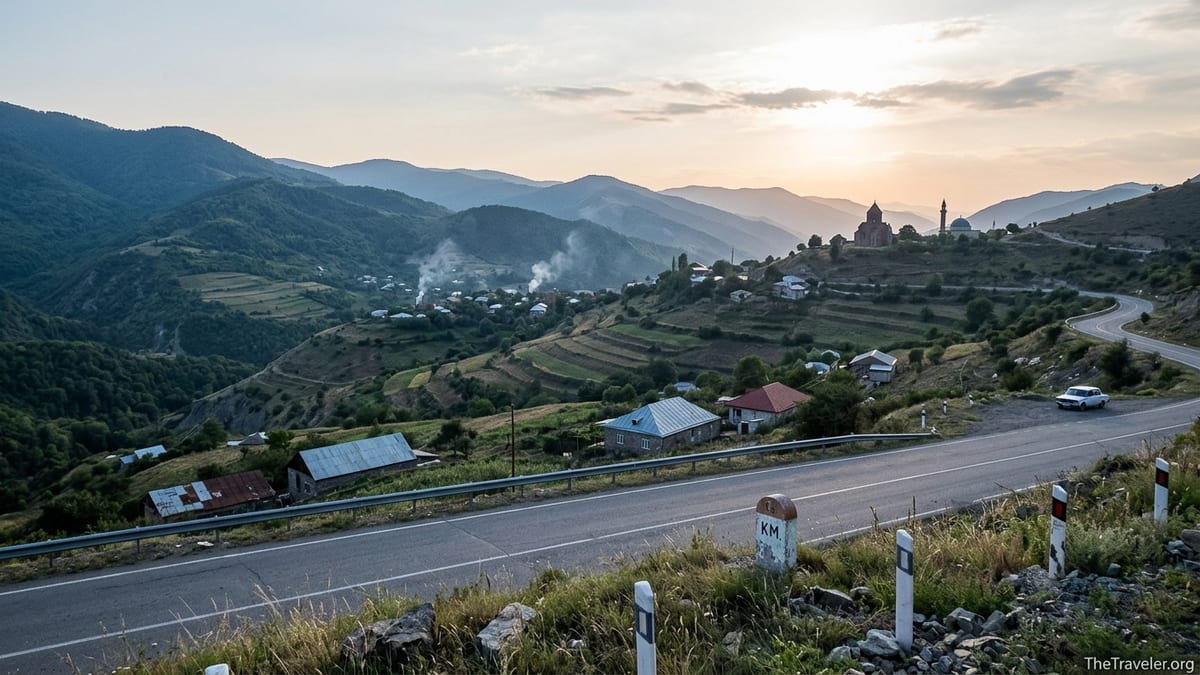
Nagorno Karabakh is a rugged, landlocked region in the South Caucasus, roughly the size of a small U.S. state like Delaware. It lies within the internationally recognized borders of Azerbaijan, in the country’s southwest, but has long been inhabited largely by ethnic Armenians. The name itself reflects its layered history: “Nagorno” is Russian for mountainous, “Kara” is Turkic for black, and “bakh” in Persian means garden, hinting at the cultural crossroads that define the region.
To visualize it on a modern map, imagine traveling west from Baku across Azerbaijan’s plains, then climbing into heavily forested mountains before dropping down toward the border with Armenia. This upland pocket, historically centered on the city of Stepanakert (known as Khankendi in Azerbaijani), is what has been called Nagorno Karabakh. For most foreign visitors, it was long out of reach, accessible only from Armenia and cut off from the rest of Azerbaijan by front lines and minefields.
Under Soviet rule, the area was known as the Nagorno Karabakh Autonomous Oblast, an administrative district inside the Azerbaijan Soviet Socialist Republic. Its population was majority Armenian, while the surrounding lowlands were populated largely by Azerbaijanis. When the Soviet Union began to unravel in the late 1980s, disputes over this status exploded into a violent struggle over who would rule the enclave.
For travelers today, Nagorno Karabakh is not a destination in any normal sense. Since 2023 the area has been tightly controlled by Azerbaijan, heavily militarized and scarred by war. Most governments advise against any travel there due to unexploded ordnance, security restrictions and unresolved political tensions, and ordinary tourism infrastructure that once existed in the Armenian-controlled era has effectively disappeared.
Deep Roots: Empires, Religions and Demographics
The story of Nagorno Karabakh starts long before modern passports and border checks. For centuries, the highlands were part of Armenian kingdoms and principalities, dotted with medieval monasteries such as Gandzasar and Dadivank. These stone complexes, with their carved khachkar crosses and weathered inscriptions, became anchors of Armenian Christian identity in the region. At the same time, Turkic-speaking Muslim communities settled in surrounding areas, tying the region into the broader Turkic and Persian worlds.
From the eighteenth century onward, competing empires shaped the fate of Karabakh. Local khanates, including the Karabakh Khanate based in the lowland city of Shusha, navigated between Persian and Ottoman influence until the expanding Russian Empire conquered the area in the early 1800s. Imperial Russian administrators redrew borders, resettled populations and categorized people by religion and language, laying the groundwork for later national claims.
By the early twentieth century, the mountains of Karabakh had a mixed but Armenian-majority population, while the lowland towns and routes linking the region to Baku and the Caspian Sea were predominantly Azerbaijani and Muslim. During brief periods of independence after World War I, both the newly formed Armenian and Azerbaijani republics claimed Karabakh. Skirmishes over places like Shusha left deep traumas: Armenians remember the 1920 destruction of the Armenian quarter of Shusha, while Azerbaijanis recall the loss of what they saw as a historic cultural center.
When the Soviet Union consolidated control in the 1920s, Moscow tried to freeze these conflicts through administrative compromise. Nagorno Karabakh was placed inside Soviet Azerbaijan but granted autonomy, a decision that satisfied neither side completely. Armenians saw it as separation from their historic homeland, while Azerbaijanis insisted it confirmed their sovereignty. The borders drawn in this era, which looked abstract on Soviet maps, became the literal front lines when Soviet power collapsed decades later.
From Soviet Autonomy to Open War
During the Soviet decades, Nagorno Karabakh functioned as an autonomous region with Armenian-language schools, local cultural institutions and representation in republican bodies. However, many Armenians in the enclave complained of economic neglect and cultural pressure from Baku. Petitions circulated as early as the 1960s and 1970s requesting transfer to Soviet Armenia, but these were quietly suppressed.
The situation changed dramatically in the late 1980s, as perestroika loosened political controls. In 1988, local leaders in Nagorno Karabakh voted to join Armenia, a move rejected by Soviet authorities and fiercely opposed in Azerbaijan. Demonstrations in Yerevan and Baku, clashes in mixed towns, and anti-Armenian violence in the Azerbaijani city of Sumgait signaled that old grievances were resurfacing in a new, more volatile era.
By the early 1990s, as the Soviet Union itself disintegrated, full-scale war broke out between Armenian forces, backed by Armenia, and Azerbaijani forces over Nagorno Karabakh and surrounding districts. Villages that had coexisted uneasily for generations were emptied almost overnight. Hundreds of thousands of ethnic Azerbaijanis fled or were expelled from the enclave and neighboring areas, while Armenians left parts of Azerbaijan where they had lived for decades. The conflict turned what had been a multiethnic Soviet region into a patchwork of front lines, ghost towns and fortified ridgelines.
When a ceasefire took hold in 1994, Armenian forces controlled most of Nagorno Karabakh and a ring of adjacent Azerbaijani districts, creating a land corridor to Armenia. The Armenian-run, self-proclaimed Republic of Artsakh emerged, but it was not recognized by any state, including Armenia itself. For the next quarter century, the conflict was “frozen” on paper, but there were regular skirmishes along the line of contact and no political settlement on status. International mediators flew in and out of Yerevan and Baku, but meanwhile an entire generation grew up on both sides with memories shaped more by displacement and loss than by coexistence.
Why Nagorno Karabakh Became So Strategically Important
Nagorno Karabakh’s importance goes far beyond its dramatic scenery. For Armenians, the region came to symbolize national survival after the trauma of the early twentieth century. Protecting the Armenian population in Karabakh was seen by many as a moral obligation, reinforced by the presence of ancient churches, cemeteries and cultural sites that tied the enclave to a broader Armenian historical narrative.
For Azerbaijan, Nagorno Karabakh became a test of territorial integrity. The fact that the enclave was recognized internationally as part of Azerbaijan meant that its loss was perceived as an occupation and a national humiliation. The surrounding districts that came under Armenian control in the 1990s were home to many Azerbaijani displaced persons who spent decades in temporary housing, waiting for a chance to return. For Baku, reclaiming these territories was central to post-Soviet state-building and domestic legitimacy.
Geography and energy politics also played a major role. The South Caucasus is a corridor for pipelines and transport routes linking the Caspian Sea and Central Asia to Europe and the Mediterranean. The Baku–Tbilisi–Ceyhan oil pipeline and the Southern Gas Corridor were deliberately routed through Georgia and Turkey to bypass conflict zones, but any renewed war still risked spooking investors and insurers. For neighboring powers such as Russia, Turkey and Iran, the conflict in and around Nagorno Karabakh offered both risks and leverage in a region where influence is closely watched.
On a human level, Nagorno Karabakh became important because so many lives were reordered around it. In Armenia, whole neighborhoods of Yerevan and towns like Goris filled with families who had fled from Baku, Sumgait and villages in Azerbaijan. In Azerbaijan, cities such as Baku, Sumgait and Ganja built districts of basic apartment blocks and temporary settlements to house those displaced from Aghdam, Fuzuli and other lost districts. For ordinary people on both sides, conversations about jobs, schooling and marriage prospects were often inseparable from memories of a home they could no longer visit.
The 2020 and 2023 Wars and the End of Armenian Control
The fragile status quo around Nagorno Karabakh shattered in autumn 2020. After years of rising tensions and smaller clashes, Azerbaijan launched a large-scale offensive using modern drones, artillery and infantry. Over six weeks of fighting, Azerbaijani forces retook large swaths of territory around the enclave and captured the key town of Shusha, perched on a plateau above Stepanakert. Thousands were killed on both sides, and many of the roads that travelers once used to reach Armenian-controlled Karabakh became front lines again.
A Russia-brokered ceasefire in November 2020 left a truncated Armenian-controlled area of Nagorno Karabakh connected to Armenia by a single road, the Lachin corridor, patrolled by Russian peacekeepers. For Armenian residents, daily life became precarious: fuel and goods arrived by convoy, and even routine trips from Stepanakert to Yerevan involved passing through checkpoints and peacekeeper posts. For Azerbaijan, the agreement confirmed its military gains and opened the door to rebuilding towns like Aghdam and Fuzuli, which had been left in ruins since the 1990s.
Tensions escalated again over access to the Lachin corridor in 2022 and 2023, with Armenian residents reporting shortages of food, fuel and medicine as movement in and out of the enclave was restricted for months. In September 2023, Azerbaijan launched a rapid military operation that forced the surrender of the Armenian authorities in Nagorno Karabakh. Within days, nearly the entire Armenian population of the enclave fled across the mountains into Armenia, creating lines of cars and buses that filled the road to the border city of Goris.
By early 2024, the self-proclaimed Republic of Artsakh had been dissolved and Azerbaijan asserted full control over the region. For those displaced Armenians now settled in Armenian cities and towns, Nagorno Karabakh turned from a daily reality into a memory and a political cause. For Azerbaijan, the reconquest was framed as the restoration of territorial integrity. Yet despite the changed map, the emotional and political weight of the region remains heavy, and its legacy still shapes how both societies see their past and future.
What This Means for Travelers to Armenia and Azerbaijan Today
For travelers exploring the South Caucasus, understanding Nagorno Karabakh is essential, even if you never go near the region itself. The conflict has left physical and psychological traces that affect everything from small talk with taxi drivers to the routes you can safely take between countries. It also influences how locals respond if you mention certain place names or recent events, so a basic grasp of the story helps you navigate conversations respectfully.
On the practical side, direct travel between Armenia and Azerbaijan remains closed, which means overland itineraries usually route via Georgia. For instance, a common loop for backpackers runs Tbilisi to Yerevan by overnight train or shared minibus, then back up to Tbilisi and onward to Baku by rail or bus. In practice this can add an extra day or two of travel time compared with crossing the Armenia–Azerbaijan border directly, but it avoids one of the most militarized borders in the world, where civilian crossings are not possible.
Within Armenia, most government and independent safety advisories recommend avoiding areas close to the border with Azerbaijan due to sporadic ceasefire violations and the presence of military positions. That means you may see checkpoints and defensive works if you travel to scenic regions like Syunik or Tavush, even if your guesthouse owner tells you daily life feels calm. In Azerbaijan, foreign ministries and travel sites consistently advise visitors not to approach the border regions with Armenia or the territories in and around Nagorno Karabakh, citing landmines, unexploded ordnance and tight security controls.
Travelers who visited Armenian-controlled Nagorno Karabakh in the past should be cautious about how they discuss that experience. In the era before 2020, some foreign visitors obtained entry permits in Stepanakert and crossed from Armenia without passing official Azerbaijani checkpoints. Today, Azerbaijan treats such visits as unauthorized entry into its territory, and some travelers have reported questions about prior travel when applying for visas or entering Azerbaijan. As with any politically sensitive area, it is wise to follow your home government’s latest advice, keep a low profile regarding contested topics and focus your trip on the many parts of Armenia and Azerbaijan that are open, welcoming and safer to visit.
Memory, Identity and the Future of the Region
Even though the front lines around Nagorno Karabakh have moved and control of the territory has changed hands, the deeper questions raised by the conflict have not disappeared. For Armenians who fled Stepanakert, Shusha or smaller villages, memories of courtyards, orchards and churches are now carried to new apartments in Yerevan and provincial towns. For Azerbaijanis returning to rebuild places like Fuzuli or Aghdam, the focus is on new housing blocks, schools and mosques rising on land where they or their parents once lived.
For visitors, this means that Nagorno Karabakh is often present in conversations even when you are far from the region itself. A taxi driver in Baku might point to a brand-new boulevard and explain that it is funded by revenues now freed up after “liberating our lands.” A café owner in Yerevan may mention relatives who arrived as refugees in 2023 and now work in the service industry. In both countries, war memorials, roadside billboards and television coverage keep the images of lost soldiers and reclaimed or lost towns vividly alive.
Looking ahead, the region’s stability will depend on whether Armenia and Azerbaijan can agree on a durable peace that addresses borders, transport routes and the rights of displaced people. International efforts continue, but trust is in short supply after so many cycles of violence. For travelers, that translates into a need to stay flexible: routes that are safe and open this year may change with little notice, and some areas that look close on a map remain off-limits in practice.
At the same time, understanding Nagorno Karabakh can deepen the experience of visiting the South Caucasus. The monasteries of Armenia, the mosques and caravanserais of Azerbaijan, and the cosmopolitan streets of Tbilisi all make more sense when seen against the backdrop of a region where borders, empires and communities have shifted repeatedly. While you may never step foot in Nagorno Karabakh itself, its story runs like a hidden thread through conversations, architecture and national narratives across the entire area.
The Takeaway
Nagorno Karabakh is more than a name on a disputed map. It is a compact landscape where Armenian and Azerbaijani histories, religions and memories have collided, especially over the last century. Shaped by imperial decisions, Soviet administration and the tumultuous end of the USSR, it became a symbol of identity and sovereignty for both nations, leading to two major wars in three decades and a profound human cost.
For travelers, the region’s history explains why the Armenia–Azerbaijan border is closed, why many border areas remain sensitive, and why conversations about recent events can be emotional on both sides. While contemporary Nagorno Karabakh is not a place to visit, its legacy is central to understanding the modern South Caucasus. Approaching the topic with curiosity, caution and empathy can help you navigate the region more thoughtfully, whether you are sipping coffee in central Yerevan, exploring the Old City of Baku or riding the overnight train through Georgia between them.
FAQ
Q1. What is Nagorno Karabakh in simple terms?
Nagorno Karabakh is a mountainous region inside Azerbaijan’s internationally recognized borders that historically had a majority Armenian population and became the focus of a long conflict between Armenia and Azerbaijan.
Q2. Who controls Nagorno Karabakh today?
Since late 2023, Azerbaijan has asserted full control over Nagorno Karabakh, and the Armenian-led authorities that once governed the enclave have been dissolved.
Q3. Why has Nagorno Karabakh been so important in regional history?
It sits at a cultural crossroads and became a powerful symbol of identity and sovereignty for both Armenians and Azerbaijanis, drawing in neighboring powers and affecting regional security, energy routes and diplomacy.
Q4. Can tourists visit Nagorno Karabakh now?
In practice, Nagorno Karabakh is not a normal tourist destination. Access is tightly controlled by Azerbaijan, security risks remain high and most foreign governments advise against travel to the area.
Q5. Is it safe to travel in Armenia and Azerbaijan despite the conflict?
Most of Armenia and Azerbaijan remains calm and open to visitors, but travelers should avoid border areas and follow current government travel advisories, as conditions can change quickly.
Q6. Why is the border between Armenia and Azerbaijan closed?
The border is closed because the two countries have not established normal diplomatic relations after decades of conflict over Nagorno Karabakh, and front-line areas remain militarized and sensitive.
Q7. How did the 2020 and 2023 wars change Nagorno Karabakh?
The 2020 war allowed Azerbaijan to retake large areas around the enclave, while the 2023 operation ended Armenian control inside Nagorno Karabakh and triggered a mass exodus of its Armenian population.
Q8. Are there still landmines in and around Nagorno Karabakh?
Yes, landmines and unexploded ordnance remain a serious hazard in former front-line areas, and extensive demining work is ongoing, which is one reason travel advisories warn against visiting.
Q9. Will visiting Nagorno Karabakh affect future trips to Azerbaijan?
Authorities in Baku regard unauthorized visits to Nagorno Karabakh as illegal entry into Azerbaijan, so past travel there can create problems when applying for Azerbaijani visas or passing border checks.
Q10. Why should travelers learn about Nagorno Karabakh if they cannot go there?
Understanding Nagorno Karabakh helps explain local perspectives, sensitive topics and practical constraints on travel across the South Caucasus, enriching visits to Armenia, Azerbaijan and neighboring Georgia.