


Amsterdam Schiphol has a reputation as an easy, well connected European hub, yet many travelers still wonder if routing through Amsterdam actually makes sense for their trip. Between tight minimum connection times, a busy KLM hub operation and a rail station directly under the terminal, Schiphol can be an extremely efficient choice in some situations and a poor one in others. Understanding when the airport’s layout, schedules and ground links work in your favor is the key to stress free connections.
Get the latest updates straight to your inbox!
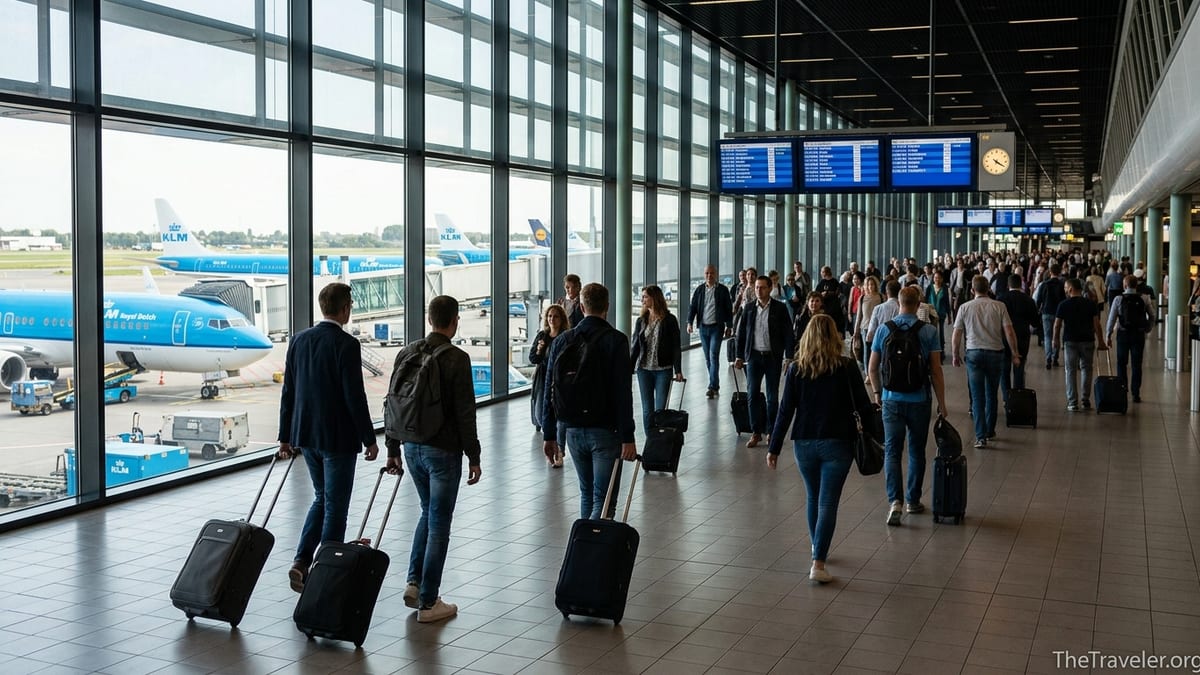
Why Schiphol Works Differently From Other European Hubs
Amsterdam Schiphol is built as a single terminal with a series of piers instead of multiple far flung terminals. In practice that means you usually stay inside one continuous airside space when you connect. There is no need to exit through arrivals, ride a shuttle and re clear security just to change terminals, which is still common at airports such as London Heathrow or Paris Charles de Gaulle. For most connections in Amsterdam you simply walk from one gate area to another, passing passport control only if you are crossing the Schengen border.
This design is one reason the officially published minimum connection times at Schiphol are relatively low. For many KLM and SkyTeam itineraries, published minimum times are around 40 minutes for Schengen to Schengen flights and about 50 minutes when a non Schengen flight is involved. Airlines will not sell you an itinerary that is below these standards, so if you see a legal 50 or 55 minute connection through Amsterdam on one ticket, it means the airport and carrier consider it operationally realistic under normal conditions.
Schiphol’s role as KLM’s primary hub also changes the connection equation. KLM and its partners operate a dense banked schedule that is designed around connections between European cities and long haul destinations in North America, Africa and Asia. That banked structure, combined with the single terminal layout, gives you more options if a flight is delayed and you miss your original connection, especially compared to smaller hubs with only one or two daily departures on many routes.
Scale matters too. Schiphol has recovered to tens of millions of passengers a year, with a particularly strong share of transfer traffic within Europe and between Europe and other continents. In practice that means the airport and airlines have processes built around connecting passengers. From dedicated transfer kiosks to signage that points clearly to connecting flows, the physical and operational setup is tuned to the needs of people who are not starting or ending their journey in Amsterdam.
When a Short Connection at Schiphol Actually Makes Sense
Because of the compact, single terminal layout, Schiphol is one of the few major European hubs where a short legal connection can be a rational choice rather than something to avoid at all costs. If you are arriving on a KLM or SkyTeam flight from a Schengen airport such as Copenhagen, Lyon or Milan and connecting onward to another Schengen destination, a 50 to 60 minute connection can be workable. You will stay within the Schengen area, avoid passport control and simply walk from one pier to another, often within 10 to 20 minutes of gate to gate time if your flights are on adjacent piers.
A practical example is a traveler flying from Hamburg to Lisbon via Amsterdam on KLM. Hamburg and Lisbon are both in the Schengen Area, and both flights are likely to use the same set of Schengen piers. If the itinerary includes a 55 minute layover, there is no passport check in between and the only step is a standard security walk through if you were screened in Hamburg. In many cases you can deplane, visit a restroom, fill a water bottle and walk calmly to the next gate with time to spare, provided the inbound flight is on time.
Short connections can also make sense when you have strong rebooking protection. On a single KLM ticket, if you miss a legal connection because your first flight is delayed, KLM will typically rebook you on the next available flight at no extra cost. That might mean taking a later departure to your final destination the same day or rerouting through another hub if there is a better option. The presence of multiple daily frequencies on popular routes such as Amsterdam to London, Paris, Frankfurt or Madrid gives the airline flexibility to get you moving again.
Travelers who value minimizing total travel time may prefer these tight but realistic connections over spending several extra hours in the terminal. If you are comfortable walking quickly, traveling with hand baggage only and do not mind the small risk of a rebooking, Amsterdam’s structure makes a one hour layover far less intimidating than at airports where a 30 minute bus ride and another security check stand between your arriving and departing flights.
When You Should Build in Extra Time at AMS
There are also many situations where making use of Schiphol’s strengths means doing the opposite and adding time to your layover. Any connection that crosses the Schengen border will introduce the possibility of passport control queues. If you are arriving from North America, the United Kingdom or another non Schengen country and connecting to a Schengen destination such as Rome or Vienna, you must clear immigration before entering the Schengen gate areas. At peak times, especially early morning arrival banks, these lines can add 20 to 45 minutes to your transit.
Another case where extra buffer is wise is when your itinerary involves changing between Schengen and non Schengen flights and you are traveling with checked luggage on separate tickets. For instance, imagine booking a low cost carrier flight from Dublin to Amsterdam on one ticket and a separate long haul ticket from Amsterdam to Bangkok on a different airline. You would need to clear immigration, collect your checked bag, pass through customs, re check the bag with your long haul airline and clear security again. In these self transfer scenarios, Schiphol’s single terminal layout is helpful but does not remove the basic steps that separate tickets require. Planning four to six hours between flights is more realistic if you are not protected by a single booking.
Families with young children, elderly travelers or anyone with reduced mobility may also want to treat minimum connection times as a theoretical floor rather than a target. Even though the airport is technically one building, the distances between some gates can be long. Walking from the far end of one pier to another can easily take 15 to 20 minutes even at a brisk pace. If you know you will need wheelchair assistance or simply prefer to move slowly, adding 30 to 60 minutes on top of any legal minimum connection time can help keep the experience relaxed.
Finally, it can make sense to build in time intentionally to take advantage of the airport’s lounges and facilities. KLM operates large Crown Lounges for both Schengen and non Schengen departures, with showers, quiet workspaces and food that can make a three hour layover productive or restorative rather than tedious. Travelers connecting from an overnight long haul flight to a shorter European hop often appreciate an extra hour to shower, have a proper breakfast and reset their body clock between sectors.
Where Schiphol Shines Compared With Other European Hubs
Schiphol’s main competitors for European connections include hubs such as Frankfurt, Munich, Paris Charles de Gaulle, London Heathrow and Istanbul. Each has its own strengths, but Amsterdam offers a few distinctive advantages on many itineraries. One is the breadth of European destinations that KLM and its partners serve from Amsterdam, including smaller regional cities that may have only limited service to other hubs. If you are flying from a mid sized city such as Bristol, Billund or Bergen to a regional destination in Southern Europe or Scandinavia, the combination of frequencies and timings through Amsterdam can be particularly attractive.
The airport’s train station directly under the terminal also adds flexibility that some hubs lack. If you are connecting between a flight and a destination in Belgium, northern France or western Germany, you may find that a flight plus train combination through Schiphol is faster and more comfortable than two flights. For example, a traveler flying from New York to Amsterdam could step off the plane, walk downstairs to the rail platforms and board an intercity or high speed train toward Brussels, Antwerp or Paris without changing stations in the city. That hybrid air rail connection can make Schiphol more sensible than routing through a hub where the main rail links involve a separate transfer into town.
Operational resilience is another strong point. Because Schiphol is an established transfer hub, the airport and airlines have systems to handle disrupted connections. KLM’s app and self service transfer kiosks inside the terminal can automatically suggest and rebook passengers onto later flights when irregular operations occur, such as weather delays or an aircraft arriving late from a previous segment. While no hub is immune to disruption, having a dense network of partner flights and built in processes for re accommodating passengers tends to make Amsterdam more forgiving than smaller or more point to point focused airports.
For travelers based in the United States or Canada, Amsterdam can also be a strategically neutral gateway when redeeming frequent flyer miles. Many transatlantic itineraries price similarly whether you connect through Amsterdam, Paris or another SkyTeam hub, but award space may be more available on specific routes. In practice, that means you might choose Amsterdam as your connection point not because it is geographically perfect, but because it offers the only seats you can book with miles on your preferred dates, knowing that the airport is set up to make that connection manageable.
Itineraries Where Schiphol Is Less Ideal
Despite its strengths, Schiphol is not always the most logical choice. On very short intra European routes where a direct flight exists from your origin to your destination, adding a connection through Amsterdam will often add more time and complexity than it saves. For example, a traveler going from London to Berlin or from Madrid to Rome will frequently be better served by a non stop flight on a low cost or full service carrier, particularly when factoring in airport arrival times and potential connection risks.
Amsterdam may also be less compelling if your trip involves significant backtracking relative to a more direct hub. Passengers flying from Lisbon to Helsinki, for instance, may find that connections through a geographically closer hub yield shorter overall travel times even if Amsterdam appears as an option in booking engines. While modern aircraft and competitive fares have made some backtracking routine, it is still worth checking the total distance and number of flight hours before committing to a connection that looks simple on paper but adds several hundred extra miles in the air.
Pricing can be another reason to look beyond Schiphol, especially on separate ticket combinations. Because KLM’s hub is strong, fares on some single ticket itineraries that connect through Amsterdam may be higher than routings via alternative hubs on competing alliances. Budget conscious travelers sometimes stitch together cheaper separate tickets via Amsterdam using low cost carriers plus long haul operators. While Schiphol’s layout makes that type of self connection simpler than at some airports, the lack of through checked baggage and rebooking protection means the savings must be weighed carefully against the added risk and hassle.
Finally, ongoing or seasonal congestion should factor into your planning. At times of peak holiday travel or during periods when security or border staffing is stretched, queues can lengthen and the advantage of short minimum connection times diminishes. If you are traveling at the start of school holidays, around Christmas or during major events in the Netherlands, it may be worth either choosing a longer connection in Amsterdam or routing through a different hub that has more breathing room on your specific dates.
Making the Most of a Planned Connection at AMS
When you do decide that Amsterdam Schiphol is the right place to connect, there are practical ways to make the experience smoother. Booking everything on a single ticket with one airline group wherever possible is the simplest. A through ticket from a SkyTeam carrier will usually include protected connections, automatic rebooking in case of missed flights and through checked baggage that follows you from origin to destination without your involvement during the layover. Even if another airline combination appears slightly cheaper on separate tickets, the security of a single booking can be worth the small fare difference.
On the day of travel, mobile tools matter. Both KLM and Schiphol provide apps that show gate assignments, walking times and updated departure information. If you arrive at a remote or far pier with a short layover, seeing a realistic walking time estimate to your next gate can help you decide whether to walk briskly, ask for assistance or prepare to be rebooked. These apps sometimes also surface fast track or short connection passes for eligible passengers, which can provide priority at security or passport control when a tight connection is at risk.
Preparing for security and passport checks before you land can also save minutes. Keeping liquids and electronics organized in your carry on, having your passport readily accessible and checking whether you will enter or leave the Schengen Area at Amsterdam will reduce surprises. If you know you are arriving from a long haul non Schengen flight and heading to a Schengen destination, being ready to move quickly from the jet bridge to immigration can help you stay ahead of the largest arrival wave from your aircraft.
Finally, consider lounge access or day passes if you have a layover of two hours or more. For economy passengers without elite status, paying for lounge access can still be worthwhile on long travel days, particularly if you can shower, eat and charge devices in a calm environment between flights. Schiphol also offers plenty of quiet seating zones, workspaces and dining options in the public airside areas, so even without lounge access you can turn a longer connection into a productive or relaxing break.
The Takeaway
Amsterdam Schiphol is one of the few major European hubs where a short, legal connection can genuinely make sense for many travelers. Its single terminal layout, strong KLM hub operation and built in support for transfer passengers create conditions that are more forgiving than at multi terminal airports that require repeated security and shuttle transfers. For Schengen to Schengen itineraries, especially within the KLM network, connections around one hour can work smoothly when flights are on time and travelers are prepared.
At the same time, Schiphol is not a magic solution for every route. Connections that cross the Schengen border, rely on separate tickets or line up during the busiest travel peaks benefit from extra buffer. Direct flights, more geographically logical hubs or simply a more spacious itinerary may be better choices in those cases. The key is to understand where Amsterdam’s design and operations work in your favor and to book with those strengths in mind, rather than relying on minimums alone.
If you treat Schiphol as a flexible hub where you either lean into its ability to support tight, protected connections or deliberately build in time to enjoy the facilities, you can turn what might have been a stressful change of planes into a predictable and even pleasant part of the journey. Used thoughtfully, Amsterdam can be one of the most sensible and traveler friendly connection points in Europe.
FAQ
Q1. Is a 50 minute connection at Amsterdam Schiphol enough for European flights?
For a same ticket Schengen to Schengen connection on KLM or a SkyTeam partner, 50 minutes can be sufficient if your inbound flight is on time and you are comfortable walking briskly between gates.
Q2. How much time should I allow when changing from a non Schengen flight to a Schengen flight at AMS?
If you must clear passport control on arrival, planning at least 75 to 90 minutes is sensible, and more during peak early morning or holiday periods.
Q3. Does Schiphol recheck my bags automatically on a connection?
If both flights are on a single ticket and your airlines have an interline agreement, your checked bags are usually tagged through to your final destination and do not need to be collected in Amsterdam.
Q4. Is Amsterdam Schiphol a good airport for self connections on separate tickets?
It is more forgiving than many hubs thanks to the single terminal layout, but you still need enough time to reclaim and recheck bags and you have no rebooking protection if something goes wrong.
Q5. Are there fast track options for tight connections at AMS?
Depending on your airline, ticket type and status, you may receive access to priority security or passport lanes, and some passengers with very short connections are offered special short connection passes.
Q6. How long does it take to walk between the farthest gates at Schiphol?
At a normal pace, walking from one end of the pier system to the other can take around 15 to 20 minutes, so very tight connections may require a brisk walk.
Q7. Is it worth planning a longer layover to use the lounges at AMS?
For travelers coming off an overnight long haul or facing a long travel day, a two to three hour layover with lounge access can make the journey far more comfortable.
Q8. Can I easily connect from a flight to a train at Amsterdam Schiphol?
Yes, the rail station sits directly under the terminal, so you can walk from arrivals to the platforms and board intercity or high speed trains toward Dutch and nearby European cities.
Q9. Are delays a major problem for connections at Amsterdam?
Like any busy hub, Amsterdam can experience delays during bad weather or peak periods, but the dense KLM and partner network often provides alternative flights if you miss a protected connection.
Q10. When should I avoid connecting through Schiphol?
It is usually better to avoid Amsterdam when a nonstop flight is available on your route, when a connection would involve major backtracking or when you are relying on very short self made connections on separate tickets.