


Hollywood is one of several central bases in Greater Los Angeles, sitting alongside options like West Hollywood, Downtown, Universal City, and the beach cities. Within Hollywood itself, staying directly on Hollywood Boulevard feels very different from booking on a quieter side street, in the foothills of the Hollywood Hills, or over the hill by Universal Studios. This guide walks through Hollywood’s main micro-areas and nearby alternatives so you can match your hotel choice to priorities such as nightlife, transit access, comfort level, and budget.
Get the latest updates straight to your inbox!
Understanding Hollywood’s Layout and Transit
For visitors, “Hollywood” usually means the dense grid around Hollywood Boulevard between La Brea and Gower, plus the residential hills just to the north. The core is compact enough to walk, but greater Los Angeles is spread out, so your base affects commute times to beaches, studios, museums, and sports venues. Many hotels market themselves with “Hollywood” in the name; some are firmly in the neighborhood, while others are technically in adjacent areas such as Universal City, Studio City, or East Hollywood.
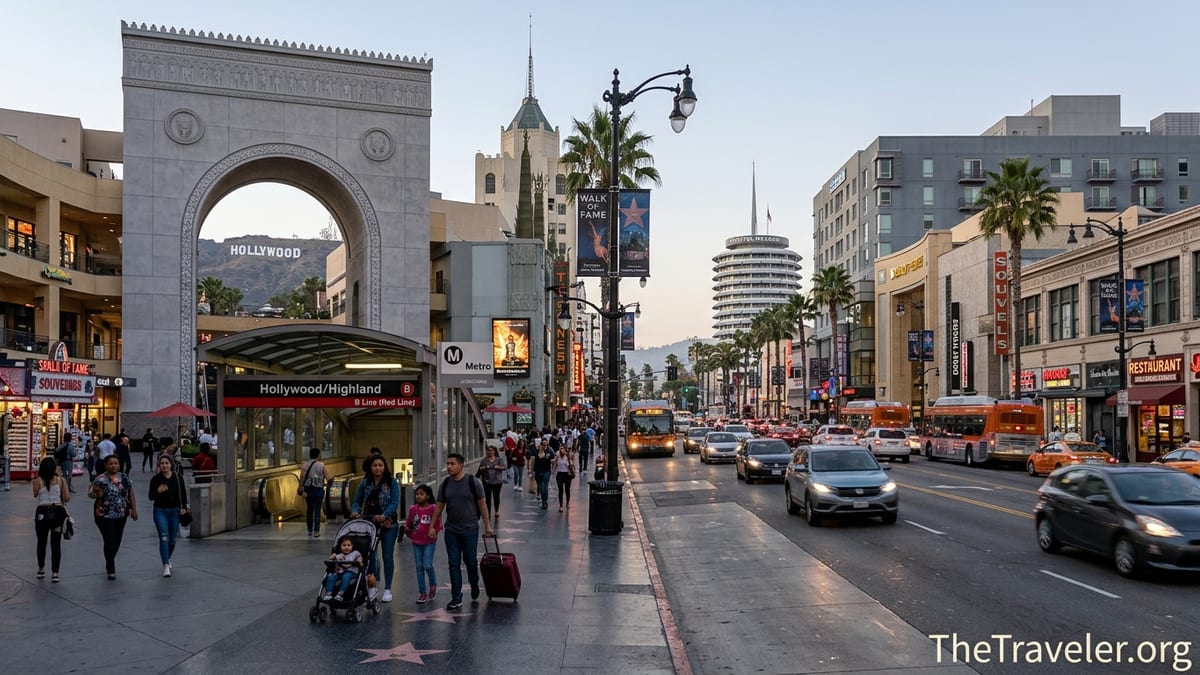
Public transit anchors Hollywood with two Metro B Line (red) stations on Hollywood Boulevard: Hollywood / Highland at Ovation Hollywood and Hollywood / Vine farther east. Travelers on forums in 2026 still consider the B Line the most practical rail link between Hollywood, Universal City, and Downtown, typically taking about 20 minutes between Hollywood and Downtown when trains run smoothly. Services and perceptions can change, so writers should verify current schedules and any planned disruptions before publication.
Traffic and parking are persistent issues. Several Hollywood hotels charge nightly fees for on-site or valet parking, which can materially change the real cost of a stay. Because these charges shift regularly, writers should pull representative parking and resort or amenity fees from at least two major booking engines and the hotel’s own site on a clearly stated date, rather than relying on outdated figures.
When comparing options, note that ride-hail journeys to West Hollywood nightlife, Beverly Hills shopping, or Universal Studios are relatively short in distance but can fluctuate heavily in journey time depending on congestion. For many first-time visitors, staying near a B Line station offers useful backup if they prefer to avoid driving on some days.
Hollywood & Highland / Ovation Hollywood: Central and Intense
The blocks around the Ovation Hollywood complex at Hollywood and Highland form the most iconic and hectic part of Hollywood. Here you are directly above or beside the Walk of Fame, the TCL Chinese Theatre, and the Dolby Theatre, with constant foot traffic well into the night. The atmosphere is overtly touristy, with buskers, costumed characters, souvenir shops, and frequent events creating crowding and noise, especially on weekends and during award season.
Recent discussions among locals note that this area feels busy but generally well lit, with a strong visible security and police presence near the major venues. At the same time, travelers and residents describe regular encounters with aggressive panhandling, street vendors, and visible homelessness on and around Hollywood Boulevard. Conditions on specific blocks can shift within months, so any safety commentary should be dated and cross-checked against fresh reviews that mention cleanliness, noise, and comfort around the hotel’s immediate entrance.
Representative hotels here include the Loews Hollywood Hotel, which is integrated into the Ovation complex and sits directly by the Hollywood / Highland B Line station. It is typically positioned in the upper-mid to upscale range, with a rooftop pool, family-friendly rooms, and extensive meeting space. The historic Hollywood Roosevelt, a few minutes west on Hollywood Boulevard, offers a classic pool courtyard and nightlife scene that appeals to couples and style-focused travelers more than very young families. Writers should confirm current parking charges and any amenity fees at both properties, as these can be substantial compared with room-only rates.
Budget and mid-range options in this micro-area are more limited than in other parts of the city, and the immediate streets can feel overwhelming for light sleepers due to constant sirens, late-night revelers, and event load-ins. Travelers seeking maximum convenience to the Walk of Fame and red carpet landmarks, plus door-to-door access to the B Line, will find this the most efficient base. Those looking for a quieter, more residential ambiance may prefer to stay just off the boulevard or in the hills above.
Hollywood & Vine Corridor: Nightlife, Music, and Mixed Comfort Levels
East of Highland, the Hollywood and Vine intersection has its own history as a radio and music hub. The surrounding blocks are a blend of renovated historic buildings, newer mixed-use developments, and older storefronts. The atmosphere here feels more oriented to nightlife and residential loft living than to family sightseeing, with bars, music venues, and late-opening restaurants dotted along Hollywood Boulevard and nearby side streets.
Locals often describe the stretch of Hollywood Boulevard between Highland and Vine as less polished than the area immediately west of Highland, with more visible street disorder and fewer major tourist draws. Anecdotal reports from residents who have lived on or near the boulevard mention that while they rarely experience serious crime, they are accustomed to late-night noise, occasional disturbances, and uneven street cleanliness. These impressions should be cross-checked with recent hotel reviews before any strong claims, because block-by-block conditions can evolve quickly.
Prominent hotels here include the W Hollywood, set at Hollywood and Vine with its own entrance to the B Line station. It is known for a rooftop pool scene, stylish rooms, and a strong nightlife orientation, generally suiting younger adults and couples more than guests seeking a quiet retreat. The Kimpton Everly (just north of Hollywood Boulevard on Argyle) positions itself as a slightly calmer alternative with views of the Hollywood sign from some rooms and a more low-key bar and pool area. Both usually fall into the upper-mid or upscale price brackets; writers should verify representative nightly ranges, broken into budget, mid-range, and higher-end tiers, using recent booking searches dated at the time of writing.
Travelers on tighter budgets can find independently run motels and smaller hotels east of Vine and along nearby streets, though quality varies significantly. Before recommending any specific property, it is wise to scan guest feedback from the past 6 to 12 months for patterns relating to noise, maintenance, and neighborhood comfort, as some East Hollywood blocks show higher reports of street activity and petty theft than the main tourist core.
Foothills and Franklin Avenue: Quieter Hollywood Close to the Action
Just north of Hollywood Boulevard, Franklin Avenue and the lower Hollywood Hills foothills provide a different experience. The atmosphere becomes more residential, with tree-lined streets, historic apartment buildings, and hillside homes replacing souvenir shops. You are still within walking distance of the Walk of Fame in many cases, yet the streets tend to feel calmer, with less constant foot traffic and fewer large tour groups.
Franklin Avenue marks the southern edge of the Hollywood Hills and runs parallel to Hollywood Boulevard, serving as a major local thoroughfare at the base of the hills. Several historic buildings and cultural landmarks sit along this corridor, giving it a local, lived-in feel. Travelers who have stayed here often describe a noticeable drop in noise compared with directly on Hollywood Boulevard, while still acknowledging issues typical of central Los Angeles such as occasional encampments or car break-ins on side streets.
Representative properties include the Best Western Hollywood Hills on Franklin Avenue, which offers a mid-range, practical base with on-site parking and easy access by car to the 101 freeway. Nearby options like the Hollywood Hills Hotel or apartment-style rentals up into the hills serve guests who prioritize views and a residential vibe over immediate access to a Metro station. Many of these hillside properties feature pools or terraces and may appeal to couples or longer-stay travelers comfortable with walking up and down steep streets or relying on rideshares.
Because the foothills are still firmly within Hollywood while feeling distinctly different from the boulevard, writers should emphasize this micro-area to readers seeking a “retreat that is still near the action.” When checking rates, it is useful to show how mid-range and higher-end hillside properties sometimes price similarly to or slightly above major boulevard hotels, reflecting the trade-off between tranquility and direct transit access.
Outlying Hollywood-Branded Strips and East Hollywood Motels
Beyond the core, many hotels along Sunset Boulevard, Santa Monica Boulevard, and stretches of Hollywood Boulevard east of the 101 market themselves with “Hollywood” in the name. These corridors are patchworks of car-oriented strips, medical centers, and older residential pockets. The atmosphere can be more utilitarian, with fewer classic landmarks and a stronger emphasis on value pricing, particularly at older motels and limited-service properties.
Travelers and locals discussing East Hollywood in 2026 commonly describe it as average urban Los Angeles in safety terms, but note that it is not especially clean and that certain blocks can feel rough around the edges, especially late at night. Reports mention encounters with individuals in crisis, encampments near underpasses, and sporadic disturbances along major streets. At the same time, many residents live here for years without serious incidents. Any description should be balanced, noting both the lived reality of long-term tenants and the elevated street-level challenges that some visitors find uncomfortable.
Budget-conscious travelers sometimes choose motels in this zone primarily for price, accepting longer rides to major sights and fewer amenities. A number of properties include free or modestly priced on-site parking, which can offset the cost of renting a car. Writers should be candid that property and neighborhood quality varies widely; only recommend specific hotels where recent independent reviews point to consistent cleanliness, responsive management, and reasonable nighttime quiet for the location.
Because there are few standout attractions within immediate walking distance in these strips, these stays work best for visitors whose priority is saving on lodging while spending most waking hours elsewhere. Families with young children or travelers uneasy with visible street homelessness may feel more relaxed in West Hollywood, Universal City, or the beach cities, even if nightly rates are higher.
Hollywood vs West Hollywood, Downtown, Universal City, and the Beaches
Choosing Hollywood is ultimately about trade-offs. Compared with West Hollywood, central Hollywood is better for direct access to the Walk of Fame, major tourist sights like the Chinese Theatre, and the B Line to Universal City and Downtown. West Hollywood, by contrast, offers a denser concentration of restaurants, bars, and boutiques in a compact, walkable area, with a reputation for a somewhat cleaner streetscape and a vibrant LGBTQ+ scene. However, West Hollywood has no Metro rail stations, so visitors rely on buses, rideshares, or rental cars for most journeys.
Downtown Los Angeles provides another contrast. It is roughly 20 minutes by B Line from Hollywood under normal conditions and is convenient for cultural venues, some sports arenas, and newer high-rise hotels with rooftop pools. Reviews frequently praise the skyline views and modern amenities but also raise concerns about street homelessness and quiet, sometimes desolate-feeling blocks outside business hours. For visitors whose main targets are Universal Studios, the Hollywood sign, and studio tours, Downtown often means extra transit time compared with staying in Hollywood or Universal City.
Universal City and nearby Studio City are appealing bases for theme park visitors and families. Hotels such as Hilton Los Angeles / Universal City and Sheraton Universal sit within walking distance or a short shuttle ride of Universal Studios Hollywood and CityWalk, with reviews in 2026 emphasizing convenience and generally calmer surroundings than central Hollywood. Family-focused guides highlight that staying here can avoid repeated cross-city trips with children and still leave you one B Line stop from Hollywood’s core for sightseeing.
Beach cities like Santa Monica and Venice deliver an entirely different ambiance, centered on the ocean, bike paths, and coastal dining. They are typically 30 to 60 minutes’ drive from Hollywood depending on traffic. This works best for travelers who care more about sand and sunsets than nightly strolls along the Walk of Fame. When comparing, writers should underline that no single base is perfect for all of Los Angeles; the best choice depends on whether readers prioritize theme parks, nightlife, the beach scene, or classic film landmarks.
Family-Friendly Stays in and Around Hollywood
For families, the right micro-area in Hollywood can make the difference between a fun base and a stressful one. Hotels directly on the busiest stretch of Hollywood Boulevard are convenient for quick photo stops and tours but also expose children to dense crowds, street performers, and frequent late-night noise. Parents of young kids often report preferring slightly removed locations, such as Franklin Avenue or the foothills, where sidewalks are calmer and rooms are more likely to be insulated from all-night activity.
Within central Hollywood, larger full-service hotels like Loews Hollywood or family-oriented chains a few blocks off the boulevard frequently offer connecting rooms, suites, small pools, and breakfast options that can simplify logistics. When assessing these hotels, writers should confirm whether cribs, rollaway beds, and kids’ menus are available and note any family-specific perks mentioned in recent reviews, such as movie nights, easy stroller access to Metro stations, or kid-friendly staff attitudes.
Families planning multiple days at Universal Studios may be better served by Universal City or Studio City properties, where the journey to and from the park is short enough to allow midday breaks. Recent family travel guides point out that being able to return to the room for naps or downtime, then head back to the park or CityWalk in the evening, is a major advantage. Some hotels in that cluster run their own shuttles to the park or are close enough to walk, but writers should confirm current shuttle schedules and any associated fees before making firm promises.
For beach days or relaxed coastal walks with strollers, basing in Santa Monica or another beach city can be more comfortable despite the longer ride to Hollywood. In those cases, a day trip by car or rideshare to Hollywood and Universal, rather than the other way around, may minimize packing children onto trains or through late-night crowds. The key for readers is to weigh the convenience of being near a single focal attraction, such as Universal Studios, against the broader citywide access of a Hollywood base.
Safety, Cleanliness, and Comfort: Reading Recent Signals
Hollywood, like many urban districts in the United States, presents a complex picture on safety and comfort. Official crime statistics give only part of the story; what matters to travelers is how a neighborhood feels on the ground. Recent local discussions consistently describe the main Hollywood Boulevard tourist stretch near Highland as busy, well lit, and usually comfortable for walking at typical sightseeing hours, while acknowledging persistent issues such as litter, vendors, and occasional disruptive behavior.
Farther east and along some outlying strips, reviewers mention greater variability, from blocks that feel like ordinary city streets to pockets with higher visibility of people in crisis, tents, or open substance use. Petty theft from vehicles is a recurring theme across Los Angeles, so travelers are advised not to leave belongings in cars, even when using secure hotel parking. Writers should avoid sensational language and instead synthesize typical guest experiences from the latest 6 to 12 months of reviews, clearly dated, noting whether complaints cluster around noise, cleanliness, or specific intersections.
Inside the hotels, comfort usually aligns with price band and brand reputation, but there are exceptions in every direction. Some older motels surprise guests with strong housekeeping and friendly management, while a few high-end properties earn criticism for wear or overcrowded pools during peak season. Before spotlighting any hotel as a recommendation, it is prudent to cross-check several recent booking and review platforms to confirm that earlier strengths or weaknesses still hold in the current year.
Because conditions on the street can change within months due to construction, city policies, or local business shifts, the article itself should explicitly remind readers and future writers to verify on-the-ground realities close to their travel dates. Encouraging readers to look at the most recent traveler photos and to search for very recent neighborhood discussions can help them calibrate expectations and choose the comfort level that suits them.
Booking Strategies, Events, and Timing
Hollywood hotel demand moves with both the tourist calendar and the entertainment industry. Room prices and availability often spike around major events at the Dolby Theatre, Hollywood Bowl concerts, film festivals, and peak school holiday periods. While specific price figures change rapidly, patterns are consistent: weekends, award-season dates, and holiday periods tend to be more expensive and sell out earlier than midweek stays in shoulder seasons.
A practical strategy is to start monitoring rates several months ahead for peak periods, using a couple of major booking platforms and the hotels’ direct sites on the same day, then noting representative low, mid-range, and higher-end nightly ranges. Writers should clearly date these checks in any article so readers understand that the examples are snapshots, not guarantees. Flexible cancellation policies offer a way to lock in a reasonable rate early while retaining the option to rebook if prices drop closer to arrival.
Loyalty programs can materially change value, especially at larger properties attached to major brands. Members may receive benefits such as discounted parking, resort fee waivers, food and beverage credits, or upgrades that shift the overall cost-benefit equation between, for instance, Loews Hollywood and an independent hillside hotel. When providing guidance, it is more useful to explain how these perks work in general terms than to quote specific promotion details that may expire quickly.
Travelers intent on attending a specific event, such as a Hollywood Bowl concert, may find it worth paying a premium for walking-distance accommodation or an easy rideshare home rather than saving by staying across town. Conversely, visitors with flexible dates who mainly want to see the Walk of Fame and a studio tour can often achieve better value by targeting shoulder seasons and midweek nights, particularly at larger hotels that cater to both leisure and business demand.
Putting It All Together: Scenario-Based Recommendations
For first-time visitors focused on iconic Hollywood sights and transit access, the area around Hollywood and Highland delivers the strongest convenience. Staying at or near Ovation Hollywood places you steps from the Walk of Fame, the Dolby Theatre, and the Hollywood / Highland B Line station. This suits travelers who accept street noise, crowds, and an intense tourist atmosphere in exchange for minimal commuting to the classic postcard locations.
Travelers who want Hollywood proximity without constant bustle are often best served by the foothills and Franklin Avenue or by side-street hotels a few blocks north or south of Hollywood Boulevard. These micro-areas balance walkability to major sights with a more residential feel and better odds of quieter nights, especially important for families with younger children or remote workers. Apartment-style lodging in the hills can appeal to longer stays, although it usually assumes comfort with driving or using rideshares for most trips.
Nightlife-focused visitors may gravitate toward the Hollywood and Vine corridor or West Hollywood. Those who want rooftop pools, DJs, and quick access to clubs can choose properties like the W Hollywood, while guests seeking a more curated dining and bar scene with somewhat cleaner streets may find West Hollywood a better fit, despite the lack of rail access. Film and theme park fans prioritizing Universal Studios should weigh the benefits of staying in Universal City or Studio City, where walking or taking a short shuttle to the park can outweigh the extra 10 to 20 minutes needed to reach central Hollywood for an evening stroll.
Finally, travelers whose dream Los Angeles revolves around the beach, art galleries, or luxury shopping may find it more logical to base in Santa Monica, Venice, or Beverly Hills and treat Hollywood as a half-day excursion. In every case, the key is to decide what you want most at your doorstep. Hollywood itself offers everything from flashy boulevard hotels above subway stations to hillside hideaways and no-frills motels. By aligning your chosen micro-area with your priorities for nightlife, transit, budget, and comfort, you can make Hollywood and its neighbors work to your advantage.