


Pre-booked airport transfers have become a quiet essential of modern travel, sitting somewhere between a classic metered taxi and a fully private chauffeur. Kiwitaxi is one of the best known of these platforms, offering fixed-price transfers in more than 100 countries, from major hubs like Paris Charles de Gaulle and Antalya to smaller resort airports. But while almost anyone can use it, some travelers extract far more value than others. Understanding who benefits most, and in which situations, can help you decide if Kiwitaxi should be part of your next trip.
Get the latest updates straight to your inbox!
What Kiwitaxi Actually Offers Travelers
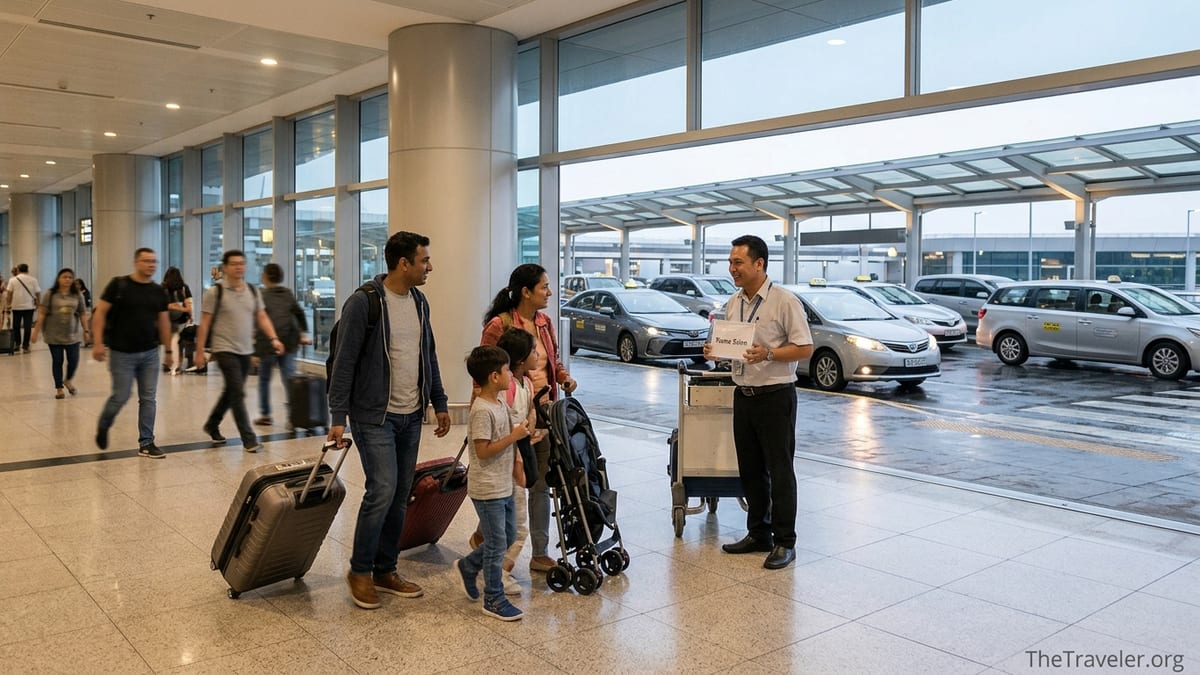
Kiwitaxi is an international online booking platform for private transfers and chauffeur-style rides, primarily used for airport and intercity trips. According to its own service description, it works with vetted local taxi and transport companies and operates in more than 100 countries, including popular holiday destinations such as Turkey, Spain, Italy, Thailand, the UAE, France, and the United States. Travelers book in advance, select a vehicle class, and pay a fixed price that does not change based on time of day or traffic conditions. Drivers meet passengers at airports or specified addresses, help with luggage, and carry them directly to their next stop.
On the main booking pages, Kiwitaxi promotes several key features that shape the kind of traveler who gains the most value. Prices are fixed in advance, there is usually free waiting time for airport pickups, and flights are monitored so drivers can adjust to delays. In many destinations, the service includes 45 minutes of free waiting after landing, plus meet-and-greet in the arrivals hall with a name sign. These inclusions are particularly relevant if you are arriving late at night, traveling with children, or entering a country where negotiating with taxi drivers in the arrivals hall can be stressful.
Real-world examples illustrate how this works. In Auckland, Kiwitaxi advertises fixed-fare transfers from Auckland Airport to city hotels with meet-and-greet and flight monitoring included in the price. In Mediterranean destinations such as Sicily, reviewers describe door-to-door transfers from beachside neighborhoods like Mondello to Palermo Airport where the driver confirms by messaging app in advance, arrives early, and drives directly to the terminal with no meter running and no haggling required. The service is not the only option in these places, but its structure clearly favors travelers who value predictability over chasing the absolute lowest fare.
At the same time, Kiwitaxi does not own the cars or employ most drivers directly. It acts as an intermediary between travelers and local transport providers. That brings both advantages and trade-offs. On one hand, it can offer coverage in dozens of countries with a unified interface and support team. On the other, the experience can vary by city and partner, which is why reading recent local reviews for specific routes remains essential before you rely on it for a critical connection.
Families and Groups With Lots of Luggage
Families with young children and groups traveling with multiple suitcases are among those who tend to get the most value from Kiwitaxi. The platform allows you to pre-book larger vehicles such as minivans and minibuses, which can be more practical and often more economical per person than taking two regular taxis or several rideshares. A common scenario is a family of five arriving in Antalya or Phuket with three large checked bags, two strollers, and hand luggage. A standard city taxi may struggle to fit everyone safely, and a rideshare may send a compact car by default. With Kiwitaxi, you can choose a minivan category that is explicitly sized for that group and luggage volume.
This becomes especially compelling for resort transfers. In European beach destinations, for example, a private transfer from a regional airport to a coastal town might cost around the same as two metered taxis, but the pre-booked van collects the entire family together, seats everyone facing forward, and heads straight to the hotel. There are plenty of reviews from parents describing how drivers met them in the arrivals hall, loaded multiple suitcases and strollers, and drove directly to apartments or villas along narrow resort roads without the parents having to translate addresses or manage multiple vehicles.
Free waiting time and flight monitoring matter more for families than for solo travelers. If you are arriving with a toddler after a delay, standing in line for a taxi or figuring out where to meet a rideshare can quickly become draining. Kiwitaxi’s model of a driver holding a name sign, coupled with a fixed waiting allowance (often 45 minutes after landing on many routes), reduces that stress. Even if you pay slightly more than a metered taxi on a perfect day, the value of skipping long queues and avoiding discussions about child car seats or extra luggage fees is real.
Another often overlooked benefit is the clarity around special baggage. Kiwitaxi explicitly asks travelers to alert support if they are bringing non-standard items such as skis, snowboards, golf bags, bikes, prams, or wheelchairs. For a group heading to a ski resort in Austria or France with gear bags and a folded stroller, arranging this in advance can prevent the awkward moment when a small sedan arrives and cannot safely carry everything. In these cases, families and groups are using the platform not just as a taxi, but as a planning tool that ensures the right size vehicle appears on the day.
Older Travelers and Those Who Prioritize Comfort
Older travelers, people with reduced mobility, and anyone who simply prefers a smoother arrival tend to extract significant value from Kiwitaxi. For these travelers, the priority is not shaving every possible euro off the fare, but ensuring that someone is waiting at the right place, helping with luggage, and driving in a clean, comfortable, and licensed vehicle. Kiwitaxi markets itself as working only with vetted, licensed drivers, and recent aggregated reviews often highlight punctuality, polite drivers, and well-maintained cars as positive points.
Consider an older couple landing at Lisbon Airport in the evening, staying in a hilltop neighborhood like Alfama. They could navigate ticket machines for the metro or aeroport bus, then walk uphill with luggage or transfer to a tram or taxi. Instead, they pre-book a Kiwitaxi sedan. The driver monitors their flight, meets them at arrivals, and drives directly to the actual door of their guesthouse, even on narrow and sloping streets. The cost may be similar to or slightly higher than a regular taxi, but the reduction in physical strain offers clear value that is hard to replicate with public transport.
Kiwitaxi is also appealing when accessibility and step-free access are priorities. Many airport trains in Europe and Asia are efficient but require changing platforms, navigating escalators, or crossing busy concourses. A door-to-door transfer removes most of those steps. Travelers have shared examples of being met at Prague or Vienna airports, assisted with heavy luggage, and driven directly to hotels with lifts, eliminating the need to drag bags over cobblestones or steps at night. While Kiwitaxi is not a dedicated medical transport service, for many people who move more slowly or tire easily, it represents a practical compromise between a standard taxi and a private chauffeur.
Another subtle advantage is communication. Older travelers sometimes feel uncomfortable using rideshare apps or are less confident about handling problems in a foreign language. With Kiwitaxi, the booking is handled in advance through a website interface, and there is central support that can coordinate with the local provider if something goes wrong. For example, if an elderly traveler misplaces a suitcase in the terminal, they can contact Kiwitaxi support, which can then reach the driver and adjust pickup timing, rather than having to call a local taxi dispatcher directly in another language.
Business Travelers and Tight Connection Windows
Business travelers also rank high among those who gain strong value from Kiwitaxi, particularly on routes where punctuality is non-negotiable. The main attractions here are fixed pricing, meet-and-greet, and the removal of uncertainty from the first or last leg of a trip. For someone flying into Munich, Istanbul, or Dubai for a short client meeting, spending extra time hunting for the right taxi stand or haggling over the fare can feel like a poor use of billable hours. A pre-booked transfer that leaves the airport as soon as the traveler exits customs not only saves time but also makes expense reporting simpler because the price and receipt are known in advance.
Examples from reviews show this in practice. Travelers describe drivers arriving early at hotels for early-morning runs to the airport, contacting them the night before via messaging apps to confirm pickup times, and choosing the most time-efficient route during heavy traffic. In some cases, the traveler has a same-day connection, such as a train departure from a central station. By pre-booking a Kiwitaxi sedan or business-class car, they reduce the risk that they will end up stuck at a taxi rank behind several delayed flights.
Another important aspect for business travelers is predictability across countries. Because Kiwitaxi uses a similar interface, payment system, and confirmation process worldwide, a frequent flyer who has used the service successfully from Barcelona to the Costa Brava can apply the same playbook when landing in unfamiliar locations such as Hurghada or Tbilisi. They know to look for the driver with a sign, they know that waiting time is included, and they know that the price does not change if the highway is congested. This consistency has a value that may justify paying slightly more than a local taxi on a quiet day.
Where business travelers should be more cautious is for extremely time-critical connections, such as tight cross-city airport changes. Since Kiwitaxi relies on local partners, very occasional failures or misunderstandings can occur. For example, a driver stuck in a traffic jam on the way to the pickup point may arrive late, or a partner might send a lower car class than expected. For a meeting that absolutely cannot be missed, it is wise to build in buffer time and to have a fallback plan, whether that is an airport express train or a backup ride-hailing option.
Travelers Arriving Late at Night or in Unfamiliar Countries
Another group that tends to benefit disproportionately from Kiwitaxi is travelers arriving late at night, or traveling to countries where they do not speak the language and are unfamiliar with local transport norms. In many airports, metered taxis are straightforward during the day but more complicated after midnight, when signposted counters may be closed and unofficial drivers may be more active in the arrivals hall. With Kiwitaxi, the price is agreed in advance and the driver’s details are shared ahead of time, so travelers know who they are looking for and what they will pay.
Take a couple landing in Antalya or Hurghada around midnight. They could in theory negotiate a ride on arrival, but they might be tired, carrying cash in an unfamiliar currency, and uncertain about fair prices to their resort area. A Kiwitaxi booking means walking past the cluster of independent drivers, meeting a named driver with a sign, and going directly to the hotel for a price that was locked in at the time of booking. In these environments, the main value is not absolute cost savings but the avoidance of scams, misunderstandings, and stressful bargaining.
The same logic applies to solo travelers arriving alone. A traveler landing in Tbilisi or Baku in the early hours may simply feel safer knowing that a pre-arranged driver is waiting just outside customs, with the route already confirmed and no need to handle cash. While taxis in many of these cities are perfectly safe for most visitors, the psychological comfort of an arranged transfer can be worth the extra expense. Kiwitaxi’s unified booking platform can be reassuring, especially for first-time visitors to a region.
It is worth noting that in some major cities, local transport from the airport is already very efficient and transparent, with fixed-price taxis or express trains. Tokyo’s Narita and Haneda airports, for example, offer frequent, clearly signposted rail links, and London has multiple train and coach options. In such places, a Kiwitaxi transfer is more of a convenience upgrade than a necessity. Travelers who are comfortable navigating public transport may decide that the incremental value of a private transfer is not worth the extra cost, while those who prioritize a frictionless arrival may still find it worthwhile, particularly at off-peak hours or with heavy baggage.
When Kiwitaxi May Not Be the Best Option
Understanding who gets the most value from Kiwitaxi also means recognizing who might not. Budget solo travelers, backpackers, and people with flexible itineraries often do not need pre-booked private transfers. In cities with excellent public transport, such as Amsterdam, Hong Kong, or Copenhagen, a train or metro from the airport is frequently cheaper and sometimes even faster than a car transfer during rush hour. For example, a metro ride from central Copenhagen to the airport can be very quick and inexpensive, while a private transfer would cost considerably more and risk delays in traffic.
Short urban hops within city centers are another case where Kiwitaxi is rarely necessary. The platform is designed primarily for airport and intercity transfers. If you simply need to go from one neighborhood to another within Paris, Madrid, or New York, a local taxi, tram, or rideshare ordered on the spot is usually faster and more flexible. Booking a Kiwitaxi car for a 10-minute city ride may not offer meaningful benefits over waving down a cab on the street or using a local app.
Travelers who prize maximum spontaneity may also feel constrained by pre-booked transfers. Kiwitaxi does offer free cancellation on many routes up to a certain time before pickup, but it is still a reservation that must be managed. Backpackers who decide on a whim whether to take a bus, share a ride, or stay an extra night may not gain enough from the predictability to justify the planning and prepayment. For them, Kiwitaxi is best viewed as a backup option for complex or late-night legs rather than a default.
Finally, the intermediary nature of the service means that while many reviews are positive, there are occasional reports of mismatched vehicle classes, late arrivals, or communication gaps between Kiwitaxi and local partners. Travelers who are extremely price-sensitive or who are comfortable dealing directly with local taxi cooperatives may prefer to negotiate on the ground. For everyone else, it makes sense to compare Kiwitaxi quotes with local taxi tariffs, ride-hailing prices, and public transport before deciding for each specific route.
The Takeaway
Kiwitaxi sits in a specific niche in the travel ecosystem. It is neither the absolute cheapest transport option nor a full luxury chauffeur service. Instead, it delivers reliable, pre-arranged transfers that are particularly valuable when predictability, comfort, and personal assistance matter more than eking out the lowest possible fare. The travelers who tend to gain the most value are families and groups with lots of luggage, older travelers and those with mobility concerns, business travelers on tight schedules, and anyone arriving late at night or in unfamiliar countries who wants a smooth, stress-free arrival.
For these groups, the combination of fixed pricing, meet-and-greet, included waiting time, and the ability to choose an appropriate vehicle class often justifies paying more than local buses or trains and roughly in line with a standard taxi. The value becomes especially clear in resort transfers, long distances from secondary airports, and destinations where language barriers or aggressive touting can make arrivals tiring. By arranging the most complicated legs of a trip in advance, travelers can focus more on enjoying their destination and less on worrying about how they will get from the runway to their room.
That said, Kiwitaxi is not automatically the best choice in every situation. Budget-conscious solo travelers, backpackers, and those exploring cities with excellent airport trains may find better value elsewhere for many routes. The smartest way to use Kiwitaxi is selectively: deploy it where its strengths are most relevant, and combine it with public transit or local taxis where those options are clearly superior. Treated as a strategic tool rather than an automatic default, it can meaningfully improve the comfort and reliability of your journeys.
Before booking, it remains wise to check recent route-specific reviews, verify cancellation terms, and compare prices with alternatives. If the numbers and circumstances line up, Kiwitaxi can be a powerful ally in turning stressful arrivals into smooth transitions, especially for those travelers who value certainty and comfort above all.
FAQ
Q1. Is Kiwitaxi usually cheaper than a regular taxi from the airport?
In many destinations Kiwitaxi is roughly comparable in price to a standard taxi, but not always cheaper. Its main advantage is fixed, prepaid pricing and added services like meet-and-greet and included waiting time, which some travelers value more than small savings.
Q2. Who benefits most from using Kiwitaxi instead of public transport?
Families with children, groups with lots of luggage, older travelers, and people arriving late at night or in unfamiliar countries usually get the most value, because door-to-door service and personal assistance matter more to them than the lowest possible fare.
Q3. Is Kiwitaxi a good option for solo budget travelers?
Often it is not the first choice for strict budget travelers. Solo backpackers in cities with good airport trains or buses can usually move more cheaply by public transport, using Kiwitaxi only for complex routes, late arrivals, or destinations with limited alternatives.
Q4. How far in advance should I book a Kiwitaxi transfer?
Booking at least a few days in advance is sensible, especially in high season or for larger vehicles. That gives Kiwitaxi time to coordinate with local partners and gives you a chance to review confirmation details and adjust if needed.
Q5. Can Kiwitaxi handle special luggage like skis, golf bags, or strollers?
Yes, but you should indicate such items when booking and, if possible, confirm with support. This helps them assign a vehicle of the right size and avoids last-minute issues if a car arrives that cannot safely fit everything.
Q6. Is Kiwitaxi suitable for travelers with reduced mobility?
It can be very helpful because it offers door-to-door service and assistance with luggage, reducing the need to navigate stations or stairs. However, it is not a medical transport service, so travelers with specific accessibility needs should describe their requirements clearly in advance.
Q7. How does Kiwitaxi compare to ride-hailing apps like Uber or Bolt?
Ride-hailing apps can be cheaper or more flexible for short city trips, while Kiwitaxi is stronger for pre-arranged airport and intercity transfers with fixed pricing, meet-and-greet, and guaranteed vehicle type, especially for larger groups or late-night arrivals.
Q8. What happens if my flight is delayed?
On most airport routes Kiwitaxi monitors flights and includes a certain amount of free waiting time after landing. If there is a significant delay, the driver’s schedule may need to be adjusted, so it is wise to stay in contact with support through the app or email if possible.
Q9. Are there situations where Kiwitaxi is not worth it?
Yes. In cities with excellent airport trains or buses, or for short downtown trips, public transport or local taxis are often cheaper and nearly as convenient. Travelers with flexible plans who enjoy spontaneity may also prefer to decide on the spot rather than commit to a pre-booked transfer.
Q10. How can I check if Kiwitaxi is reliable on a specific route?
Look for recent reviews that mention the exact airport and destination you are considering, paying attention to comments about punctuality, vehicle condition, and communication. Comparing a few months of feedback provides a realistic picture of how the local partner is performing.