


In a corner of southern Lapland where spruce forests crowd the shores of a dark lake, Ranua Resort has been quietly reinventing itself. Once known simply for its wildlife park, this small-scale Lapland retreat is now drawing travelers who want Northern Lights, glass igloos and Arctic animals, but in a calmer, more nature-focused setting than Finland’s better-known winter playgrounds. With new accommodation packages launching through summer 2026 and a surge of attention for its lakeside Arctic igloos, Ranua is fast becoming one of Lapland’s most sought after nature escapes.
Get the latest updates straight to your inbox!
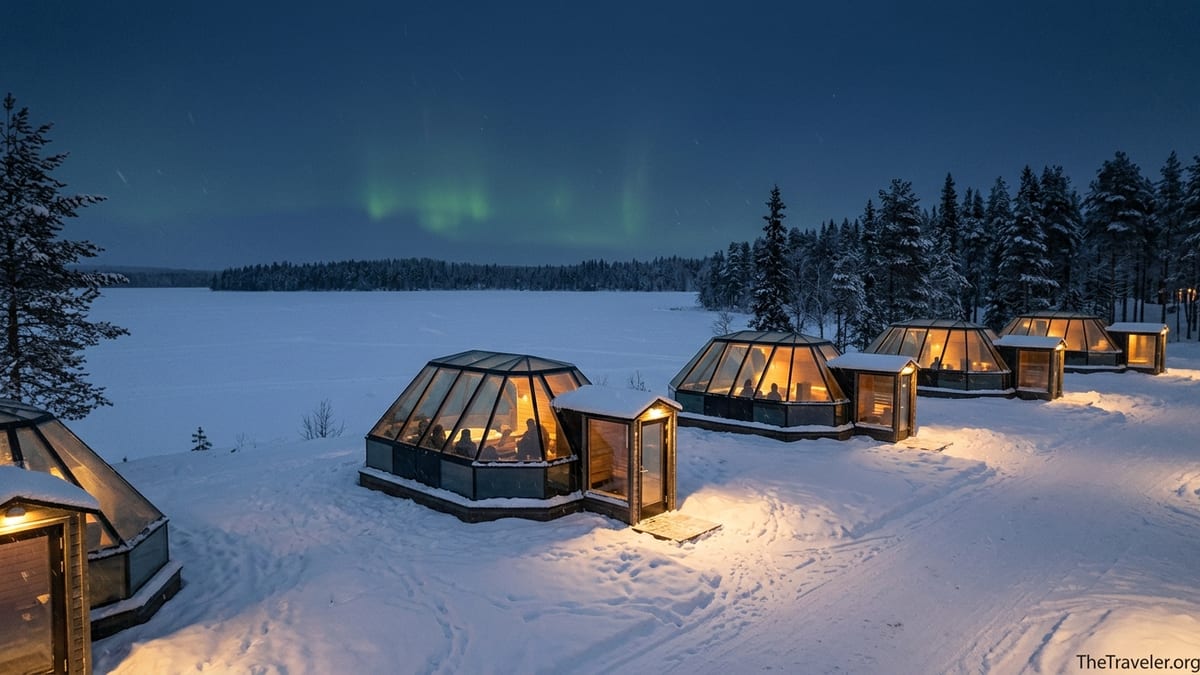
A Wilderness Base Between Rovaniemi and the Deep North
Ranua sits about an hour and twenty minutes south of Rovaniemi by road, in a gentle belt of forest and lakes that feels distinctly wilder than the busy Arctic Circle area yet more accessible than Lapland’s far north. Regular bus connections run between Rovaniemi and Ranua, operated by regional companies that link Oulu, Pudasjärvi, Ranua and Rovaniemi, which means visitors can land at Rovaniemi Airport and be checking into their cabin or igloo in Ranua the same day without renting a car. For many travelers, Ranua becomes a quiet counterpoint to the Santa tourism of Rovaniemi and the resort bustle of Levi or Saariselkä.
The resort itself is split between the main Holiday Village around Ranua Wildlife Park and the separate Arctic Igloos site on the shore of Lake Ranuanjärvi, roughly six kilometers away. That layout is important to its growing appeal. You can wake to the sounds of forest birds near the park one day, then transfer for a night or two in an adults-leaning, lakeside glass igloo for peak aurora viewing the next. Compared with better-known glass igloo clusters closer to Rovaniemi, Ranua’s igloos sit in real darkness, with no streetlights on the shore and very little nearby development, which gives night skies a clarity travelers often say takes them by surprise.
Crucially, Ranua still feels like a lived-in Lapland community rather than a purpose-built resort. A handful of local cafés, a supermarket and small services in Ranua village mean you can shop alongside locals, pick up snacks for a cabin breakfast or chat with staff who are used to winter cold rather than seasonal crowds. For visitors who prefer the feel of an authentic village over a themed resort complex, this balance is a major part of the destination’s charm.
Glass Igloos That Put Nature First
Ranua Resort’s signature experience is its Arctic Glass Igloos, often marketed under the Arctic Fox Igloos name. These are fully equipped glass cabins laid out in two staggered rows on the quiet shore of Lake Ranuanjärvi. Twin Igloos sit on the upper row, while Lakeside Igloos line the waterfront below, each angled so that even the upper row looks out over the lake. Heated glass roofs prevent snow build-up and fogging, which means that whether you stay in December or in the soft light of April, your view of the sky and water stays clear.
Unlike some older igloo concepts in Lapland that are little more than glass domes with shared facilities, Ranua’s units are proper 36 square meter mini-apartments. Every igloo includes its own kitchenette, shower, toilet and a private sauna, along with air conditioning, heating and Wi-Fi. Breakfast, linens, towels and final cleaning are typically included in the rate, so you can arrive with a small suitcase rather than camping gear. Guests often praise the convenience of being able to make a late-night snack or heat water for tea while watching the sky, then stepping directly into a warm sauna without leaving their igloo.
Pricing reflects the all-in comfort. For summer 2026, Ranua Resort advertises a romantic glass igloo package at about 299 euros per night for two people, including breakfast, a bottle of sparkling wine, a rose, chocolates, macarons and entrance to the wildlife park for the entire stay. That is not a budget choice, but in Lapland’s glass-igloo market it compares favorably to high-profile names where similar packages can easily run well above 400 or 500 euros per night in peak winter. Travelers weighing multiple Lapland venues increasingly discover Ranua when they are looking for fully equipped igloos that feel indulgent without tipping into ultra-luxury pricing.
Year-Round Experiences: Beyond the Winter Postcard
Ranua’s rise coincides with a broader shift in how people travel to Lapland. While December and January remain core months, more visitors now plan trips in late autumn, spring and even summer for quieter trails and more diverse activities. Ranua Resort has leaned into that seasonality. In winter, the focus tilts to snow: guests book husky rides along forest tracks, snowmobile safaris across frozen bogs, reindeer sleigh rides and guided Northern Lights hunts that combine lake viewpoints with open fells. The lakeside igloos become cozy viewing pods where you can end a long day in a private sauna, watching for aurora until sleep wins.
As the snow retreats in April and May, the wildlife park paths turn from hard-packed snow to springy forest trails. By June, Lake Ranuanjärvi is clear of ice and the igloo shoreline takes on a completely different character. Guests can kayak or row on still water, listen for divers calling on the lake and experience the surreal brightness of the midnight sun. Families sometimes split their stay between a holiday villa with more space for children to run and one splurge night in an igloo, turning the glass roof into a novelty for sky watching rather than an every-night expense.
Autumn has become a stealth favorite for repeat visitors. From late August into October, the nights grow dark enough for Northern Lights, but the forests are still walkable in light hiking shoes and temperatures are kinder than mid-winter. The shoreline in front of the igloos takes on reds and golds as birch and shrubs turn color, and the resort promotes photography and berry picking along nearby trails. For travelers who crave nature immersion over deep snow, Ranua’s shoulder seasons can offer better value and more flexible activities than the peak holiday weeks around Christmas and New Year.
Ranua Wildlife Park: Arctic Animals in Naturalistic Habitats
Ranua’s wildlife park is central to the resort’s identity. Opened in 1983 and often described as the northernmost zoo in the world, it hosts a curated selection of Arctic and sub-Arctic animals in spacious enclosures threaded through forest. Visitors walk a roughly 2.5 to 3 kilometer loop on wooden boardwalks and gravel paths, passing habitats for brown bears, lynx, wolves, wolverines, owls, moose, and often the park’s headline residents, polar bears. The emphasis is on species adapted to northern climates rather than an encyclopedic zoo collection.
For guests staying at Ranua Resort, access is straightforward. Many accommodation packages, including some glass igloo offers, bundle unlimited wildlife park entrance for the length of your stay. That means you can take an early morning walk when animals tend to be more active, return for lunch at the park’s restaurant or café, then go back later in the afternoon without worrying about ticket costs adding up. Families often appreciate this flexibility, using shorter visits spread across two or three days rather than trying to see everything in one push with young children.
The park’s scale and setting align with the nature-escape positioning that is now drawing travelers to Ranua. Unlike large urban zoos, the enclosures are set within real forest. On a snowy day, you might watch a lynx pad silently through frosted spruce while snowflakes fall at the same pace on the boardwalk where you stand. In summer, the trail feels like a forest hike punctuated by animal viewpoints, with mosses, wildflowers and berries lining the path. For visitors who will not have time to reach Finland’s remote national parks, this combination of semi-wilderness and structured walking routes offers a digestible and family-friendly taste of Arctic nature.
Accommodation Mix: Villas, Cabins and Group-Friendly Options
While the glass igloos grab most of the headlines, Ranua Resort’s broader accommodation mix is a quiet reason it works so well as a nature base. Around the wildlife park, holiday villas and apartments cater to families and groups who want more space and the ability to self-cater. Many units come with private saunas, fully equipped kitchens and easy access to sledding hills, children’s play areas and cross-country ski tracks that begin near the resort. Bed linen, towels and final cleaning are generally included in the rates, keeping the experience closer to a serviced apartment than a barebones rental cabin.
This flexibility matters to multi-generational groups, school trips and corporate retreats who might add one or two nights in the igloos as a highlight while using villas as their primary base. Ranua Resort markets specific group offerings with accommodation blocks that keep everyone close to the wildlife park and shared meeting or dining spaces. In practice, that can look like a company group of 20 people splitting across several holiday villas for a three-day strategy session, with one evening reserved for optional aurora viewing at the lakeside igloos.
Ranua’s location has also encouraged other small-scale accommodation ventures to spring up nearby, from floating AuroraHut igloos and traditional guesthouses to small lakeside lodges in and around Ranua village. While these are separate businesses, they add to the area’s overall capacity and reinforce its reputation as an alternative Lapland hub that does not rely solely on one resort. For travelers, that translates into more choice at different price points, from simple guesthouse rooms to high-comfort igloo suites.
Value, Accessibility and the Shift Away From Crowds
The surge of interest in Ranua is not happening in a vacuum. Across Lapland, travelers report frustration with price spikes and crowding in the most famous glass-igloo destinations, especially around Christmas. Some who stay near the Arctic Circle in Rovaniemi find that light pollution dulls the night sky, while others discover that transport and activity costs add up quickly in isolated luxury resorts. Ranua, by contrast, positions itself as a place where you can still splurge on a once-in-a-lifetime night in a glass igloo but combine that with more grounded, everyday experiences at a wildlife park and in a real village.
From an accessibility standpoint, the resort is relatively easy to reach. International visitors typically fly into Rovaniemi, then connect by scheduled bus or pre-booked transfer south to Ranua in under two hours. Because Ranua lies on regional road routes rather than at the end of a side track, winter travel remains practical for those not used to driving in snow. For independent travelers on a longer Lapland loop, Ranua can slot neatly between stops in Rovaniemi, the ski areas around Ruka or Pyhä and more remote northern destinations.
Value is another factor in Ranua’s appeal. While no glass igloo stay in Lapland is truly cheap, the ability to mix and match nights across villas, igloos and perhaps a guesthouse gives cost-conscious travelers tools to shape a trip that feels special without being excessive. Couples might book two or three nights in a comfortable villa with park access, add a single night in a lakeside igloo with the romantic package, and spread activity spending across a husky safari, one guided aurora evening and self-guided snowshoeing. In an era when travelers scrutinize every line of the budget, this blend of treat and practicality is powerful.
The Takeaway
Ranua Resort’s evolution from a wildlife park with cabins to a multi-faceted nature escape fits the way many people now want to experience Lapland. Instead of a single grand gesture, such as a week in a famous glass-igloo hotel, travelers look for layered trips that combine animal encounters, wilderness quiet, local life and at least one moment of pure Arctic spectacle viewed through a glass roof. Ranua happens to offer all of that on a human scale.
With its lakeside igloos, forest-wrapped wildlife park trails and straightforward access from Rovaniemi, the resort delivers what many visitors imagine when they picture Lapland, but with fewer crowds and more connection to place. As new seasonal packages roll out into 2026 and word spreads beyond Finland, Ranua is likely to see more international attention. For now, it remains one of Lapland’s most compelling nature escapes for travelers willing to look just beyond the most obvious names on the map.
FAQ
Q1. Where exactly is Ranua Resort located in Lapland?
Ranua Resort is in the municipality of Ranua in southern Lapland, roughly 80 to 90 kilometers south of Rovaniemi, Finland’s main Arctic gateway city.
Q2. How do I get from Rovaniemi Airport to Ranua Resort without renting a car?
You can travel by regional bus from Rovaniemi toward Ranua, with journeys typically taking about one hour and twenty minutes, or arrange a private transfer through the resort or local operators.
Q3. What makes Ranua’s glass igloos different from other Lapland igloos?
Ranua’s Arctic Igloos are 36 square meter self-contained cabins with heated glass roofs, private saunas, bathrooms and kitchenettes, set in a dark lakeside location ideal for sky watching.
Q4. When is the best time of year to see the Northern Lights at Ranua?
Aurora season usually runs from late August to early April, with the darkest months between October and March offering the most consistent viewing opportunities on clear nights.
Q5. Is Ranua Resort suitable for families with young children?
Yes, the holiday villas and apartments around the wildlife park are particularly family-friendly, with self-catering facilities, saunas and easy access to short walking trails and animal exhibits.
Q6. How much does a night in a glass igloo at Ranua typically cost?
Rates vary by season, but a summer 2026 romantic package is advertised at around 299 euros per night for two people, including breakfast and wildlife park entrance.
Q7. Can I visit Ranua as a day trip from Rovaniemi?
It is possible to visit on a day trip by car or bus, focusing on the wildlife park, but staying overnight allows you to enjoy the quiet lakeside environment and potential Northern Lights.
Q8. What activities are available besides the wildlife park?
Depending on the season, guests can join husky and reindeer safaris, snowmobile trips, guided Northern Lights excursions, lake activities, hiking and berry picking in the surrounding forests.
Q9. Do I need special clothing or gear to stay at Ranua Resort in winter?
Warm layers, insulated boots, a good hat and gloves are essential; many activity providers also supply thermal overalls, boots and mittens for safaris in very cold weather.
Q10. How far in advance should I book a glass igloo stay?
For peak winter dates and special packages, booking several months ahead is wise, while shoulder seasons like autumn and late spring may offer more last-minute availability.